Resistance Band Standing Shoulder Internal Rotatio
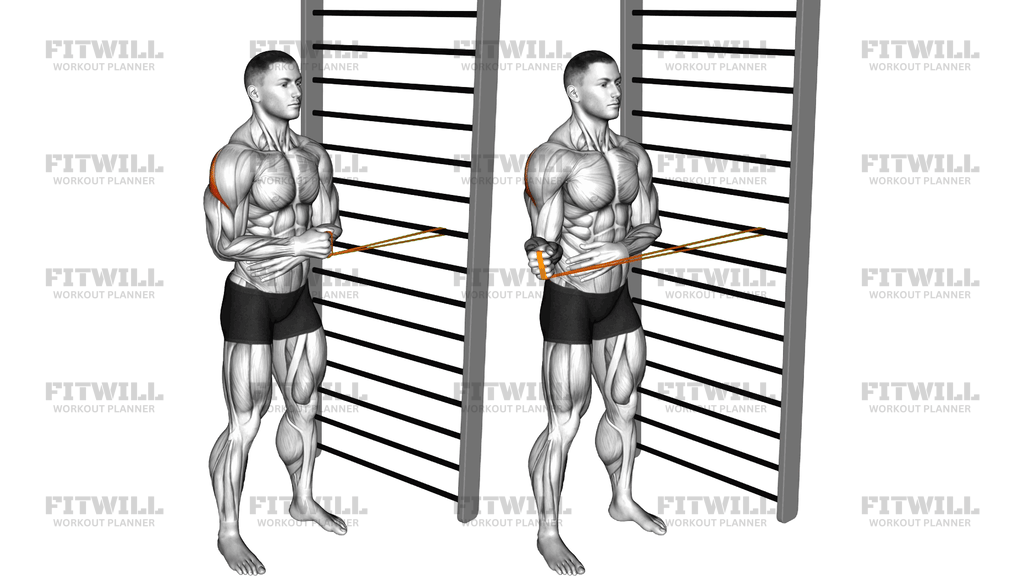
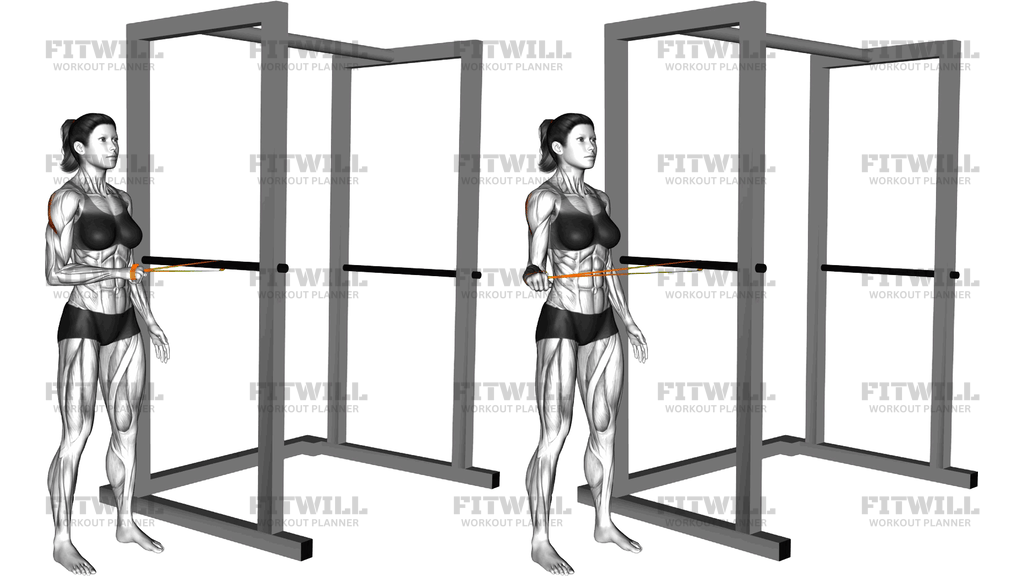
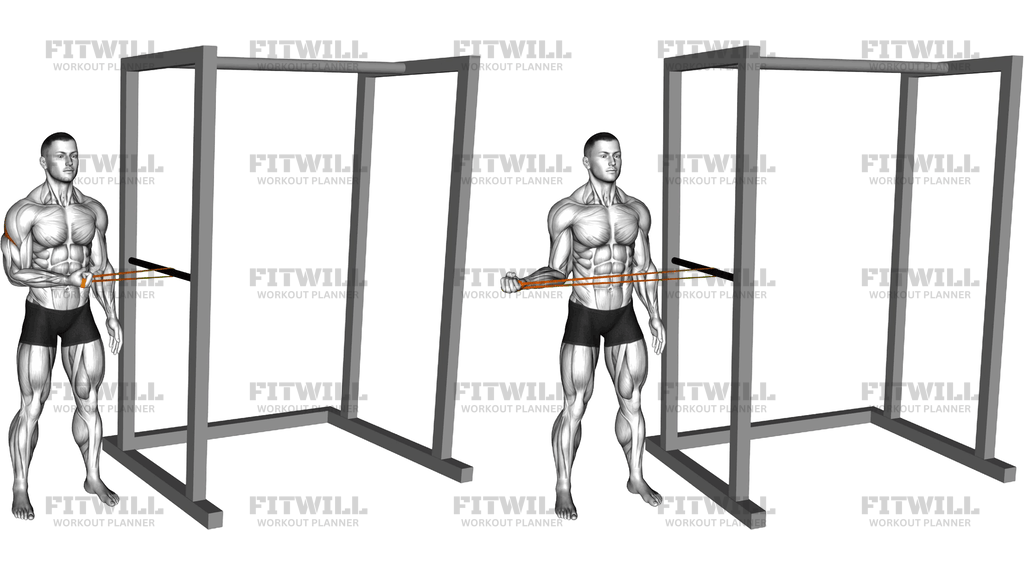
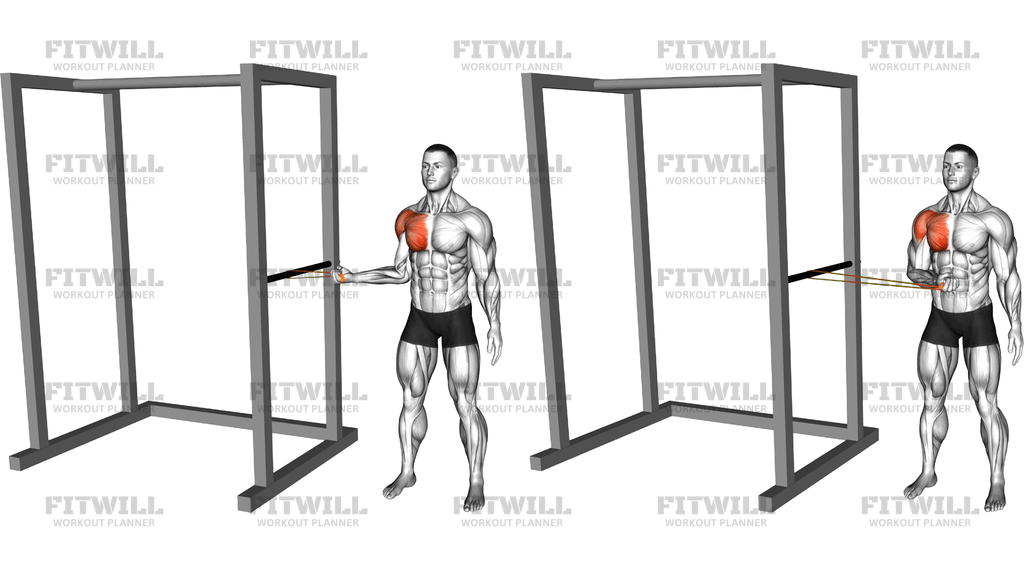
The Resistance Band Standing Shoulder Internal Rotation is a targeted rotator cuff exercise that strengthens the muscles responsible for rotating your upper arm inward toward the midline of your body. You stand upright beside a rack or anchor point with a band attached at roughly elbow height, hold the handle with the arm on the far side of your body, and pull your forearm across your stomach while keeping your elbow pinned to your side. Because the band provides tension that increases as you rotate inward, the resistance matches the strength curve of the movement well.
This exercise is a staple in shoulder health and rehab-style programming. It trains the subscapularis, the primary internal rotator of the shoulder, along with supporting contributions from the pectoralis major and front deltoid. Strong internal rotators help balance the external rotators, which matters for anyone pressing heavily, throwing, swimming, or playing racquet sports. People recovering from shoulder irritation and lifters building durable shoulders both benefit from keeping this movement in rotation, usually with light resistance and higher repetitions.
Setup details matter more here than in most band exercises. The anchor should sit at or just below elbow height, and you need enough distance from the anchor that the band is already slightly taut before you start pulling. Stand side-on to the anchor with the working arm on the far side, so the band crosses your body toward the anchor. Tuck your elbow firmly against your ribs and keep it there for the whole set; if the elbow drifts away from your side, the shoulder takes over the rotation in a way that reduces the work on the rotator cuff.
Execution is deliberately small and controlled. From the start position, where your forearm points toward the anchor, rotate your arm so your hand sweeps across the front of your body toward your opposite side, stopping when your forearm crosses your abdomen. Pause briefly, then let the band draw your hand back to the start under control instead of letting it snap back. The entire motion happens at the shoulder joint; your wrist stays neutral and your torso stays square.
A common use case is as a prehab or warm-up drill before pressing days, typically for two to three sets of twelve to twenty reps per side. It also fits well at the end of upper body sessions as focused rotator cuff work. Because the resistance is light by design, progress by slowing the tempo, adding a pause at the finish, or stepping slightly further from the anchor rather than jumping to a heavy band.
Keep the effort honest and the ego out of it. Rotator cuff muscles are small, and cranking a stiff band with momentum or torso twist does little besides teaching poor mechanics. If you feel pinching at the front of the shoulder rather than muscular effort, reduce the band tension or shorten the range slightly.
[ Workout Log & Planner ]
Put your next workout in Fitwill
Keep your plan and training log ready when you are.


Instructions
- Anchor a resistance band to a rack or stable post at about elbow height, and attach a single handle to the free end.
- Stand side-on to the anchor with your feet about hip-width apart, positioned far enough away that the band has light tension at the start.
- Grip the handle with the hand farther from the anchor, and step or turn so the band runs across the front of your body toward the anchor point.
- Bend your working elbow to 90 degrees and press it firmly against your side, with your forearm pointing toward the anchor as the starting position.
- Brace your core, keep your chest tall, and square your hips and shoulders so your torso cannot twist during the pull.
- Exhale and rotate your arm inward, sweeping your hand across your stomach until your forearm crosses the front of your body, keeping your elbow glued to your ribs the whole time.
- Pause for a second at the finish position with your hand near your opposite side.
- Inhale and slowly rotate back, resisting the band's pull until your forearm returns to the starting position pointing toward the anchor.
- Complete all repetitions on one side, then switch your stance and re-grip so the opposite arm becomes the working arm.
- Reset your stance and band tension between sides, and check that the anchor and handle are secure before your next set.
Tips & Tricks
- The most frequent mistake is letting the elbow drift off the ribcage, which turns the drill into a general arm pull; if you cannot keep it pinned, use a lighter band or a smaller range.
- Do not lean or rotate your torso to finish the rep. If your chest starts turning toward the working arm, the band is too heavy or you are chasing extra range you do not need.
- Control the return just as much as the pull. Letting the band yank your hand back to the start trains nothing and can jerk the shoulder joint.
- Keep your wrist straight and your grip relaxed. Squeezing the handle hard shifts tension into the forearm and hides whether the rotation is actually coming from the shoulder.
- Start with a band that lets you complete twelve to fifteen smooth reps. Rotator cuff work responds to controlled volume, not maximal tension.
- If the band tension feels uneven through the range, adjust your distance from the anchor before changing exercises; a few inches closer or farther changes the feel noticeably.
- Stop short of forcing the hand far past your midline. A comfortable finish with the forearm across the abdomen is enough, and pushing deeper rarely adds anything useful.
- Use this as a warm-up before benching or overhead pressing, or pair it with band external rotations for balanced cuff work in the same session.
- If you feel a pinch at the front of the shoulder instead of muscular effort, slightly lower the anchor or reduce the range until the movement is pain-free.
Frequently Asked Questions
Which muscles does the Resistance Band Standing Shoulder Internal Rotation work?
The primary mover is the subscapularis, the main internal rotator of the rotator cuff, with assistance from the pectoralis major and front deltoid. The forearm and grip muscles work isometrically to hold the handle.
Why does my elbow have to stay against my side during this exercise?
Keeping the elbow pinned at 90 degrees isolates rotation at the shoulder joint. If the elbow drifts away, the chest and larger arm muscles take over and the rotator cuff gets far less targeted work.
How high should I anchor the band for the Resistance Band Standing Shoulder Internal Rotation?
Set the anchor at or just below elbow height so the band pulls roughly parallel to your forearm through the movement. An anchor that is too high or low changes the resistance angle and makes the rotation harder to control.
Is this exercise suitable for beginners?
Yes, it is one of the more accessible rotator cuff drills because the setup is simple and the range is short. Beginners should start with a light band, focus on keeping the elbow tucked, and prioritize smooth tempo over resistance.
How many reps and sets should I do?
Two to three sets of twelve to twenty controlled reps per side works well for most people. Because the target muscles are small, higher reps with light tension are generally more productive than heavy, grinding efforts.
What is the most common mistake with this movement?
Using too much band tension and swinging the hand across the body with torso rotation. If your shoulders or hips turn during the pull, lighten the band and reset your stance square to the anchor.
Can I do internal rotation with a cable machine instead of a band?
Yes, a cable set at elbow height with a single handle is a close substitute and provides slightly more constant tension. The band version is more convenient for home training and easier to scale by stepping closer or farther from the anchor.
Should I pair this with external rotation exercises?
It is a good idea. Training only internal rotation can create imbalances, so pairing it with band external rotations keeps the cuff balanced around the shoulder joint.
Is it normal to feel this in the front of the shoulder?
Mild muscular effort near the front of the shoulder is normal, but sharp or pinching discomfort is not. Reduce the band tension, shorten the range slightly, and if the sensation persists, skip the exercise and get the shoulder assessed.
How do I progress the Resistance Band Standing Shoulder Internal Rotation?
Progress by adding a one-second pause at the finish, slowing the return phase, or stepping farther from the anchor to increase tension. Move to a heavier band only when all of those feel easy and your form stays strict.