Resistance Band Standing Shoulder External Rotati
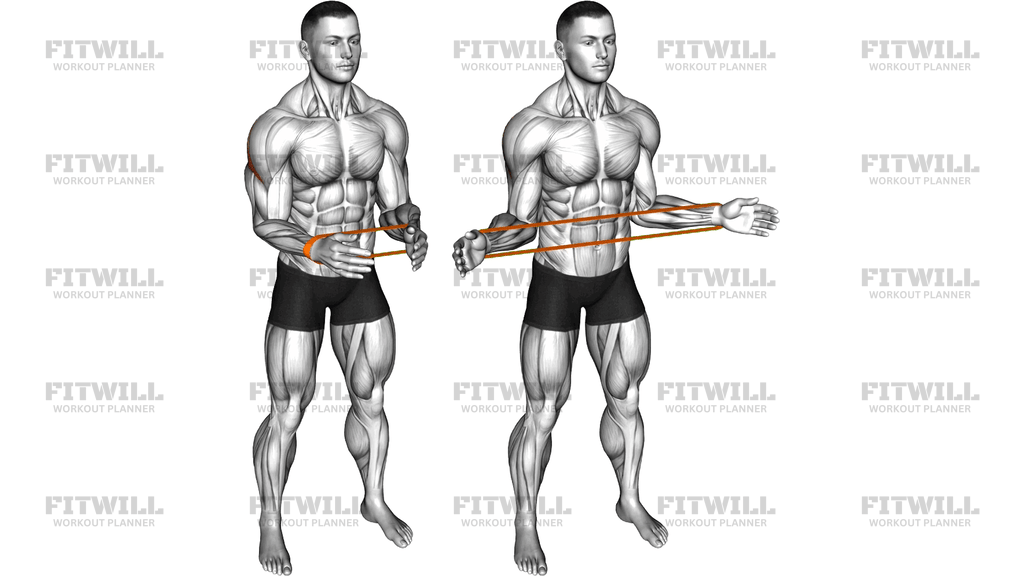
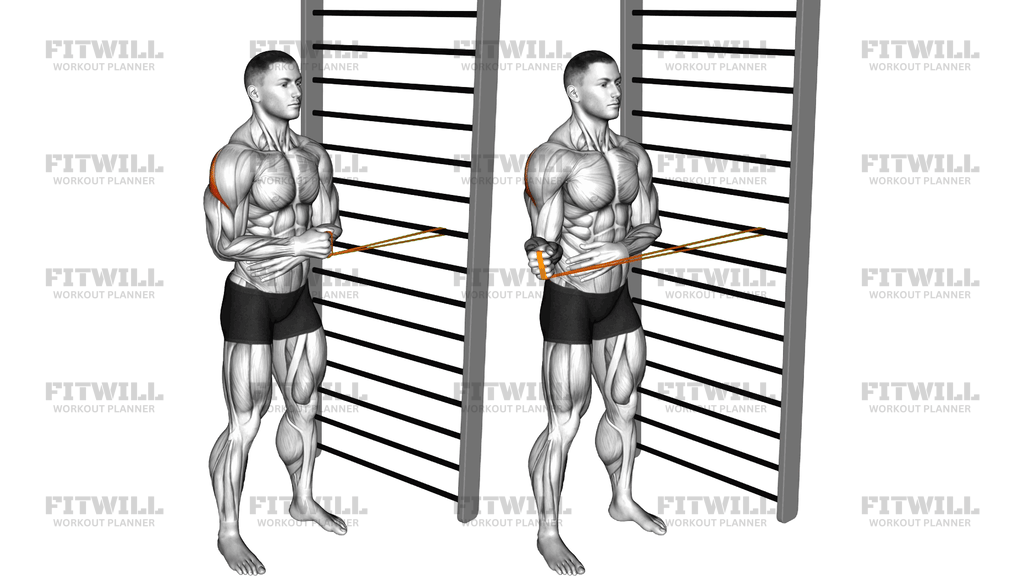
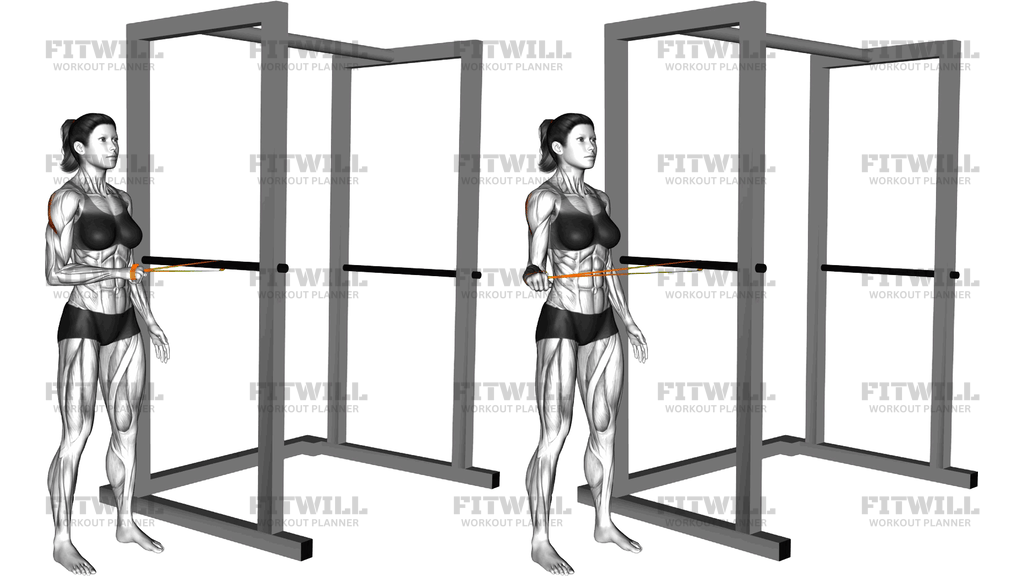
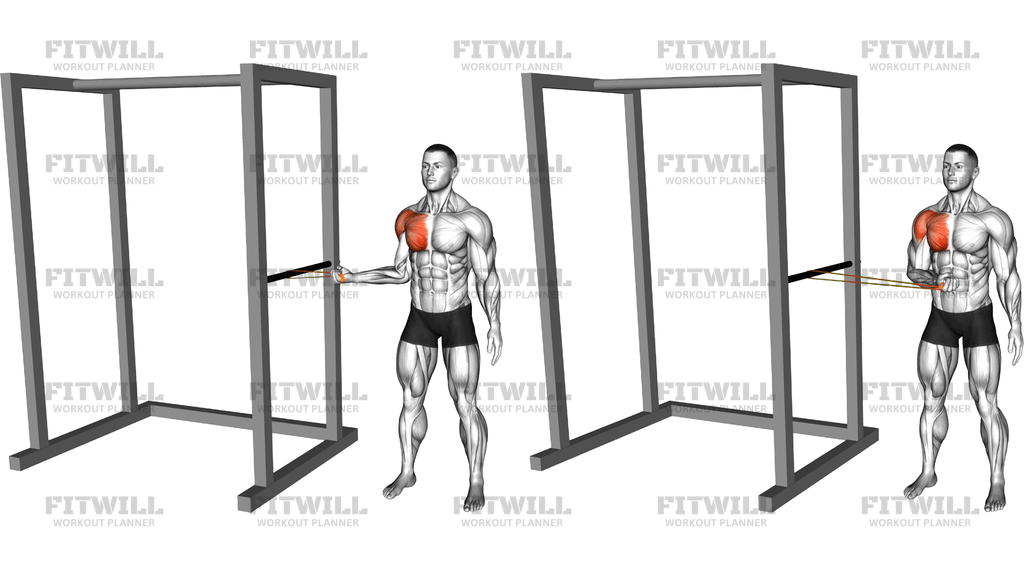
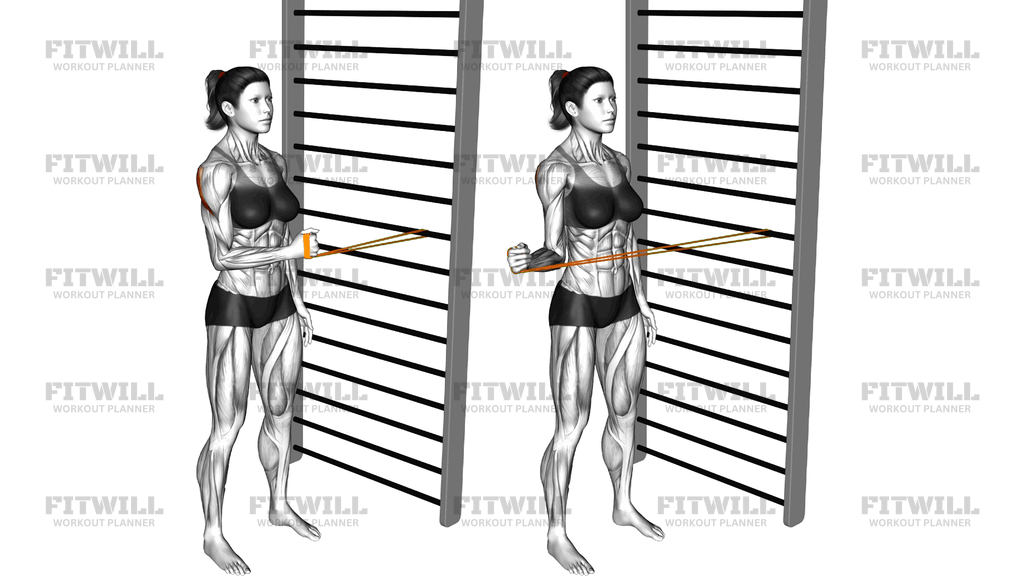
Resistance Band Standing Shoulder External Rotation is a small, precise movement that strengthens the rotator cuff, specifically the muscles on the back of the shoulder that rotate the upper arm outward. You stand upright with the band anchored to a rack or stable object at about waist-to-elbow height, hold the end in the hand nearest the anchor, and keep your elbow pinned to your side at a 90-degree bend. From there, you rotate your forearm away from the anchor point against the band's pull, then control it back. The band provides constant tension through the entire arc, which is exactly what the rotator cuff responds to.
This exercise matters because the rotator cuff does a huge amount of quiet work in almost every upper-body movement you perform. It stabilizes the shoulder joint during pressing, pulling, throwing, and carrying, yet it rarely gets direct attention until something starts to ache. Weak external rotators are one of the most common gaps in people who bench and press heavily, and building them up helps the shoulder tolerate those bigger lifts more comfortably. It is equally valuable for swimmers, baseball and tennis players, and anyone whose sport involves repetitive overhead or throwing motions.
The setup is what makes or breaks this drill. Because the resistance is light and the range of motion is short, it is very easy to cheat by pulling with the biceps, shrugging the shoulder, or leaning the torso into the rotation. Standing tall with the elbow fixed against your ribs forces the rotation to come from the shoulder joint itself, which is the entire point. The band should pull roughly perpendicular to your forearm at the midpoint of the movement so the tension stays productive throughout.
Execution should feel slow and deliberate. Rotate the forearm outward only as far as you can move without the elbow drifting forward or the shoulder rolling up toward the ear, pause briefly, and return under control rather than letting the band snap your arm back. Most people do well with higher repetitions in the 12 to 20 range per side, using a light band, because the rotator cuff is built for endurance and precision rather than maximal force.
Use this movement as part of a warm-up before upper-body training, as accessory work after pressing days, or in a rehab-style routine if you are returning from a shoulder issue under the guidance of a professional. Because it loads the shoulder gently and in a standing, functional position, it fits easily into almost any program and requires nothing more than a band and an anchor point.
[ Workout Log & Planner ]
Put your next workout in Fitwill
Keep your plan and training log ready when you are.


Instructions
- Anchor a resistance band at waist-to-elbow height to a rack, wall bars, or another sturdy fixed object, and stand sideways to the anchor with the working arm closest to it.
- Grip the end of the band in your near hand and step sideways until there is light tension on the band with your forearm across your stomach.
- Bend the working elbow to 90 degrees and press it firmly against the side of your ribs; the elbow stays glued to your body for the whole set.
- Stand tall with feet about hip-width apart, brace your core lightly, and relax your shoulders down away from your ears.
- Exhale and rotate your forearm outward, pivoting at the shoulder and swinging your hand away from the anchor while the elbow stays fixed at your side.
- Stop the rotation when your forearm cannot move further without the elbow lifting or your torso twisting, and hold the end position for a brief pause.
- Inhale and slowly let your forearm rotate back toward your stomach, resisting the band's pull instead of letting it snap the arm back.
- Complete all repetitions on one side, then switch stance and grip to train the other arm with the same setup.
- Keep the tension moderate at the start of each rep; if the band is slack at the beginning or violently tight at the end, adjust your distance from the anchor.
Tips & Tricks
- A folded towel between your elbow and ribs is a useful cue — if the towel drops, your elbow has drifted away from your body and the shoulder is no longer doing the work.
- The most common mistake is turning this into a biceps curl; if your elbow angle changes during the rep, reduce the band tension and think about the forearm swinging like a door on a hinge.
- Do not let your shoulder shrug as you rotate outward. If the space between your ear and shoulder narrows, consciously press the shoulder blade down and shorten the range slightly.
- Rotation beyond your natural end range adds nothing here. Stop where the movement is smooth; forcing extra external rotation under tension irritates the joint rather than strengthening it.
- If you feel the movement only in your forearm or wrist, your grip may be too tight. Hold the band firmly but loosely enough that the effort stays in the shoulder.
- Stand far enough from the anchor that the band is taut before the first rep — a slack start lets you wind up uncontrolled and yank into the rotation.
- Slow the return phase down deliberately. The eccentric, when the band pulls your forearm back inward, is where much of the strength benefit lives.
- Keep your head neutral and eyes forward. Looking down or twisting toward the working arm usually accompanies unwanted trunk rotation.
- Progress by using a thinner-to-thicker band progression or adding repetitions, not by dramatically shortening the anchor distance, which ramps up resistance unevenly across the range.
Frequently Asked Questions
Which muscles does Resistance Band Standing Shoulder External Rotation work?
The primary movers are the rotator cuff muscles on the back of the shoulder, especially the infraspinatus and teres minor. The rear deltoid and the muscles around the shoulder blade assist to keep the joint stable.
Why is my elbow supposed to stay pinned to my side during Resistance Band Standing Shoulder External Rotation?
Fixing the elbow at 90 degrees against your ribs forces the rotation to happen at the shoulder joint, which is what targets the rotator cuff. If the elbow drifts forward or swings outward, the larger muscles of the arm and chest take over and the drill loses its purpose.
How far should I rotate my arm during Resistance Band Standing Shoulder External Rotation?
Rotate outward until your forearm stops comfortably with your elbow still touching your ribs. For most people this lands somewhere between pointing forward and pointing out to the side; chasing extra range by twisting the trunk or lifting the elbow is counterproductive.
What band resistance should a beginner use for Resistance Band Standing Shoulder External Rotation?
Start with the lightest band that keeps tension through the whole arc, and aim for 12 to 15 controlled repetitions per side. If you cannot keep your elbow against your ribs for the last few reps, the band is too strong.
How is Resistance Band Standing Shoulder External Rotation different from the cable version?
The movement pattern and setup are essentially the same, but the band's resistance increases as it stretches, so the hardest point is at the end of the rotation. A cable provides constant load, while the band is gentler at the start of the range, which many beginners find more comfortable.
Can I do Resistance Band Standing Shoulder External Rotation every day?
Because the load is light and the muscle is built for endurance, frequent practice is usually well tolerated, and many people use it as a daily warm-up. If the shoulder feels sore or achy rather than worked, back off the frequency and volume.
I feel Resistance Band Standing Shoulder External Rotation in my biceps instead of my shoulder — what am I doing wrong?
Your elbow angle is probably changing, meaning you are bending and straightening the arm rather than rotating it. Lock the elbow at 90 degrees against your ribs, lighten the band, and focus purely on the forearm swinging outward like a hinged door.
Can Resistance Band Standing Shoulder External Rotation be used for shoulder rehab?
External rotation with a band is a staple in many shoulder rehabilitation programs, but if you have a current injury, post-surgical restrictions, or pain during the movement, follow the specific protocol given by your physical therapist or doctor rather than self-prescribing.
What can I use as an anchor if I don't have a rack for Resistance Band Standing Shoulder External Rotation?
Any sturdy object at roughly waist height works, such as a heavy table leg, a door anchor, or a firmly closed door handle on the hinge side. Always test that it cannot move before you pull against it.
How does Resistance Band Standing Shoulder External Rotation help my pressing and pulling lifts?
Strong external rotators stabilize the shoulder socket under load, which gives heavier presses and pulls a more secure base to work from. Many lifters use this drill as part of their warm-up on upper-body days for exactly that reason.