Cable Bent Over Neutral Grip Kickback With Rope A
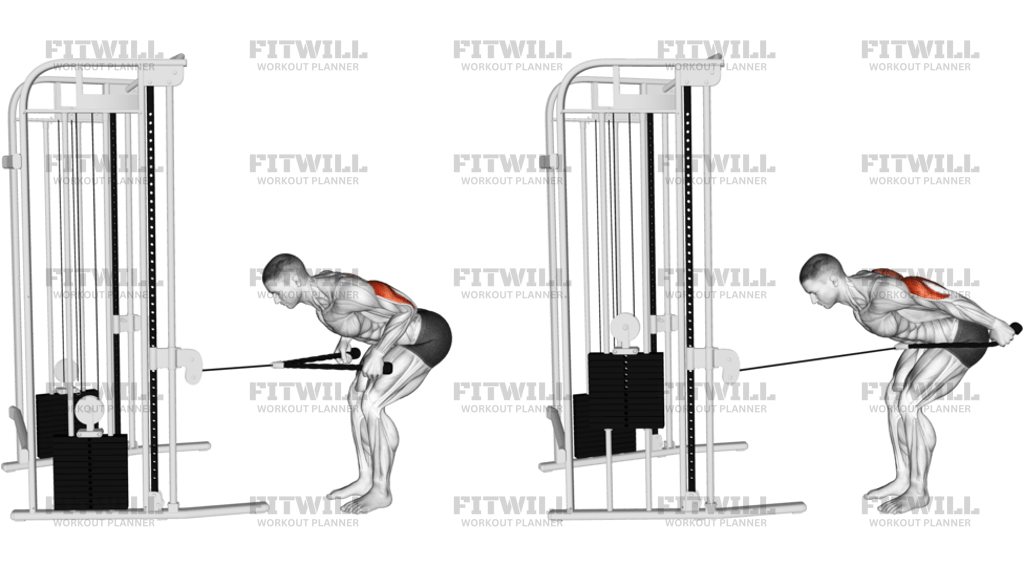
The Cable Bent Over Neutral Grip Kickback With Rope is a triceps isolation exercise performed at a cable station with a rope attachment set at roughly hip height. You hinge forward at the hips until your torso is close to parallel with the floor, take the rope with a neutral grip so your palms face each other, and extend your elbows straight back behind your body. The two rope ends sit on either side of the movement, which naturally encourages the neutral hand position and lets the arms track cleanly along the sides of the torso.
This movement targets the triceps, with emphasis on the lateral and long heads during the final portion of the lockout. Because the cable pulls the rope forward and slightly down, your triceps have to work through the entire range rather than only against gravity at one angle, which is the main advantage over a dumbbell kickback. The bent-over position also recruits the hamstrings, glutes, and lower back statically as they hold your torso in place, and the front shoulders assist in keeping the upper arms fixed behind you.
Setup matters more here than in most arm exercises. The height of the pulley, your hip hinge, and the distance you stand from the machine all determine whether the resistance pulls the rope in a straight line back past your hips or drags your shoulders forward. Set the pulley near hip level, stand far enough back that the rope tension is already present at the start, and keep your upper arms pinned close to your ribs throughout the set.
To execute it well, brace your core before the first rep, then extend both elbows backward until your arms are straight and slightly past your hips. Pause for a beat at full extension, feeling the triceps contract, then bend the elbows slowly and under control until your forearms return toward your thighs. Avoid swinging the torso or letting the elbows drift outward or downward, since both turn a precise triceps movement into a loose, momentum-driven one.
This exercise suits lifters who already train pressing movements and want focused triceps work with constant tension, as well as anyone who finds dumbbell kickbacks awkward because the resistance disappears at the top. It fits well as a finishing movement on arm or upper body days, typically for 10 to 15 controlled reps per set. Keep the load modest at first; the bent-over position makes heavy weights uncomfortable on the lower back long before the triceps run out of strength.
[ Workout Log & Planner ]
Put your next workout in Fitwill
Keep your plan and training log ready when you are.


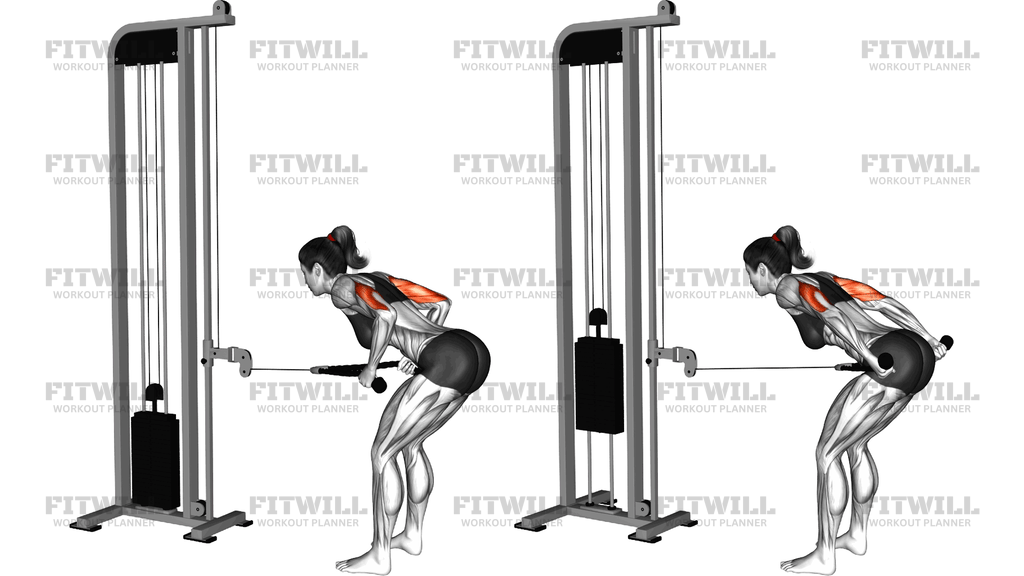
Instructions
- Attach a rope to the pulley of a cable machine and set the pulley to approximately hip height.
- Stand facing the machine and take one rope end in each hand with a neutral grip, palms facing each other.
- Step back until there is tension on the cable at the start position, feet about hip-width apart with a soft bend in the knees.
- Hinge forward at the hips until your torso is angled down toward the floor, keeping your back flat and your head in line with your spine.
- Pull your elbows up and back so your upper arms sit close to your ribs, roughly parallel to the floor, and hold them there.
- Brace your core and exhale as you extend both elbows straight back until your arms are fully straightened slightly past your hips.
- Squeeze the triceps for a moment at full extension, turning the rope ends slightly outward if it helps the lockout feel strong.
- Inhale as you bend your elbows slowly and let the rope return until your forearms hang near your thighs, keeping the upper arms fixed.
- Complete your reps, then stand up out of the hinge before letting go of the rope or adjusting the weight.
Tips & Tricks
- If your shoulders creep toward your ears or forward as you press back, you are likely standing too close to the machine; take a half step back so the cable pulls in a cleaner line.
- The most common fault in this setup is turning the kickback into a row by moving the whole arm; check that only the forearm swings while the upper arm stays welded to your ribs.
- Keep the hinge honest: a flat back with hips pushed back, not a rounded spine with the chest lifted between reps.
- Use a lighter weight than you think you need. If your torso rocks backward to help the rope back, the load is too heavy for the position.
- Slightly rotating the palms outward at full extension, a small external shoulder turn, can make the lockout feel tighter without changing the elbow path.
- Control the return for two to three seconds; the cable keeps tension on the triceps during the lowering phase, and rushing it wastes half the set.
- If your lower back fatigues before your arms, place your free hand on a bench or your thigh for support and work one arm at a time.
- Keep the neck relaxed and look at the floor a foot or two ahead of your feet rather than craning up to check the mirror.
Frequently Asked Questions
Which muscles does the Cable Bent Over Neutral Grip Kickback With Rope work?
The triceps are the primary mover, working hardest through the lockout. The front shoulders help hold the upper arms in position, while the glutes, hamstrings, and lower back work isometrically to keep you hinged over.
Why use a rope instead of a straight bar for this kickback?
The rope's two handles force a neutral grip with the palms facing each other, which lets the elbows travel comfortably close to the body and reduces wrist strain. It also allows a slight outward turn at lockout for a stronger triceps squeeze.
How high should I set the cable pulley?
Set it at roughly hip height. If the pulley is much higher, the cable pulls down on your shoulders and makes the hinge harder to hold; much lower and the rope may drag on your legs.
Is this exercise suitable for beginners?
Yes, provided the weight stays light and the bent-over position feels stable. Beginners should practice the hip hinge without weight first, then add the cable once they can hold a flat-backed hinge for a full set.
Why do my lower back and hamstrings fatigue before my triceps?
The bent-over stance holds those muscles under static tension the whole time, so they tire first if the load or set length is too much. Shorten your sets, reduce the weight, or support yourself with one hand on a bench to take load off the hinge.
What is the most common mistake in this movement?
Letting the elbows drop or drift away from the ribs, which turns the kickback into a partial row and shifts work away from the triceps. Keep the upper arms pinned beside your torso and move only at the elbow.
How does the cable version compare to dumbbell kickbacks?
A dumbbell's resistance fades at the top of the movement, while the cable keeps steady tension on the triceps through the entire range, including full lockout. The trade-off is that the cable setup requires more attention to stance and pulley height.
Can I do this exercise one arm at a time?
Yes, and it is a smart option if your lower back or core tires quickly in the hinge. Hold the rope with one hand, brace your free hand against a bench or your thigh, and complete all reps on one side before switching.
How many sets and reps work best for the Cable Bent Over Neutral Grip Kickback With Rope?
Two to four sets of 10 to 15 reps with a moderate weight usually works well as a triceps finisher. Because the bent-over position limits how much load the position tolerates, prioritize strict form over adding weight.