Cable Seated Overhead Curl
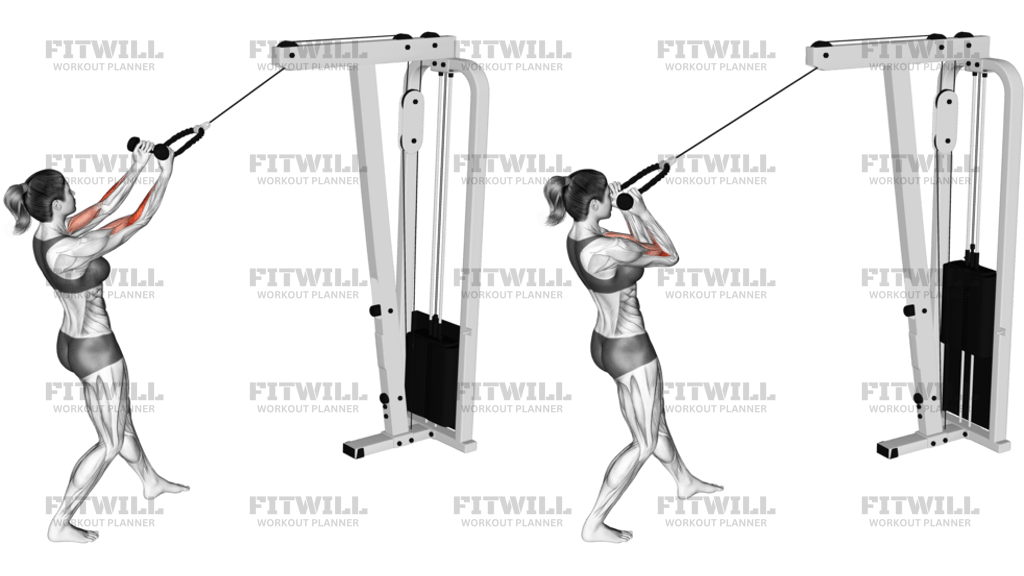
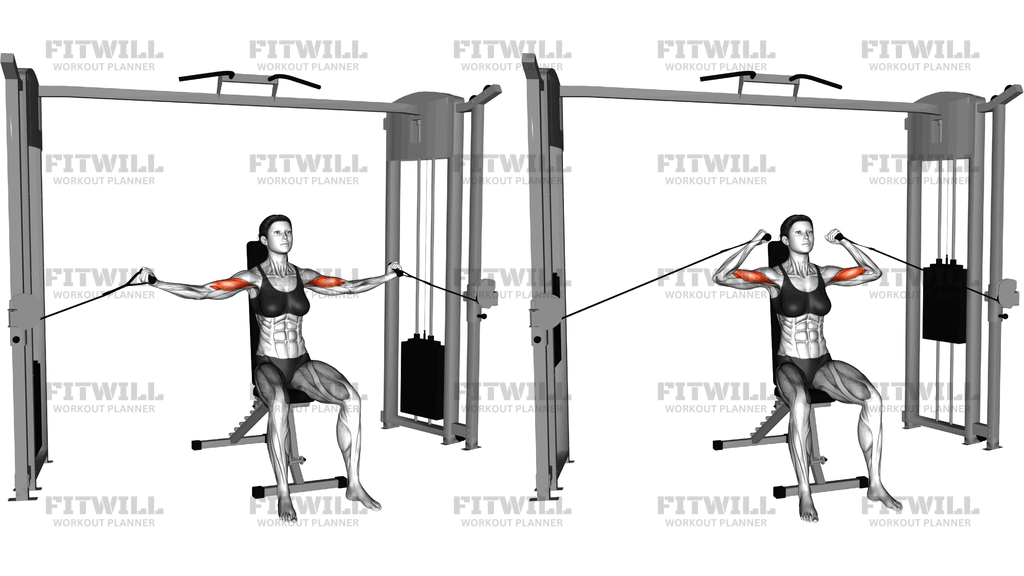
The Cable Seated Overhead Curl is a bilateral biceps variation performed between two facing cable pulleys. You sit upright on a bench positioned in the center of a dual cable station, hold a single handle in each hand, and extend your arms straight out to your sides at roughly shoulder height. From there, you flex both elbows simultaneously to curl the handles up and in toward your head, keeping your upper arms fixed in that wide, horizontal line throughout the movement. The cables pull outward and slightly behind you, which places continuous tension on the biceps from the very first inch of the rep to the last.
What makes this setup different from a standard curl is the arm position. Because your upper arms are held out to the sides instead of pinned against your torso, the biceps work through the movement from a stretched, lengthened position at shoulder level. The long head of the biceps in particular gets a different stimulus than it does in conventional curls, and the brachialis and brachioradialis assist heavily as your elbows bend against the horizontal pull. The front delts and upper back also work isometrically to hold your arms in place while your elbows move.
This exercise suits lifters who already have some training experience and want to add variety to their arm work. It is especially useful for anyone whose progress has stalled on standard dumbbell or barbell curls, since the cable resistance angle is one you rarely encounter otherwise. Because you are seated with your back supported, there is very little room to cheat with body English, so it also doubles as a strict, honest test of arm strength.
Setup matters a great deal here. Position the pulleys so the cables track at or just below shoulder height, and set the bench far enough back that you feel steady tension with your arms extended. If the bench is too far forward the tension is slack at the bottom; too far back and you get yanked backward at the start. Sit tall with your ribcage stacked over your hips and let the bench back take some of your weight so your torso stays quiet while your elbows do the work.
To execute it well, think of your upper arms as frozen at shoulder height and move only from the elbows down. Curl the handles up and slightly inward until your hands are near or above ear level, squeeze briefly, then lower with control until your elbows are fully extended. The eccentric is where the cables really challenge you, so resist the outward pull rather than letting your arms get flung back to the start.
In practice, this movement works well as a secondary or finisher exercise after heavier curl variations, typically for moderate to higher rep ranges where the constant cable tension can be fully appreciated. Keep the loads conservative at first; the wide arm position makes the biceps handle less weight than a normal curl, and that is expected.
[ Workout Log & Planner ]
Put your next workout in Fitwill
Keep your plan and training log ready when you are.


Instructions
- Position an upright bench with back support in the center of a dual cable machine, and set both pulleys at about shoulder height with single handles attached.
- Sit on the bench facing forward with your feet flat on the floor, then reach out to each side and grip a handle in each hand with your palm facing up.
- Slide or adjust your position until your arms are extended straight out to your sides at shoulder height with light, even tension on both cables.
- Sit tall against the bench back, brace your core, and pull your shoulder blades gently back so your torso stays stable before the first rep.
- Keeping your upper arms fixed at shoulder level, bend both elbows at the same time and curl the handles up and in toward your head.
- Continue until your hands are near or slightly above ear level and your biceps are fully contracted, holding the top for a beat.
- Slowly straighten your elbows, resisting the outward pull of the cables as your arms travel back to the wide starting position.
- Exhale as you curl the handles up and inhale as you lower them back out under control.
- Complete all reps with even tension on both sides, then release one handle at a time and stand up carefully once the weight stack is settled.
Tips & Tricks
- Do not let your upper arms drift forward or drop as you fatigue. If your elbows start traveling toward your ears or sinking to your sides, reduce the weight so the elbow joint stays the only moving part.
- Choose a lighter load than you would for a standard curl. The biceps are at a mechanical disadvantage with the arms out wide, so ego weights usually cause torso twisting.
- Check your distance from the pulleys before your first rep. If the cables go slack with your arms extended, move back; if they drag you backward, move slightly forward.
- Avoid shrugging your shoulders up as you curl. Keep them pressed down and back so the work stays on the biceps instead of leaking into your traps.
- Control the stretch at the bottom. Letting the cables snap your arms back to full extension is the most common way to lose tension and irritate the elbow.
- If one side fatigues faster than the other, the stacks may be set unevenly. Confirm both weight pins are in the same position before starting.
- Squeeze your grip firmly on the handles without flexing your wrists back. A neutral, steady wrist keeps the curl path clean and protects the forearm flexors.
- Use a full but comfortable range. Stop the curl when your hands reach ear level rather than collapsing your elbows inward just to lift higher.
- Place this exercise late in your arm session. Doing it first makes it hard to stabilize the wide arm position under heavier pressing or pulling work afterward.
Frequently Asked Questions
Which muscles does the Cable Seated Overhead Curl work?
The biceps brachii is the primary mover, with the brachialis and brachioradialis assisting elbow flexion. The front delts and upper back work isometrically to hold your arms at shoulder height while the elbows curl.
How is the Cable Seated Overhead Curl different from a regular seated cable curl?
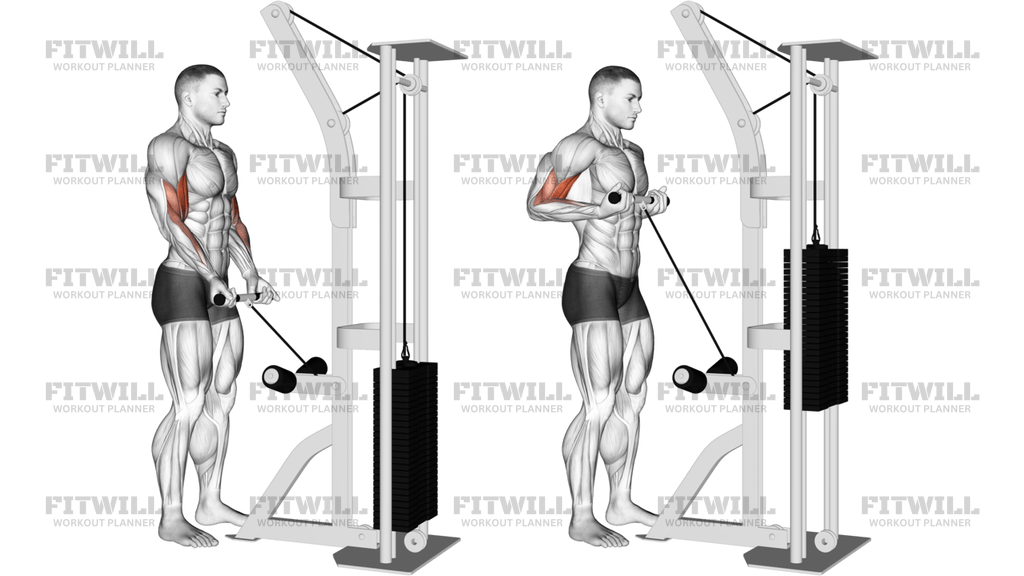
In a regular curl your upper arms stay at your sides, but here they are held straight out at shoulder height while only the forearms move. That changes the resistance angle and loads the biceps from a much wider, more stretched starting position.
Can beginners do the Cable Seated Overhead Curl?
Yes, but it is best treated as a variation rather than a first curl. A beginner should learn standard dumbbell or cable curls first, then start here with very light weight to practice keeping the upper arms still.
What height should the cable pulleys be set at?
Set both pulleys at or just below shoulder height so the cables run roughly horizontal when your arms are extended. If the pulleys are too low or too high, the resistance direction changes and the top of the curl loses tension.
Why do I feel this more in my shoulders than my biceps?
That usually means your upper arms are moving with the handle or your shoulders are shrugging to help. Lock your elbows at shoulder height, drop your shoulder blades down, and lighten the load until the biceps do the lifting again.
How far back should the bench be from the pulleys?
Far enough that both cables have light, even tension with your arms fully extended to the sides. Too close and the start is slack, too far and the cables will pull you backward off your stable seat.
What can I substitute if my gym has only one cable tower?
A single-arm version works well: sit sideways to the tower with the working arm out at shoulder height and curl the handle toward your head. High cable curls standing, with arms held out wide, are a close standing alternative.
How many reps and sets should I use for this exercise?
Because the wide arm position limits how much load you can handle, moderate to higher rep ranges work best. Two to four sets of 10 to 15 controlled reps is a practical starting point, usually after your main curl movement.
Is it safe to curl the handles above my head?
Curling to about ear level is enough for a full biceps contraction. Going higher usually means the elbows drift up and the shoulders take over, so keep the end position at or slightly above ear height and stay within a comfortable range.
Why does one side feel harder than the other?
Slight differences in arm length, shoulder mobility, or cable alignment can make one side feel heavier. Double-check that both stacks are pinned equally, and if the imbalance persists, add single-arm sets to the weaker side.