Dumbbell Bent Over Wide Row
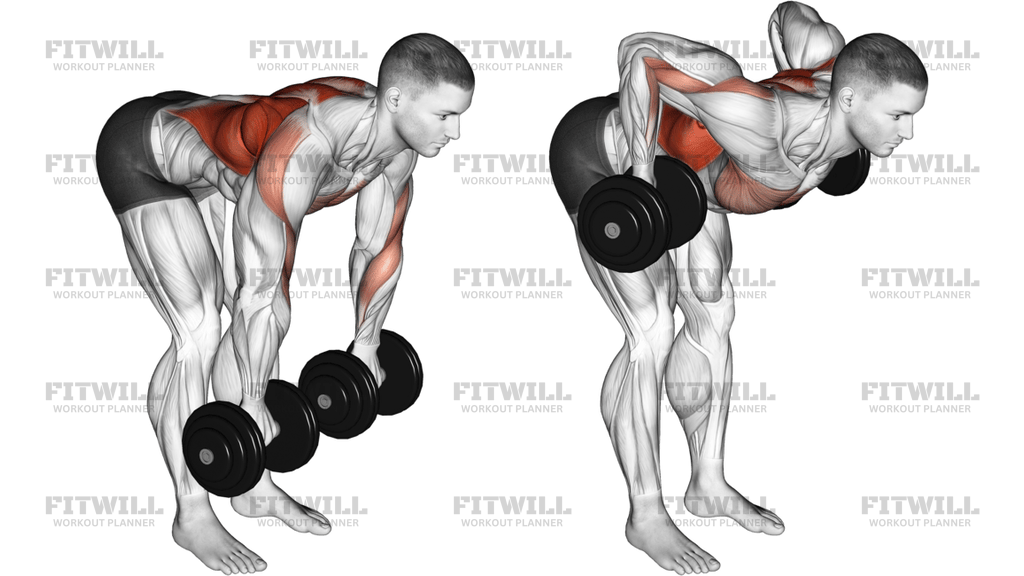
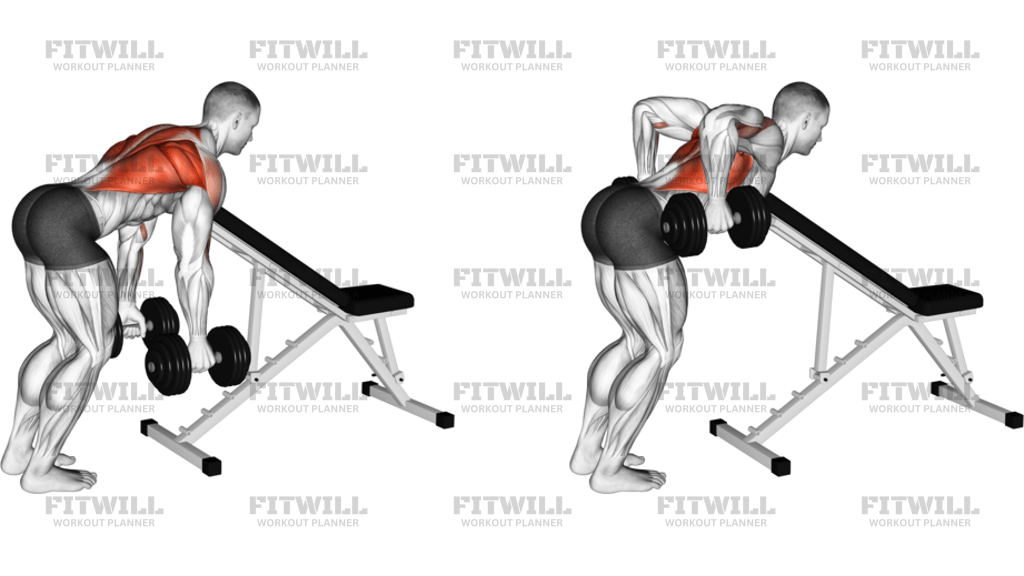
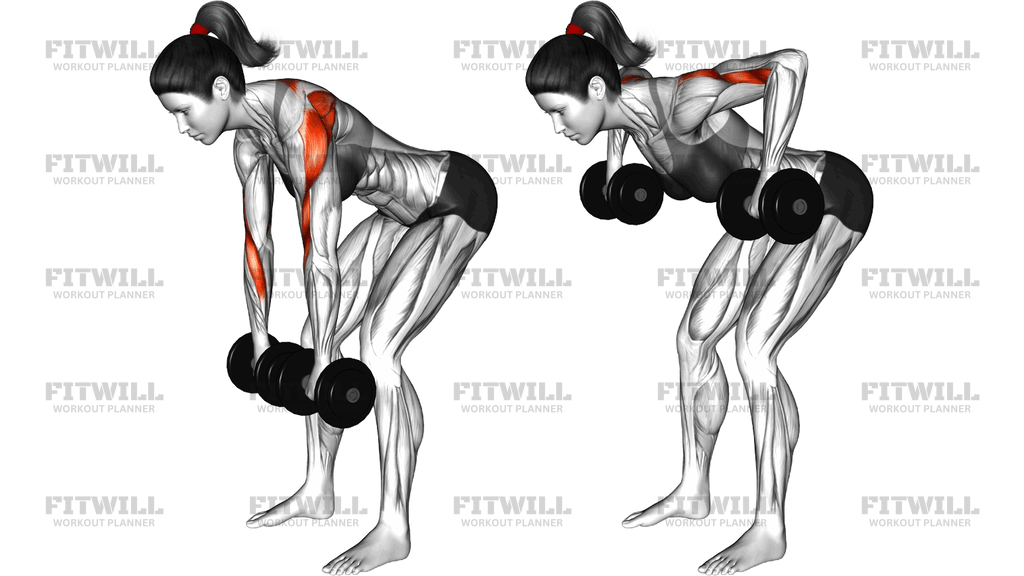
The Dumbbell Bent Over Wide Row is a hip-hinged row with a pair of dumbbells and a wider elbow path. You fold the torso forward, let the bells hang, then pull them toward the lower chest or upper waist with the elbows traveling out more than they would in a tight, tucked row. The wide path puts extra work on the rear shoulders and upper back while the lats still start the pull.
Use this when a close-elbow row feels like it only hits the lats and you want more of the upper back involved. Neutral-grip dumbbells let each arm find its own line, which is helpful if one shoulder is cranky with a barbell. It is a strength accessory, not a hip-hinge test. If you cannot hold a flat back, the row does not count.
The lats begin the lift of the upper arms. As the elbows flare, the rear delts and rhomboids take more of the finish. The forearms grip the handles, and the spinal erectors hold the hinge. A clean rep ends with the elbows high and back, not with the dumbbells curling toward the belly button.
Stand with the feet about hip-width, soften the knees, and push the hips back until the torso is in a strong hinge, roughly 45 to 70 degrees from vertical. Hold the dumbbells with a neutral grip and let them hang under the shoulders. Pack the shoulders down, brace the abs, and look at the floor just ahead of your feet.
Exhale and row both dumbbells up and out so the elbows point more to the sides and slightly back. Stop when the bells reach the sides of the lower chest and the shoulder blades have squeezed. Pause, then lower the dumbbells until the arms hang straight. Inhale on the way down. Do not stand up between reps.
Work in the 8 to 12 range with a load you can pause. If the upper traps shrug, the bells are too heavy or the path is too upright. If the low back rounds, raise the torso or cut the set. This belongs after your main pull or as the main upper-back piece on an accessory day. The Dumbbell Bent Over Wide Row is also a useful swap when a barbell wide row irritates one shoulder, because each arm can finish at a slightly different height.
[ Workout Log & Planner ]
Put your next workout in Fitwill
Keep your plan and training log ready when you are.


Instructions
- Stand with a dumbbell in each hand, feet hip-width apart, and knees slightly bent.
- Push your hips back until your torso is hinged and your back is flat.
- Let the dumbbells hang under your shoulders with a neutral grip, palms facing each other.
- Brace your abs and pull your shoulders down away from your ears.
- Exhale and row the dumbbells up and out, letting the elbows travel wider than a tucked row.
- Stop when the bells reach the sides of your lower chest and your shoulder blades are squeezed.
- Inhale and lower the dumbbells until your arms hang straight, keeping the hinge locked.
- Repeat for the planned reps, then stand by driving the hips forward and setting the bells down.
Tips & Tricks
- Wide means the elbows go out, not that you swing the dumbbells away from the body in an arc.
- If you feel this only in the arms, you are curling. Think about spreading the floor with the elbows.
- Keep the neck in line with the spine. Craning up to watch yourself in a mirror shrugs the traps.
- A slightly higher torso is acceptable if it lets you keep a flat back with the wide elbow path.
- Pause at the top. The extra upper-back work of the Dumbbell Bent Over Wide Row lives in that squeeze.
- Match the dumbbells and the height of both elbows. One high elbow usually means that side is shrugging.
- Do not bounce the bells off the hang. A dead stop at the bottom keeps the lats honest.
- Stop the set when you cannot keep the hinge still, even if the arms have more reps.
Frequently Asked Questions
What muscles does the Dumbbell Bent Over Wide Row work?
It works the lats, rear shoulders, and rhomboids. The wider elbow path emphasizes the upper back more than a tucked row.
How wide should the elbows go?
Flare them out so the upper arms finish about parallel to the floor and the forearms stay vertical. That is a wide row, not a reverse fly with straight arms, and not a tucked row to the waist.
Is the Dumbbell Bent Over Wide Row better than a close-grip row?
It is different. Use the wide version when you want more rear-delt and upper-back work, and a tucked row when you want a heavier lat-focused pull.
What grip should I use?
A neutral grip with the palms facing each other is the default. It is usually kinder to the wrists and shoulders than a hard overhand twist.
How bent over should I be?
Hinge until the back is flat and the dumbbells can hang freely. Parallel is fine if your hamstrings allow it; otherwise stay a bit higher.
Why do my traps take over?
The load is too heavy or you are pulling toward the neck. Row to the lower chest and keep the shoulders down.
Can I do this supported on a bench?
A chest-supported wide dumbbell row is a good substitute if your lower back fatigues before your upper back.
How many reps should I do?
Eight to twelve paused reps is a solid range. If you cannot pause, the dumbbells are too heavy for a wide row.