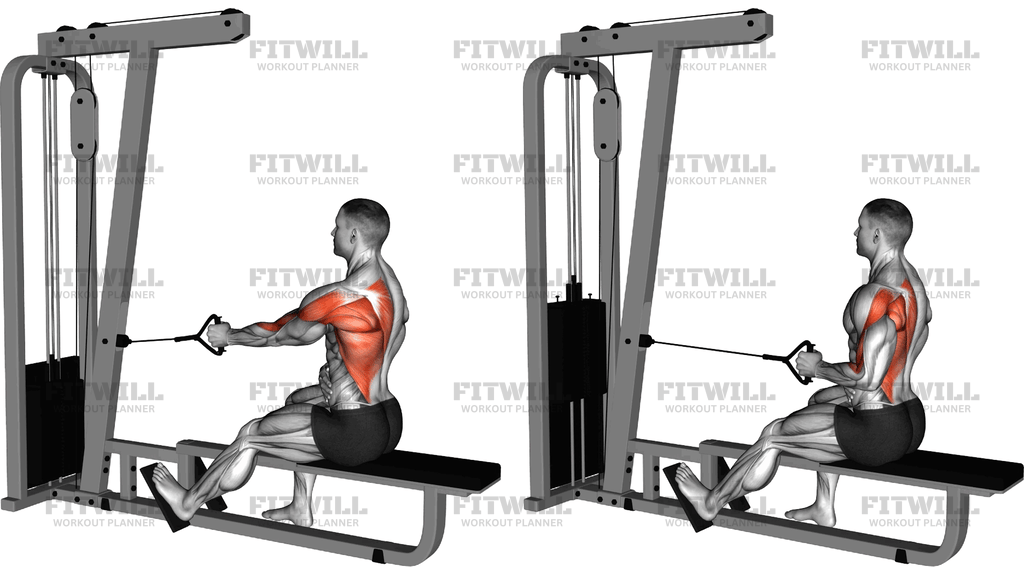
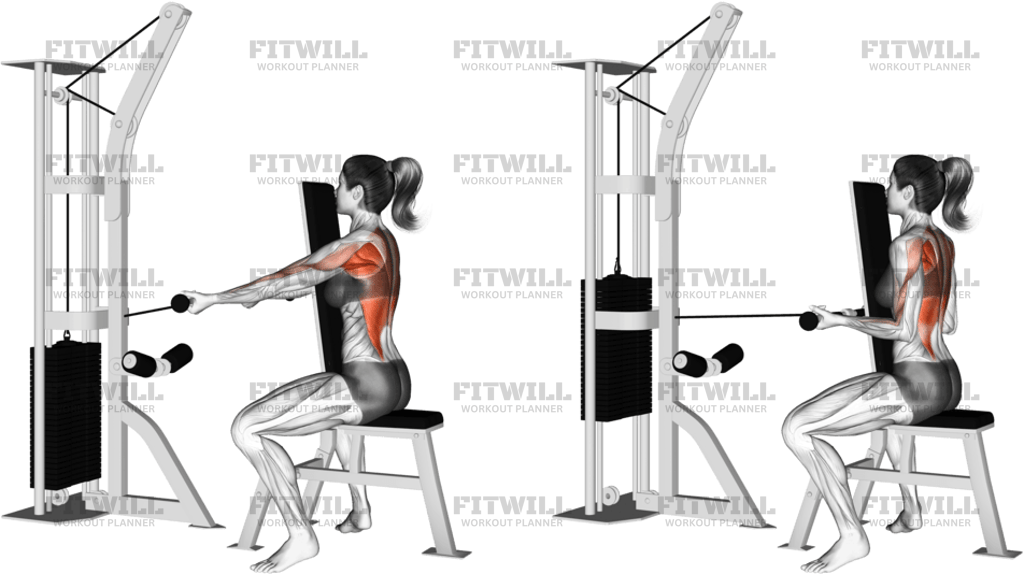
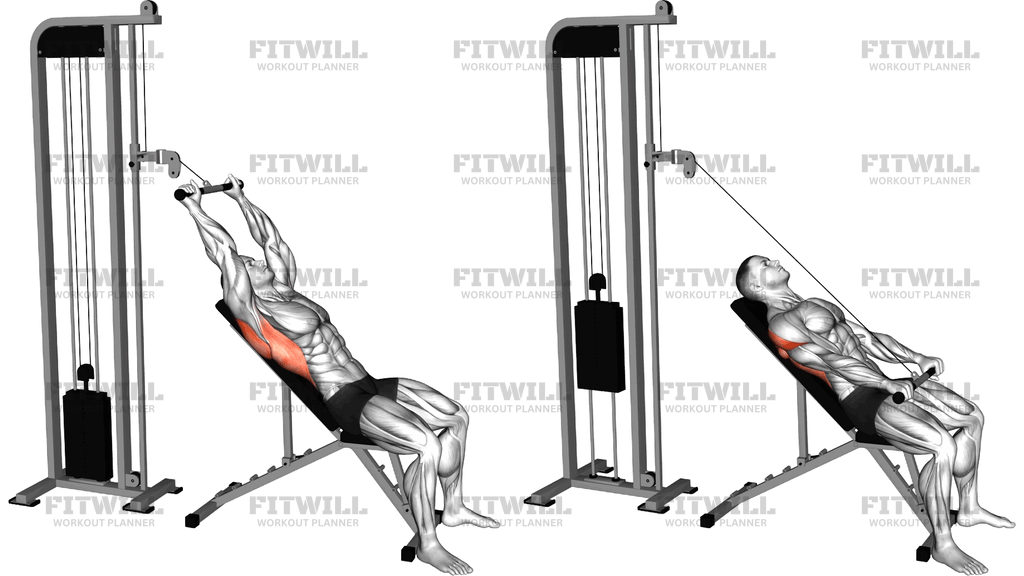
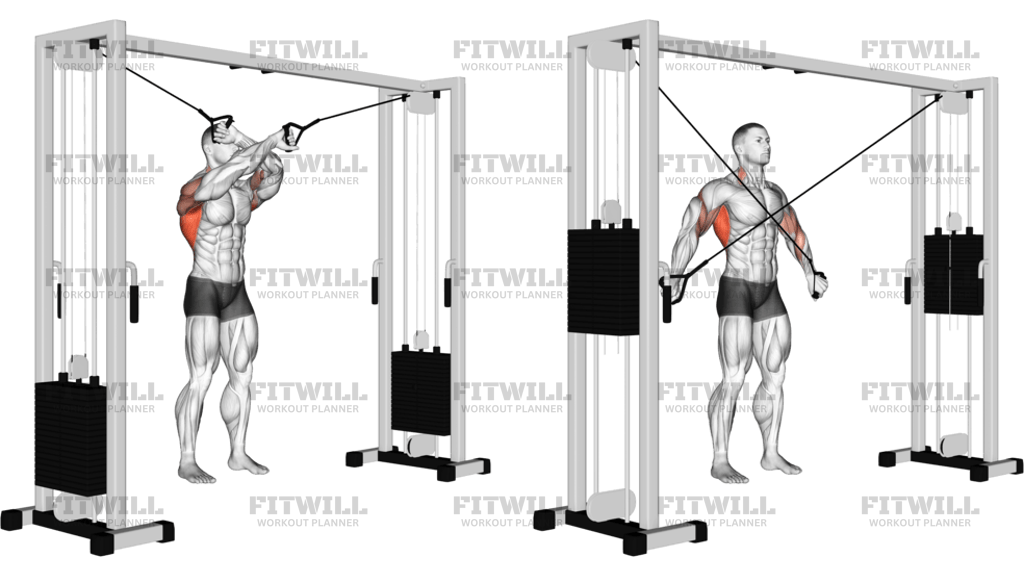
Cable Palm Rotational Row
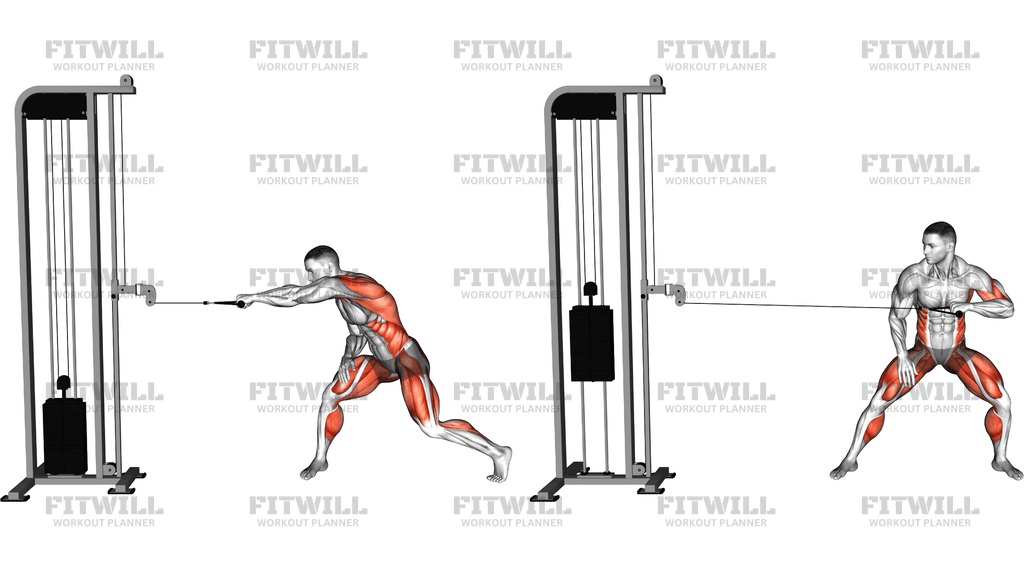
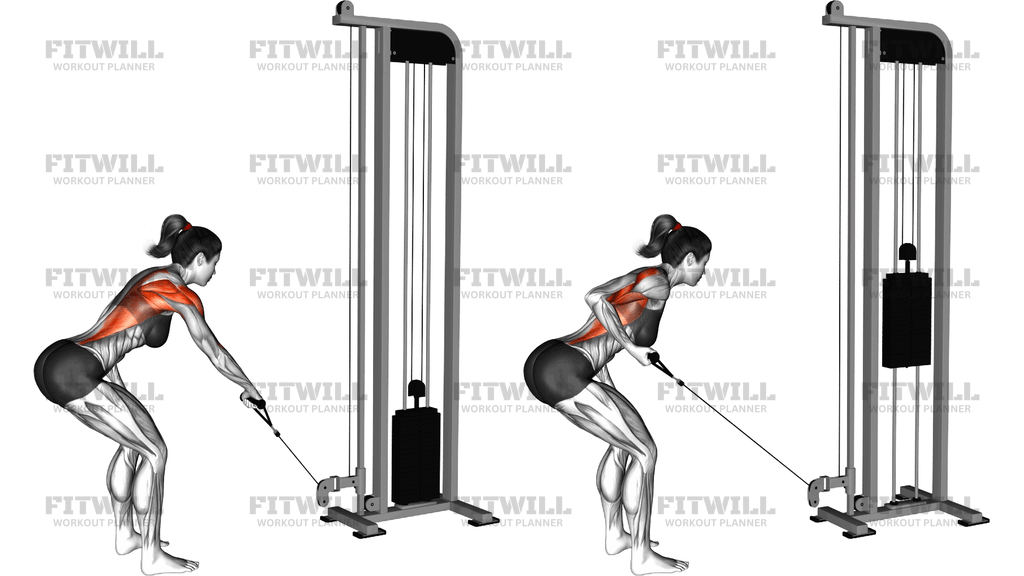
The Cable Palm Rotational Row is a bent-over row performed at a low cable pulley with a single handle, where the hand deliberately rotates as you pull. You start with the arm extended and the palm facing down or neutral, then rotate the palm upward toward your body as the handle travels to your lower torso. This rotation separates the exercise from a standard bent-over cable row, because it adds a forearm turn on top of the shoulder extension and elbow flexion, giving the whole pulling chain a slightly different stimulus.
The setup matters more here than in most rows. Standing facing the cable machine with a hip hinge, knees softly bent and back flat, means your trunk has to hold itself against the constant pull of the cable for the entire set. If your torso drifts upright or your lower back rounds, the pull stops coming from the upper back and lats and starts turning into a lower-back or momentum exercise. Take a moment to set the hinge before you touch the weight stack.
To perform it well, pull the handle toward your lower ribs or hip while rotating the palm so it faces up at the top of the rep. Squeeze the shoulder blade back and down at the end of the pull, pause briefly, then reverse everything in the same order: rotate the palm back, straighten the arm, and let the shoulder blade protract as the handle returns toward the pulley. The cable should stay taut and the weight stack should not slam between reps.
The rotating component makes this row useful for people who feel standard rows mostly in their biceps, since the supination tends to promote a stronger lat and mid-back contraction at the finish. It also gives the forearms and grip a distinct challenge, and the anti-rotation demand on the trunk makes the core work harder than the movement suggests. Lifters working on pulling strength, posture around the shoulder blades, or forearm rotation all get value from it.
Because it is a cable exercise, the resistance stays smooth and matched through the whole range, including the stretched position at the bottom where free-weight rows feel easiest. Keep the load conservative at first. A hinged torso plus a rotating pull offers plenty of places to cheat, and a weight you can control through the full turn will build the pattern far better than a heavier one that turns the movement into a body-english swing.
[ Workout Log & Planner ]
Put your next workout in Fitwill
Keep your plan and training log ready when you are.


Instructions
- Set the pulley of the cable machine to its lowest position and attach a single handle.
- Stand facing the machine with your feet roughly hip-width apart, then hinge at the hips and push them back until your torso is angled well forward, knees softly bent and back flat.
- Grab the handle with the working arm, palm facing down or toward the machine, and step back slightly so the weight stack lifts off and the cable stays under tension.
- Brace your core and lock in the hinge position; your torso angle should not change once the set begins.
- Pull the handle toward your lower ribs or near-side hip, rotating your palm upward as the elbow travels back and close to your body.
- At the end of the pull, your palm should face up and your shoulder blade should be pulled back and down; pause there for a moment.
- Reverse the motion in a controlled way: rotate the palm back to the starting position as you extend the arm and let the shoulder blade move forward with the cable.
- Exhale as you pull and rotate, inhale as you return the handle toward the pulley.
- Complete all reps on one side, then switch hands and repeat on the other arm while keeping the same hinge.
- Reset your hinge between sets rather than standing up mid-set and re-bending under tension.
Tips & Tricks
- If your torso keeps rising as you pull, the weight is too heavy; the cable wins that tug-of-war every rep, so drop a plate or two and hold the hinge still.
- Let the rotation happen naturally through the forearm rather than flicking the wrist at the top — an exaggerated wrist turn does nothing extra for the pull.
- Think of driving the elbow back toward your hip, not pulling with the hand; this keeps the lats and upper back doing the work instead of the biceps.
- Avoid rounding your lower back to reach the handle at the start; walk the stance back or bend the knees more until the arm hangs straight without straining.
- A full stretch at the bottom, where the shoulder blade protracts and the arm reaches toward the pulley, is where the row earns its keep — don't cut it short to squeeze out extra reps.
- Keep the shoulder down away from the ear throughout the pull; shrugging on this exercise turns a lat row into an upper-trap exercise.
- If your grip fails before your back does, use a handle with a thicker or knurled grip for practice and slightly lighter loads rather than strapping up immediately.
- Check your head position: a craned neck is a common compensation when the load gets heavy. Keep the gaze down and slightly forward, in line with your spine.
Frequently Asked Questions
Which muscles does the Cable Palm Rotational Row work?
The primary movers are the lats, supported by the mid-back muscles like the rhomboids and middle traps, along with the rear shoulders. The biceps and forearms assist, and the palm rotation adds extra demand on the forearm muscles and grip.
Why does the palm rotate during this row instead of staying neutral?
Rotating the palm upward as you pull changes the pull line of the arm and tends to encourage a stronger lat and mid-back contraction at the finish. It also trains the forearms through their turning range, which standard rows ignore.
Is the Cable Palm Rotational Row suitable for beginners?
Yes, as long as the load stays light enough to hold the hip hinge steady. Beginners should practice the hinge position with a very light weight for a set or two before doing the full rotation at a working load.
How bent over should my torso be during the Cable Palm Rotational Row?
Hinge far enough forward that your torso is roughly angled between 45 degrees and parallel to the floor, with a flat back and bent knees. The exact angle matters less than keeping it fixed for the whole set.
What is the most common mistake with this exercise?
Standing up as the weight gets heavy, which turns the row into a torso swing powered by the lower back. Another frequent one is pulling only with the arm and skipping the shoulder blade squeeze at the end.
Can I do the Cable Palm Rotational Row with both arms at once?
Not with a single handle in this setup — the rotation pattern is designed for one arm at a time. Working one side also lets the opposite hand brace or support your stance if you need it.
What can I substitute if my gym has no low cable pulley?
A resistance band anchored low works as the closest replacement: hinge, hold the band with the same starting palm position, and perform the identical pull-and-rotate pattern. The resistance curve differs slightly, but the movement carries over well.
Should I feel this in my lower back?
Some isometric work from the spinal muscles is normal since they hold your torso in the hinge, but you shouldn't feel strain. Sharp or worsening lower-back discomfort means the hinge has collapsed or the load is too heavy, so reset your position and reduce the weight.
How heavy should I go on the Cable Palm Rotational Row?
Choose a load you can pull with a two-second up, brief pause, and three-second return while keeping your torso angle frozen. If you cannot control the return without the stack pulling you forward, it is too heavy.
How is this different from a regular bent-over cable row?
The regular version keeps the grip orientation fixed and emphasizes the row itself, while the Cable Palm Rotational Row adds forearm rotation through the pull, shifting some emphasis toward the lats at the finish and placing extra demand on the forearms and grip.