Hack One Leg Calf Raise
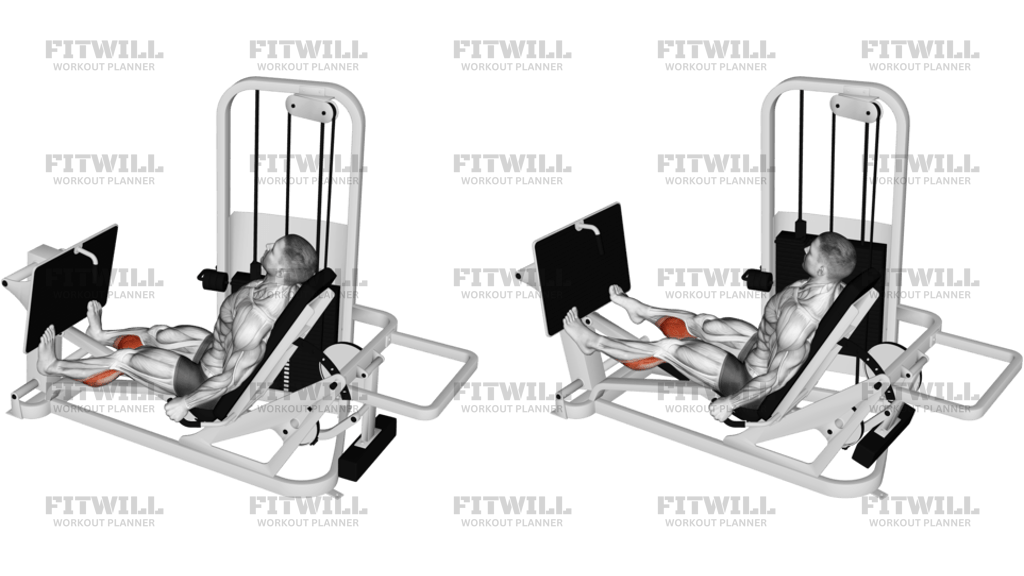
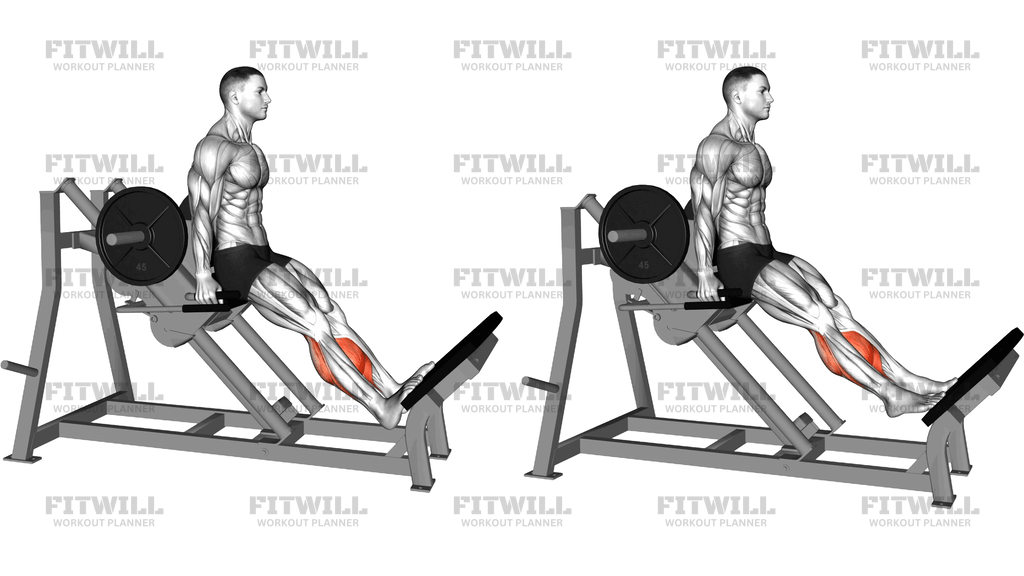
The Hack One Leg Calf Raise is a single-leg calf exercise performed on a hack squat machine or linear leg press. You position your back against the angled pad, place the ball of one foot on the lower edge of the foot platform so the heel hangs off, and drive the sled up by extending the ankle. The working calf carries the entire load, while the free leg simply stays out of the way, which makes this one of the most direct ways to load the gastrocnemius and soleus under heavy resistance.
This movement suits lifters who want to fix a size or strength gap between calves, since training one side at a time exposes differences that bilateral raises hide. It is also a practical option for people who find standing calf raises uncomfortable with a barbell on their back, because the hack machine supports your torso and keeps the load on a fixed track. Because the knee stays essentially straight during the raise, the gastrocnemius — the visible, two-headed muscle of the upper calf — does most of the work, with the soleus assisting underneath it.
Setup details matter more here than in most calf work. Your foot placement on the platform determines both the range of motion and the stretch: too far forward and the sled may slip toward your toes; too far back and your heel cannot drop below the platform edge, cutting off the stretch at the bottom. A secure grip on the handles and a braced torso keep you stable so the effort stays in the calf instead of leaking into your hip or lower back.
To perform it well, think in terms of a long, deliberate arc. Lower the heel slowly until you feel a definite stretch along the back of the lower leg, pause briefly, then press through the ball of the foot to rise as high as the ankle allows. The top of the rep should feel like a strong contraction, not a bounce. Keep the knee of the working leg extended but not locked hard, and resist the temptation to let the sled drift as you fatigue.
In practice, this exercise fits best as a primary calf builder in a leg session, usually for moderate to higher reps per set. Single-leg work means you should start lighter than you would on a two-legged hack calf raise, and the fixed sled path makes it easy to control tempo and pause safely at any point. If you have a history of ankle or achilles discomfort, keep the range to what feels like a stretch rather than a strain, and progress the load gradually.
[ Workout Log & Planner ]
Put your next workout in Fitwill
Keep your plan and training log ready when you are.


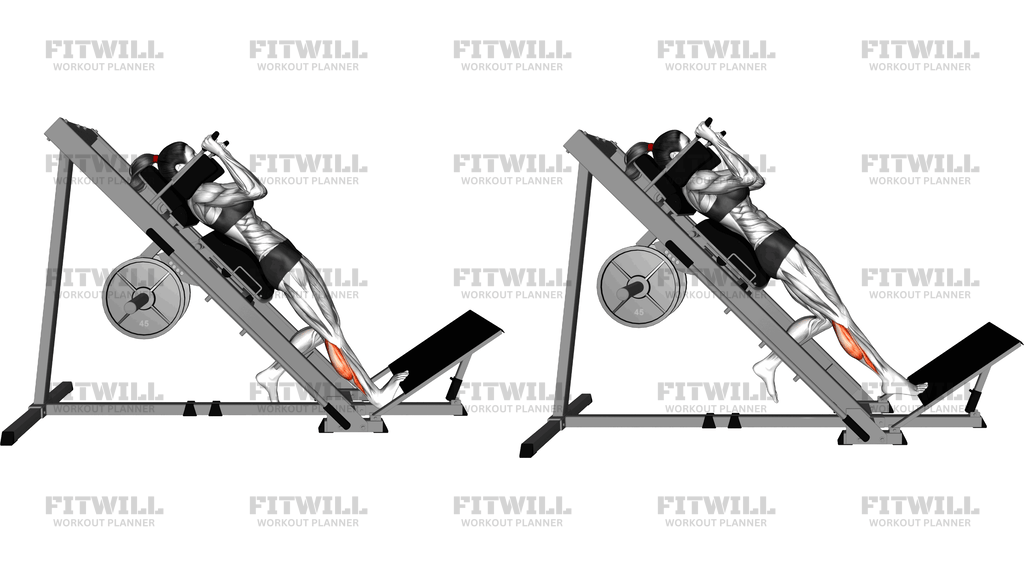
Instructions
- Load the hack squat machine with a light to moderate weight and position your back firmly against the angled back pad.
- Place the ball of one foot on the lower portion of the foot platform so your heel extends past the edge, and let the other foot rest off the platform or against the machine out of the load path.
- Grip the handles firmly, straighten the working knee so the sled is supported, and check that the shoulder pads and pad height keep you secure before releasing the safety stop.
- Brace your core and keep your hips and torso pressed against the pad so your body does not shift during the rep.
- Slowly lower your heel below the platform edge until you feel a clear stretch along the calf of the working leg.
- Pause for a beat at the bottom, then press through the ball of your foot and raise your heel as high as possible, fully shortening the calf.
- Squeeze briefly at the top, then control the sled back down over two to three seconds rather than dropping the heel.
- Exhale as you press up and inhale as you lower the heel, keeping your breathing steady through the set.
- Complete all reps on one leg, re-engage the safety stop, switch feet, and match the rep count on the other side.
- Step off only after the safeties are set, and adjust the load between legs if one side cannot complete the same reps.
Tips & Tricks
- A common mistake is letting the knee bend as the set gets hard — a bent knee shifts work away from the gastrocnemius toward the soleus, so keep the working leg extended the whole time.
- If the sled drifts toward your toes, your foot is too far forward on the platform; slide the ball of the foot back until the heel can still drop fully below the edge.
- Avoid bouncing out of the bottom stretch. The achilles tendon stores elastic energy and will do the work for you, which defeats the purpose of the slow lower.
- Do not twist the working foot inward or outward to chase a squeeze — the ankle should move straight up and down in line with the shin.
- The free leg should never be positioned where the sled could come down on it; park it clearly off the platform or braced against the frame before you release the safeties.
- Start with noticeably less weight than your two-legged hack calf raise, since one calf must move the entire sled on its own.
- If you feel the work in the arch of the foot rather than the calf, spread the toes slightly and think about pushing through the base of the big toe.
- Chasing extra height at the top by shrugging or lifting the hips off the pad robs the calf of tension — keep the torso still and let the ankle do the rising.
- Use a full stretch every rep. Many lifters only work the top half of the range on hack calf raises, which limits growth in the gastrocnemius.
Frequently Asked Questions
Which muscles does the Hack One Leg Calf Raise work?
The gastrocnemius is the primary mover because the knee stays extended, and the soleus assists underneath it. The smaller muscles around the ankle also work to keep the foot aligned on the platform.
Is the Hack One Leg Calf Raise suitable for beginners?
Yes, as long as you start light. The hack machine supports your torso and fixes the sled path, which makes it easier to learn proper calf technique than free-weight versions.
Why train calves one leg at a time on the hack machine?
Single-leg work reveals and corrects side-to-side differences in strength and size, since the stronger calf cannot take over for the weaker one. Each leg also gets a full, unshared range of motion.
How far forward should my foot be on the platform?
Place the ball of your foot on the lower edge of the platform so the heel can drop fully below it at the bottom. If the sled starts rolling toward your toes, move the foot back slightly.
What is the most common mistake in this exercise?
Bouncing the heel off the bottom stretch and using partial reps. Letting momentum or elastic rebound from the achilles move the sled removes most of the tension from the calf.
Can I substitute the Hack One Leg Calf Raise with something else?
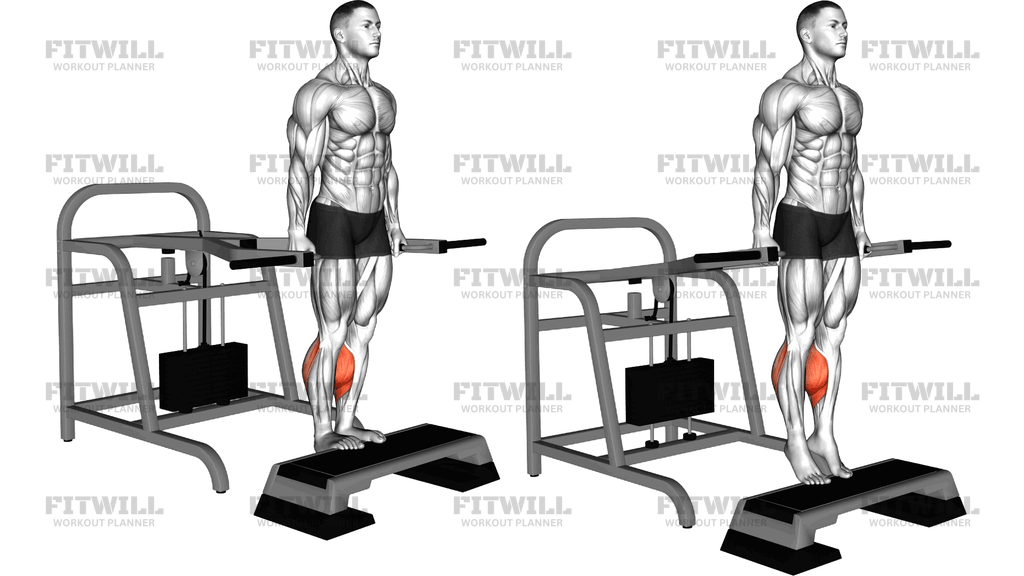
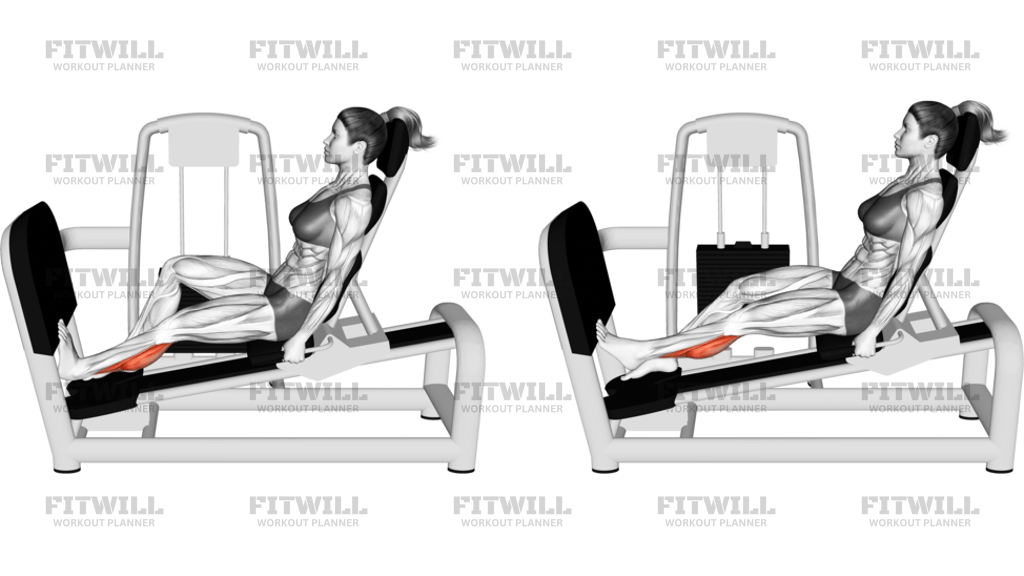
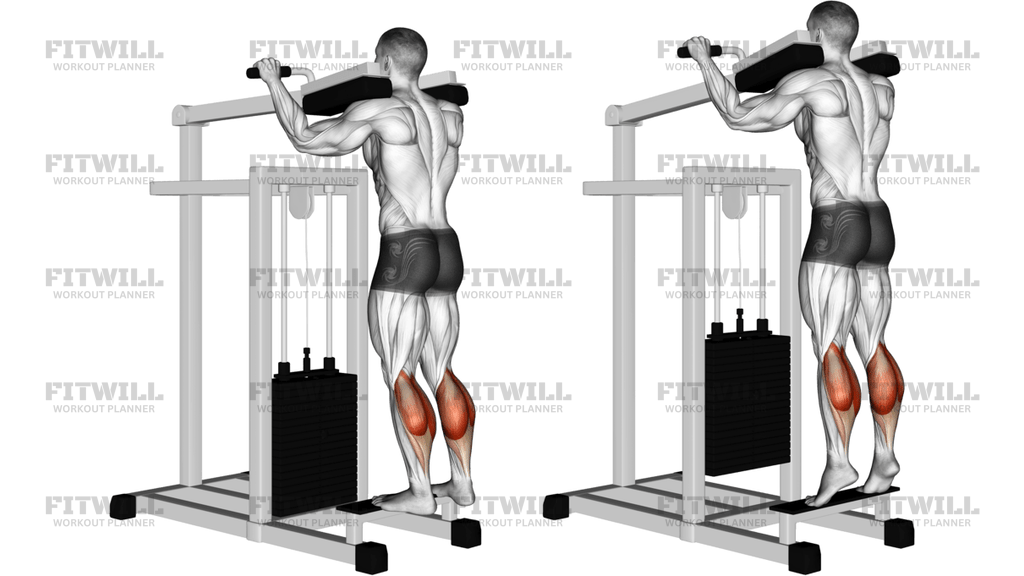
A single-leg standing calf raise on a step or a one-leg press calf raise on a leg press machine are the closest substitutes. Both keep the knee straight and allow the heel to drop below the foot for a full stretch.
Should my knee be locked during the raise?
Keep the working knee extended so the gastrocnemius stays loaded, but do not jam it into a hard lock. A soft-straight knee protects the joint without shifting work to the soleus.
How many reps and sets should I do?
Because the range is long and the muscle is small, sets of roughly 10 to 20 controlled reps per leg work well. Start with two to three sets per side and prioritize a full stretch and pause over load.
Is it safe if I have achilles or ankle discomfort?
Reduce the weight, shorten the bottom stretch to a tolerable range, and stop if you feel sharp pain at the back of the ankle. Progress the depth and load gradually rather than forcing the full stretch early on.