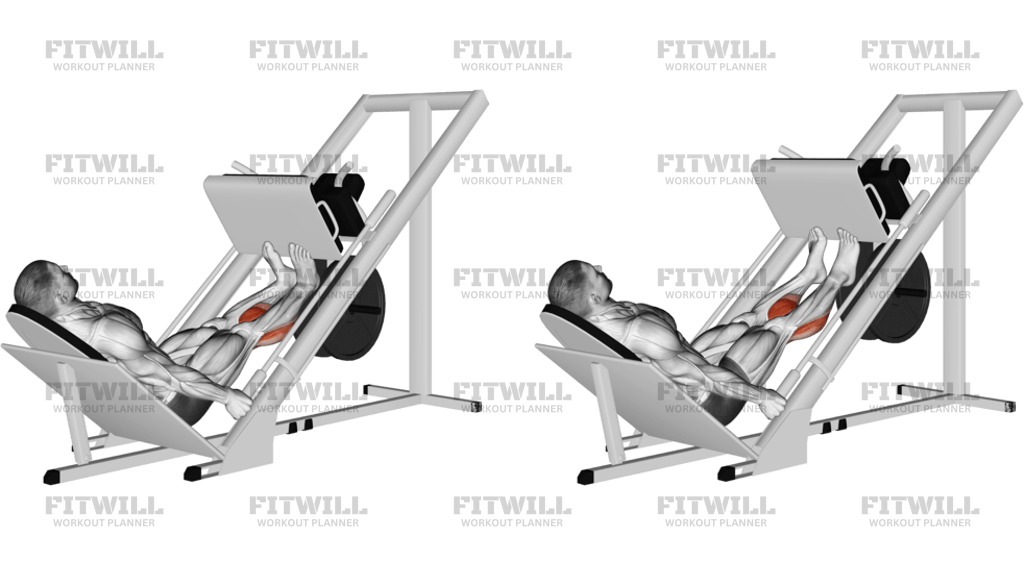
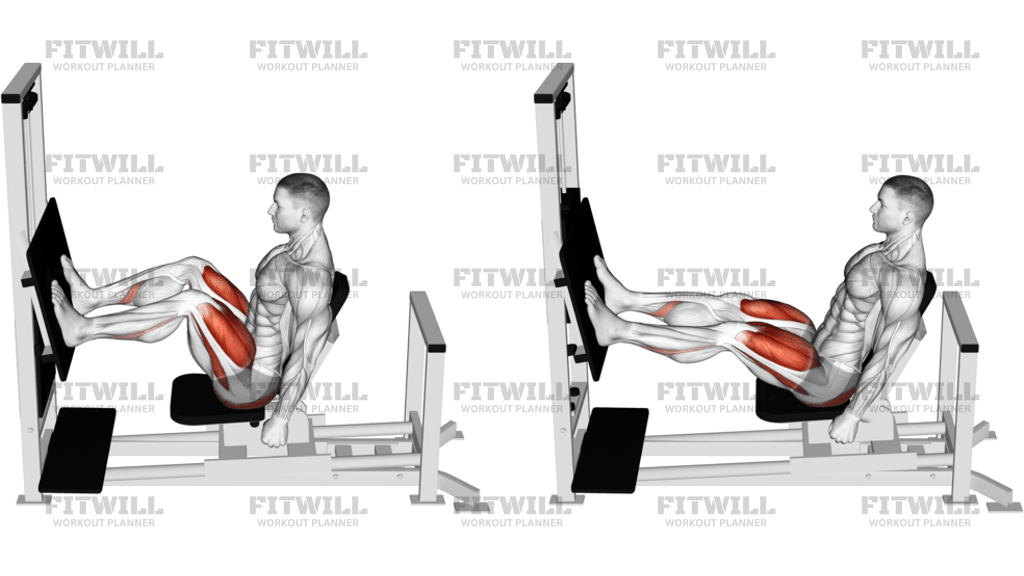
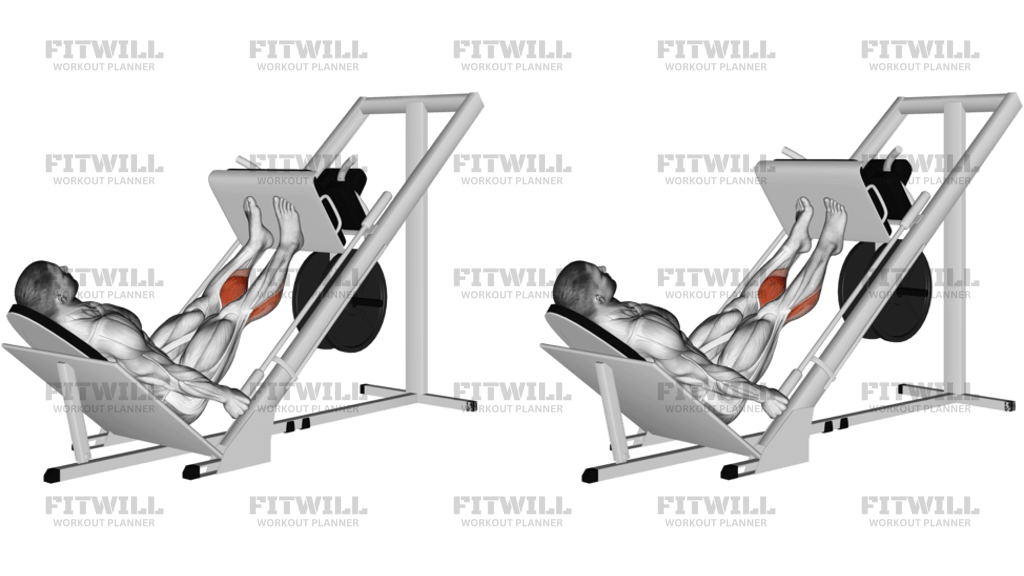
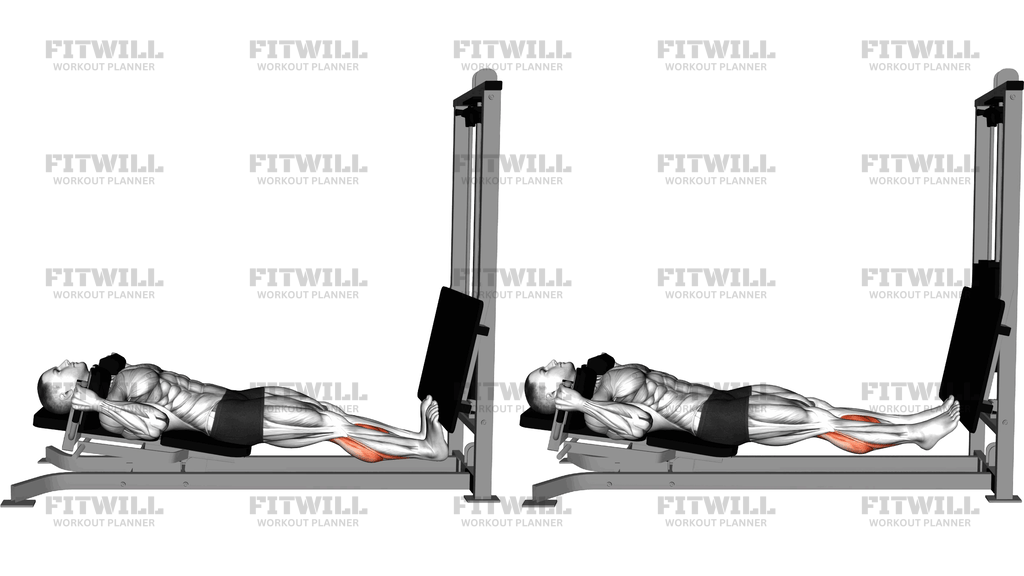
Sled Lying Calf Press
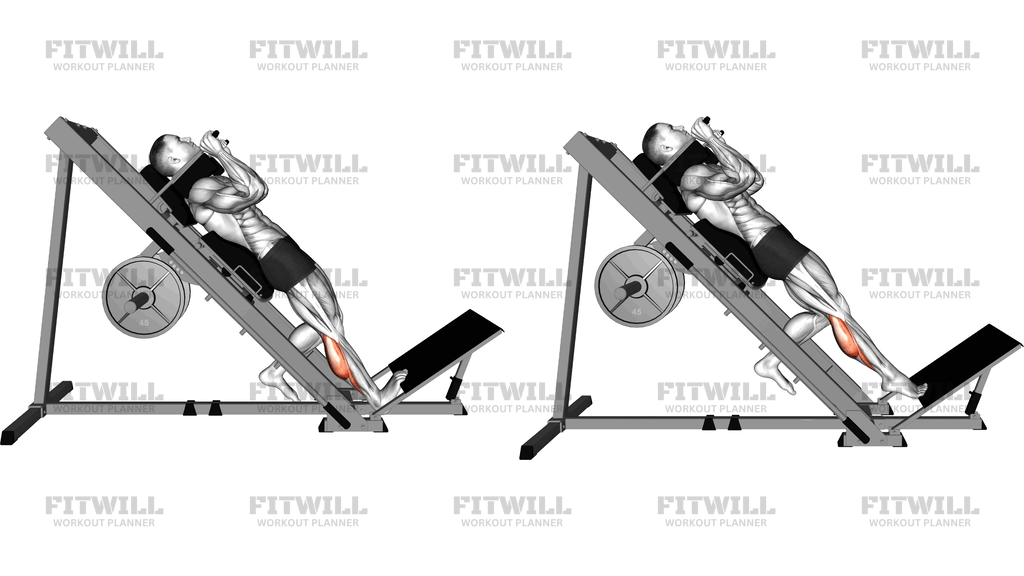
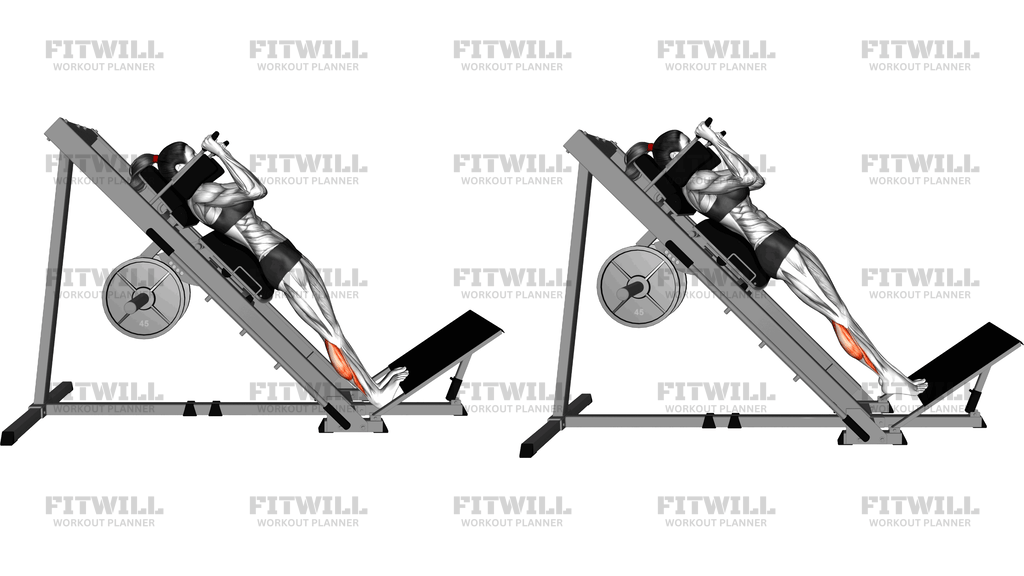
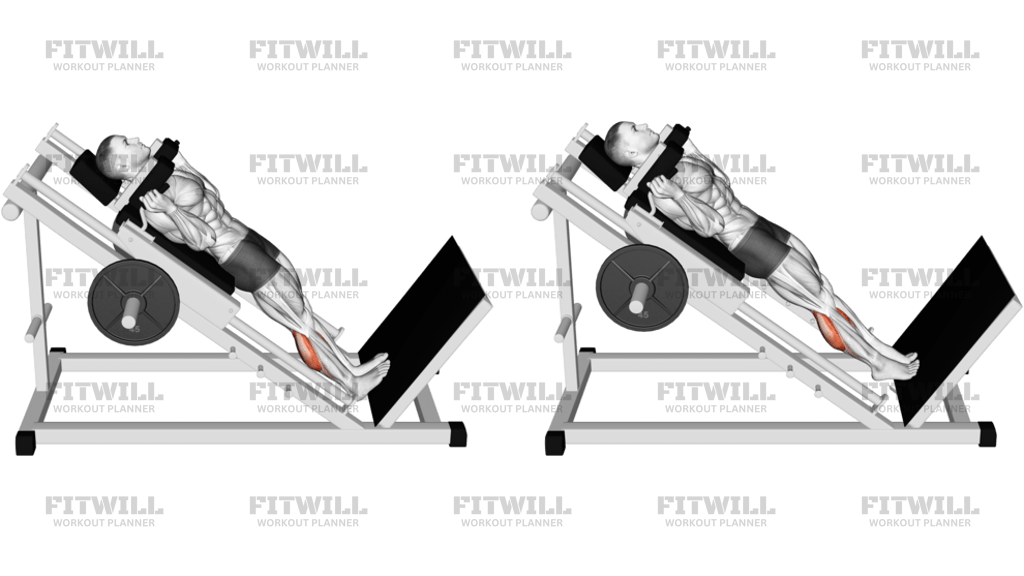
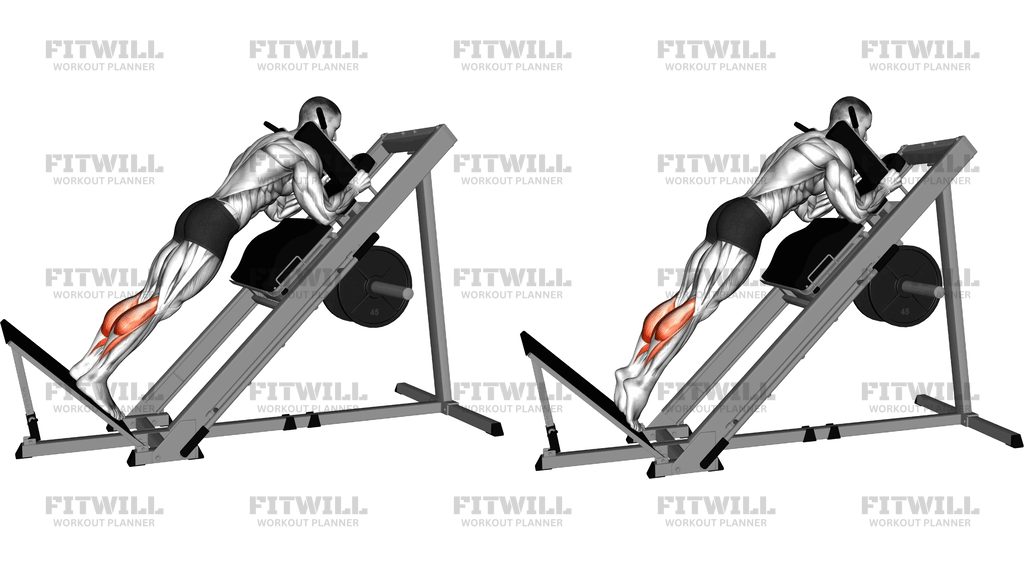
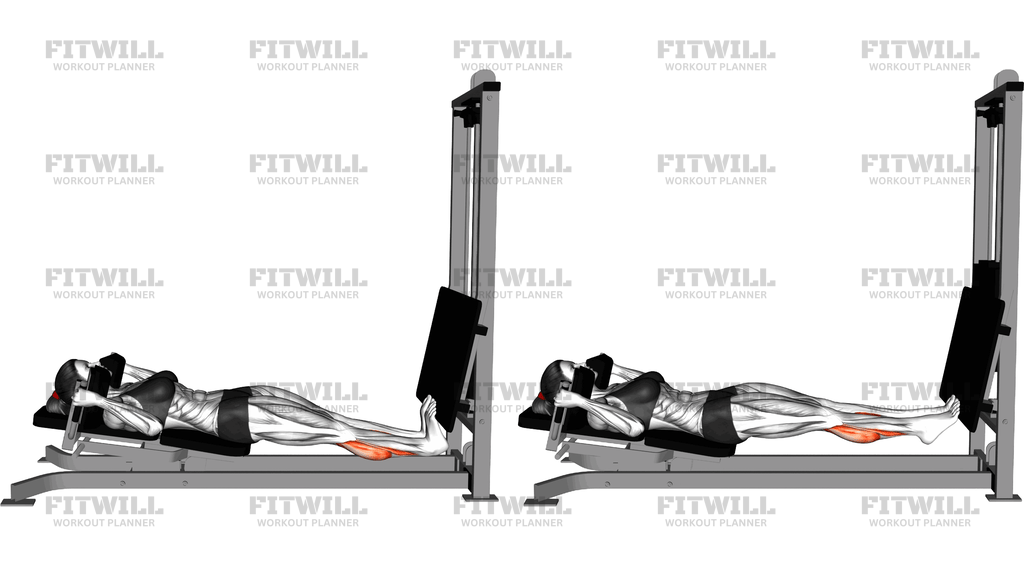
The Sled Lying Calf Press is a calf exercise performed face down on a horizontal sled machine, such as a lying leg press with a low foot platform. Instead of bending the knees to move the sled, you keep your legs nearly straight and drive the weight away by pushing through the balls of your feet, extending your ankles into full plantar flexion. Because your knees stay extended throughout, the load falls squarely on the calf complex rather than sharing work with the thighs.
This body position gives the exercise a distinct advantage over standing calf raises: lying prone with the leg running roughly parallel to the floor puts the gastrocnemius, the two-headed muscle at the back of the knee, in a slightly stretched, unloaded-at-the-hip position that many standing variations can't match. The gastrocnemius crosses both the knee and ankle joints, so training it with the knee straight recruits it more completely than bent-knee versions, which shift emphasis toward the underlying soleus.
The setup matters because the sled locks you into a fixed path. Your hips and chest should be firmly against the pads, your hands gripping the handles near the shoulder restraints, and only the balls of your feet and toes in contact with the platform, heels hanging off the lower edge. If your feet sit too high on the plate, your heels will jam against it and shorten the range; too low, and you risk slipping off the edge under load. Take a moment to get this right before adding weight.
Execution is deliberately simple but easy to rush. Press the sled away by extending your ankles until the calves are fully shortened, pause briefly at the top to squeeze, then lower with control until you feel a clear stretch along the back of the lower leg before starting the next rep. The stretched and squeezed positions are where most of the training effect lives, so avoid bouncing at the bottom or cutting the top short.
This movement suits lifters who want direct calf work without standing under a barbell, people rebuilding calf strength after lower-body training has been limited, and anyone whose gym has a lying leg press or sled machine but no dedicated calf station. Because the sled supports the body and the range is short, it's also approachable for beginners who can start light and learn the ankle-only pattern safely.
The main practical cautions are keeping the knees soft rather than locked hard, never letting the hips or lower back rock to help the weight, and always ensuring the sled's safety stops or range limiters are set so the feet cannot slide off the platform at full stretch.
[ Workout Log & Planner ]
Put your next workout in Fitwill
Keep your plan and training log ready when you are.


Instructions
- Lie face down on the sled machine with your chest and hips flat against the pads and your head turned to one side or supported on the restraint.
- Place the balls of both feet and your toes on the lower edge of the platform, roughly hip-width apart, with your heels hanging off the plate.
- Grip the handles near the shoulder pads firmly and brace your torso so your whole body stays glued to the pads.
- Press the sled out slightly to take up the slack and release any safety locks, keeping your knees almost straight but not jammed back.
- Starting with your ankles bent so your heels drop toward you, push through the balls of your feet to extend your ankles and drive the sled away.
- Continue pressing until your ankles are fully extended, the toes pointed, and the calves fully contracted; hold that top position for a beat.
- Lower the sled slowly by letting your heels rise back toward you until you feel a distinct stretch in the calves at the back of the lower leg.
- Breathe in as the sled comes back and exhale as you press each rep away, keeping the rhythm smooth rather than explosive.
- Complete all reps without letting the hips lift or the knees bend, then set the sled back against the stops before relaxing your feet off the plate.
Tips & Tricks
- The most common mistake is bending the knees to help push the sled, which turns it into a leg press; if your hips rise off the pad, the weight is too heavy.
- Do not let the heels make contact with the platform during the set, or each rep loses range and the calves stop doing the work.
- Bouncing at the stretched position uses tendon recoil instead of muscle effort; control the bottom two to three inches deliberately.
- Point your toes straight ahead or slightly outward; turning the toes sharply outward does not 'target outer calves' meaningfully and just twists the knee under load.
- Because the sled path is fixed, your foot placement is your only setup variable, so recheck it before every working set, especially if the machine is shared.
- Squeeze hard for a full second at full extension; calves respond poorly to fast, sloppy reps because the ankle range is naturally short.
- Keep your neck relaxed by resting your cheek or forehead on the pad; straining to look forward while prone tenses the shoulders and makes bracing harder.
- If your feet slip on a smooth platform, wear flat-soled shoes with good grip rather than pushing through your socks.
- Start with moderate loads even if your legs are strong elsewhere; the calf attachment and ankle joint need a few sessions to adapt to sled loading.
Frequently Asked Questions
Which muscles does the Sled Lying Calf Press work?
The primary muscles are the calves, mainly the gastrocnemius at the back of the lower leg, with the soleus underneath assisting. Small stabilizing muscles around the ankle joint also work to keep the foot aligned on the platform.
Why perform calf raises lying down on a sled instead of standing?
With the knee kept straight in the lying position, the gastrocnemius works across both its ankle and knee span, which usually allows a stronger contraction and a fuller stretch. It also removes balance demands and spinal loading, so you can focus purely on the ankle movement.
Is the Sled Lying Calf Press suitable for beginners?
Yes, it is one of the more beginner-friendly calf exercises because the machine supports the body and the path is fixed. Start with a light load, learn to move only at the ankle, and add weight once the foot stays planted and the knees stay still.
Where exactly should my feet sit on the platform?
Place the balls of your feet and toes on the lower portion of the plate with the heels fully off the edge. This lets your heels drop for a complete stretch at the start and rise freely as you press.
Should my knees be completely locked out?
Keep them nearly straight but not jammed back. A soft, extended knee protects the joint while still positioning the gastrocnemius for full involvement.
How do I stop my knees and hips from helping during the press?
Reduce the weight and recheck your brace: chest and hips flat on the pads, hands gripping the handles, and attention on moving only at the ankles. If the sled stalls mid-rep, the load has exceeded what the calves alone can handle.
What can I substitute if my gym has no sled machine?
Standing calf raises with a barbell or Smith machine, or single-leg calf raises on a step, train the same muscles. A seated calf raise shifts more work to the soleus, so pair it with a straight-knee variation for balance.
How many reps should I use for this exercise?
Because the range of motion is short, moderate to higher rep ranges of roughly 10 to 20 reps with a brief pause at the top work well. Prioritize full stretch and squeeze over maximum load.
Is it safe to let my heels drop far below the platform edge?
A deep stretch is useful, but lower only as far as feels comfortable and controlled, especially with heavier weights. Ensure the sled's stops are set so the balls of your feet cannot slide off the plate at the bottom of the rep.