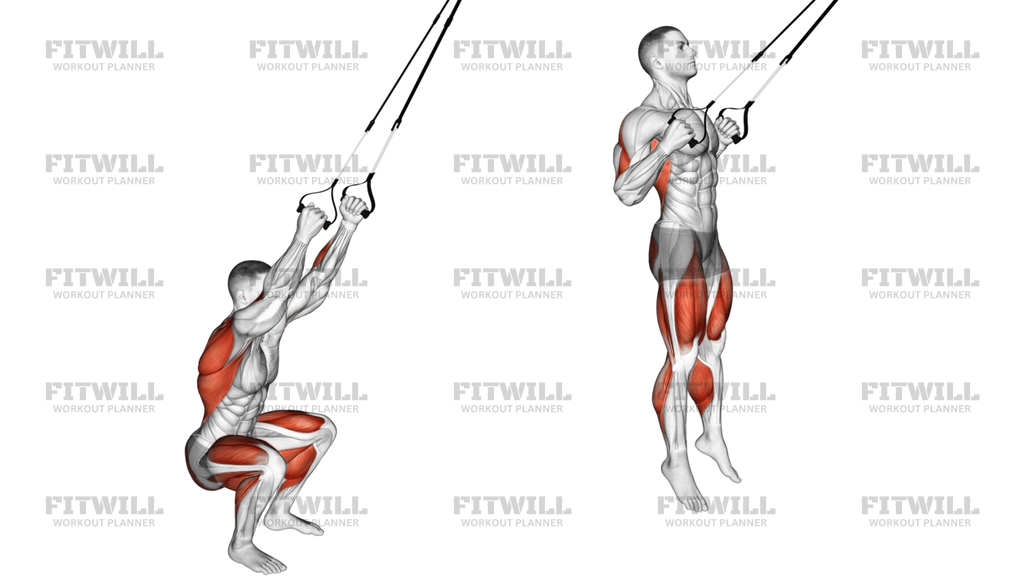
Suspension Calf Raise
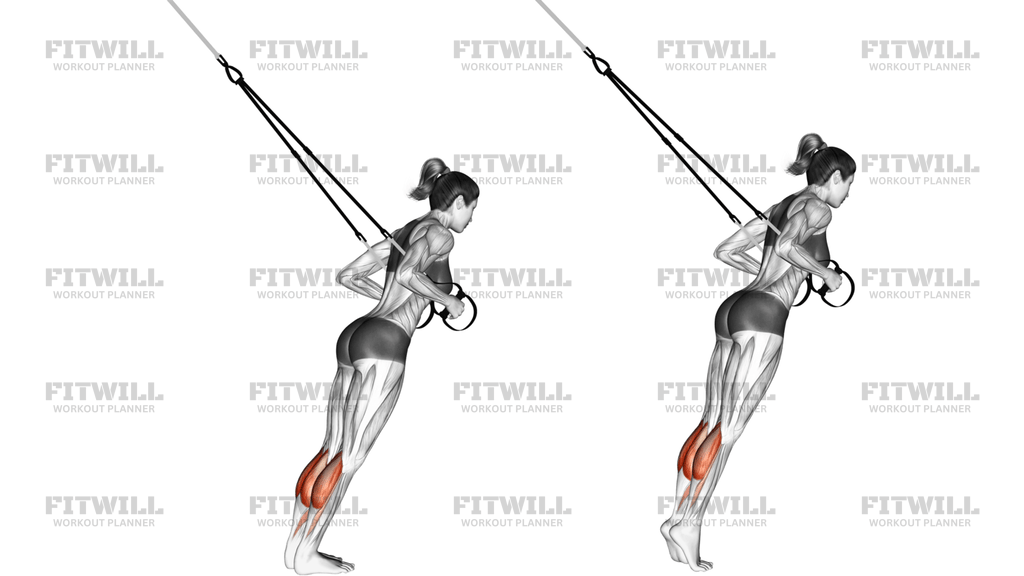
Suspension Calf Raise is a standing calf exercise that uses suspension straps for balance while you train the ankles through a full raise-and-lower pattern. It is a simple movement on paper, but the straps make the setup matter more than most people expect. If your feet, torso angle, and hand position are organized well, the calves work continuously without the set turning into a wobble or a partial bounce.
The main training target is the calves, especially the gastrocnemius and soleus, with the feet and lower legs working hard to keep the body steady. The suspension handles take just enough load off your balance that you can focus on ankle extension instead of fighting to stay upright. That makes Suspension Calf Raise useful for calf growth, ankle strength, and lower-leg control in both beginner and more advanced programs.
Start by setting the straps to a height that lets you hold the handles with your elbows bent and your arms close to your sides. Step back until the straps are taut, then place your feet about hip-width apart with your heels free to lift. Keep your weight over the balls of the feet and maintain a slight forward lean from the ankles so the straps support balance without pulling you into a row or a shrug.
Each rep should be driven by the ankles, not by the hips, knees, or shoulders. Rise onto your toes as high as you can, keep the knees long but not locked, and pause briefly at the top before lowering under control into a clear calf stretch. The lowering phase matters just as much as the lift, because it keeps tension on the lower leg and reduces the temptation to bounce through the bottom.
Suspension Calf Raise fits well as accessory work after squats, lunges, runs, jumps, or lower-body machine work, when the calves need direct attention without heavy loading. It also works well for people who want a lower-risk way to train the calves while practicing single-point balance and foot control. Keep the motion smooth, stop if the straps start swinging, and use a range that stays clean from the first repetition to the last.
[ Workout Log & Planner ]
Put your next workout in Fitwill
Keep your plan and training log ready when you are.


Instructions
- Set the suspension straps so the handles hang around lower-rib to waist height, then face away from the anchor and hold one handle in each hand.
- Step back until the straps are taut, place your feet hip-width apart, and keep only the balls of your feet on the floor with your heels free to rise.
- Lean slightly forward from the ankles, keep your ribs stacked over your pelvis, and let your elbows stay bent so the handles help with balance instead of pulling you upright.
- Brace lightly through your midsection and keep your knees long but not locked before you start the first rep.
- Press through the balls of both feet and lift your heels as high as you can without bouncing or shifting your weight to the outer edges of the feet.
- Squeeze the calves at the top for a brief pause while keeping your shoulders quiet and your grip relaxed.
- Lower your heels slowly until you feel a clear stretch through the calves and ankles, keeping the straps steady as you descend.
- Exhale as you rise and inhale as you lower, then reset your stance if the straps start swinging or your feet lose alignment.
Tips & Tricks
- Keep pressure on the big toe and second toe so the ankles stay centered instead of rolling outward.
- Use the straps for balance only; if your arms are doing the work, you are leaning too hard or pulling against the handles.
- A small forward lean is enough to challenge the calves without turning the movement into a body-weight row.
- Pause briefly at the top of each rep so you do not bounce through the hardest part of the range.
- Lower under control all the way to a noticeable calf stretch, but stop before the heels drop so far that the arches collapse.
- If your Achilles tendon feels tight, shorten the bottom range and build it back gradually with slower lowering reps.
- Keep the knees soft and still; bending them more turns the set into a different lower-leg emphasis and reduces the calf stretch.
- Choose a rep count that lets every raise look identical, because once the straps swing, the set has already become too sloppy.
- Higher reps usually work well here, especially when you want a strong calf burn without adding external load.
Frequently Asked Questions
What do you feel most in Suspension Calf Raise?
The main work should be in the calves, especially the gastrocnemius and soleus, with the feet and lower legs helping you stay steady.
Why use suspension straps for a calf raise?
The handles give you balance support so you can focus on ankle motion and a clean calf contraction instead of fighting to stay upright.
How far should my heels drop on Suspension Calf Raise?
Lower until you feel a clear calf stretch and then stop before you lose foot control or let the arches collapse.
Should my knees be straight on Suspension Calf Raise?
Keep them mostly straight with a soft unlock. Too much knee bend shifts tension away from the calves and changes the exercise.
Can beginners do Suspension Calf Raise?
Yes. It is a good beginner option because the straps help with balance, but start with slow reps and a smaller range until the ankles feel stable.
What is the most common mistake in Suspension Calf Raise?
Letting the body sway and using the arms to pull against the straps. The movement should come from the ankles, not from a swing through the torso.
How many reps should I do on Suspension Calf Raise?
Higher reps usually make the most sense, often in the 12-20 range, because the calves respond well to controlled, repeated tension.
Can I make Suspension Calf Raise harder without adding weight?
Yes. Slow the lowering phase, add a longer pause at the top, or stand a little farther back so the straps create more balance demand.