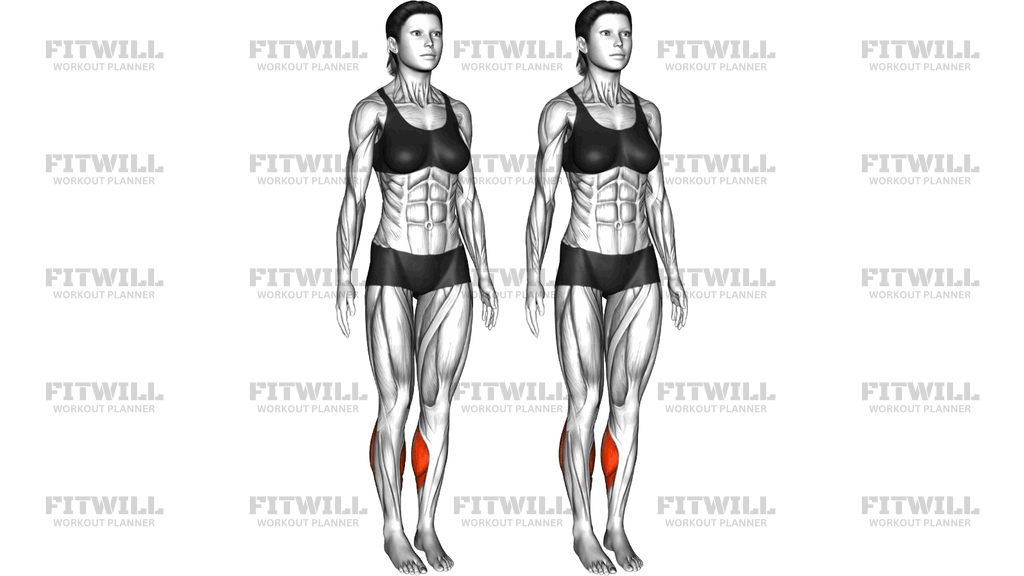
Calves Stretch
Calves Stretch is a standing lower-leg mobility exercise performed with the forefoot on the edge of a step so the heel can drop below the toes. It is a simple way to lengthen the calf complex through ankle dorsiflexion, and it is especially useful after running, jumping, squatting, or any session that leaves the lower leg tight.
The setup matters because small changes in foot angle and knee bend change what you feel. A straighter knee biases the gastrocnemius, while a soft bend shifts more of the stretch toward the soleus. The foot should stay square and stable on the step so the ankle can open without twisting the knee or collapsing the arch.
This stretch should feel strong but controlled through the back of the lower leg, not sharp at the Achilles tendon or pinchy in the ankle joint. Keep the torso long, the pelvis level, and your weight centered so the calf lengthens under steady tension instead of a quick bounce. A smooth heel drop is better than chasing maximum range.
Use Calves Stretch after lower-body training, as part of an ankle-mobility warmup, or on recovery days when the calf feels dense and short. It is also useful when one side feels tighter than the other, because the step lets you compare sides cleanly and work within the range each ankle can control.
The goal is not to force the deepest possible position. It is to find a repeatable stretch that restores motion without irritating the Achilles or cramping the foot. If you keep the step setup consistent, breathe calmly, and avoid bouncing, this movement becomes a reliable way to improve calf comfort and ankle mobility over time.
[ Workout Log & Planner ]
Put your next workout in Fitwill
Keep your plan and training log ready when you are.


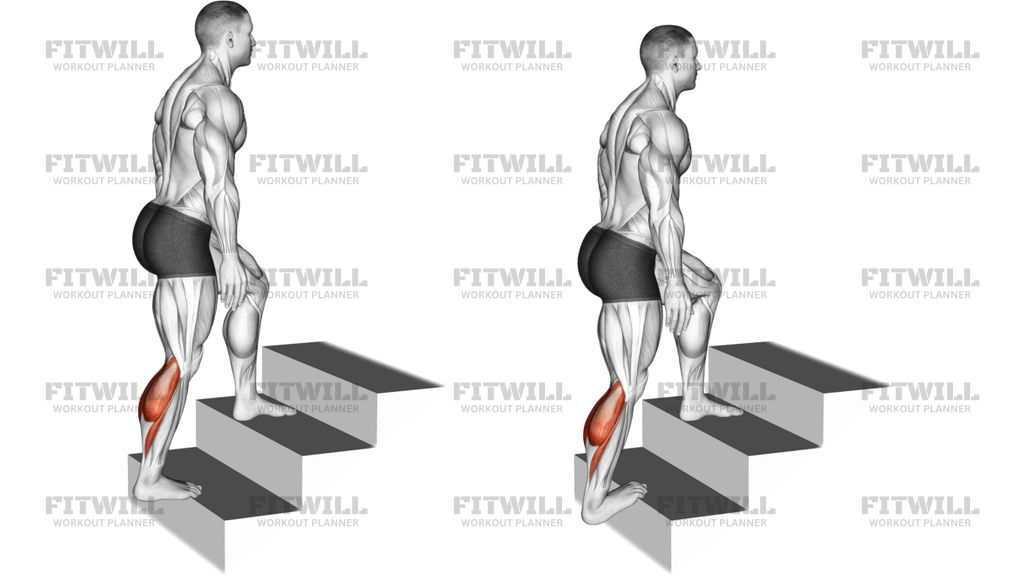
Instructions
- Stand on a step or low platform with the ball of one foot on the edge and the heel hanging off.
- Keep the working foot pointed straight ahead and plant the other foot firmly for balance.
- Stack your torso over your hips and brace lightly before you let the heel drop.
- Straighten the working knee to emphasize the upper calf, or keep a small bend for a milder stretch.
- Lower the heel slowly until you feel a strong but manageable stretch through the back of the lower leg.
- Keep the arch lifted and the ankle tracking straight instead of rolling inward.
- Hold the stretch while breathing out slowly and relaxing the calf without bouncing.
- Step the heel back up under control, then switch sides and repeat with the same setup.
Tips & Tricks
- Use a step, curb, or wedge that lets the heel drop below the forefoot without slipping.
- If the stretch shifts into the Achilles tendon or back of the ankle, reduce the drop and shorten the hold.
- Keep the toes facing forward; turning the foot out often twists the knee and changes the stretch.
- A straighter knee hits the gastrocnemius more, while a slight bend shifts tension lower into the soleus.
- Press through the big toe, little toe, and heel of the support foot so you do not wobble.
- Exhale as the heel sinks; long exhales usually let the calf relax more than forcing range.
- Do not bounce at the bottom, because repeated bouncing can irritate the Achilles and plantar fascia.
- If you need a gentler version, keep more weight on the support foot and drop the heel a little less.
Frequently Asked Questions
What muscles does Calves Stretch target?
It mainly stretches the gastrocnemius and soleus, with the Achilles tendon and foot muscles contributing to what you feel.
Is this better with a straight knee or bent knee?
A straight knee emphasizes the larger upper calf, while a small bend shifts more tension toward the soleus.
Why use a step instead of the floor?
A step lets the heel drop below the forefoot, which usually creates a deeper calf stretch than a flat surface.
Should I feel this in my Achilles tendon?
You may feel mild tension near the tendon, but the main stretch should stay in the calf muscle. Sharp tendon pain means you should back off.
Can beginners do this stretch?
Yes, as long as they keep most of their weight controlled and do not force the heel below a comfortable line.
How long should I hold each side?
Most people do well with a 20-30 second hold, repeated for a few controlled rounds after training or mobility work.
What is the most common mistake?
Letting the heel drop too fast or letting the arch collapse inward, which turns the stretch into a sloppy ankle twist.
What if one calf is much tighter than the other?
Spend the same time on both sides, but only use the range the tighter side can control without pain or cramping.