Lever Seated One Leg Calf Raise
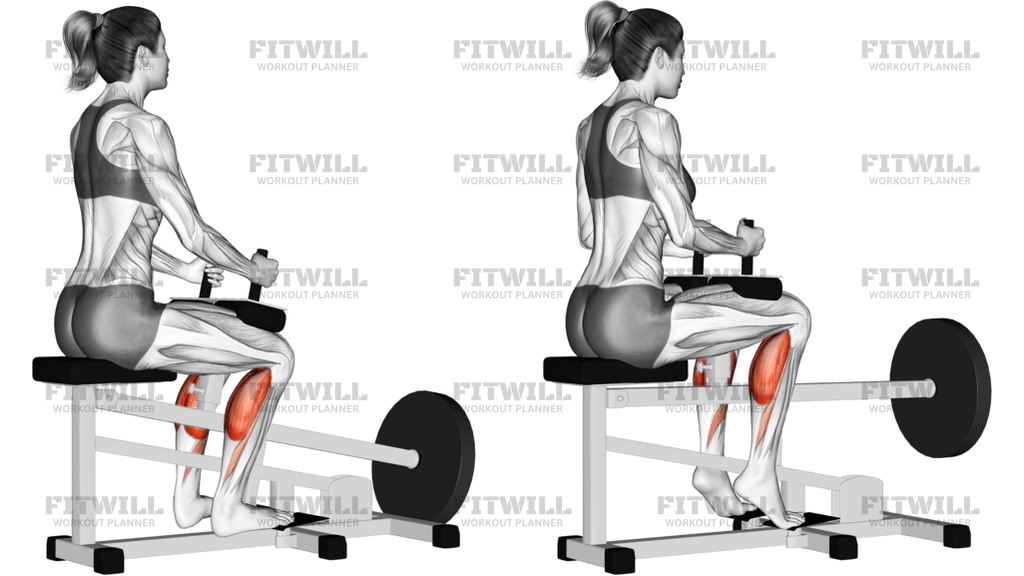
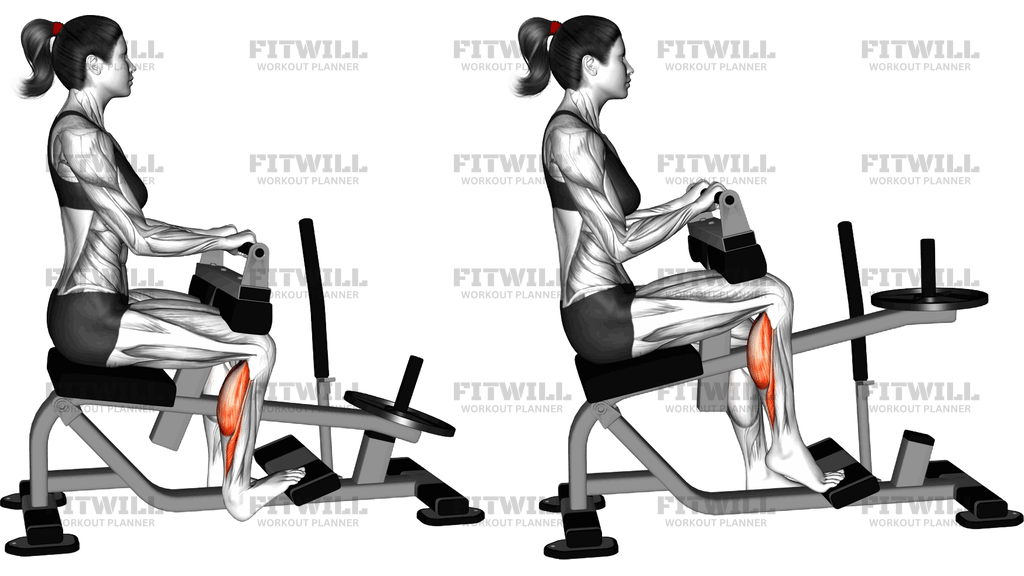
The Lever Seated One Leg Calf Raise is a machine-based calf exercise performed sitting on a plate-loaded lever machine, with one leg at a time driving the movement. Your knee sits under a padded lever arm, the ball of your foot rests on a raised platform, and you press through the forefoot to lift the lever as high as possible before lowering the heel below the platform for a full stretch. Because the machine pivots on a lever with the weight plate mounted at the far end, resistance stays smooth through the entire range of motion.
Training one leg at a time is the main advantage here. Most people have a noticeable strength difference between their left and right calves, and bilateral raises let the stronger side quietly do more of the work. With the single-leg version, each calf has to earn its reps on its own, which makes this a useful exercise for fixing imbalances and for bringing up a lagging side. It also lets you use a lighter plate load while still giving each calf a demanding stimulus.
The seated knee position shapes which muscles do the work. With the knee bent, the gastrocnemius is placed at a shortened position at the knee and contributes less, so the soleus takes on a large share of the effort. The soleus is the workhorse muscle of the lower leg, heavily involved in walking, running, cycling, and standing for long periods, so strengthening it carries over well to daily life and endurance activities.
Setup matters more than it might seem. The pad should rest on the lower thigh just above the knee, not high on the leg where it can slide or press unevenly, and the ball of the foot needs to sit fully on the platform with the heel free to drop. Your free foot can rest on the floor or a nearby support to stay out of the working leg's path. Sit tall and keep the working ankle relaxed at the bottom so the calf, not momentum, controls the weight.
Execution should be deliberate in both directions. Press the forefoot down to rise as high onto the toes as the ankle allows, pause briefly at the top, then lower slowly until you feel a complete stretch in the calf. Bouncing out of the bottom or rushing the descent is the most common way people cheat this movement, and it costs them most of the benefit. Two to four sets of ten to twenty controlled reps per leg works well, depending on the load and your training goal.
This exercise fits well into lower-body sessions as a secondary movement after squats, presses, or hinges, or on its own when calves are a priority. It is also a solid option for anyone who finds standing calf raises uncomfortable with heavy loads, since the seated position reduces demand on balance and the lower back while the machine provides stable support for the torso and working leg.
[ Workout Log & Planner ]
Put your next workout in Fitwill
Keep your plan and training log ready when you are.


Instructions
- Sit on the calf raise machine with one foot placed so the ball of that foot is centered on the platform and the heel hangs off the back edge.
- Position the padded lever arm on your lower thigh just above the working knee, and load an appropriate plate on the machine's weight peg.
- Grip the front handles firmly, sit up tall, and brace your trunk so your torso stays still against the seat and back support.
- Let the heel drop below the level of the platform until you feel a full stretch along the back of the calf; this is your starting depth.
- Press the ball of the foot into the platform and extend the ankle to lift the lever until you are as high on the toes as possible.
- Hold the top position for a short pause and squeeze the calf before beginning the descent.
- Lower the heel slowly and under control until it returns to the fully stretched position, without letting the weight slam down.
- Exhale as you press up, and inhale as you lower the heel back into the stretch.
- Complete all reps on the working leg, then reposition the pad and repeat for the same number of reps on the other leg.
- Adjust the plate load and pad height between sets if your knee position shifts or the range of motion changes.
Tips & Tricks
- Do not let the pad ride up onto the middle of the thigh; keep it just above the knee so the lever pressure transfers cleanly into the calf raise.
- Watch for the temptation to push with the toes only through a short range. Aim for a full stretch at the bottom and full extension at the top on every rep.
- If the weight plate clanks at the bottom of each rep, you are dropping the heel too fast. Slow the lowering phase to about two to three seconds.
- Keep the free foot planted on the floor so it cannot assist or push against the machine frame during the working leg's reps.
- Point the toes straight ahead or slightly inward rather than flaring them out; excessive external rotation changes the calf emphasis in unpredictable ways.
- If your working hip slides forward or your torso leans into the movement, reduce the load, because you are likely recruiting the thigh to help drive the lever.
- Pause for a full second at the top of each rep. Rushing through the lockout shortens the effective range and reduces the work the calf actually does.
- Start with your weaker leg first so both sides get an equal challenge, and match the reps rather than letting the strong side set the pace.
- Keep the ankle moving, not the knee. Pushing the knee up against the pad turns this into a leg press pattern and takes tension off the calf.
Frequently Asked Questions
Which muscles does the Lever Seated One Leg Calf Raise work?
The exercise primarily targets the calf muscles, with the soleus doing much of the work because the bent-knee seated position reduces the gastrocnemius's contribution. Smaller stabilizers around the ankle also help control the movement.
Why train one leg at a time instead of using both feet on the platform?
The single-leg setup prevents your stronger calf from compensating for the weaker one, which helps balance strength and size between sides. It also lets each leg work at an appropriate intensity with a lighter plate load.
Where exactly should the pad sit on my leg?
Place the padded lever on the lower thigh just above the working knee. If the pad sits higher, pressure spreads over more of the thigh and the movement feels less precise at the ankle.
Is the Lever Seated One Leg Calf Raise suitable for beginners?
Yes. The machine supports your torso and guides the movement path, which makes it easier to learn than free-weight calf raises. Beginners should start with a light plate and focus on a full, slow range of motion before adding load.
How is this different from a standing calf raise?
In the seated version your knee is bent, which reduces the involvement of the gastrocnemius and shifts more work to the soleus. The machine also removes the balance and grip demands of holding a weight while standing on one foot.
What is the most common mistake with this exercise?
Bouncing out of the bottom stretch is the biggest one, followed by cutting the top range short. Both turn a full calf raise into a short, momentum-driven partial that does far less for the muscle.
How many reps and sets should I do per leg?
Two to four sets of ten to twenty controlled reps per leg is a practical range. Since the soleus responds well to higher volumes, staying toward the higher end with a moderate load works well for most people.
Can I substitute this exercise if my gym has no lever calf machine?
A seated calf raise on a pin-loaded machine or a single-leg dumbbell calf raise performed seated with a weight on the knee are reasonable substitutes. The key details to keep are the bent knee, the heel hanging off a platform edge, and a slow controlled tempo.
Should I feel a stretch at the bottom of each rep?
Yes, the heel should lower below the platform until you feel a clear stretch along the back of the calf. Do not force past a comfortable range, but stopping well short of the stretch removes much of the exercise's value.
Is it safe for the knee to have the pad pressing above it?
For most people the pressure is comfortable because the pad rests on muscle and tissue above the joint, not on the kneecap itself. If you feel pressure directly on the kneecap or pain in the joint, adjust the pad height or stop and choose a different calf exercise.