Band Skull Crusher
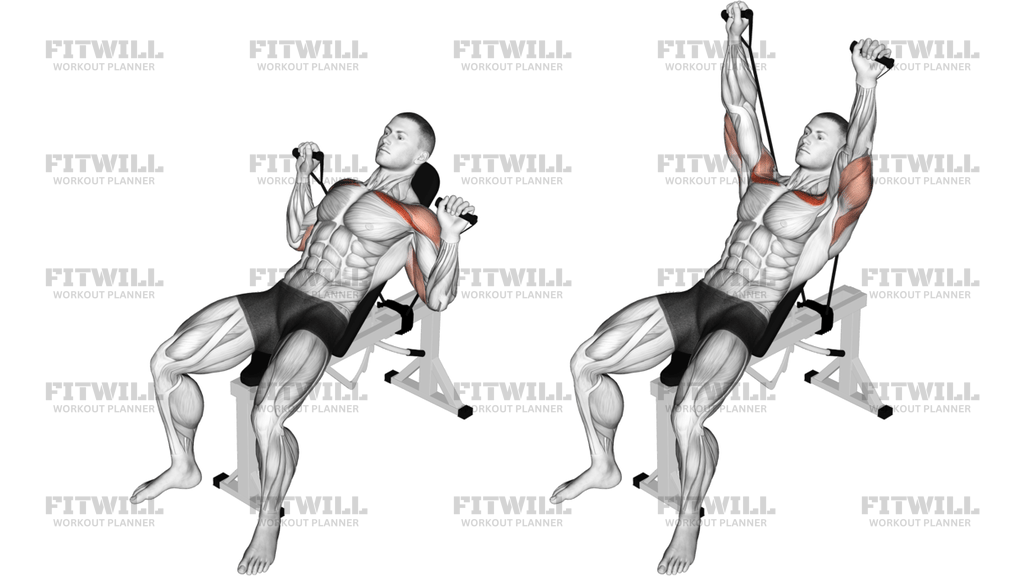
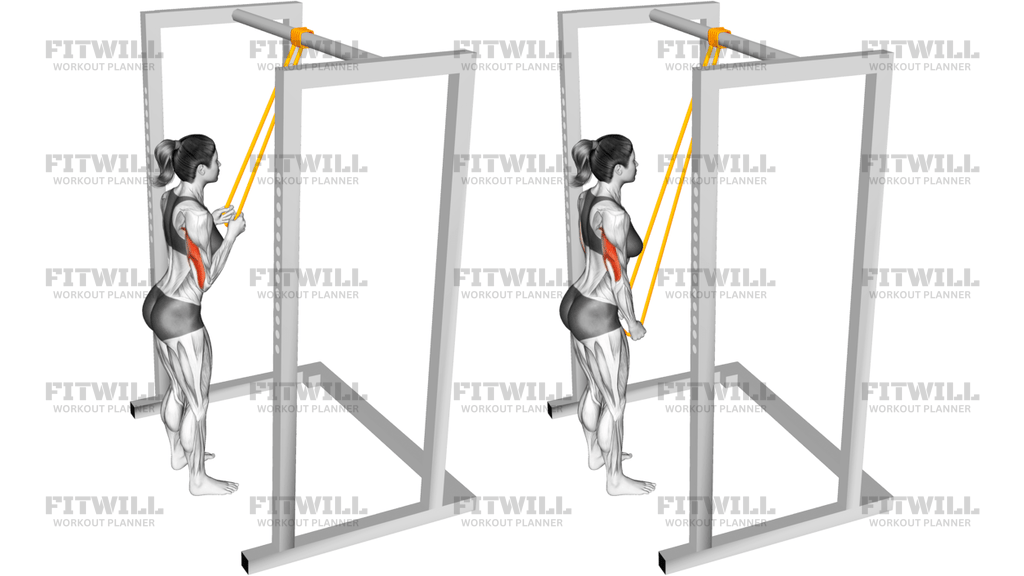
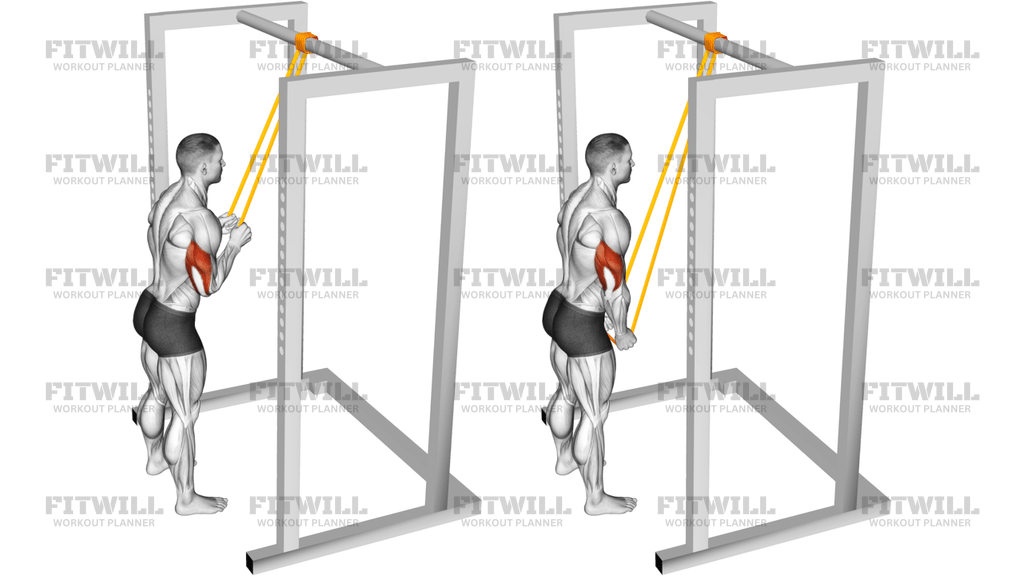
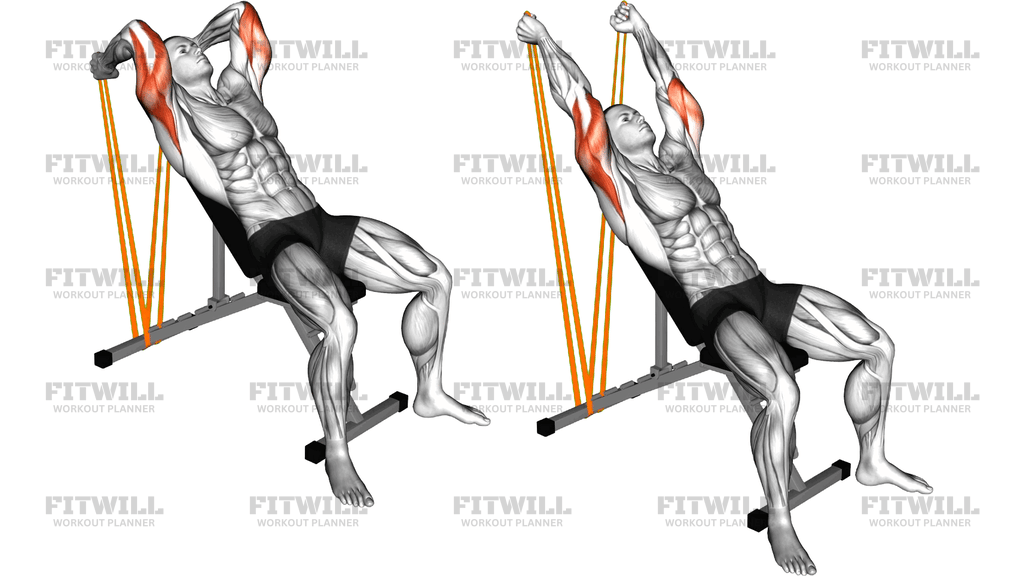
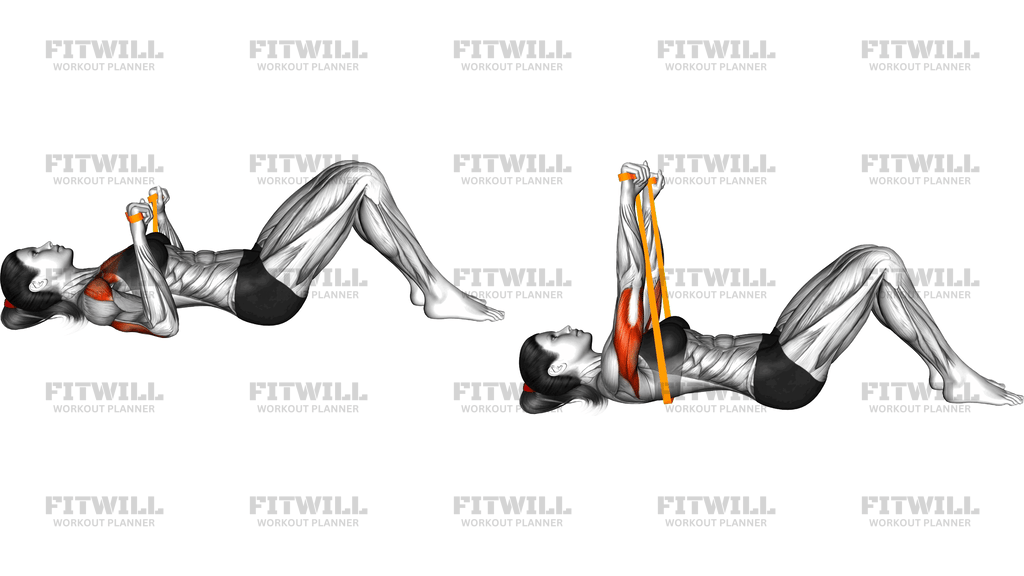
The Band Skull Crusher is a lying triceps extension performed with a resistance band instead of a barbell or dumbbells. You lie on your back on a flat bench with the band anchored behind your head, hold it with both hands, and start with your arms extended straight up over your chest. From there, you bend your elbows to lower your hands back toward or slightly behind your head, then press back up to full extension by squeezing the triceps. The band anchors near or under the bench behind you, so tension is highest as your arms straighten and moderate at the bottom.
This movement isolates the triceps, with the long head doing most of the visible work because the shoulder starts in a flexed, overhead position. The forearms and the small stabilizing muscles around the shoulder joint also contribute, especially as the band pulls you backward at the top. Because the resistance comes from elastic tension rather than gravity, the difficulty peaks at lockout, which is exactly where the triceps finish their contraction.
The band version is a smart choice for home training, for lifters who want joint-friendly triceps work, and for anyone who finds a loaded bar uncomfortable near the face and forehead. The band also provides a smoother deceleration at the bottom of the rep, since the stretch of the band cushions the descent rather than fighting it. Beginners can learn the elbow-extension pattern with light tension, while more experienced lifters can use a thicker band or choke up on it for more resistance.
Setup matters more here than in most triceps exercises. If the band is anchored too close to your hands, tension will be sloppy and uneven; if it is anchored too far away, it can snap forward toward your face at lockout. Position the band securely under or around the base of the bench behind your head, and keep a firm overhand grip with your thumbs wrapped around the band or handle. Check that the band runs evenly to both hands so one side does not take more load.
Executed well, the elbows stay pointed toward the ceiling and roughly shoulder-width apart throughout, acting as hinges rather than drifting out or flaring. Only the forearms move. Keep your head and shoulders on the bench, ribs down, and lower back in a neutral position rather than arching to help the press. Exhale as you extend, inhale as you lower, and stop the set if you feel the band slipping or your elbows complaining.
The main safety point is unique to this setup: you are working with an elastic band pointed at your own face. Always confirm the anchor point before your first rep, inspect the band for tears or thin spots, and never release a stretched band suddenly. If you train alone, keep the range of motion to a depth you can control with straight wrists, and re-grip the band fully between sets rather than letting it snap back under tension.
[ Workout Log & Planner ]
Put your next workout in Fitwill
Keep your plan and training log ready when you are.


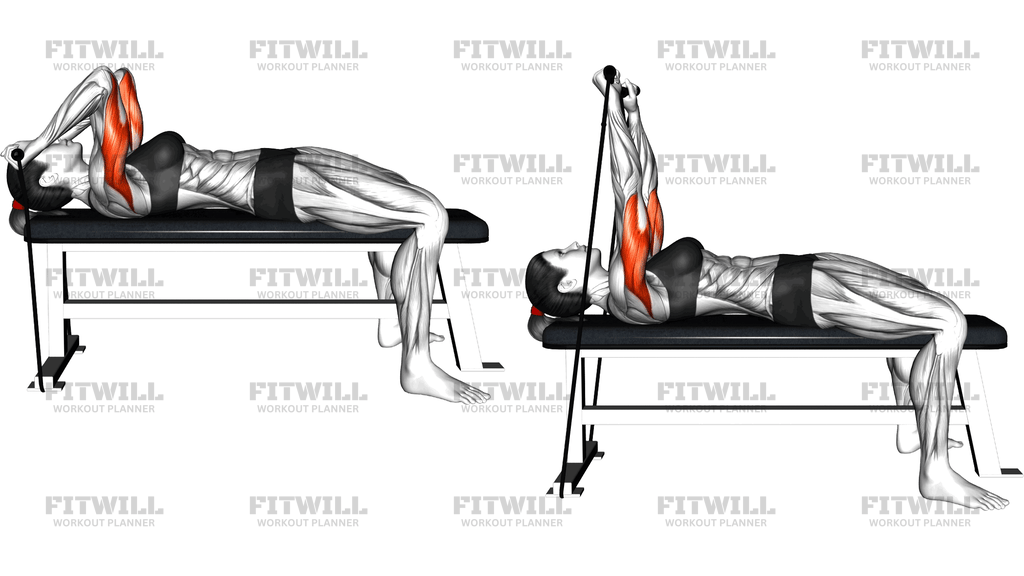
Instructions
- Lay a resistance band across a flat bench and anchor it securely at the base of the bench post behind the head end, or loop it around the bench legs so it cannot slip.
- Lie on your back with your head near the anchored end, feet flat on the floor on either side of the bench, and grab the band with an overhand grip, hands about shoulder-width apart.
- Press the band up until your arms are straight and vertical over your chest, then walk your grip slightly if one side has more tension than the other.
- Brace your core lightly and pull your ribs down so your lower back stays in contact with the bench.
- Bend only at the elbows and lower your hands in a controlled arc toward the top of your head, keeping your upper arms vertical and pointed at the ceiling.
- Stop when your hands are just above or slightly behind your head and you feel a solid stretch in the back of the upper arms.
- Exhale and extend your elbows to press the band back up over your chest, squeezing the triceps at the top without shrugging.
- Inhale as you lower into the next rep, keeping the descent slow so the band does not snap your hands down.
- After your final rep, bend your elbows, lower the band to your chest, sit up carefully, and only then release your grip on the band.
Tips & Tricks
- The most common mistake is letting the elbows drift outward or toward the ears as fatigue sets in; cue yourself to keep the upper arms stacked over the shoulders so the triceps, not the shoulders, do the pressing.
- If the band goes slack at the bottom of the rep, you are lowering too far or the anchor is too close; shorten the range slightly or move the anchor point a little farther behind you.
- Do not flare your ribs or arch your lower back to grind out the lockout; if you need to arch, the band is too heavy and you should switch to a lighter one.
- Keep your wrists straight and knuckles facing the ceiling; bending the wrists back turns this into a forearm exercise and strains the elbow.
- Anchor the band at floor level under the bench legs rather than around a high point, so it cannot whip toward your face if your grip slips.
- A common error with bands is rushing the descent because there is no weight to control; slow the lowering phase to two or three seconds to keep tension on the triceps the whole way.
- If your shoulders feel pinched at the bottom, reduce the depth until your hands lower to just behind your head instead of all the way down.
- Choke up on the band or fold it to increase resistance before jumping to a thicker band, since a half-step in band tension often fits better between sets.
- Inspect the band for small tears or worn spots before every session; a stretched band failing at lockout is a real risk when it is aimed at your head.
Frequently Asked Questions
Which muscles does the Band Skull Crusher work?
The triceps are the primary muscle, with the long head heavily involved because the arms start in a flexed overhead position. The forearms assist with gripping and stabilizing the band, and the small muscles around the shoulders help keep the upper arms steady.
How is the Band Skull Crusher different from a barbell skull crusher?
The band is anchored behind you, so resistance peaks at lockout and eases off at the bottom, the opposite of a barbell, where gravity loads the stretched position most. The band is also gentler on the elbows and safer around the face if you lose control.
Where should I anchor the band for the Band Skull Crusher?
Secure it around the base of the bench post or the bench legs behind your head, at or near floor level. This keeps the band pulling straight down toward the floor behind you and prevents it from slipping or snapping forward toward your face.
Should my elbows move during the Band Skull Crusher?
No. Your upper arms should stay vertical and pointed at the ceiling while only the forearms swing at the elbow joint. If your elbows drift toward your head or out to the sides, the shoulders start taking over and the triceps lose tension.
How far down should I lower my hands?
Lower until your hands are just above or slightly behind the top of your head and you feel a stretch in the back of your arms. Going deeper only helps if you can keep your elbows still and your wrists straight.
Is the Band Skull Crusher good for beginners?
Yes, it is one of the friendlier ways to learn the triceps extension pattern because the band is light at the start of the lowering phase and provides feedback through tension. Start with a thin band and master the fixed-elbow path before adding resistance.
My band goes slack at the bottom of each rep. What should I change?
Either you are lowering too far or the anchor point is too close to your head. Reduce your range slightly, or move the anchor farther behind the bench so the band stays under tension through the whole rep.
Can I do the Band Skull Crusher without a bench?
You can lie on a firm floor or exercise mat and anchor the band around a sturdy low object behind your head, such as a heavy table leg. The floor limits shoulder range slightly, so keep the movement shallower and make sure the anchor will not move.
How do I make the Band Skull Crusher harder?
Use a thicker band, choke up on the band to shorten it, or slow the lowering phase to three seconds. Adding a pause with the elbows bent at the bottom also increases time under tension without changing equipment.
Are there any safety concerns specific to this exercise?
The main one is the band being stretched directly over your face, so always check the anchor and the band condition before starting, keep a full wrapped grip, and release the band only after lowering it to your chest, never while it is taut.