Resistance Band Lying Floor Chest Press
The Resistance Band Lying Floor Chest Press is a horizontal pressing exercise performed on your back with a resistance band looped around your upper back and held in both hands. From a bent-knee position on the floor, you press the band straight up until your arms are extended over your chest, then lower with control back to the starting position. Because the band is anchored by your own body weight rather than a bench or rack, the setup is minimal, but the tension pattern is real: resistance peaks as your arms approach full extension and eases off as the hands return toward the chest.
This movement suits people who train at home, beginners who are not ready to press a barbell or dumbbells overhead, and anyone recovering from a layoff who wants to rebuild pressing strength without loading the shoulder joint heavily. It also works well as a warm-up or burnout finisher on a chest day, since the band provides smooth, joint-friendly resistance that is easy to scale simply by changing band thickness or slack.
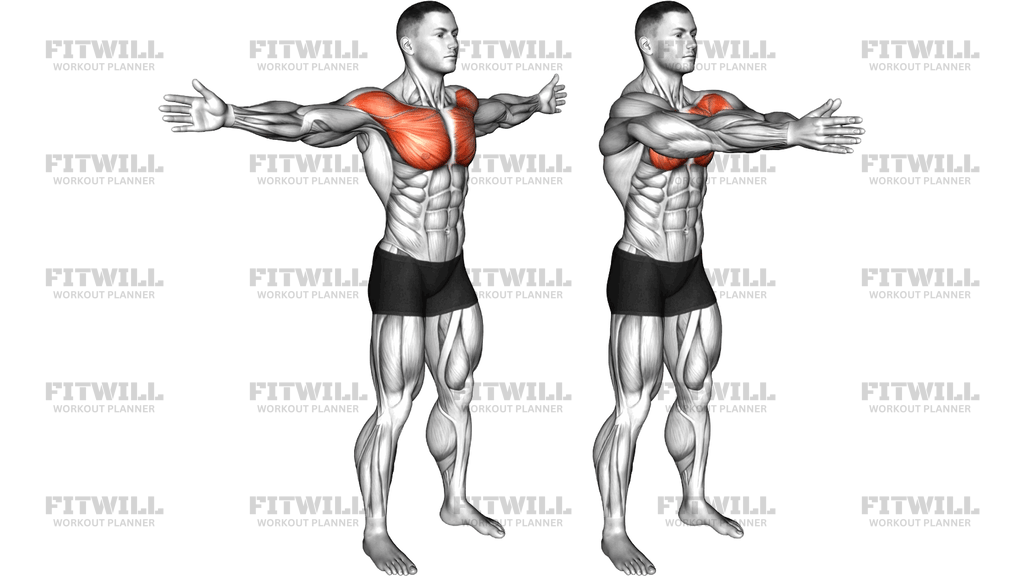
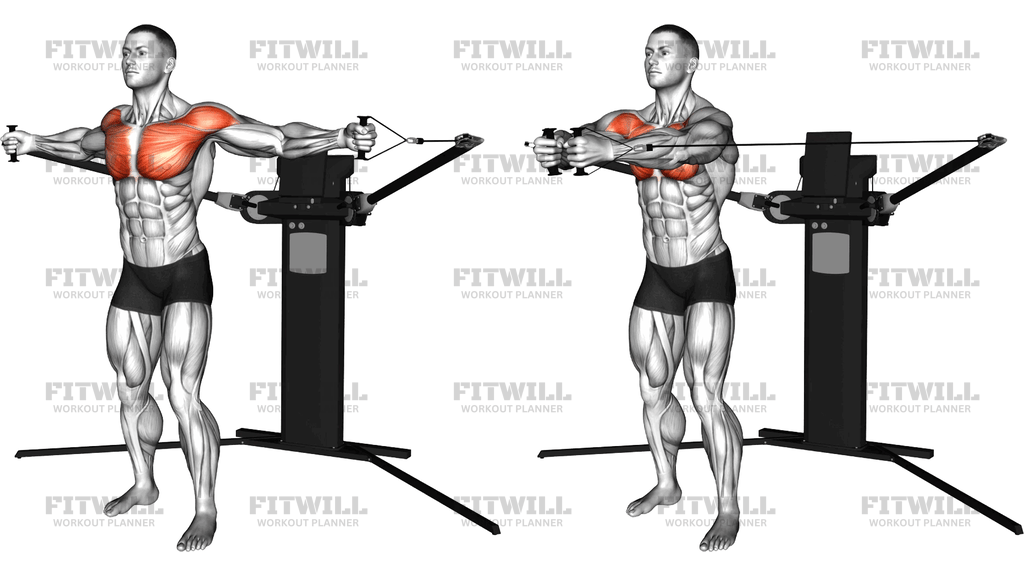
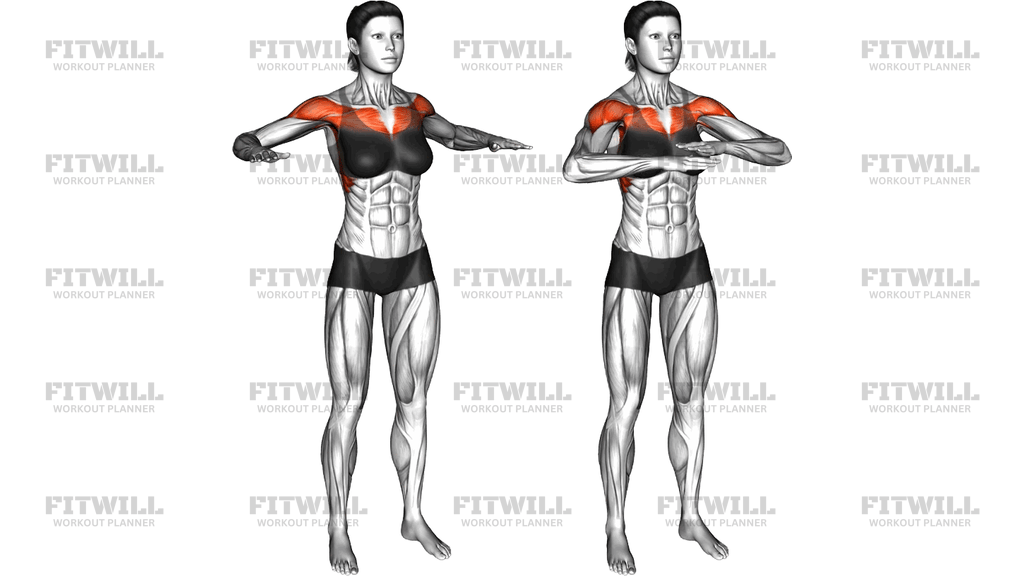
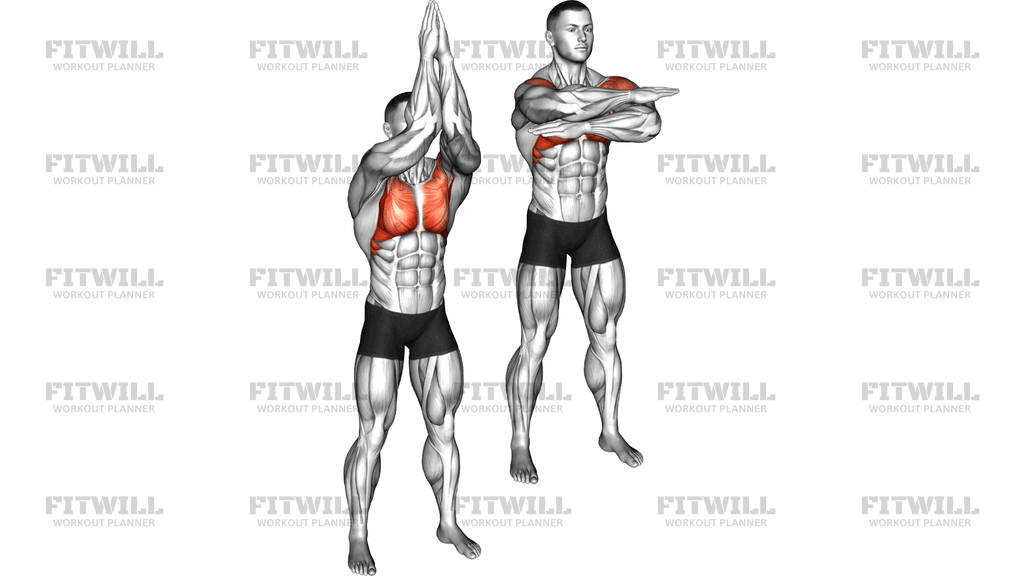
The main muscles worked are the chest, specifically the pectoralis major across the sternal region, with the front of the shoulders assisting and the triceps extending the elbows at the top of each press. Lying on the floor with knees bent also keeps the lower back in a neutral, supported position, which makes it easier to keep the ribcage down and the shoulder blades stable against the ground.
Setup matters more than it first appears. The band must sit across your upper back, roughly at the line of your shoulder blades, so the tension pulls backward and downward through the press. If the band sits too low near your waist, the resistance path angles away from the chest and the movement loses its pressing character. Grip width should place your hands roughly above your elbows at the bottom, with the band wrapped around the palms so it cannot slip toward the fingers.
To execute the press well, keep your elbows at about 45 degrees to your torso, drive the band up until the arms are nearly straight without locking the elbows hard, and squeeze the chest briefly at the top. Lower slowly until the backs of your upper arms touch the floor or your hands reach chest level, then press again. Avoid bouncing off the floor and avoid letting the band pull your shoulders forward at the bottom.
Common use cases include home chest training without a bench, adding volume to pressing muscles with minimal equipment, teaching pressing mechanics to newcomers, and maintaining upper-body strength while traveling. The main safety points are simple: check the band for wear before each session, keep it secure in your grip so it cannot snap toward your face, and choose a tension level you can press smoothly for all planned reps.
[ Workout Log & Planner ]
Put your next workout in Fitwill
Keep your plan and training log ready when you are.


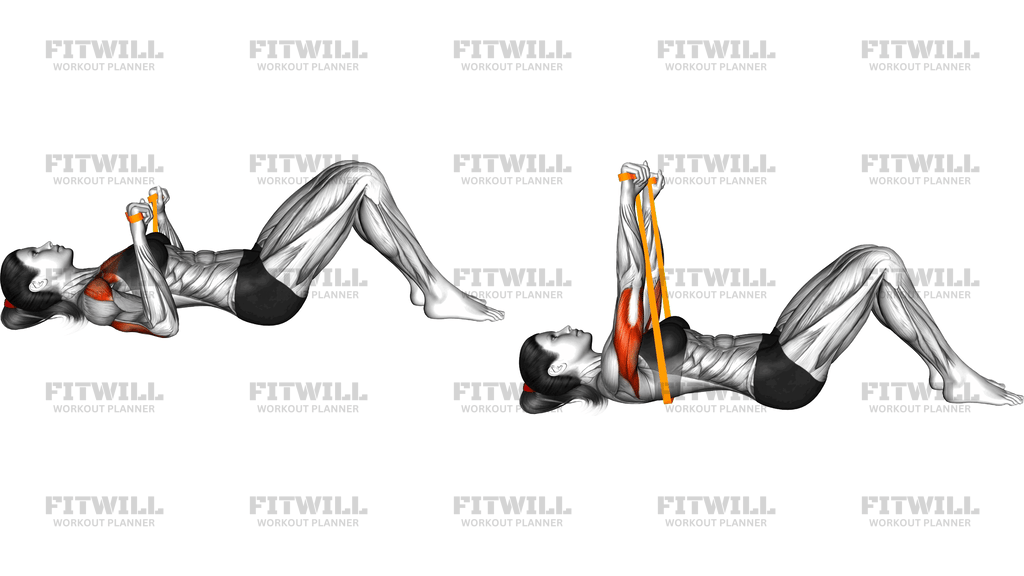
Instructions
- Lie on your back on an exercise mat with your knees bent and feet flat on the floor, about hip-width apart.
- Loop a resistance band around your upper back so it sits across the shoulder blades, then take an end in each hand with the band wrapped securely around your palms.
- Position your hands over your chest with elbows bent and upper arms resting on the floor at roughly 45 degrees to your torso, so the band already feels taut at the start.
- Draw your shoulder blades down and back against the floor, brace your core lightly, and keep your lower back in a neutral position without arching excessively.
- Press both hands straight up over your chest, extending the elbows until your arms are nearly locked out and the band tension peaks at the top.
- Hold the top position for a moment and squeeze your chest, keeping your wrists straight and stacked over your elbows.
- Inhale as you lower your hands under control until your upper arms touch the floor or the band tension eases near chest level.
- Exhale as you press back up to full extension, moving the hands along the same vertical path over the chest.
- Complete all repetitions, then release the band carefully by lowering your hands first, letting tension off before sitting up and stepping out of the loop.
Tips & Tricks
- If the band slips during the press, wrap it an extra turn around each palm instead of pinching it with your fingers, which fatigues the forearms before the chest.
- Check the band's position before your first rep: it should cross your upper back at the shoulder blades, not the waist, or the press direction and resistance will both feel off.
- A common mistake is flaring the elbows out to a full 90 degrees from the torso, which strains the shoulder capsule; keep them closer to 45 degrees for a comfortable pressing angle.
- Do not let the band snap your arms back down on the way in — the eccentric (lowering) phase is where much of the chest work happens, so take two to three seconds on the way down.
- If your hips rise or your lower back arches as you press, the band is too strong; switch to a lighter band rather than compensating with your lower back.
- Keep your head resting on the mat rather than lifting it to watch your hands, which keeps the neck relaxed and the shoulder position stable.
- To make the exercise harder without changing bands, add a pause of one to two seconds at the top of each press or slow the lowering phase further.
- If one side presses faster than the other, slow down and let the weaker arm set the tempo — the band will not hide a side-to-side difference the way a barbell might.
- Inspect the band for small tears or thin spots before lying on it, since body weight plus stretch places more stress on the material than a standing band exercise.
Frequently Asked Questions
Which muscles does the Resistance Band Lying Floor Chest Press work?
The chest is the primary mover, with the triceps extending the elbows and the front shoulders assisting the press. The serratus anterior and stabilizers around the shoulder blades also work to keep the pressing path steady.
Where exactly should the resistance band sit during this exercise?
The band should lie across your upper back, roughly at the level of your shoulder blades, so the tension pulls straight back toward the floor as you press. If it sits near your waist, the resistance will angle away from the chest and the exercise loses its pressing feel.
Is the Resistance Band Lying Floor Chest Press good for beginners?
Yes, it is one of the friendliest ways to learn horizontal pressing because the floor supports your shoulder blades and the band load is gentle on the joints. Start with a light band and focus on a smooth, controlled path over the chest.
How is this different from a dumbbell floor press?
A dumbbell's resistance comes from gravity and stays constant, while the band's tension increases as your arms extend, so the hardest part is the top of the press instead of the bottom. The band version is also easier on the shoulders and needs no equipment beyond the band itself.
Should my upper arms touch the floor at the bottom of each rep?
Letting the backs of your upper arms lightly touch the floor gives you a consistent bottom position and a brief release of band tension. Avoid bouncing or driving off the floor with your elbows, since that turns the rep into a momentum-based movement.
How do I make the Resistance Band Lying Floor Chest Press harder?
Use a thicker band, shorten the slack by holding the band closer to your chest, or add a pause at the top and a slower lowering phase. Increasing reps is also effective since band tension rises naturally at lockout.
What is the most common mistake with this exercise?
Letting the elbows flare out to a full 90 degrees from the torso and letting the band drag the shoulders forward at the bottom. Keep the elbows near 45 degrees and keep the shoulder blades drawn back and down against the floor throughout.
Can I do this exercise without a mat?
Yes, a carpeted or firm floor works, but a mat makes the position more comfortable for your shoulder blades, spine, and tailbone during longer sets. Comfort matters because an awkward position will pull your attention away from pressing cleanly.
Is it safe if the band snaps or slips out of my hands?
A worn band can snap back toward your face, so inspect it for tears before every session and wrap it fully around your palms rather than hooking it on your fingers. If the band shows thin spots or cracking, replace it before training with it again.
How should I breathe during the Resistance Band Lying Floor Chest Press?
Exhale as you press the band up and inhale as you lower it back down. Steady breathing keeps your core braced without you having to hold your breath on each rep.