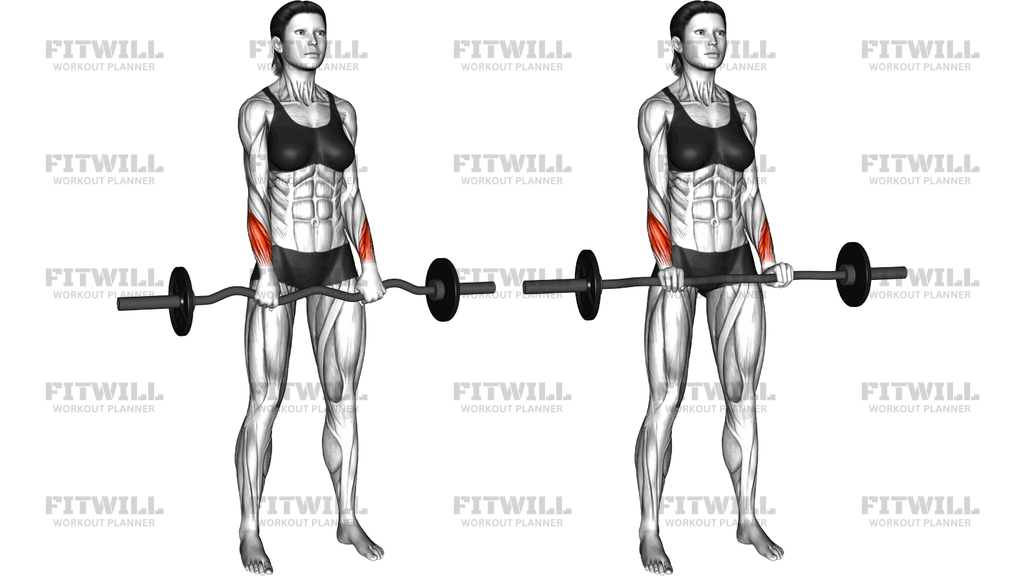
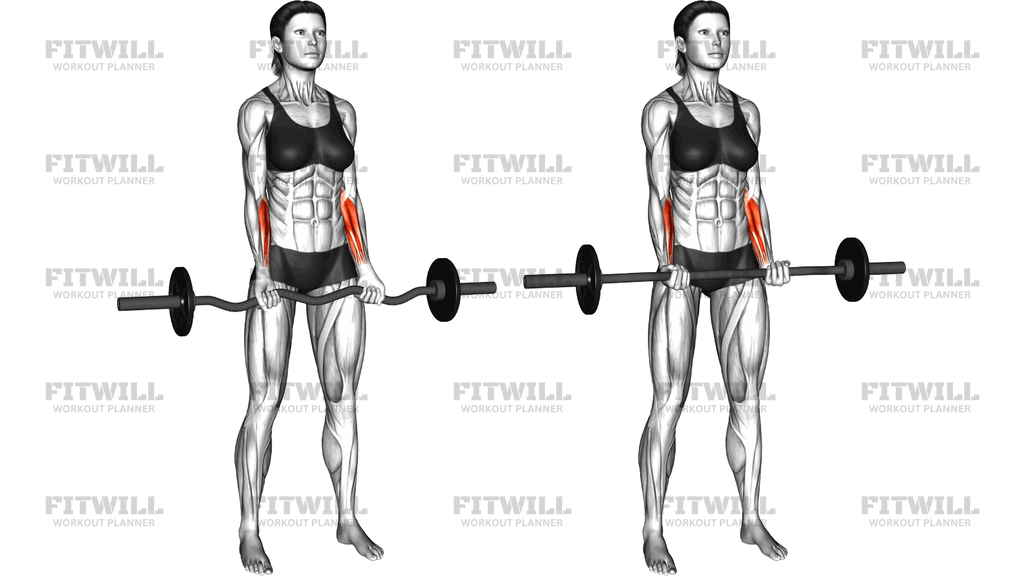
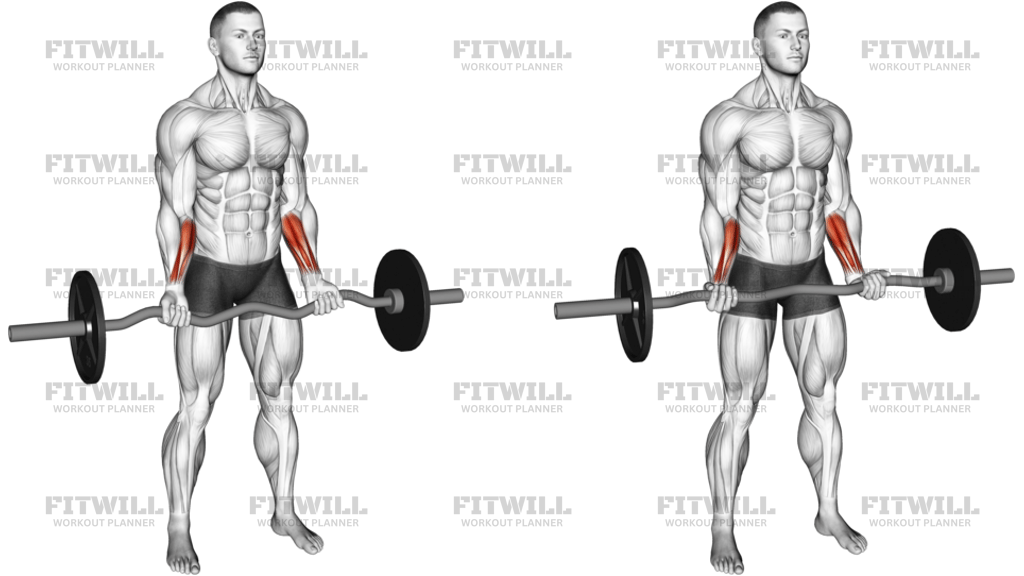
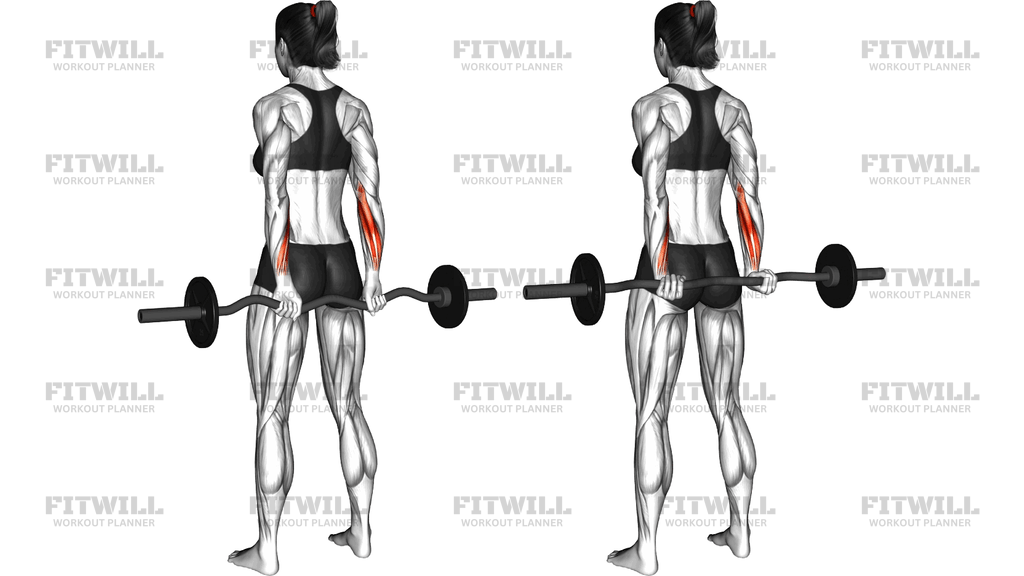
Ez Bar Seated Wrist Curl
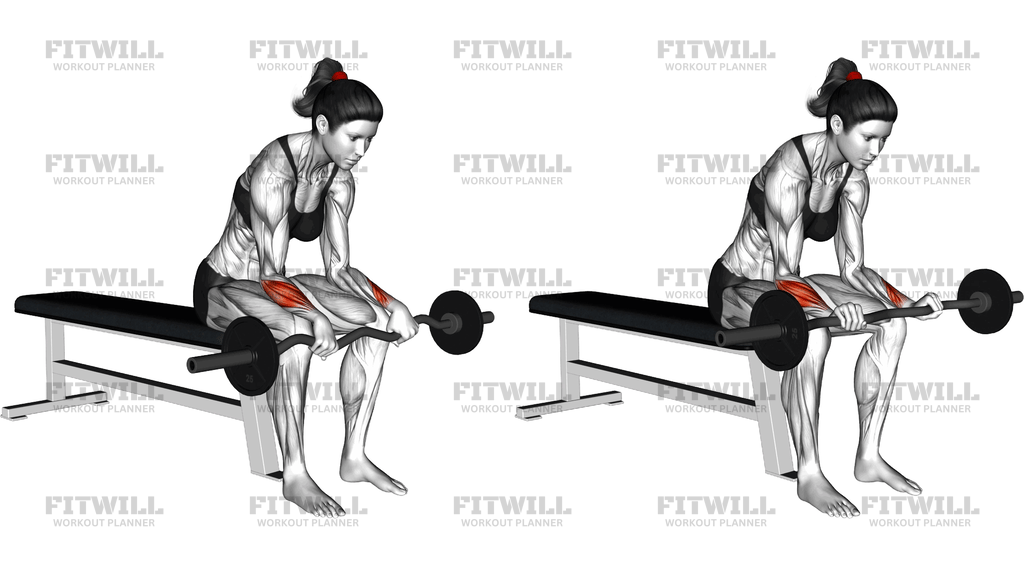
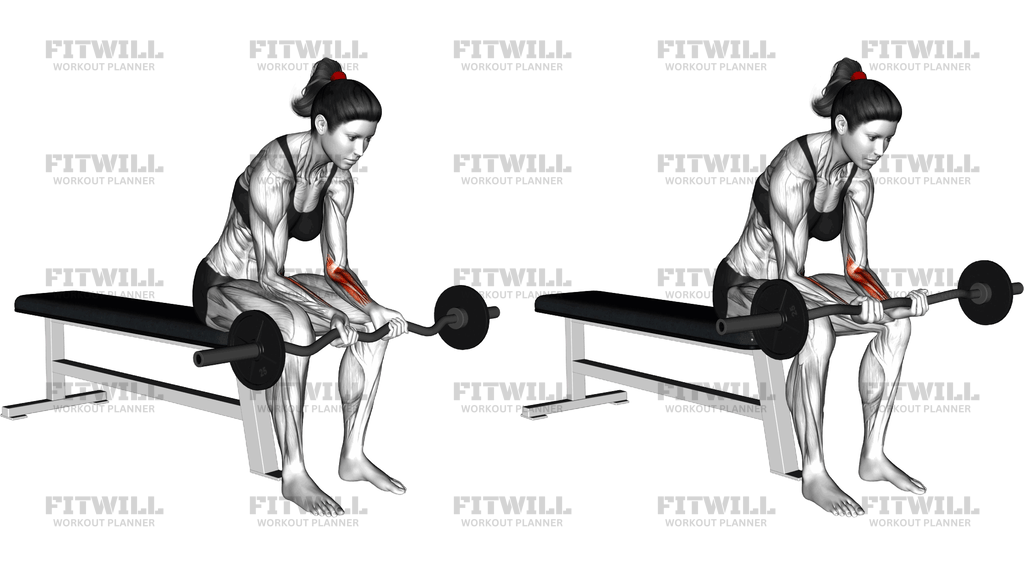
The Ez Bar Seated Wrist Curl is a focused forearm exercise performed sitting on a flat bench with your forearms braced along your thighs and an EZ bar held with an underhand grip. From that position, you curl the bar up by flexing at the wrists only, letting the bar roll down toward your fingertips at the bottom and squeezing the wrist flexors hard at the top. The angled camber of the EZ bar sits more comfortably in the hands than a straight barbell, which is why many lifters prefer it for high-rep wrist work.
This movement primarily trains the wrist flexors on the underside of the forearm, with the flexor carpi radialis and flexor carpi ulnaris doing most of the work and the smaller flexors of the hand contributing as the bar rolls through the fingers. Your grip gets worked isometrically the entire time, since you have to keep holding the bar as it tries to pull your hands into extension. It is a small-range, joint-isolated exercise, so the weight stays modest and the quality of the contraction matters far more than load.
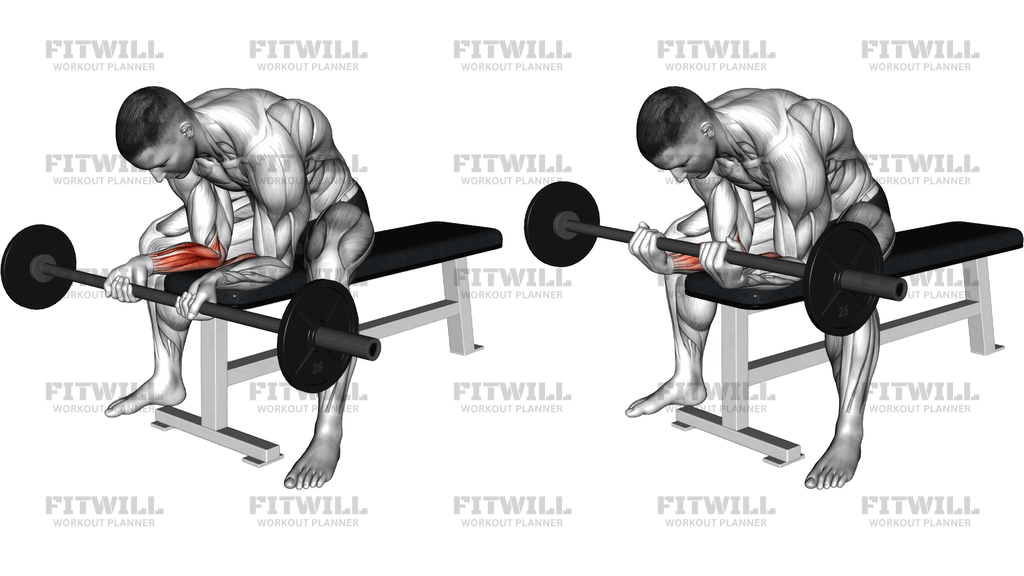
The seated setup matters because your thighs act as the bench for your forearms. With your forearms resting on your quads and your wrists hanging just past your knees, the forearm stays fixed and the wrist becomes the only moving joint. That locking-in is what forces the work into the forearm flexors instead of letting your elbows, shoulders, or lower back borrow the load. Leaning forward slightly with your chest over the bar, as shown, keeps the forearms flat and the wrist hinge clean.
This exercise is useful for anyone whose grip or forearm strength limits other lifts, such as deadlifts, rows, pull-ups, or any carrying work. Climbers, golfers, tennis players, and martial artists also benefit because wrist flexion strength supports grip endurance and wrist control under load. For physique-focused lifters, it is one of the most direct ways to add size to the forearm flexors, a muscle group that does not grow much from ordinary pressing and pulling alone.
Execution is simple but easy to rush. Keep the reps slow, let the bar unroll toward your fingertips at the bottom to get a full stretch, then curl the knuckles up toward the ceiling and pause briefly at the top. Because the wrist joint is small and the tendons pass through tight channels, avoid bouncing at the bottom or letting the elbows drift off the thighs. Light weight, controlled tempo, and higher reps in the 12 to 20 range usually give the best combination of results and joint comfort.
A practical safety note: stop the set if you feel sharp wrist or elbow discomfort rather than muscle burn, and build volume gradually. Forearm flexor tendons adapt to high-frequency work, but they need time when the exercise is new.
[ Workout Log & Planner ]
Put your next workout in Fitwill
Keep your plan and training log ready when you are.


Instructions
- Sit on a flat bench with your feet flat on the floor about hip-width apart and your knees bent to roughly 90 degrees.
- Hold an EZ bar with an underhand grip, hands about shoulder-width apart on the angled sections of the bar.
- Lean your torso forward and rest the backs of your forearms flat on your thighs, letting your wrists hang just past your knees with the bar in front of you.
- Start with your wrists extended, allowing the bar to roll down toward your fingers so you feel a stretch along the underside of your forearms.
- Curl the bar upward by flexing at the wrists only, pulling your knuckles toward the ceiling while your forearms stay glued to your thighs.
- Squeeze the wrist flexors briefly at the top, where the backs of your hands face forward and the bar sits high in your grip.
- Lower the bar slowly back down, letting it roll toward your fingertips again to complete the full range.
- Exhale as you curl the bar up and inhale as you lower it under control.
- Keep your chest leaning over the bar and your back neutral throughout the set rather than sitting upright and letting the forearms slide.
- After your final rep, carefully guide the bar down to the floor or rack it safely before standing up.
Tips & Tricks
- The most common mistake is turning this into a mini arm curl by lifting the elbows off the thighs. If your forearms rise, the set loses its isolation, so drop the weight and pin the forearms back down.
- Let the bar actually roll into your fingers at the bottom instead of keeping a tight crush grip the whole time. That roll gives the flexors a loaded stretch that a static hold does not provide.
- Use the inner angles of the EZ bar rather than the wider outer bends. Holding the narrow angled grips keeps your wrists in a more neutral, comfortable line.
- Do not slam the bar down at speed between reps. Wrist flexor tendons handle slow tension better than rebounding, and bouncing the bar at the bottom is the usual cause of forearm or wrist aches with this exercise.
- If your wrists feel pinched, narrow or widen your grip slightly by one hand width. A small change in hand spacing often removes discomfort at the top of the curl.
- Keep the plates close to your hands if you load the bar. A long unloaded bar sleeve whips and pulls the bar side to side as your wrists fatigue.
- Chalk or a dry towel on your hands helps more here than on most lifts, because sweaty fingers make the bar roll out of your grip at the bottom of each rep.
- Pause for a full second at the top of each rep. Since the range of motion is short, that brief hold is what makes light weights feel productive.
- Train this movement after your main pulling work, not before, so fatigued forearms and grip do not compromise your deadlifts or rows.
Frequently Asked Questions
What muscles does the Ez Bar Seated Wrist Curl work?
It primarily targets the wrist flexors on the underside of the forearm, especially the flexor carpi radialis and flexor carpi ulnaris. Your grip muscles work isometrically throughout, since they must keep holding the bar as it rolls through your fingers.
Why use an EZ bar instead of a straight barbell for seated wrist curls?
The angled grips of an EZ bar let your wrists sit in a slightly more natural position, which reduces strain during the repeated flexion. Many lifters find they can do higher reps with less wrist discomfort than with a straight bar.
Why do my forearms rest on my thighs during the Ez Bar Seated Wrist Curl?
Your thighs fix the forearms in place so the wrist is the only joint that moves. This prevents your elbows and shoulders from assisting and keeps the tension on the forearm flexors where it belongs.
Is the Ez Bar Seated Wrist Curl suitable for beginners?
Yes, it is one of the most beginner-friendly forearm exercises because the setup is stable and the range of motion is short. Start with a light bar, keep the reps slow, and learn the wrist-only movement pattern before adding meaningful weight.
How heavy should I go on wrist curls?
Wrist flexors respond well to moderate loads and higher reps, typically 12 to 20 per set. Because the wrist joint is small, jumping straight to heavy weights is the fastest way to develop nagging wrist or elbow discomfort.
Why does the bar roll toward my fingers at the bottom of the rep?
That roll is intentional and gives the hand flexors a loaded stretch in addition to the wrist flexion work. Re-curling the bar from your fingertips to the top of the rep trains both functions of the forearm flexors.
What can I use if I do not have an EZ bar?
A straight barbell, a pair of dumbbells, or a low cable with a straight bar all work with the same seated forearm-on-thighs setup. Dumbbells let each wrist move independently, which some lifters find easier on the joints.
Will the Ez Bar Seated Wrist Curl improve my grip for deadlifts and pull-ups?
It strengthens the flexor side of the forearm and builds grip endurance, which carries over to holding a heavy bar. For balanced development, pair it with a wrist extension exercise so the top of the forearm is trained too.
My wrists ache when I curl the bar up. What should I change?
First, lighten the load and slow the tempo, since rushing heavy wrist curls is the most common cause of aching. If discomfort persists, adjust your hand spacing on the EZ bar angles or reduce the range slightly at the top until the movement feels smooth.