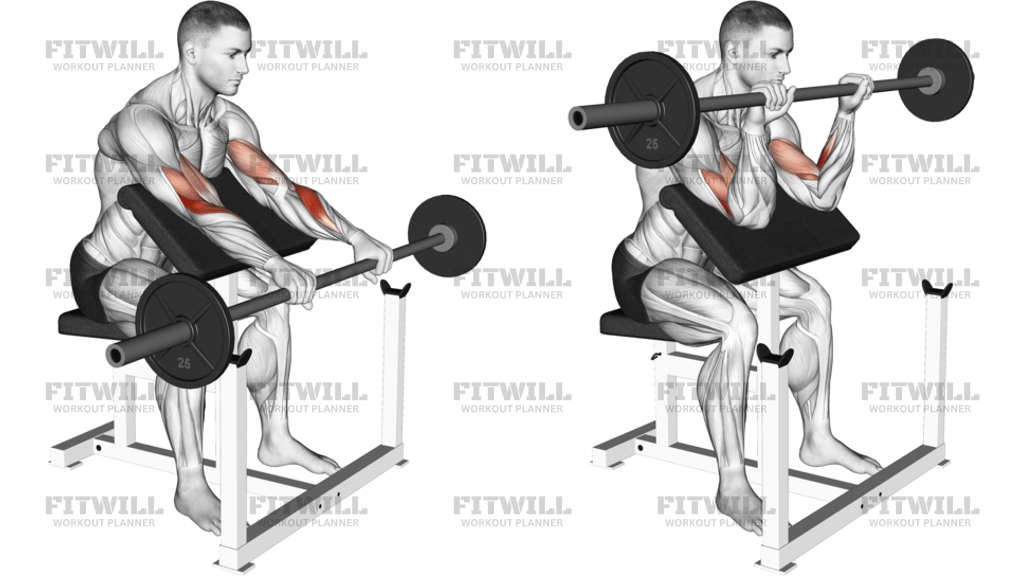
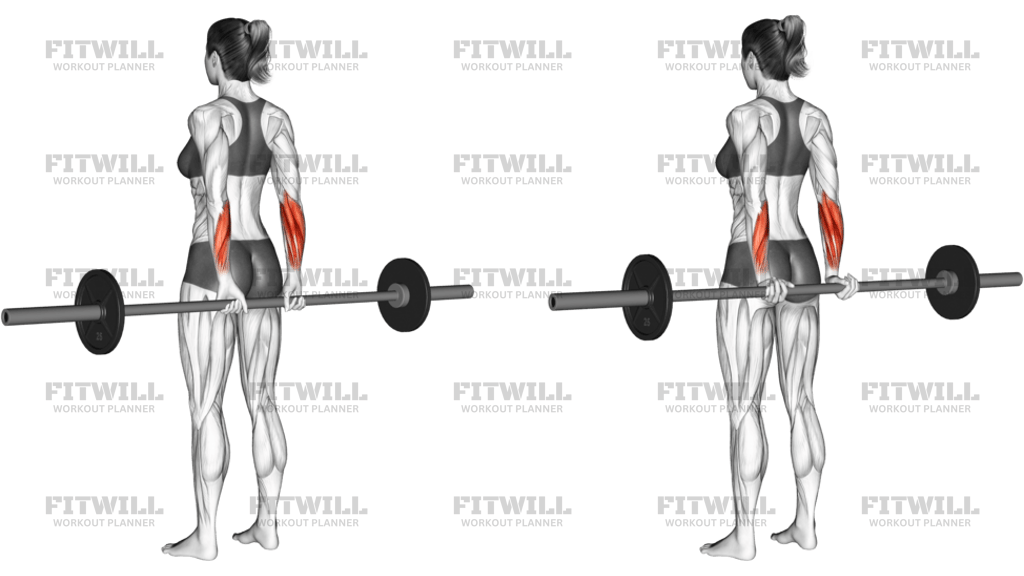
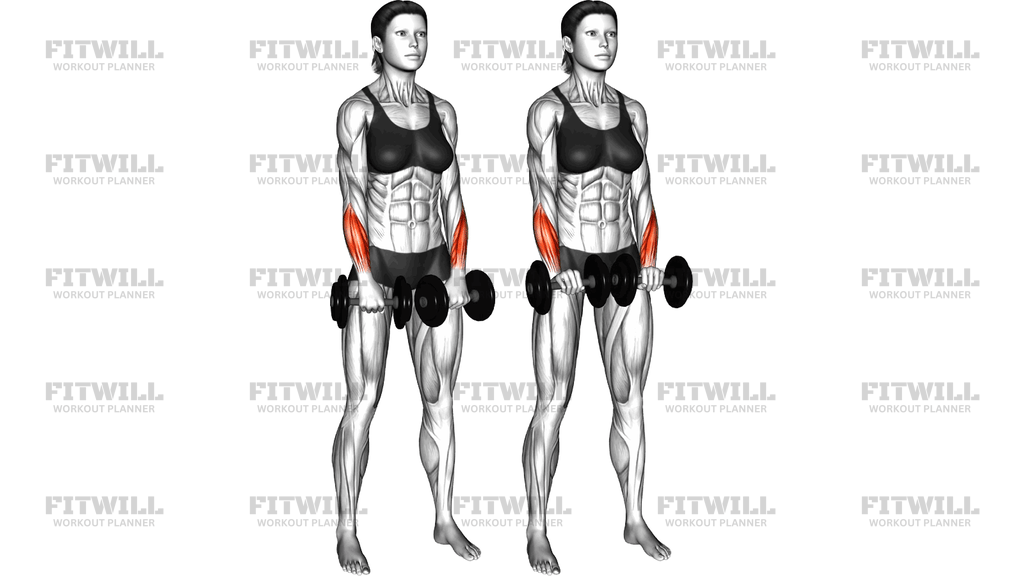
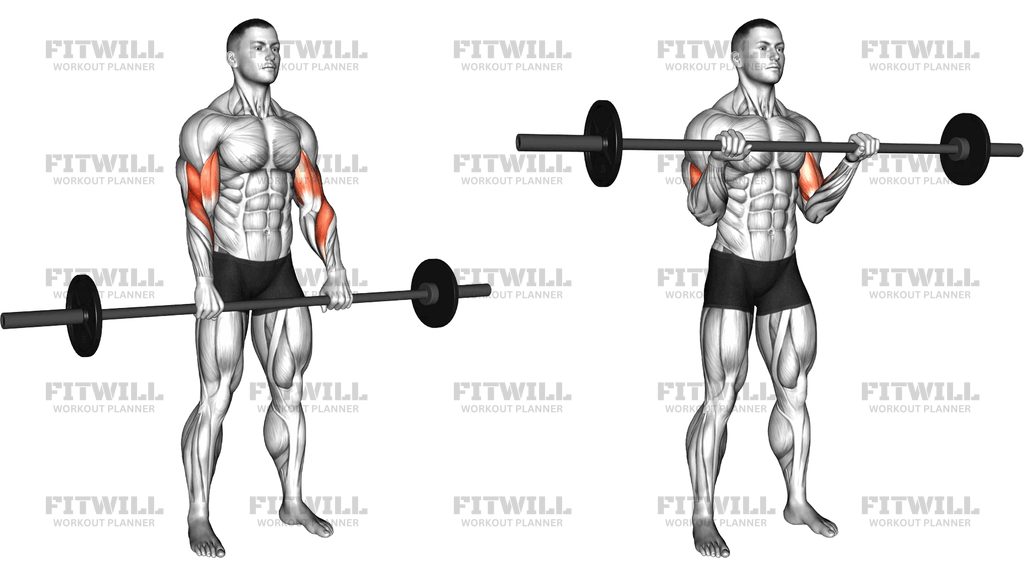
Ez Bar Seated Wrist Reverse Curl
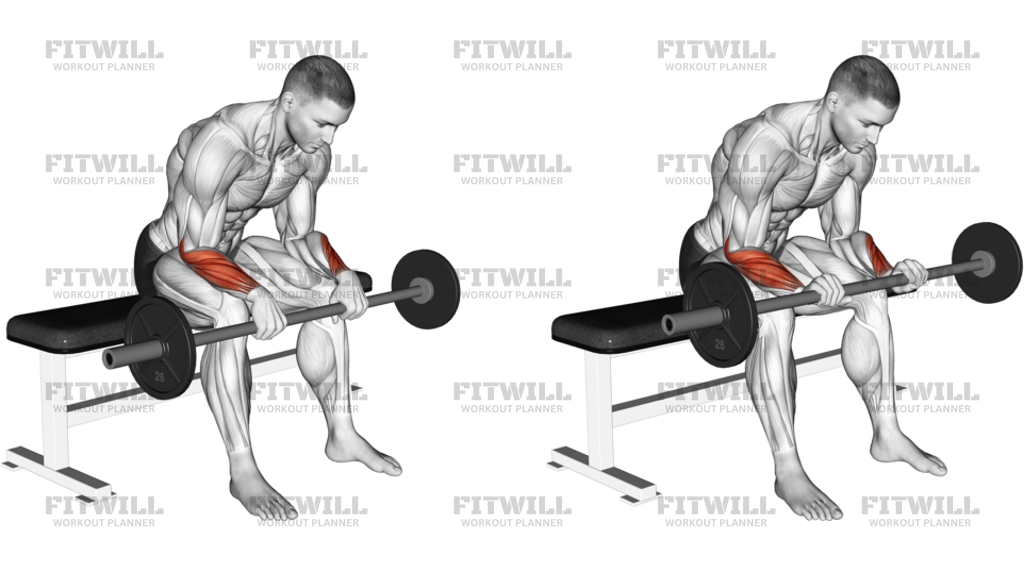
The Ez Bar Seated Wrist Reverse Curl is a forearm isolation exercise performed sitting on a flat bench with your forearms resting on your thighs and an EZ bar held with an overhand, palms-down grip. From that position you curl the bar up by bending at the wrists only, letting the knuckles rise toward the ceiling before lowering the bar back down under control. The angled camber of the EZ bar sits more comfortably in the hands than a straight barbell, which matters when your wrists are loaded in a extended position.
This movement targets the muscles on the top of the forearm, primarily the wrist extensors, with support from the brachioradialis and the small stabilizing muscles around the wrist joint. Because the reverse grip also demands active gripping, you get meaningful forearm and grip work even with light plates on the bar. If your forearms give out before your back or biceps on pulling exercises, or your grip fails during deadlifts and rows, this is one of the most direct ways to build that capacity.
The seated setup is what makes the exercise work. Resting your forearms along your thighs fixes the elbow and forearm in place, so the only moving joint is the wrist. That removes any temptation to swing the weight or turn the rep into a partial reverse biceps curl. Keep your feet flat on the floor, knees bent to roughly 90 degrees, and let the wrists hang just past your kneecaps so the bar can travel through a full, unobstructed range.
Execution should be slow and deliberate. Start with the wrists lowered below the level of your knees so the bar rolls slightly toward your fingertips, then pull the back of your hands upward as high as you can without lifting your forearms off your legs. Pause briefly at the top, lower the bar slowly, and let the wrists extend fully at the bottom before starting the next rep. Because the forearm muscles are small and used to constant low-level work, moderate weight with strict technique beats heavy weight with sloppy reps.
This exercise suits lifters who want balanced forearm development, climbers and racket-sport players who rely on wrist strength, and anyone rehabilitating or protecting the wrist extensors after heavy grip work. It pairs naturally with the palms-up seated wrist curl, which trains the flexors on the underside of the forearm and keeps the joint strong on both sides. One or two sets of twelve to twenty reps at the end of an arm or pull session is usually plenty.
A few practical points will keep it productive. Warm the wrists up with a few unloaded extensions before adding weight, and choose a load you can control through the entire range without your forearms leaving your thighs. If the top of your forearm produces sharp discomfort rather than normal working effort, reduce the range or the weight. Keep the wrists within a comfortable line with the forearm rather than forcing extreme positions at either end.
[ Workout Log & Planner ]
Put your next workout in Fitwill
Keep your plan and training log ready when you are.


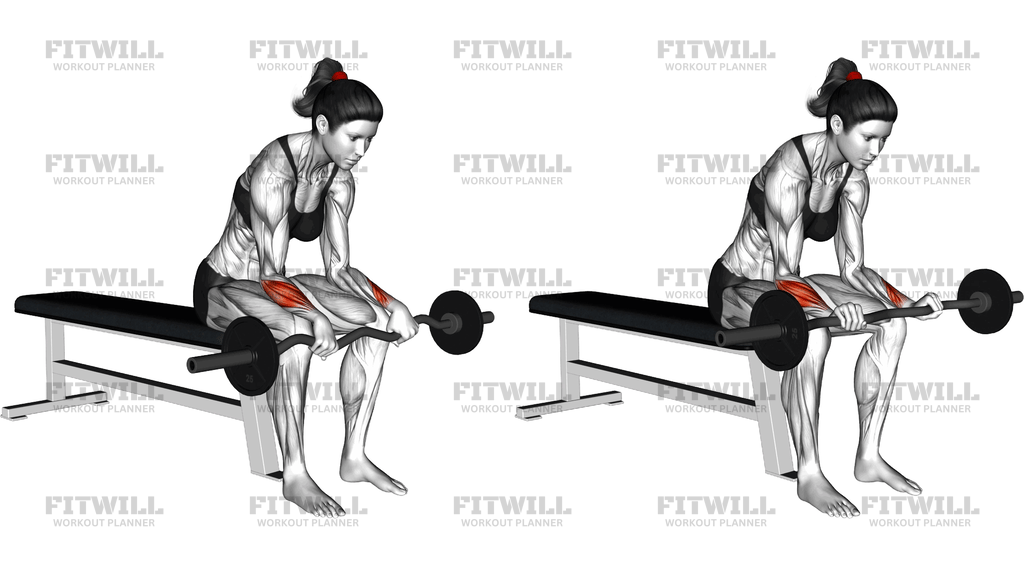
Instructions
- Sit on a flat bench with your feet flat on the floor and your knees bent about 90 degrees, leaning your torso slightly forward.
- Grasp an EZ bar with an overhand reverse grip, palms facing down, using the angled inner section of the bar so your wrists sit at a natural angle.
- Rest the backs of your forearms flat along your thighs with your wrists hanging just beyond your kneecaps, and let the bar hang so your wrists bend down toward the floor.
- Brace your torso lightly and keep your shoulders relaxed and down, avoiding any hunching as you prepare to move.
- Curl the bar upward by bending only at the wrists, raising the backs of your hands as high as possible while your forearms stay glued to your thighs.
- Hold the top position for a brief moment with the extensors on top of the forearm fully contracted.
- Lower the bar slowly back down, letting your wrists extend fully so the bar rolls toward your fingertips at the bottom.
- Exhale as you curl the bar up and inhale as you lower it, keeping the breathing rhythm steady throughout the set.
- Complete all reps, then set the bar down on the floor safely before standing up, and shake out your wrists and forearms between sets.
Tips & Tricks
- If the bar rolls toward your fingertips at the bottom and you lose control, lighten the load rather than shortening the range, since that deep stretch is where much of the benefit lives.
- Watch for your forearms lifting off your thighs mid-set, which turns the exercise into a partial arm curl; cue yourself to press the forearms down and move only the hands.
- Keep the overhand grip on the angled section of the EZ bar instead of the center, or your wrists will sit in an awkward twist under load.
- Avoid driving the movement with your fingers alone; the lift should come from bending the wrists back, with the fingers simply holding on.
- If your wrists ache at the very top, stop just short of the maximum height and build up the range gradually over a few weeks.
- Slow the lowering phase to a two- or three-count, since the eccentric is where the forearm extensors do their most productive work.
- Do not grip the bar excessively hard from the first rep; squeeze only as firmly as needed so your grip does not fail before the extensors do.
- Pair this with a palms-up seated wrist curl in the same session so the flexors and extensors develop evenly and the wrist stays balanced under load.
- Warm up with ten to fifteen unloaded wrist extensions before your first set; cold wrist extensors are quick to complain when loaded directly.
Frequently Asked Questions
What muscles does the Ez Bar Seated Wrist Reverse Curl work?
It primarily trains the wrist extensors on the top of the forearm, along with the brachioradialis and the gripping muscles of the hand. The small stabilizers around the wrist joint also work hard to control the bar.
Why use an EZ bar instead of a straight barbell for reverse wrist curls?
The angled grip of the EZ bar puts your wrists in a slightly less extreme position, which is more comfortable when the palms face down under load. This makes it easier to keep tension on the extensors without wrist discomfort.
Is the Ez Bar Seated Wrist Reverse Curl suitable for beginners?
Yes, provided you start with a light load and prioritize full range and control. Beginners often benefit from it because grip and forearm strength usually lag behind the rest of their lifting early on.
How far should my wrists bend during the exercise?
Let the wrists extend fully at the bottom so the bar rolls toward your fingertips, then curl up until the backs of your hands are as high as they comfortably go. Work within a range that feels like effort, not sharp pinching.
Why do my forearms keep lifting off my thighs during the set?
That usually means the weight is too heavy or you are fatigued, so you are borrowing from the elbows to keep the bar moving. Reduce the load and focus on moving only at the wrists while the forearms stay pressed into your legs.
How many reps should I do for the Ez Bar Seated Wrist Reverse Curl?
Higher reps tend to work best, typically twelve to twenty per set for two or three sets. The forearm extensors are endurance-oriented muscles and respond well to controlled, higher-rep work.
Can I do this exercise standing instead of seated on a bench?
You can, but the seated position is a big advantage because your thighs fix the forearms in place and stop you from swinging or cheating. Standing versions tend to turn into loose arm movements with much less wrist isolation.
What can I use if I do not have an EZ bar?
A straight barbell, dumbbells, or a cable with a straight bar attachment all work using the same seated forearm-on-thighs setup. Dumbbells in particular let each wrist work independently.
Is it normal for the top of my forearm to burn during this exercise?
A working burn in the top of the forearm is expected and normal. Sharp pain, especially at the outer elbow or deep in the wrist joint, is not; reduce the weight or range and build back up gradually.
Should I train the Ez Bar Seated Wrist Reverse Curl before or after my main lifts?
Do it after your main pulling or arm work, since pre-fatiguing your grip and forearms can compromise heavier exercises like rows or deadlifts. It works well as a finisher when your forearms are already warm.