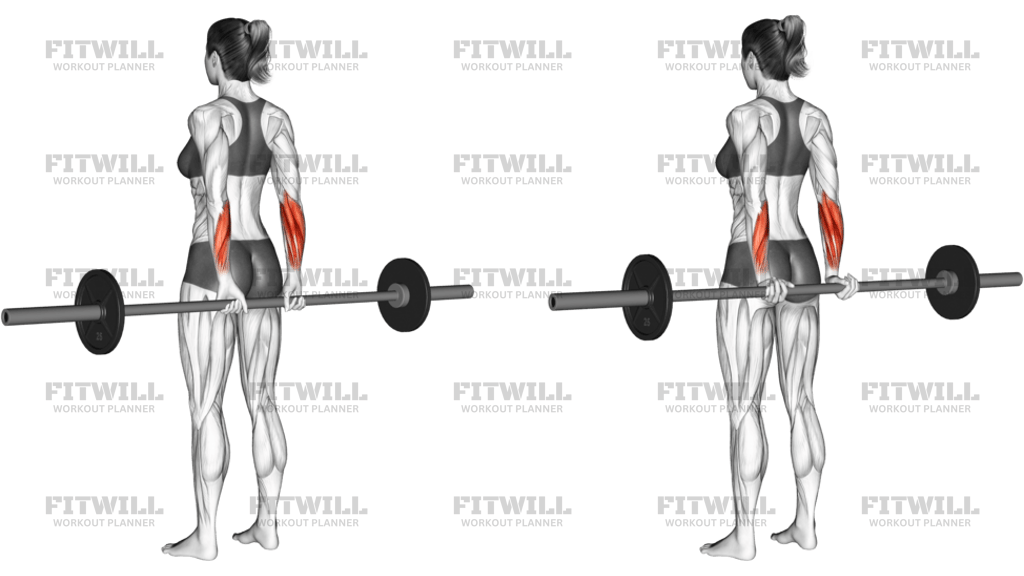
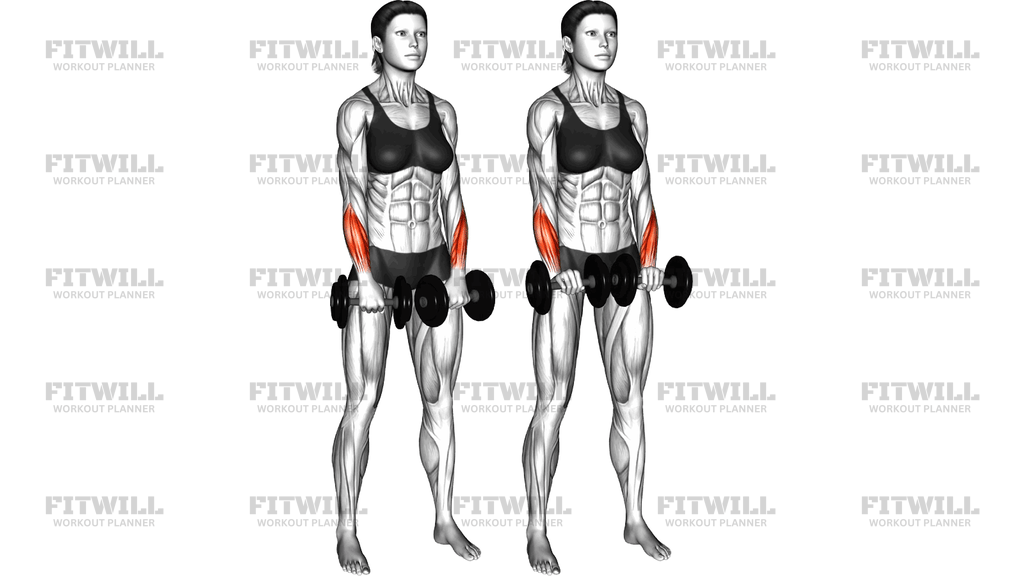
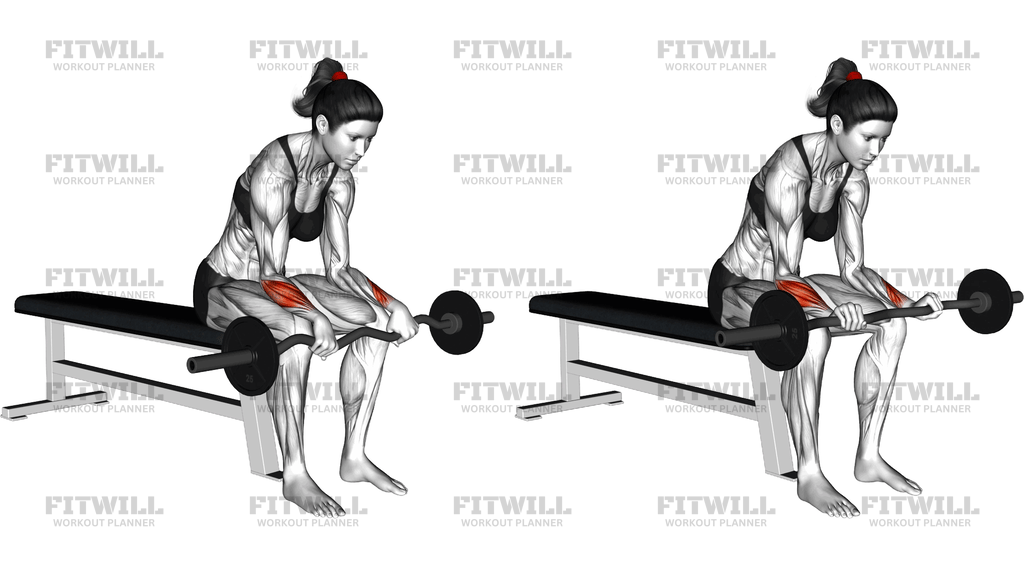
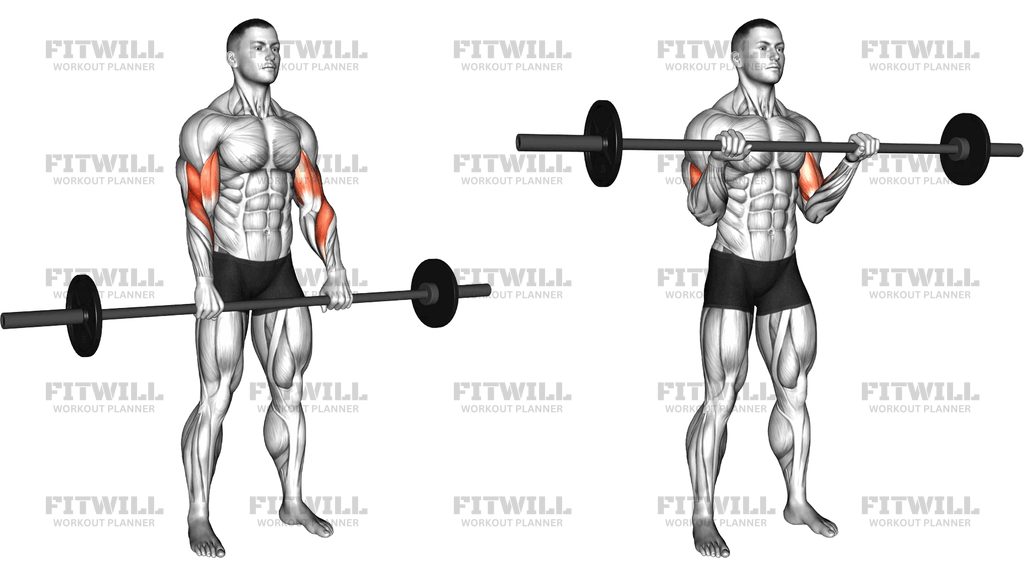
Ez Barbell Standing Wrist Reverse Curl
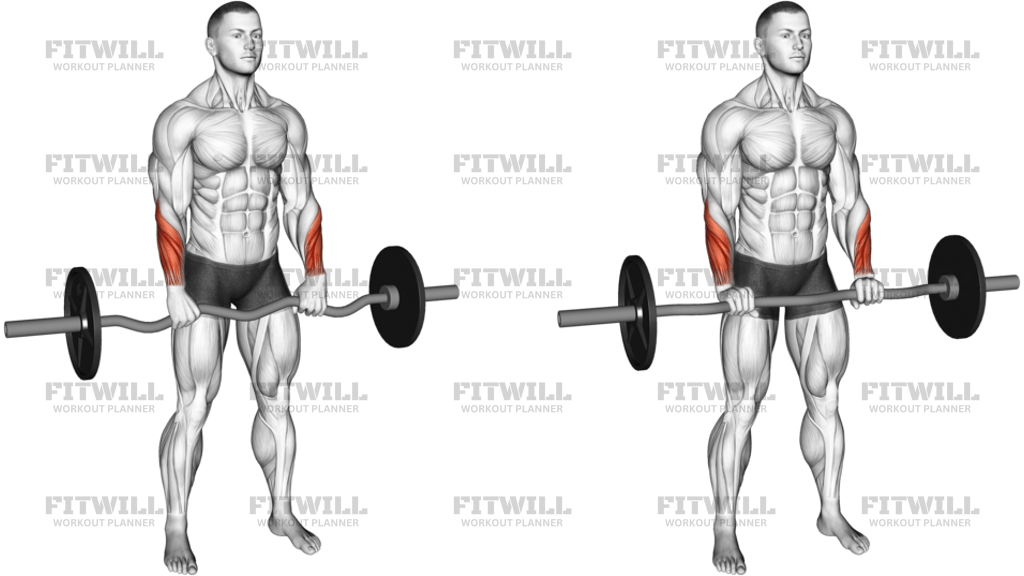
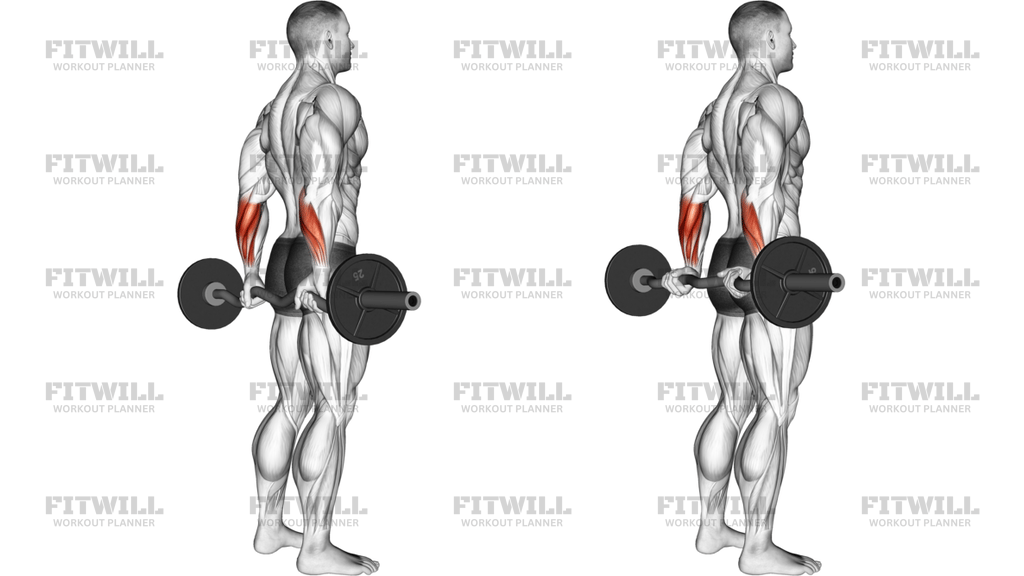
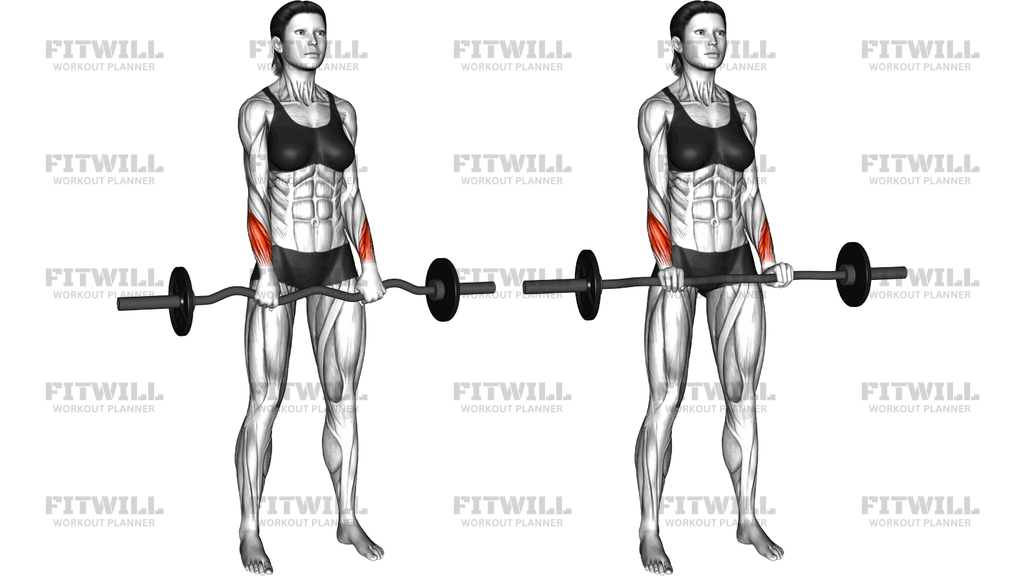
The Ez Barbell Standing Wrist Reverse Curl is a forearm isolation exercise performed with an EZ bar held at thigh height using an overhand, shoulder-width grip. Instead of bending the elbows, you keep your arms straight and move the bar purely by extending your wrists, lifting the back of your hands upward so the bar rises a few inches in front of your thighs. The EZ bar's angled grip sits more comfortably on the wrists than a straight barbell, which matters a lot in a movement where the wrist joint is doing all the work.
This exercise targets the muscles on the top of the forearm, mainly the wrist extensors, with supporting work from the brachioradialis and your grip. These muscles are often undertrained compared with the flexor side of the forearm, even though they handle everyday tasks like carrying groceries, holding a racket, or typing. Because the movement is small and joint-dominant, it works best with light to moderate loads and higher repetitions rather than heavy grinding sets.
It is a useful addition for anyone who wants balanced forearm development, stronger wrists for pressing and pulling, or more resilient elbows for climbing, golf, tennis, and racket sports. Lifters who feel forearm tightness only on the underside of the arm often benefit from adding direct extensor work like this to balance things out.
Setup matters here because the arms must stay completely still. Stand tall with feet about hip-width apart, hold the bar with an overhand grip in front of your thighs, and let your arms hang relaxed but controlled. If your elbows bend or your shoulders roll forward, the wrists stop being the limiting factor and the exercise loses its point.
To perform it well, extend your wrists so the backs of your hands move up and the bar arcs slightly away from your thighs, pause at the top, then lower the bar under control until your hands hang down again. The range is short, only a few inches at each end, so the quality of each rep depends on feeling the top of the forearm contract rather than chasing height.
Keep the load conservative, especially when you first learn the movement, since the wrist extensors are small muscles and the joint is directly loaded. Slow, smooth reps with a brief squeeze at the top will do far more for you than fast, bouncy reps with a bar that is too heavy.
[ Workout Log & Planner ]
Put your next workout in Fitwill
Keep your plan and training log ready when you are.


Instructions
- Stand with your feet about hip-width apart and hold an EZ bar with an overhand grip, hands roughly shoulder-width apart on the angled sections of the bar.
- Let the bar hang at arm's length in front of your thighs with your arms straight, elbows soft but not bent, and knuckles facing forward.
- Roll your shoulders back and down, brace your core lightly, and keep your torso upright without leaning back.
- Exhale and extend your wrists, raising the backs of your hands toward the ceiling so the bar arcs up and slightly away from your thighs.
- Keep your elbows and upper arms completely still throughout the rep; only the wrist joints should move.
- Pause briefly at the top and squeeze the muscles along the top of your forearms.
- Inhale and lower the bar slowly by letting your wrists flex until your hands hang down and the bar returns near your thighs.
- Avoid swinging or using momentum; if the bar drifts toward your body or away from it, reset before the next rep.
- Complete your set, then set the bar down on a rack or the floor with a controlled hinge rather than dropping it from standing height.
Tips & Tricks
- Choose a lighter load than you think you need; the wrist extensors are small and the wrists sit directly in the load path with no larger muscle to absorb force.
- If your wrists ache with a fully straight bar path, rotate your grip slightly on the EZ bar's angled sections so the joint sits in a more neutral line.
- A common mistake is bending the elbows and turning this into a partial reverse biceps curl; watch yourself in a mirror from the side to confirm your arms stay vertical.
- Keep the bar close to your thighs at the start of each rep. Letting it drift forward turns the movement into a front raise and shifts stress away from the wrists.
- Use a full but small range: let the hands hang all the way down at the bottom, then extend all the way up. Partial bouncing in the middle shortens the work the extensors actually do.
- Grip fatigue is often the first thing to fail. Chalk or a firm, even squeeze on the bar helps, but end the set when your wrist movement gets sloppy, not just when your hands feel tired.
- Higher reps in the 12-20 range suit this movement better than heavy low-rep sets, because the goal is controlled wrist extension rather than maximal load.
- If you feel sharp discomfort in the wrist or outer elbow, reduce the range slightly and slow the tempo; persistent discomfort is a signal to stop and reassess rather than push through.
Frequently Asked Questions
What muscles does the Ez Barbell Standing Wrist Reverse Curl work?
It primarily targets the wrist extensors on the top of the forearm, with the brachioradialis and grip muscles assisting. Because the elbows stay straight, the biceps contribute very little.
Why use an EZ bar instead of a straight barbell for reverse wrist curls?
The angled grips of the EZ bar place the wrists in a slightly less extreme position, which many people find more comfortable when the wrist joint is the moving joint. If a straight bar bothers your wrists, the EZ bar is usually the better choice.
How is this different from a regular wrist curl?
A regular wrist curl uses an underhand grip and trains the wrist flexors on the underside of the forearm. The Ez Barbell Standing Wrist Reverse Curl uses an overhand grip and trains the extensors on the top of the forearm.
How far should the bar travel during each rep?
Only a few inches. The bar starts near your thighs with hands hanging down and rises as the backs of your hands lift; if it is traveling a long distance, your elbows or shoulders are probably moving too.
Is this exercise suitable for beginners?
Yes, as long as the load is light and the reps are controlled. Beginners should focus on keeping the elbows locked in place and feeling the top of the forearm work before adding weight.
Why do my elbows bend during the set?
This usually happens when the bar is too heavy or when grip fatigue sets in, so the body tries to help by curling the arms. Lighten the load, brace your core, and consciously pin your upper arms against your sides.
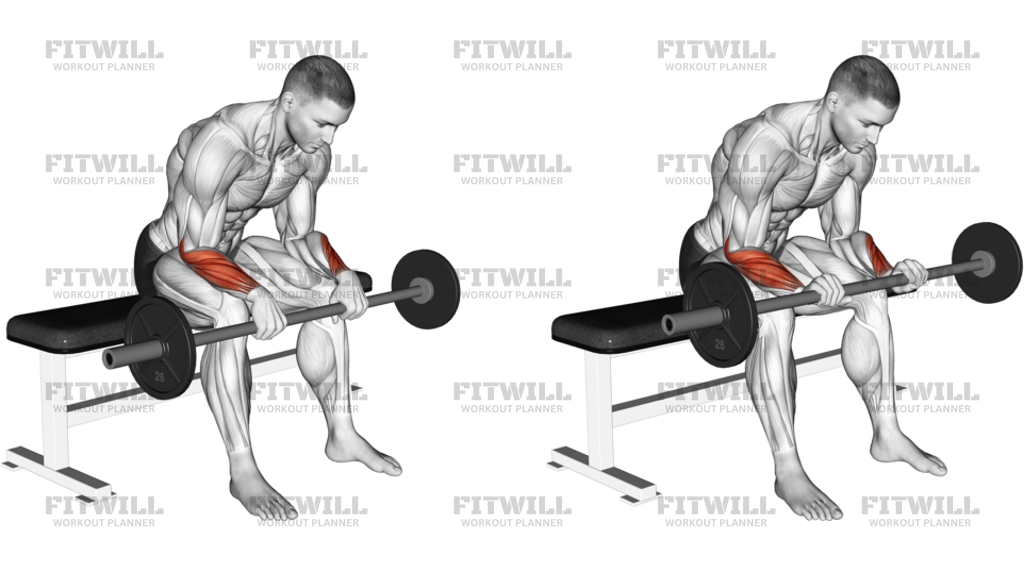
Can I do reverse wrist curls seated or behind the back instead?
Yes, seated forearm-supported versions and behind-the-back wrist curls train similar muscles. The standing version shown here is simply the most equipment-minimal option and also lightly challenges your posture and grip.
How many sets and reps should I do?
Two to four sets of 12-20 reps works well for most lifters. Because the range of motion is short and the muscles are small, moderate loads and higher reps give a better training effect than heavy weights.
Is it safe to do this exercise every day?
Daily training is not necessary and may irritate the wrists over time. Treating it like any other strength exercise, with rest days between sessions, is a more sustainable approach.