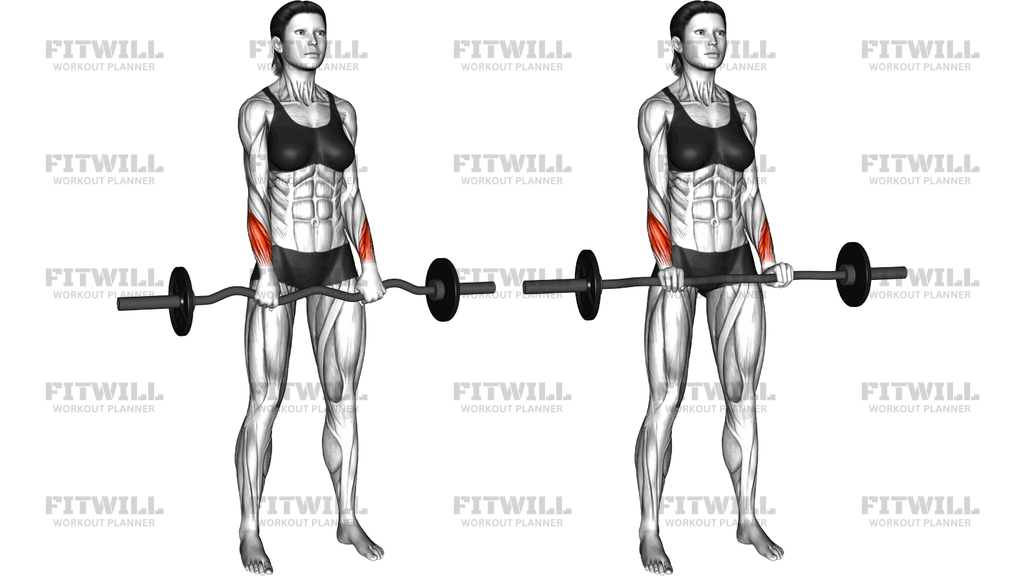
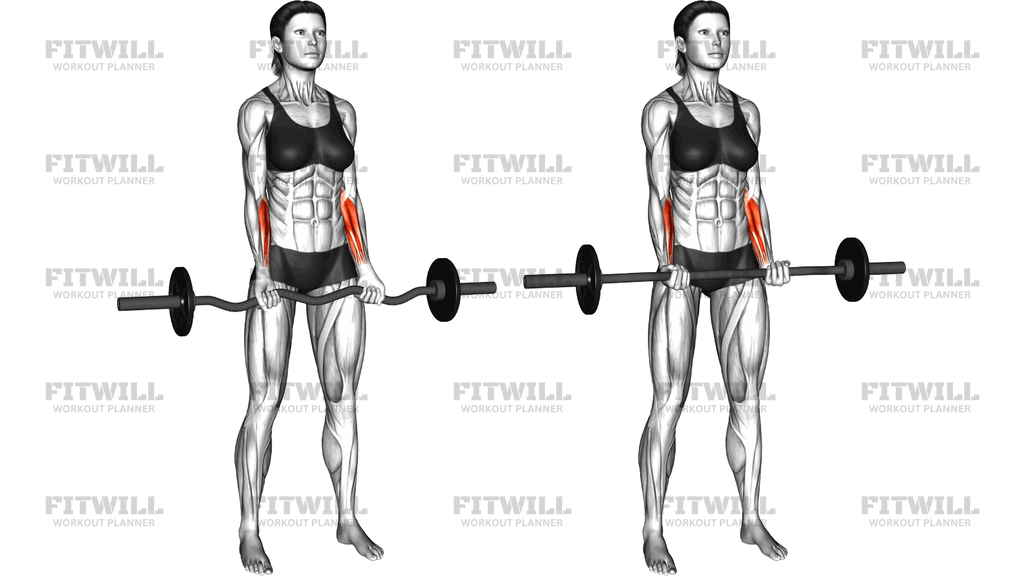
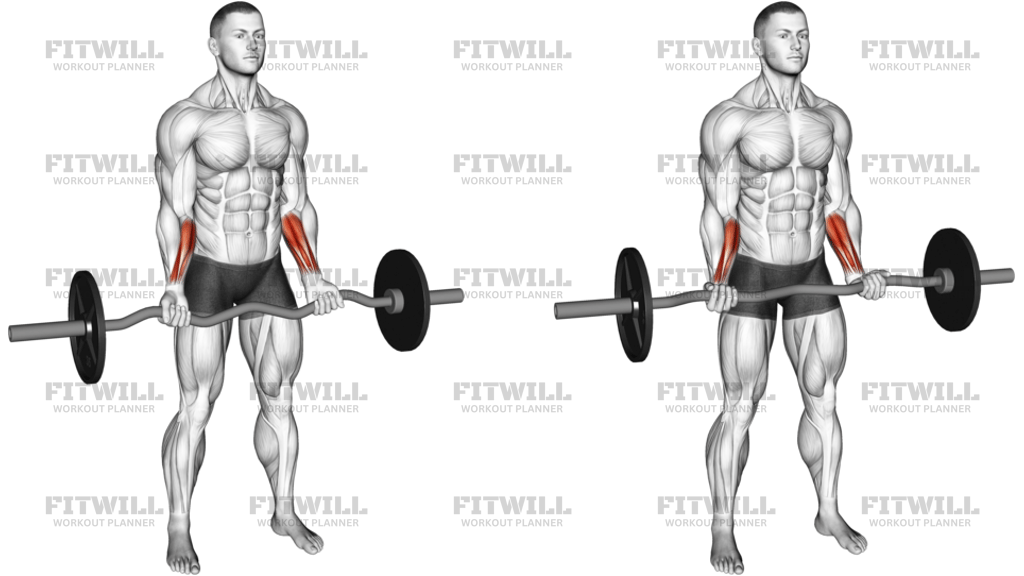
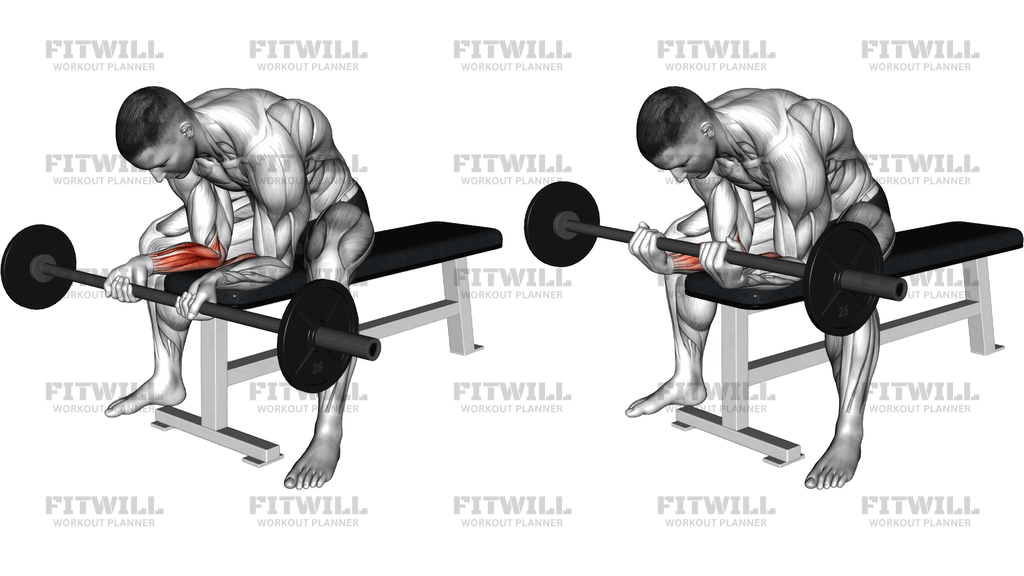
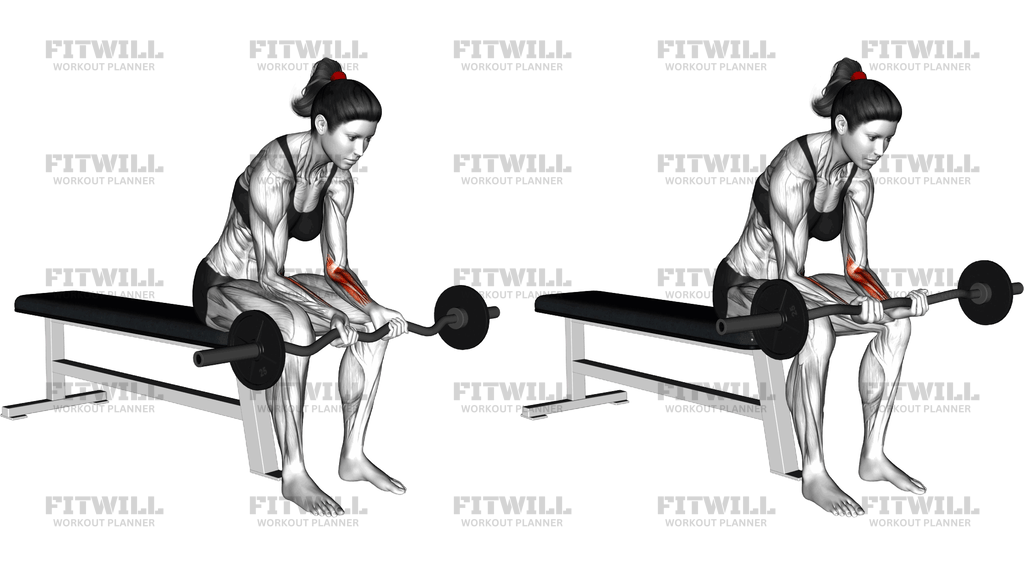
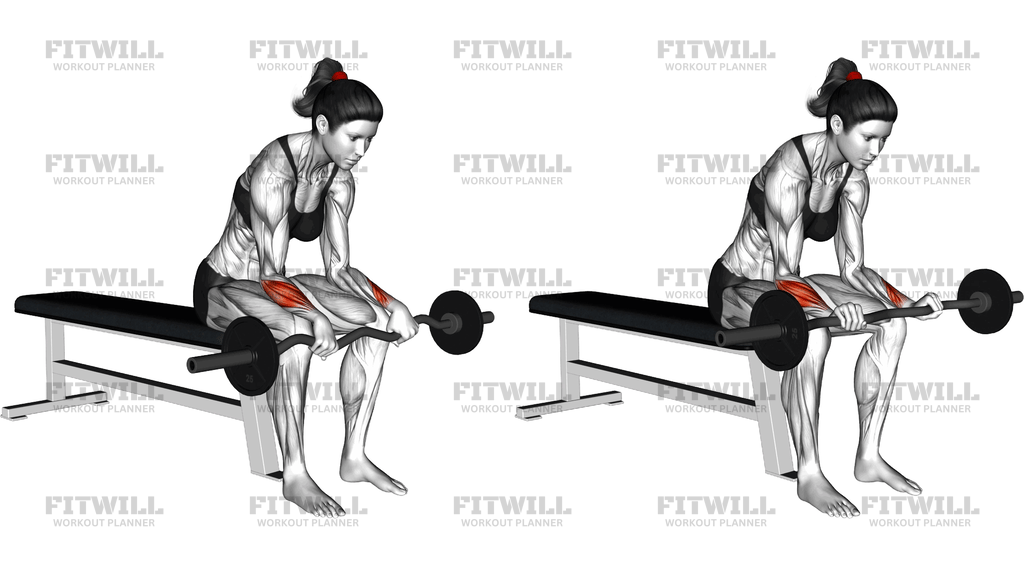
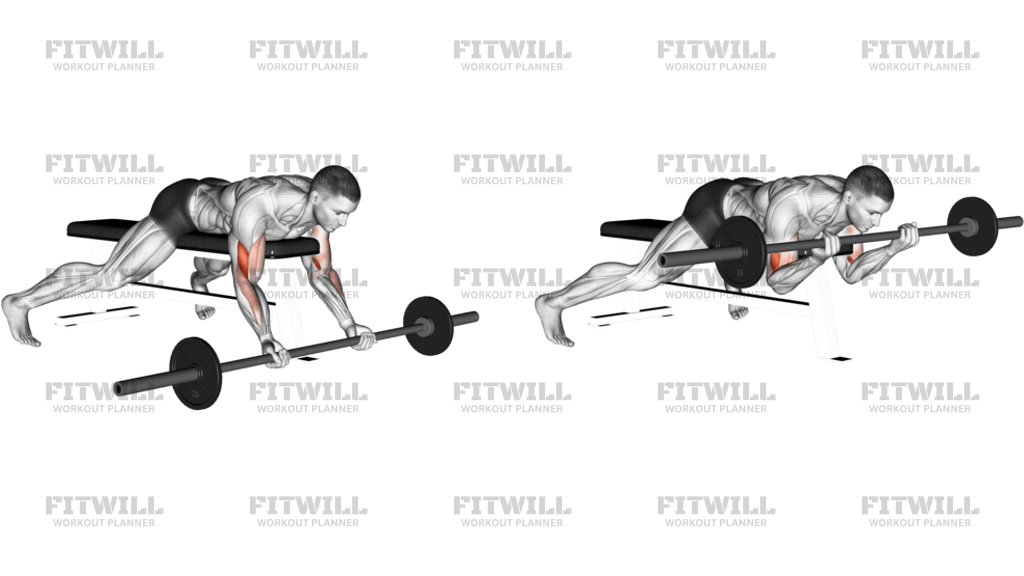
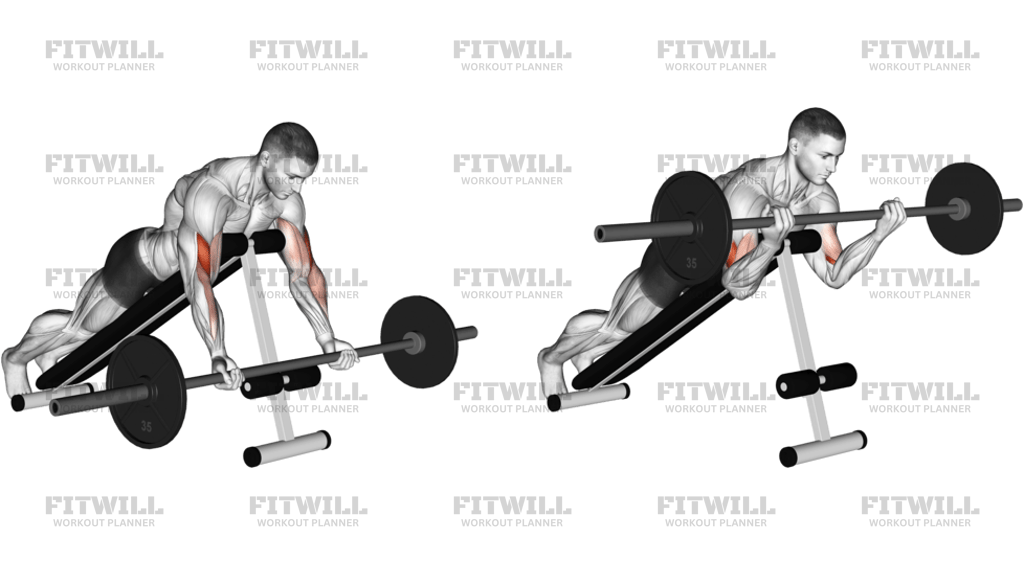
Ez Barbell Standing Back Wrist Curl
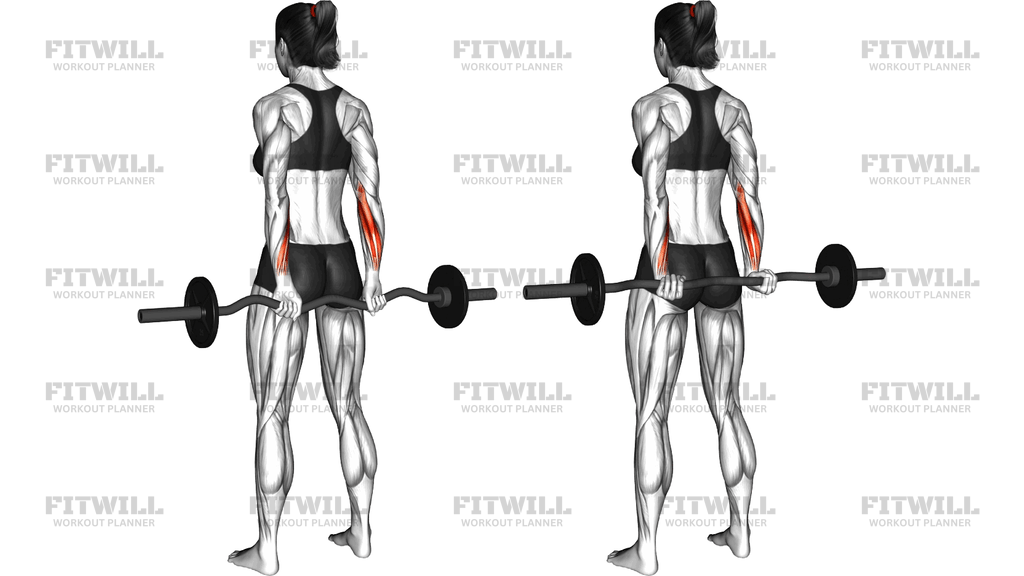
The Ez Barbell Standing Back Wrist Curl is a forearm isolation exercise performed with an EZ barbell held behind your body at arm's length. You stand upright, let the bar rest against your glutes and hamstrings, and curl your wrists upward by flexing at the wrist joint only. The EZ camber of the bar sits your hands at a slightly angled position, which many lifters find more comfortable on the wrists than a straight bar during high-rep flexion work.
This movement primarily trains the wrist flexors on the underside of the forearm, with the flexor carpi radialis and flexor carpi ulnaris doing most of the work and the palmaris longus assisting. Your grip also has to stay engaged the entire time simply to keep the bar from sliding out of your fingers, so the exercise doubles as grip endurance work. Because the bar sits behind you rather than in front, the forearms hang in a slightly stretched position at the bottom of each rep, which gives the flexors a fuller range than many front-facing wrist curl variations.
The standing, behind-the-back setup matters for two reasons. First, with your arms hanging straight down and no bench or thigh to rest on, there is nothing to cheat with — your torso cannot help push the weight, so the wrists do all of the moving. Second, holding the bar behind your hips keeps it clear of your thighs, so you can move through a complete range without the plates or sleeve bumping into your legs at the bottom.
To execute it well, keep the movement small and honest. The elbows and shoulders stay still, the arms stay long, and only the wrists hinge open and closed. Lift by rolling your knuckles and the back of your hand upward until your wrists are fully flexed, pause briefly at the top, then lower the bar under control until your fingers are close to opening at the bottom. Most sets run in the 10 to 20 rep range with a light weight, since the wrist flexors are small muscles and respond better to controlled reps than to heavy grinding.
This exercise suits anyone whose training or daily life leans on grip and forearm strength — pulling movements like deadlifts, rows, and pull-ups all benefit from stronger flexors, and climbers, martial artists, and racket sport players often notice the carryover quickly. It is also a common choice in rehab-style or prehab-style forearm programming because the load is light and the motion is isolated. Start conservatively: if you have never trained your wrists directly, the flexors will likely be far weaker than you expect, and jumping in too heavy is the fastest way to strain the wrist or forearm.
[ Workout Log & Planner ]
Put your next workout in Fitwill
Keep your plan and training log ready when you are.


Instructions
- Load an EZ barbell with light plates and set it on the floor or a rack at about hip height so you can take a secure grip.
- Stand upright with your feet roughly hip-width apart and hold the bar behind your body at arm's length, palms facing backward, letting the bar rest lightly against your glutes and hamstrings.
- Set your hands on the angled sections of the EZ camber so your wrists sit at a natural angle, and let the bar roll down into your fingertips to reach the starting position.
- Brace your core, pull your shoulders back and down, and keep your elbows and upper arms pinned in place against your sides and glutes for the whole set.
- Exhale as you curl the bar upward by flexing only at the wrists, raising the back of your hands toward your body as high as the joints allow.
- Squeeze the wrist flexors hard for a one-second pause at the top, keeping the bar secured in a full closed grip.
- Inhale as you lower the bar slowly, letting your wrists extend until you feel a mild stretch across the underside of your forearms.
- Allow the bar to settle briefly into your fingertips at the bottom, then start the next rep without bouncing.
- Complete all reps, then set the bar down on the floor or rack with a straight back rather than bending over carelessly under fatigue.
Tips & Tricks
- Choose a lighter load than feels impressive — the wrist flexors are small, and going heavy usually turns the set into short, jerky reps where the elbows drift forward to assist.
- If your grip fails before your forearms do, use lifting straps or have a partner help you take the bar into position so your hands only have to hold on during the set, not lift it into place.
- Keep the bar in contact with or just behind your glutes throughout the set; if it swings away from your body, your shoulders are moving instead of your wrists.
- Do not let the bar roll fully out to open fingers at the bottom and then snap shut to lift — control the descent so the flexors work through the stretch instead of catching the weight suddenly.
- The EZ camber should reduce wrist strain, but if one wrist aches, try shifting your hand slightly along the angled grip or dropping the weight a notch before abandoning the movement.
- Pause for a full second at the top of each rep; without the pause, most lifters rush and rely on momentum from the forearm swinging.
- Keep your knees soft rather than locked — a slightly bent knee position makes it easier to stay tall and keeps the bar path stable behind you.
- Because the bar sits behind you, have it set at hip height on a rack or have someone hand it to you; bending down to pick it up mid-set is where the lower back gets careless.
- Higher reps in the 12 to 20 range with strict form generally build the forearms better than low-rep heavy sets on this movement.
Frequently Asked Questions
What muscles does the Ez Barbell Standing Back Wrist Curl work?
It primarily targets the wrist flexors on the underside of the forearm, especially the flexor carpi radialis and flexor carpi ulnaris, with the palmaris longus assisting. Your grip muscles also work continuously to hold the bar throughout the set.
Why hold the bar behind my back instead of in front of my body?
The behind-the-back position lets your arms hang straight down and keeps the bar clear of your thighs, so your wrists can move through a full range without obstruction. It also removes the temptation to rest your forearms on a bench or knees and push with the torso.
Is an EZ bar better than a straight bar for back wrist curls?
For many lifters, yes. The angled camber places the wrists in a slightly turned-out position that feels more comfortable during repeated wrist flexion, though both bars train the same muscles.
How heavy should I go on the Ez Barbell Standing Back Wrist Curl?
Start light — many people begin with just the bar or small plates — and aim for sets of 12 to 20 controlled reps. The wrists take time to adapt to direct loading, and progressing too quickly is the most common cause of forearm strain.
My elbows keep moving during the set. How do I fix that?
Pin your upper arms against your sides and glutes and think of your arms as fixed posts with only the wrists hinging. If the elbows still drift, the weight is too heavy or you are rushing the reps.
Can beginners do this exercise?
Yes, it is actually a good first wrist exercise because the standing position makes cheating difficult and the load can be very light. Beginners should master the small, controlled range before adding weight.
What can I use if I do not have an EZ barbell?
A straight barbell, dumbbells, or a bar/attachment on a low cable work as substitutes. Dumbbells let you train each wrist on its own, which is helpful if one side is weaker.
How does this exercise help my grip strength?
Because the bar rolls toward your fingertips at the bottom of each rep, your fingers and flexors must re-grip and pull it back into the palm on every rep. That constant grip demand builds endurance that carries over to deadlifts, rows, and pull-ups.
Is the Ez Barbell Standing Back Wrist Curl safe for my wrists?
When performed with a light load, a full but pain-free range, and controlled tempo, it is a low-risk isolation movement. Stop if you feel sharp pain, and avoid it temporarily if you have an active wrist or forearm injury until cleared to train.