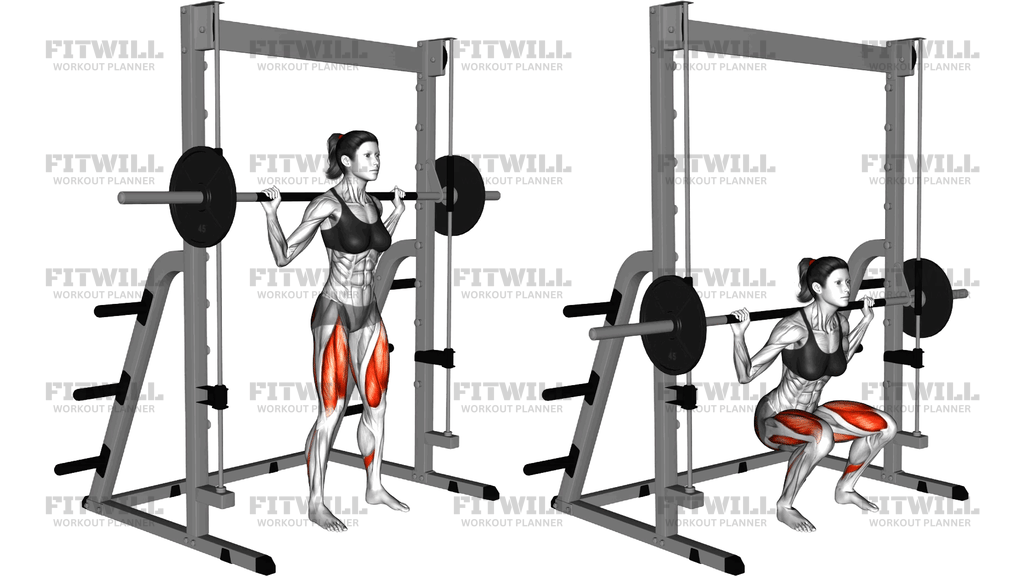
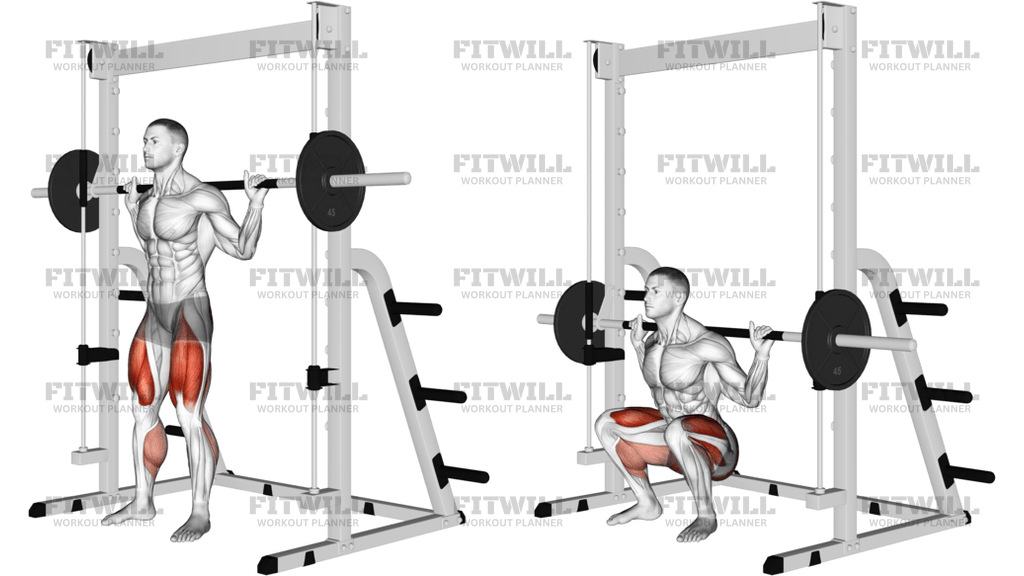
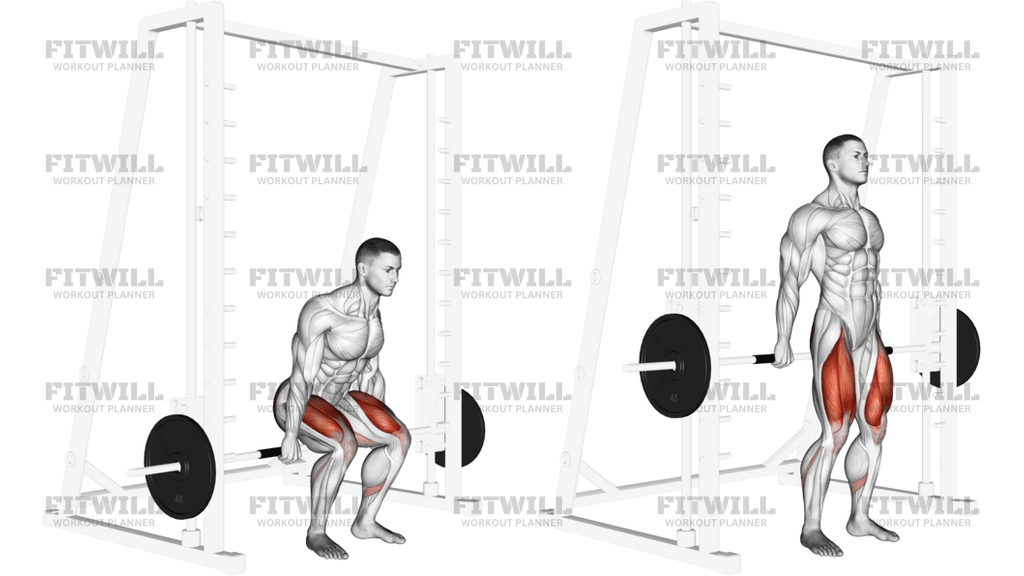
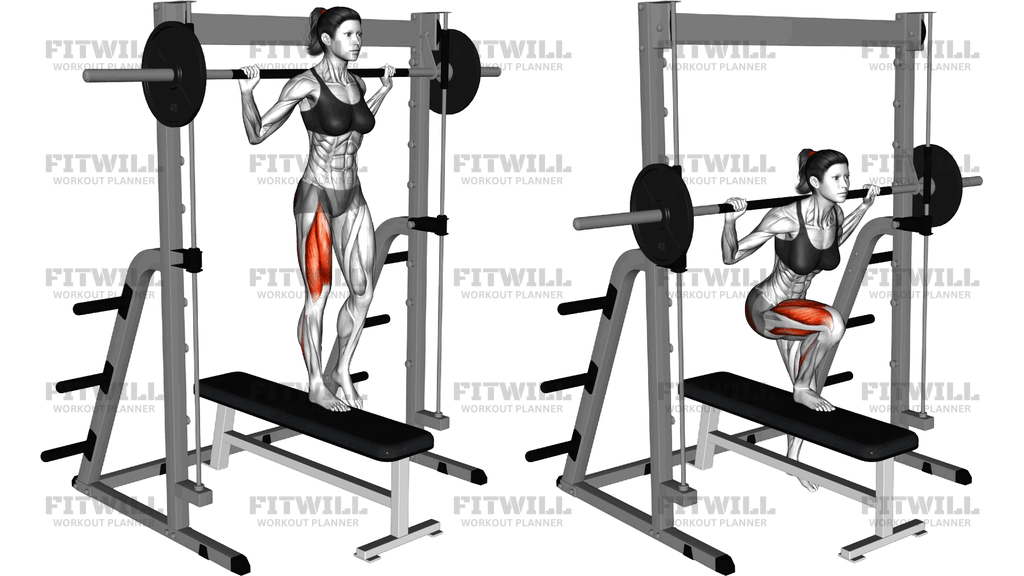
Smith Unilateral Bulgarian Split Squat From Defic
The Smith Unilateral Bulgarian Split Squat From Deficit is a single-leg squat variation performed with the rear foot elevated on a flat bench and the front foot raised on a step platform. The Smith machine bar is held across the front of the shoulders with a clean-style grip, elbows pointing down, which keeps the load fixed on a vertical track while you squat down and drive back up. The deficit under the front foot is the defining detail: it lets the front knee travel further over the toe and the hips sink lower, extending the range of motion well past a standard split squat.
This movement is aimed primarily at the quadriceps, with heavy involvement from the glutes of the front leg as they work through a deep stretch at the bottom. The hamstrings and adductors of the front leg assist, the calf stabilizes the ankle, and the core works to keep your torso upright against the front-loaded bar. Because the load sits on the fixed Smith machine path, your balance demands are lower than with a free-weight barbell, so you can push closer to muscular failure without worrying about tipping sideways.
The deficit setup matters more than it might first appear. Elevating the front foot increases hip and knee flexion at the bottom, which places the glutes and quads under tension through a longer range. That extra depth is where much of the benefit lives, but it also demands decent ankle mobility and controlled tempo. If you rush the descent or bounce out of the stretched position, you lose the targeted loading and invite sloppy knee tracking.
This exercise suits lifters who want to load one leg at a time with meaningful weight while limiting spinal and lower-back stress. It is a common choice for building quad size, addressing left-right strength differences, and training the glutes through a deep range without heavy back squats. Powerlifters and squat-focused athletes often use it as an accessory, while general trainees appreciate that the fixed bar path makes heavy unilateral work feel more secure.
Execution hinges on foot placement and torso position. Set your front foot far enough forward that your shin stays roughly vertical to slightly inclined at the bottom, keep your chest up with the bar resting on the front of your shoulders, and descend until your rear knee hovers just above the floor or your front thigh reaches at least parallel. Drive up through the whole front foot, emphasizing the mid-foot and heel, and avoid letting the rear leg take over the lift.
From a safety standpoint, respect the fixed bar path: your body has to move around the bar, not the other way around. Learn the bottom position with light weight first, use the Smith machine safety stops set just below your deepest point, and step your feet out to a stable stagger before unracking. If your front knee caves inward or your heel lifts off the step, reduce the depth or the load before continuing.
[ Workout Log & Planner ]
Put your next workout in Fitwill
Keep your plan and training log ready when you are.


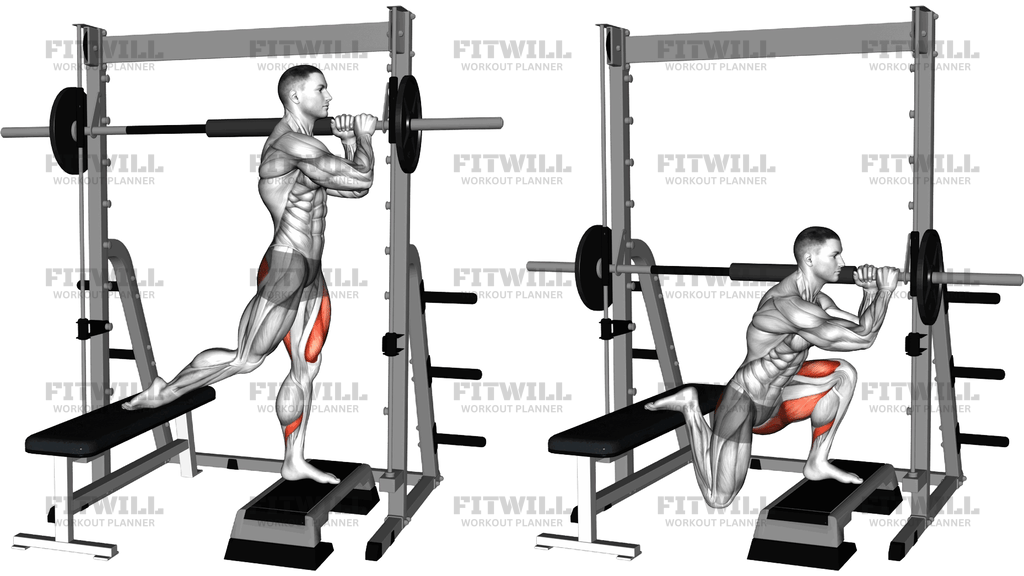
Instructions
- Position a flat bench behind you and place a step platform under the Smith machine bar so your front foot will rest on the elevated surface.
- Set the bar at roughly upper-chest height, load an appropriate weight, and adjust the safety stops just below your intended bottom depth.
- Face away from the bench, place the bar across the front of your shoulders with a shoulder-width clean grip, elbows down and chest tall, then unrack it by straightening your legs slightly.
- Place your entire front foot flat on the step platform and rest the laces or top of your rear foot on the bench behind you, feet about hip-width apart laterally.
- Brace your core and keep your torso upright, then lower straight down by bending the front knee and hip until your rear knee nears the floor or your front thigh reaches parallel or deeper.
- Keep the front knee tracking over the toes and the full front foot in contact with the step at the bottom.
- Exhale and press through the mid-foot and heel of the front leg to drive back up to a full, controlled stand without locking out aggressively.
- Inhale at the top, reset your brace, and complete all planned repetitions on one leg.
- After finishing the first side, re-rack the bar or hold it steady, switch your feet, and repeat the same depth and tempo on the other leg.
- When the set is complete, step the rear foot off the bench first, then step the front foot back and rack the bar securely.
Tips & Tricks
- Set the bench height so your rear hip can drop without the rear foot pulling off the bench; a standard flat bench works for most lifters, but lower the rear foot if your hips feel pinched at the bottom.
- Measure your front-foot distance before loading: if your heel lifts off the step or your knee jams forward uncomfortably, slide the foot back an inch or two on the platform.
- The front-racked position demands upright posture; if your wrists ache from the grip, relax your hands slightly and let the bar rest on the front delts rather than holding it with the arms.
- Do not let the rear leg push the floor — keep the rear foot purely as a kickstand so the front glutes and quads do the lifting.
- Pause for one second in the deep position on the first few reps of each set to confirm balance and knee tracking before speeding up.
- If the front knee drifts inward as you fatigue, drop the weight or cut the set; knee valgus is the most common breakdown in this deficit setup.
- Warm up the ankles with a few bodyweight front-foot-elevated split squats, since the deficit exposes limited dorsiflexion quickly.
- Match reps and depth exactly between legs, using the weaker side to set the load for both.
- Use the Smith machine's fixed path to your advantage by keeping your torso vertical and letting the bar travel straight down over the mid-foot, rather than leaning forward like in a barbell variation.
Frequently Asked Questions
Which muscles does the Smith Unilateral Bulgarian Split Squat From Deficit work the most?
The quadriceps of the front leg are the primary movers, with the front glutes working hard through the deep stretched position. The hamstrings, adductors, calves, and core provide support and stabilization.
Why is the front foot elevated on a step platform in this exercise?
The deficit increases how far the front knee and hip can travel, which deepens the range of motion at the bottom. This places the quads and glutes under tension through a longer path than a standard Bulgarian split squat.
Is the Smith Unilateral Bulgarian Split Squat From Deficit suitable for beginners?
Beginners can do it, but they should start with an empty bar and reduced depth while learning foot placement. The fixed Smith machine path helps with balance, but the deficit makes it more demanding than a regular split squat.
How far should my rear foot be from the bench?
Place the top of your rear foot on the bench so your rear shin and thigh form a comfortable angle at the bottom, with the rear knee hovering just above the floor. If your rear hip feels jammed, move the bench slightly closer or lower the rear foot.
Why is the bar held in front of the shoulders instead of behind the neck?
The front-carry position with elbows down keeps your torso upright and shifts more demand to the quads. It also makes it harder to lean forward and turn the lift into a lower-back-dominant movement.
What is the most common mistake in this movement?
Letting the rear leg push off the bench to help drive up, which steals work from the front leg. Another frequent error is letting the front knee cave inward at the deepest point of the deficit.
What can I use instead of the Smith Unilateral Bulgarian Split Squat From Deficit?
A dumbbell or bodyweight Bulgarian split squat with the front foot on a low step is the closest substitute. A regular Smith machine split squat without the deficit works if ankle mobility limits your depth.
Should I set the Smith machine safety stops for this exercise?
Yes, set them just below your deepest comfortable position. If you lose balance or strength at the bottom, the stops give you a place to set the bar down safely.
How deep should I squat in the deficit setup?
Lower until your front thigh reaches parallel or slightly below, provided your knee tracks over the toes and your full foot stays on the step. Stop earlier if your heel lifts or your knee position breaks down.
Is it safe to do this exercise with a history of knee discomfort?
The deep knee flexion from the deficit loads the knee joint significantly, so start with minimal weight, a shallow deficit, and a reduced range. If discomfort persists beyond normal effort, consult a qualified professional before continuing.