Smith Single Leg Chair Squat
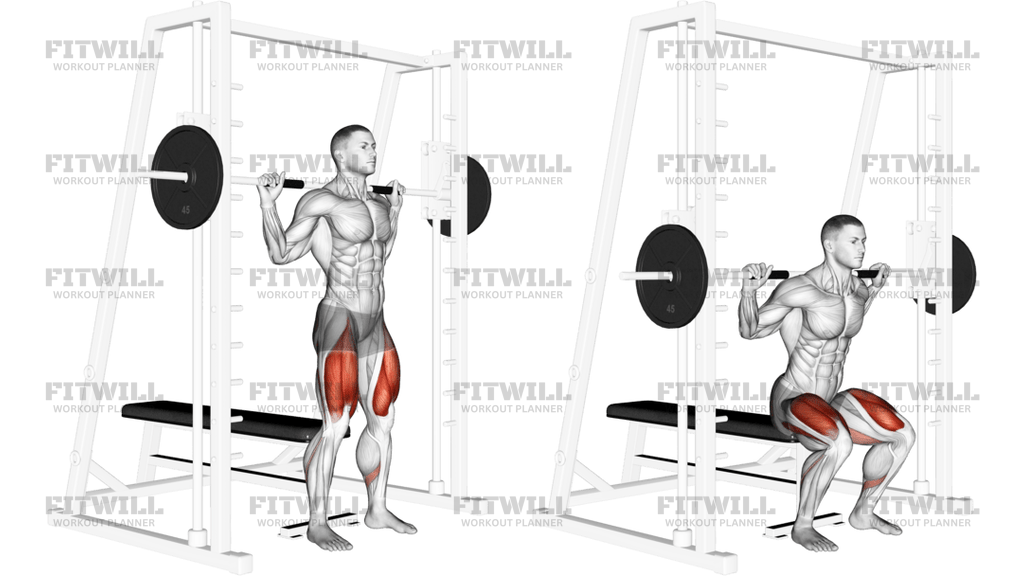
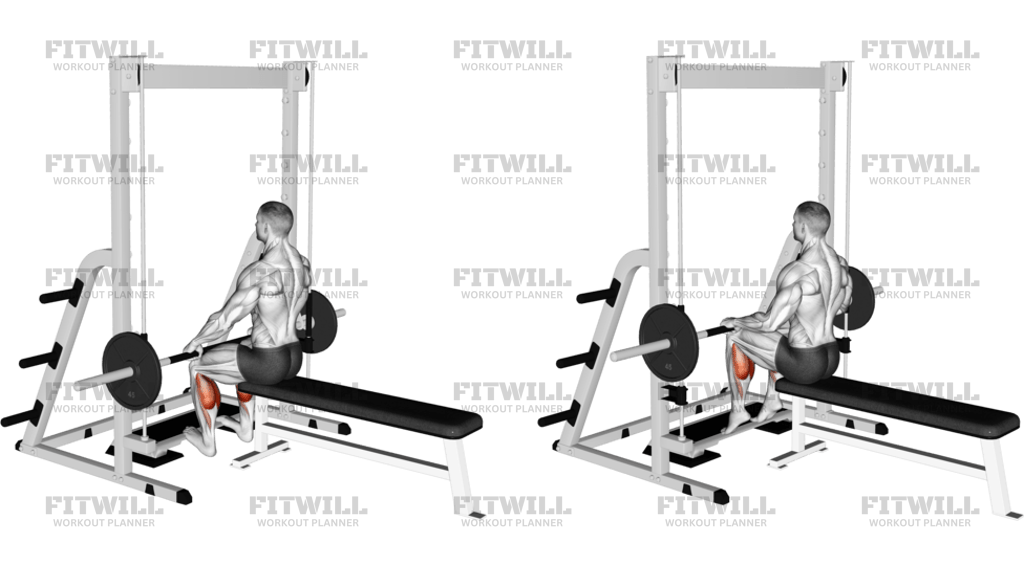
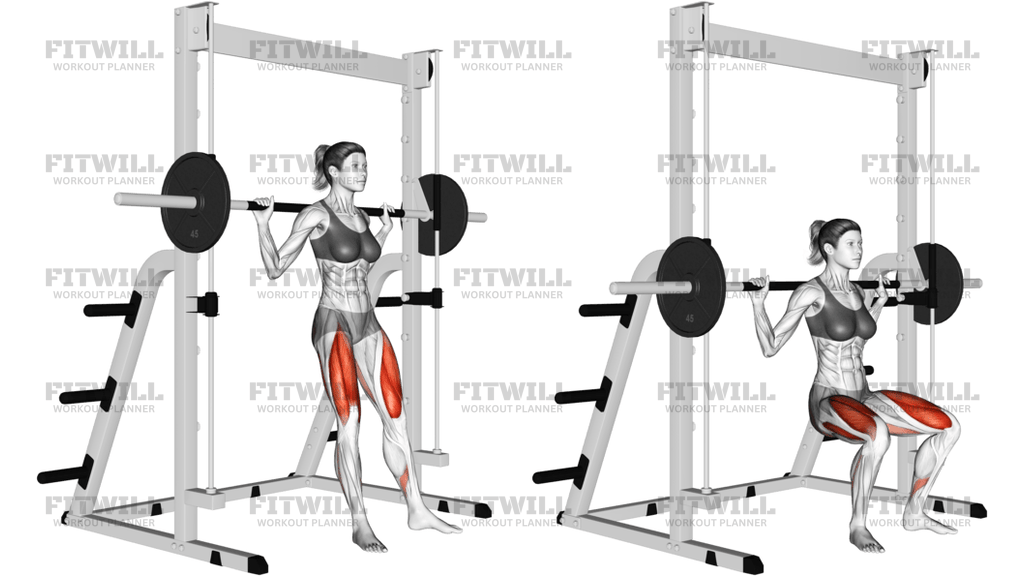
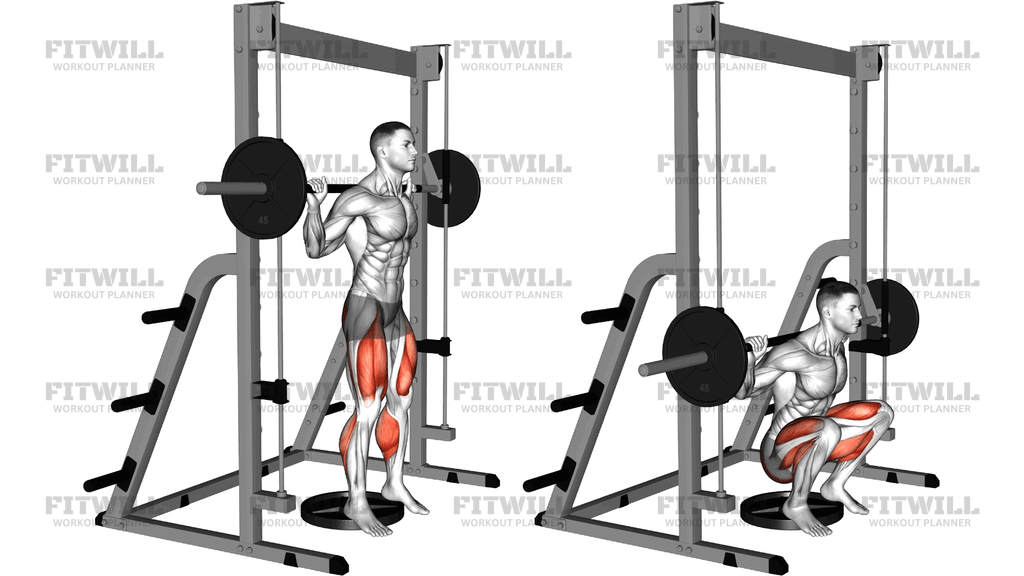
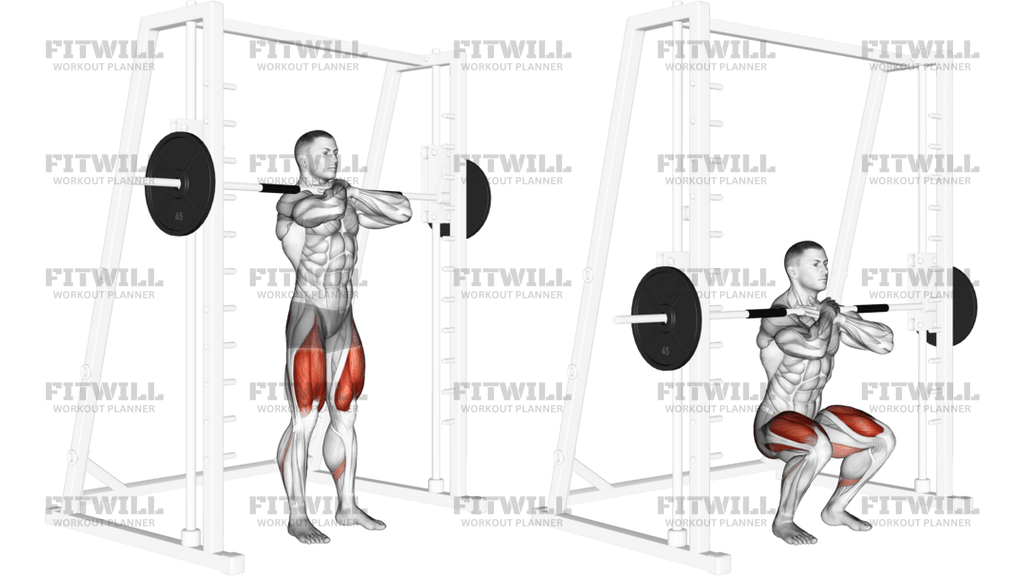
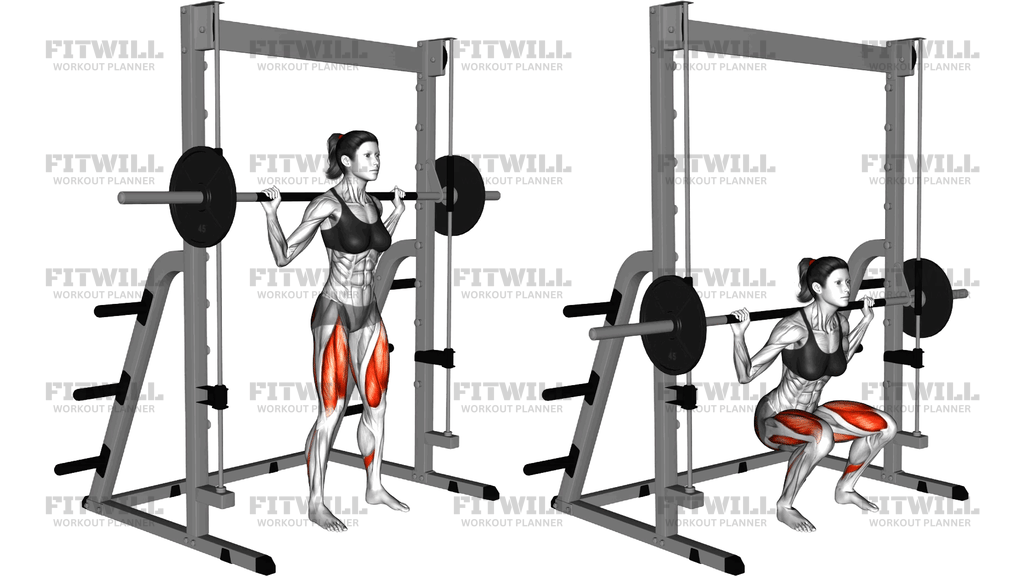
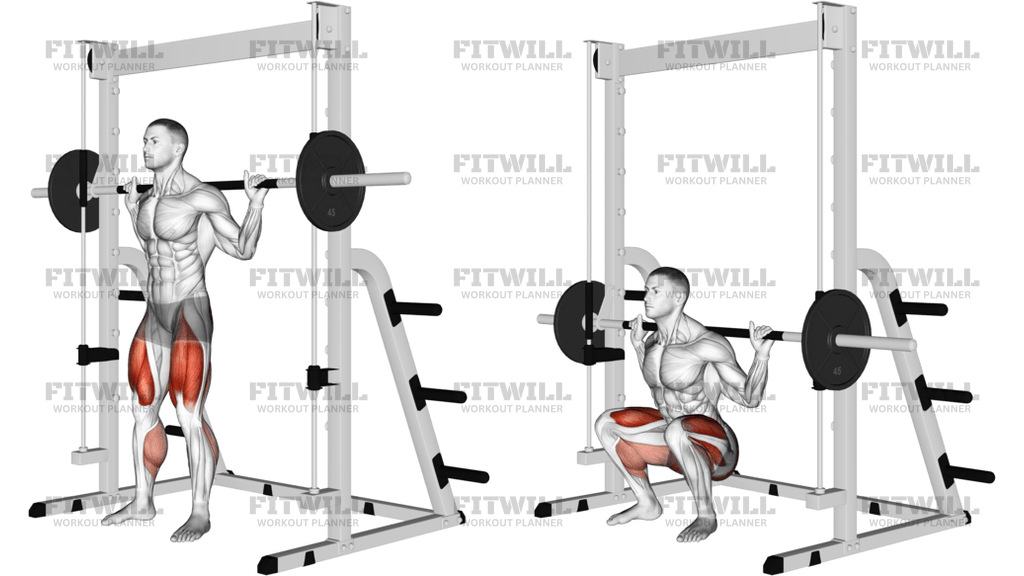
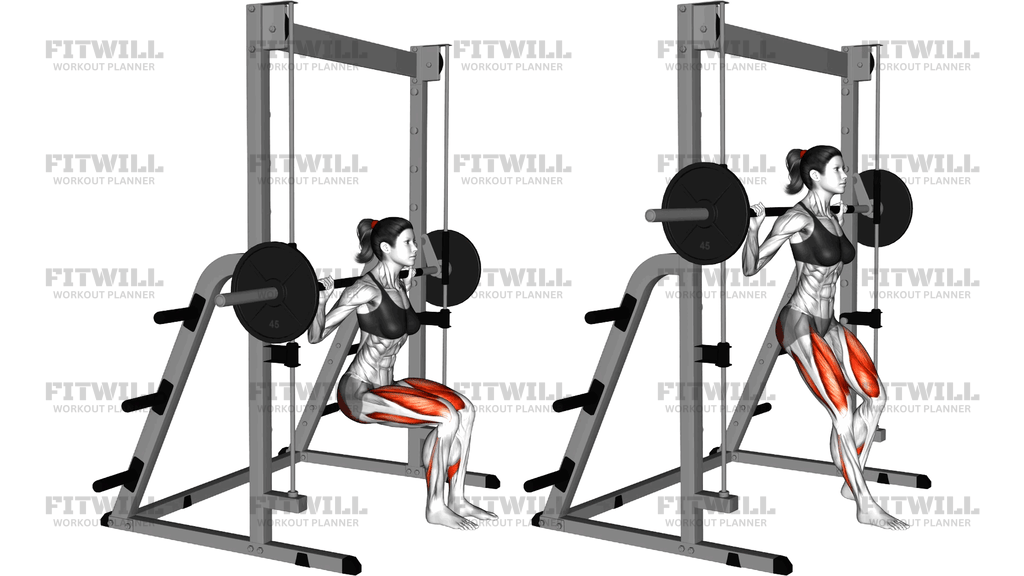
The Smith Single Leg Chair Squat is a one-legged squat performed in a Smith machine with a bench or chair positioned behind you as a depth gauge and safety target. The fixed bar path of the Smith machine removes the balance demands of a free-weight single-leg squat, letting you load the working leg with weight while the bench gives you a clear, repeatable bottom position to sit back toward.
This movement earns its place in a leg program because it exposes and corrects side-to-side differences. Because the Smith machine supports the load for you, you can challenge one leg at a time with far more weight than you could handle in a pistol squat or free-standing single-leg squat, making it useful for lifters rehabbing a weaker side, runners and cyclists who want to even out push strength, or anyone who has outgrown bilateral Smith machine squats.
The main work comes from the quads of the standing leg, which extend the knee through the whole range. The glutes and hamstrings of the working leg handle hip extension, especially as you drive up from the bench, and the calf and foot musculature works to keep you stable over a single base of support. The elevated rear position of the bar on the upper traps keeps your torso more upright than a back squat, which shifts emphasis toward the front of the thigh.
Setup matters more here than in most Smith machine squats. The bench height determines your bottom position: it should roughly match your knee height so you can sit down with control rather than crash onto it. The bar height and your foot placement must let you descend vertically while the bench catches you at the right depth. If your foot is too far forward you will fold at the hips; too far back and your knee will travel past your toes under load.
Execution is straightforward but unforgiving of rushing. Unrack the bar, step one foot forward slightly or let the non-working leg bend behind you, then lower under control until your hips lightly touch the bench. Lightly tap, do not rest, then drive through your whole foot to stand. The fixed bar path means your body has to adapt to the machine, so small adjustments in stance width and distance from the bench change the feel dramatically.
Keep the weight modest for your first several sessions. Single-leg work with a bar on your back doubles the load on one leg instantly, and the Smith machine's fixed path gives you no room to shift and save a rep. Set the safety stops or make sure the bar's locking mechanism works before every set.
[ Workout Log & Planner ]
Put your next workout in Fitwill
Keep your plan and training log ready when you are.


Instructions
- Position a flat bench inside the Smith machine behind the bar, at roughly knee height, so that sitting back from the bar path lands your hips on the bench.
- Set the bar at upper-chest height and place it across your upper traps with a grip slightly wider than your shoulders, elbows pointing down.
- Stand under the bar with your feet hip-width apart, then stagger so your working foot sits flat and centered under the bar and your other foot is either bent behind you or lifted with the knee forward.
- Unrack the bar by rotating it out of the safety hooks, brace your core, and shift your full weight onto the working leg.
- Inhale, then push your hips back and bend the working knee to lower yourself straight down along the machine's fixed path toward the bench.
- Descend until your hips lightly contact the bench, keeping the working heel flat and your shin tracking roughly over your foot.
- Pause briefly without unloading onto the bench, then exhale and press through your heel and midfoot to drive back up to a full stand.
- Complete all reps on one leg, then re-rack the bar, switch legs, and match the rep count on the other side.
- Reset your foot position and brace between reps if you feel yourself drifting off the bar path.
Tips & Tricks
- Adjust bench height before adding weight. If the bench is too low you will round your lower back to reach it; if it is too high you will shorten the range and lose most of the benefit.
- The most common fault is dropping onto the bench instead of lowering to it. If you hear a thud, slow the descent for a two-count.
- Keep your weight on the whole foot, not the toes. Rocking forward onto the ball of the working foot is a sign the bench is too close or the load is too heavy.
- Do not let the non-working leg touch the floor for balance mid-set. If it keeps tapping down, reduce the weight before you reduce the range.
- Keep a slight forward lean, about what you would use for a box squat. Standing perfectly vertical on one leg forces the knee to travel too far forward.
- Start with the bar alone or light plates until the knee of your working leg tracks smoothly over your foot; wobbling at the bottom means the load is ahead of your stability.
- Test the bench position with an empty bar and one slow rep each side before loading. A few centimeters of stance change completely alters the movement.
- Match the left and right leg by rep count and load, not by effort. Let the weaker side set the standard so the gap closes rather than grows.
- Set the Smith machine's safety stops just below your seated bottom position as insurance against a failed rep.
Frequently Asked Questions
What muscles does the Smith Single Leg Chair Squat work?
The quads of the working leg do most of the work through the knee extension, with the glutes and hamstrings driving you up from the bench. The calf and foot muscles contribute stability since you are balanced on one leg.
Is the Smith Single Leg Chair Squat good for beginners?
Yes, with light or no added weight. The Smith machine's fixed bar path and the bench target make it one of the safer ways to learn single-leg squatting, but beginners should master the two-legged Smith machine chair squat first.
How high should the bench be for the Smith Single Leg Chair Squat?
Set it around knee height so your thigh ends up roughly parallel to the floor at the bottom. Lower benches increase the range and difficulty; higher benches make it easier but shorten the work.
Should I sit fully on the bench during the Smith Single Leg Chair Squat?
No. Touch the bench lightly to mark depth, then drive back up. Fully sitting and pausing unloads the working leg and turns each rep into two separate movements.
Where should the bar sit during the Smith Single Leg Chair Squat?
Rest it across your upper traps, the same position as a back squat, with elbows pulled down rather than flared back. Holding it lower on the shoulders can pull you into a forward lean as fatigue builds.
What should I do if my knee hurts during the Smith Single Leg Chair Squat?
Check that your heel stays flat and your knee tracks over your foot rather than caving inward, and reduce the load or raise the bench to shorten the range. Persistent discomfort is a reason to stop and get it assessed.
Can I substitute the Smith Single Leg Chair Squat with a free-weight version?
You can do a body-weight single-leg squat to a bench, or hold a dumbbell in front of you for load. The free-weight versions demand more balance, so use less external weight than you would on the Smith machine.
How does the Smith Single Leg Chair Squat differ from a regular Smith machine squat?
Working one leg at a time roughly doubles the load on each leg, highlights imbalances, and demands far more single-leg stability, even though the machine supports the bar path. Most lifters need considerably less total weight than they use for bilateral squats.
Why do I keep losing balance at the bottom of the Smith Single Leg Chair Squat?
The fixed bar path forces your body to stay in one vertical line, so a foot placement that is too far forward or back pulls you off it. Re-test with an empty bar and adjust your stance until the descent feels smooth before adding weight.