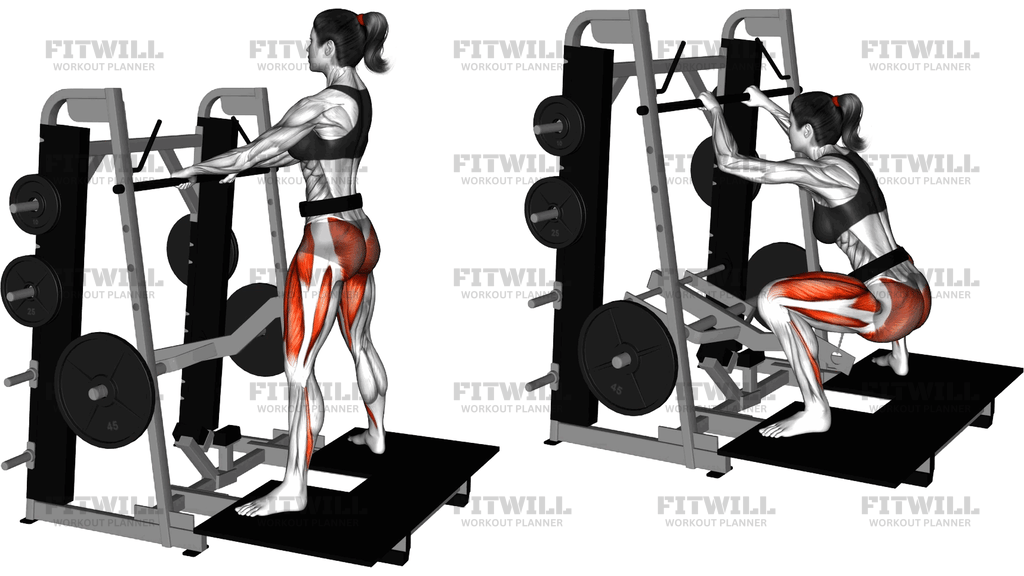
Smith Full Squat
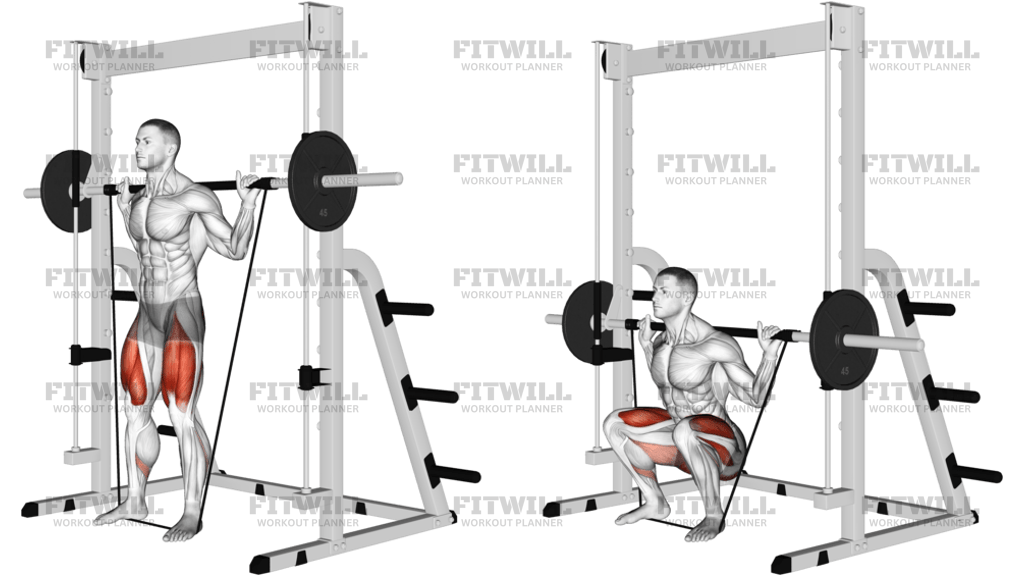
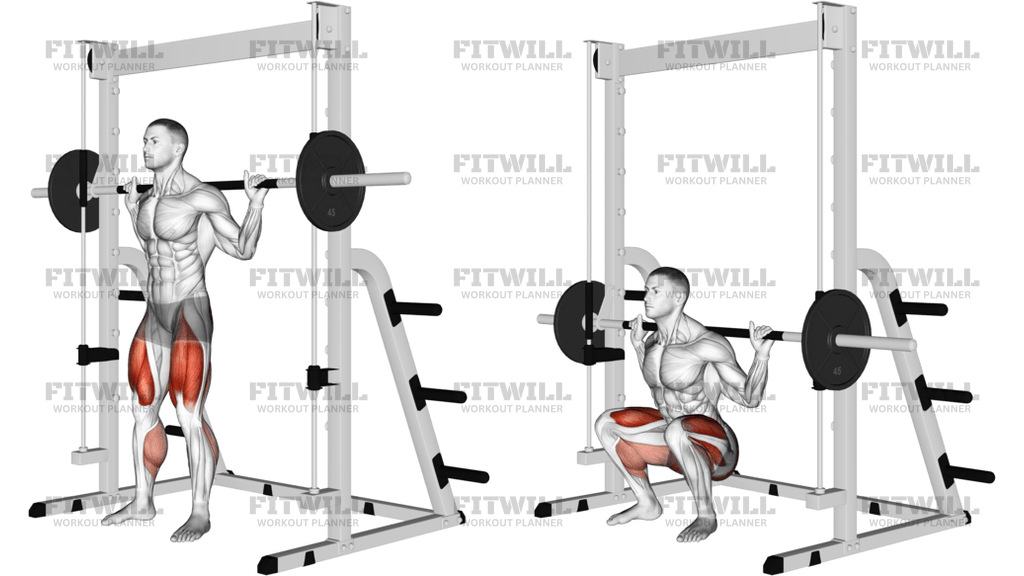
Smith Full Squat is a guided barbell squat performed in a Smith machine with the bar resting across the upper back and the body dropping into a deep, controlled squat. The fixed bar path reduces balance demands, but it also means foot placement and torso angle matter more than they would with a free bar. A good rep keeps the bar centered over the midfoot, the heels rooted, and the knees tracking in line with the toes while you reach full comfortable depth.
This version of the squat is mainly a lower-body strength movement for the thighs and glutes. The primary emphasis is on the quads and glutes, with the hamstrings, adductors, and trunk working to steady the descent and stand back up cleanly. In anatomy terms, the main work centers on the gluteus maximus and quadriceps, with support from the hamstrings, rectus abdominis, and erector spinae. It is useful when you want a repeatable squat pattern, a controlled hypertrophy set, or a machine-based option that makes bracing and load management straightforward.
The setup is what makes the exercise feel natural instead of forced. The bar should sit high enough on the traps that you can keep your chest open without cranking your neck back, and your feet should be set slightly forward of the bar so you can sit down between your hips instead of being dragged straight under the machine. From there, lower with control until the thighs are at least parallel or as deep as your mobility allows without losing heel contact, knee alignment, or lower-back position.
Use the Smith Full Squat when you want the legs to do the work without a lot of stability noise. It fits well in lower-body strength blocks, hypertrophy training, or as a controlled accessory after compound lifts. The exercise rewards patience: a smooth descent, a brief change of direction at the bottom, and a strong drive to standing usually produce better results than forcing extra depth or bouncing out of the hole.
Because the bar path is fixed, poor stance choices show up quickly. If the heels rise, the knees cave, or the hips shoot back and the torso folds, adjust your foot position and reduce the load before adding volume. The best reps are deep, repeatable, and symmetrical, with the bar returning to the rack under control after the final rep.
[ Workout Log & Planner ]
Put your next workout in Fitwill
Keep your plan and training log ready when you are.


Instructions
- Set the Smith bar across your upper traps, stand under it, and unrack it with your feet about shoulder-width apart.
- Place your feet slightly forward of the bar path so you can sit down between your hips while keeping your heels down.
- Lift your chest, brace your trunk, and keep your ribs stacked over your pelvis before you descend.
- Unlock the hips and knees together and lower yourself straight down under control.
- Track your knees in line with your toes and keep pressure through the whole foot, especially the heels and midfoot.
- Descend until your thighs are at least parallel or as deep as you can go without losing posture or heel contact.
- Pause briefly at the bottom without relaxing or bouncing out of position.
- Drive through the floor to stand back up, letting the knees and hips extend together.
- At the end of the set, step the bar back into the hooks only after you are fully upright and steady.
Tips & Tricks
- If the machine feels like it is pulling you forward, move your feet a little farther in front of the bar instead of forcing a more upright torso.
- Keep the bar high on the traps rather than on the neck so you can stay braced without straining the cervical spine.
- Let the knees travel forward naturally; in this setup, forcing the shins to stay vertical usually turns the squat into an awkward hip hinge.
- Use a depth you can repeat on every rep, because one deep rep followed by three shortened reps defeats the purpose of the movement.
- Keep the heels planted through the bottom; if they start to rise, shorten the stance slightly or reduce the load.
- Do not bounce off the bottom of the squat. A short pause helps you own the transition and keeps the Smith bar from jerking upward.
- Exhale as you pass the hardest part of the ascent, then reset your brace before the next rep.
- Stop the set if your lower back rounds, your knees collapse inward, or the bar starts drifting into the hooks.
Frequently Asked Questions
What muscles do Smith Full Squats work most?
They primarily train the quads and glutes, with the hamstrings, adductors, and trunk helping stabilize the lift.
Where should the Smith bar sit on my back?
It should rest across the upper traps, not on the neck, so you can keep your chest open and brace comfortably.
How far forward should my feet be in the Smith machine?
Set them slightly forward of the bar path so you can squat down between your hips instead of being forced straight under the bar.
How deep should I go in the bottom position?
Go as deep as you can while keeping the heels down, knees tracking over the toes, and the lower back neutral.
Why does the Smith squat feel different from a free-bar squat?
The fixed bar path reduces balance demands and changes the stance you need, so foot placement and torso angle become more important.
Can beginners use this exercise?
Yes, it can be beginner-friendly if the load is light and the stance lets you reach depth without tipping forward or rising onto the toes.
What should I do if my knees cave inward?
Lower the load, narrow or widen the stance slightly, and focus on pressing the knees in line with the toes on every rep.
Is it okay to pause at the bottom?
Yes. A short pause can improve control and keep you from bouncing out of the hole with the Smith bar.