Smith Full Squat
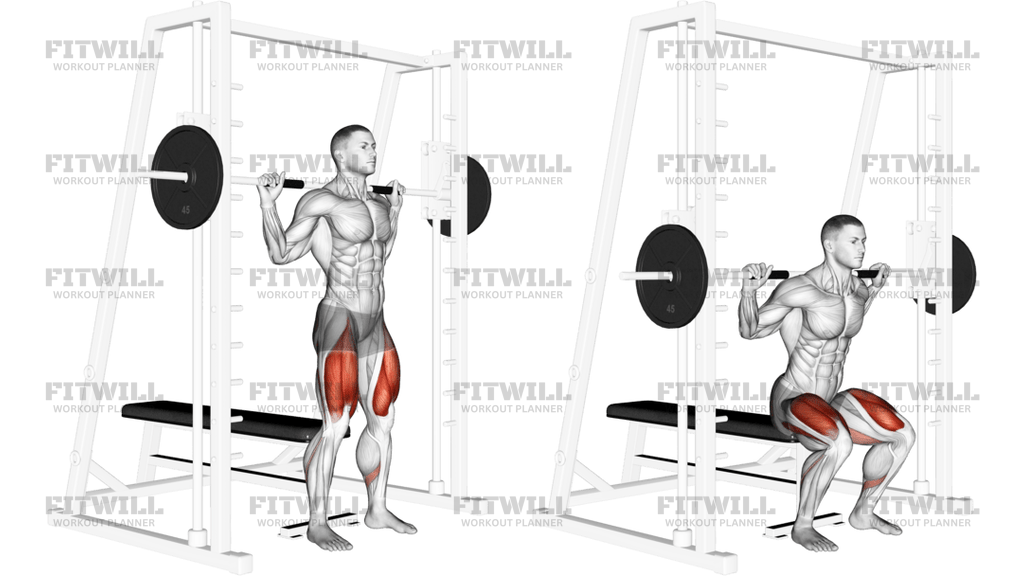
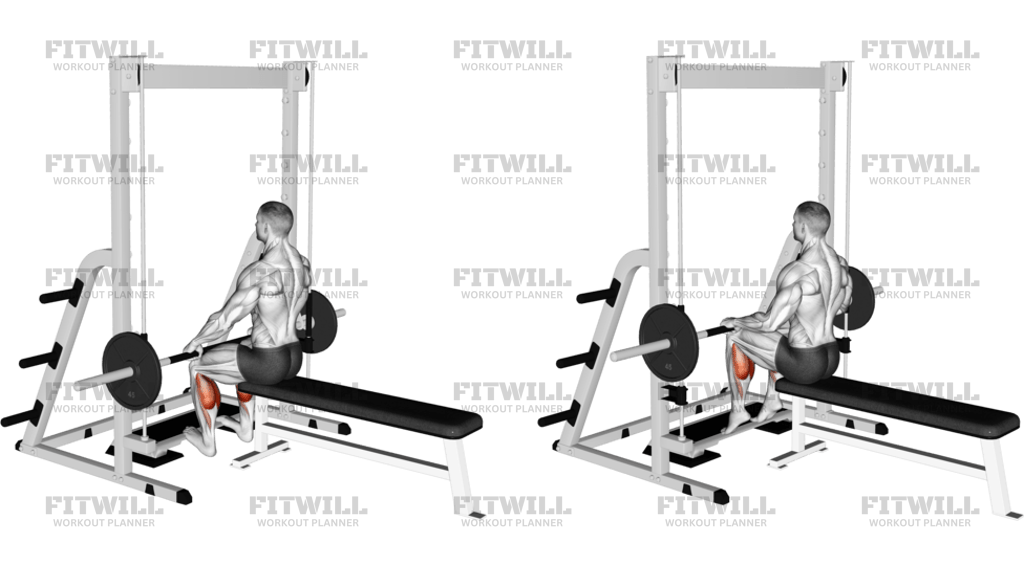
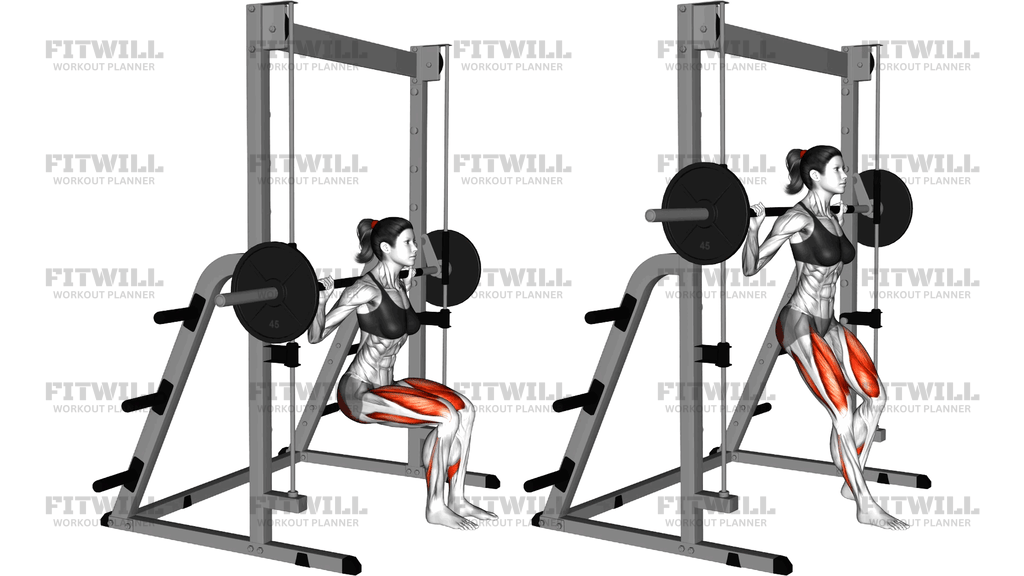
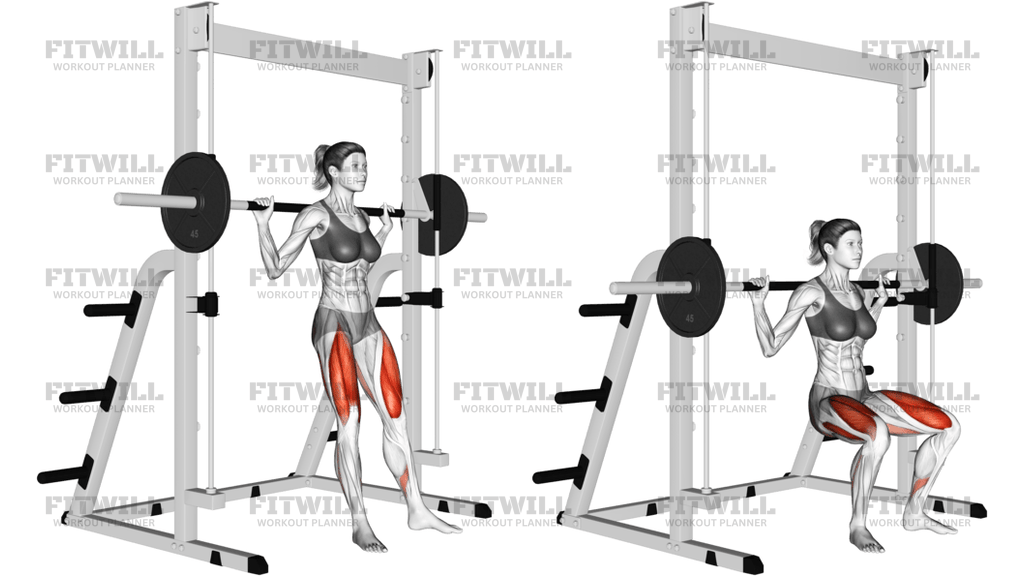
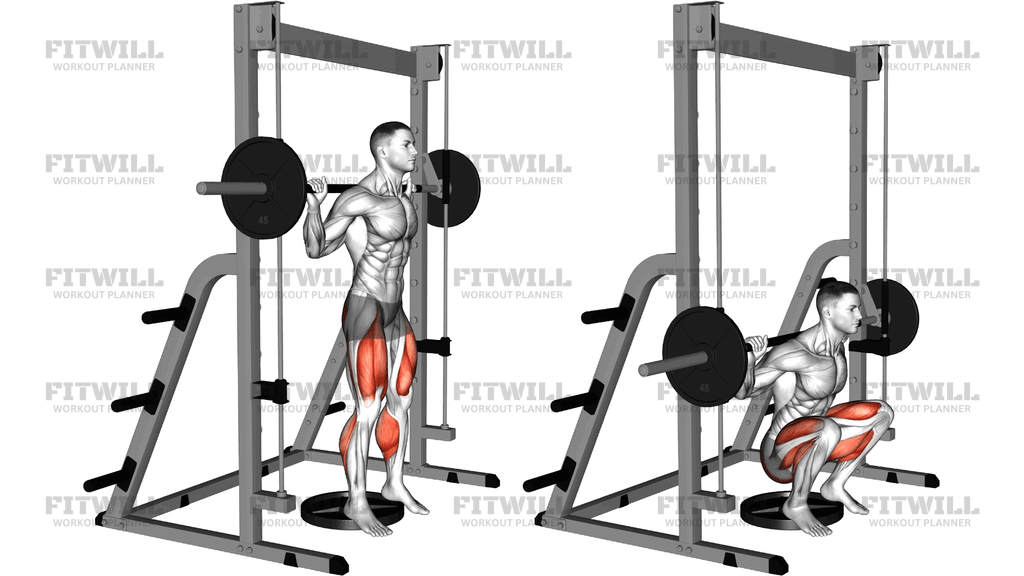
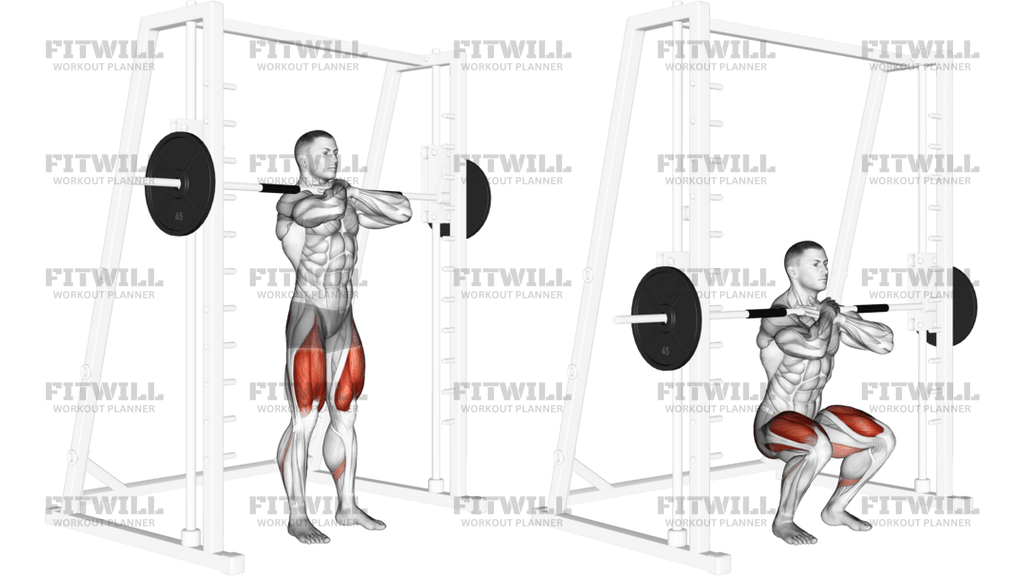
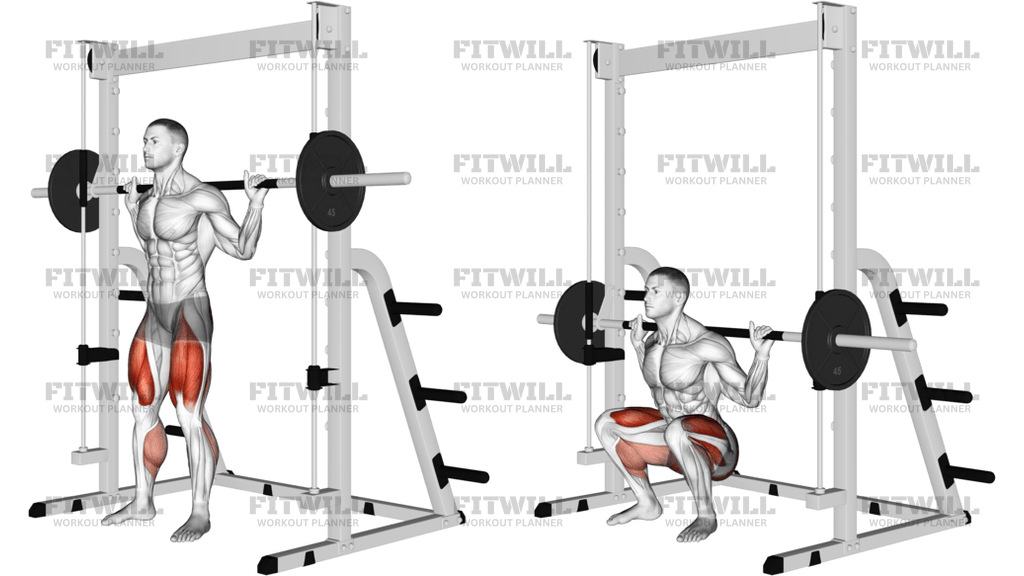
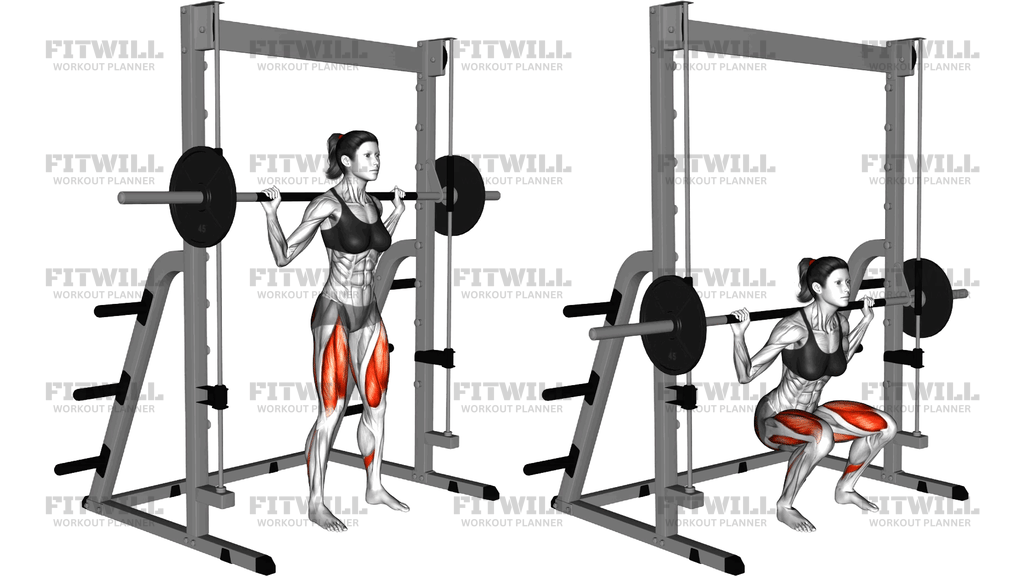
The Smith Full Squat is a barbell squat performed inside a Smith machine, with the bar resting across the back of your shoulders and the descent taken all the way down until your thighs break parallel and your hips sit close to your heels. Because the bar travels on fixed vertical rails, the machine handles the balance work for you, which lets you concentrate entirely on squatting deep with a controlled tempo and an upright torso.
This movement primarily trains the quadriceps, with strong involvement from the glutes and hamstrings as you approach the bottom position. Going full depth is what separates it from a partial machine squat: the deeper your knees and hips flex, the more the glutes and hamstrings contribute to driving you back up, and the more the quads work through a complete range.
The fixed bar path is the main reason lifters choose this variation. Beginners can learn what a deep squat feels like without worrying about tipping forward or backward, and more experienced lifters can use it to push close to muscular failure safely, since re-racking the bar only requires a small wrist rotation rather than a spotter. It is also a practical option when training alone with heavy loads or when working on squat depth and bottom-position strength.
Setup matters more than people expect, even with the bar locked to its rails. Set the bar height so you can unrack it with a slight knee bend rather than standing on your toes, and place your feet a step or two in front of the bar so your shins stay close to vertical as you descend. This forward foot position lets your knees travel naturally over your toes and keeps the load on your legs instead of straining your knees or lower back.
To perform it well, keep your chest up, your elbows tucked under the bar, and your weight spread across your whole foot. Push your hips back and down, let your knees track in line with your toes, and descend until your hip crease drops below the top of your knee. Drive up through your mid-foot, exhaling as you rise, and finish each rep with your hips and knees fully extended before starting the next one.
A few practical safety points: never bounce out of the bottom, keep your heels flat on the floor at all times, and make sure the bar's safety stops or rotating catch mechanism is engaged before your first rep. Because the machine removes the stabilizing demand of a free-weight squat, treat it as a tool for depth, volume, and controlled overload rather than a complete replacement for barbell squatting.
[ Workout Log & Planner ]
Put your next workout in Fitwill
Keep your plan and training log ready when you are.


Instructions
- Set the Smith machine bar at roughly upper-chest height and load plates evenly on both sides, securing them with collars.
- Step under the bar and rest it across your upper back on the trapezius muscles, gripping the bar with hands slightly wider than shoulder width and elbows pointing down.
- Unrack the bar by rotating it forward off the catches, then take one or two small steps forward so your feet are planted slightly ahead of the bar, about shoulder-width apart with toes turned out 10 to 20 degrees.
- Brace your core as if bracing for a light punch, lift your chest, and look straight ahead at a fixed point on the wall.
- Inhale, then push your hips back and bend your knees together, letting the bar glide straight down its rails while your knees track over your toes.
- Descend until your hip crease drops below the top of your knees, keeping your heels flat and your lower back in a neutral position.
- Drive up through your mid-foot and exhale as you extend your hips and knees, pushing the floor away until you are standing tall.
- Pause briefly at the top without locking your knees hard, then reset your brace before the next repetition.
- After your final rep, step your feet back under the bar, rotate it back onto the catches, and confirm it is secured before letting go.
Tips & Tricks
- The most common mistake with this setup is placing the feet directly under the bar. Because the Smith machine locks the bar on a vertical path, feet too far back force your knees far past your toes and jam the bottom position. Step forward until your shins are near vertical at the bottom.
- Do not bounce out of the hole to gain momentum. In a full-depth Smith squat the rebound shifts stress to the knee joint and takes tension off the glutes and quads. Pause for a beat at the bottom if you catch yourself rebounding.
- If your heels lift as you descend, widen your stance slightly or turn your toes out a little more. The fixed bar path exposes ankle mobility limits faster than a free-weight squat, so a small stance adjustment often fixes it.
- Keep the bar contacting the same spot on your upper back for the whole set. Leaning forward or letting the bar slide onto your neck changes your center of gravity and rounds your lower back.
- Set the machine's safety stops just below your deepest rep height. If you fail a rep at the bottom, you can sit back into the safety position and slide out from under the bar rather than being pinned.
- Match your foot position exactly on every set by marking the floor or noting your toes relative to the machine base. Small changes in foot placement noticeably change which muscles the movement emphasizes.
- Control the descent for two to three seconds. The rails make the eccentric easy to cheat, but a slow lower is where much of the quad and glute stimulus of this exercise comes from.
- If you feel pinching at the front of your hips at full depth, do not force past it. Reduce depth slightly for a few weeks and work on hip mobility before returning to the full bottom position.
Frequently Asked Questions
Which muscles does the Smith Full Squat work the hardest?
The quadriceps do most of the work throughout the lift, while the glutes and hamstrings take on a large share near the bottom and during the drive back up. Your core and lower back stabilize your torso under the bar.
How is the Smith Full Squat different from a regular barbell back squat?
The Smith machine bar is fixed to vertical rails, so it removes the forward lean and balance demands of a free barbell. This makes it easier to sit deep with an upright torso, but it trains the stabilizing muscles less than the free-weight version.
Why do my feet need to be in front of the bar for the Smith Full Squat?
The bar travels straight down, but in a natural squat your hips travel backward. Standing a step ahead of the bar lets your hips drop behind your heels so the movement matches your body's mechanics instead of forcing your knees into an awkward position.
How deep should I go on the Smith Full Squat?
The defining feature of this variation is full depth: descend until your hip crease drops below the top of your knees, as long as you can keep your heels flat and your lower back neutral. If your form breaks down at the bottom, build up depth gradually.
Is the Smith Full Squat a good starting point for beginners?
Yes, it is one of the safest ways to learn a deep squat pattern because the fixed bar path removes balance concerns and the safety catches make failing a rep low-risk. Once your depth and control are solid, transitioning to a free-weight squat is a natural next step.
Can I train heavy and alone with the Smith Full Squat?
That is one of its main advantages. To escape a failed rep, rotate the bar back onto the catches or lower yourself onto the safety stops set just below your bottom position, then step out from under the bar.
Why do my knees ache in front of the bar path during this exercise?
Front-of-knee discomfort usually means your feet are placed too far back, forcing your knees well past your toes with the load pressing straight down. Move your feet forward so your shins stay closer to vertical throughout the descent.
What can I use instead if my gym has no Smith machine?
A barbell back squat in a power rack with safety pins set just below your depth is the closest substitute, followed by a hack squat or leg press machine. Goblet squats with a dumbbell or kettlebell work well for learning full-depth positioning with lighter loads.
How does foot width change the emphasis of the Smith Full Squat?
A shoulder-width stance with toes slightly out keeps the emphasis on the quadriceps, while a wider stance with more forward foot placement shifts a greater share of the work to the glutes and inner thighs. Keep your knees tracking in line with your toes in either version.