Kettlebell Reverse Grip Row
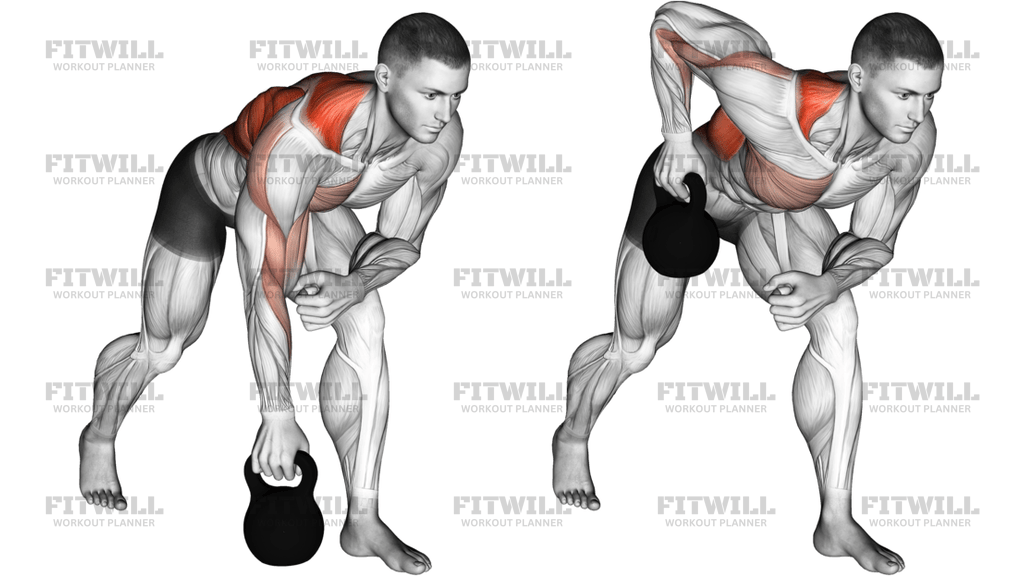
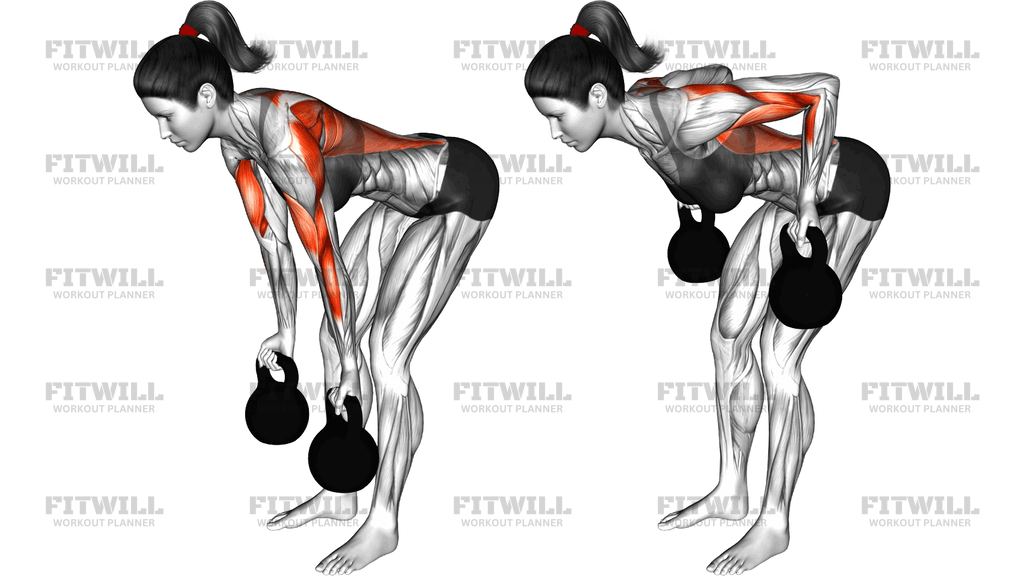
The Kettlebell Reverse Grip Row is a bent-over row with two kettlebells held using a supinated, or underhand, grip. You hinge the torso, let the bells hang, then pull them toward the waist with the palms facing forward. The reverse grip lets the elbows stay closer to the body and brings the biceps in as strong helpers while the lats still do the main pulling.
This is a good option when you want a row that feels more like an underhand barbell row but you only have kettlebells. The handles sit in front of the bells, so you have to row without letting the weights drift forward and yank the shoulders. It belongs on a back day or as a pulling accessory. It is not a shrug and not a curl performed while bent over.
The lats pull the upper arms back to the ribs. The biceps help because the palms face up. The rear shoulders and mid-back finish the squeeze. The hinge muscles hold the position. A clean rep ends with the kettlebells close to the body at the waist, elbows tucked, and the torso still.
Stand with the feet about hip-width, kettlebells just outside the feet. Hinge until the back is flat and the arms hang. Turn the palms forward so you have a true reverse grip on both handles. Pack the shoulders, soften the knees, and brace the abs before the first pull.
Exhale and row both kettlebells up along the sides of the legs until the handles reach the waist. Keep the elbows close and the wrists straight. Pause with the shoulder blades in, then lower the bells until the arms are long. Inhale on the way down. Do not let the kettlebells swing away from the body at the bottom.
Use 8 to 12 reps with a load you can pause. If the biceps take over completely, you are curling instead of rowing the elbows back. If the low back rounds, raise the torso or drop the weight. Set the bells down by standing up with a hip drive, not by dropping them from the hang. The Kettlebell Reverse Grip Row also works as a bridge toward chin-up strength, because the underhand pull trains the same elbow path.
[ Workout Log & Planner ]
Put your next workout in Fitwill
Keep your plan and training log ready when you are.


Instructions
- Stand with a kettlebell on each side of your feet, then hinge forward until your back is flat and your arms can reach the handles.
- Grip both kettlebells with the palms facing forward so you have a reverse, underhand grip.
- Soften your knees, brace your abs, and let the bells hang under your shoulders.
- Pull your shoulders down away from your ears before you row.
- Exhale and row both kettlebells up along your sides until the handles reach your waist and the elbows stay close.
- Pause and squeeze the shoulder blades together without shrugging.
- Inhale and lower the kettlebells until your arms are straight, keeping the bells close to your body.
- Repeat for the planned reps, then stand up by driving the hips forward and set the kettlebells down.
Tips & Tricks
- Reverse grip means palms forward, not a mixed grip. Matching both hands keeps the torso square.
- Row to the waist, not the chest. Pulling high with an underhand grip often turns this into a curl.
- Keep the kettlebells close. If they drift forward, the shoulders dump and the low back takes the hang.
- A slightly higher hinge is better than rounding just to get the bells off the floor.
- Squeeze two seconds at the top. The extra biceps help is wasted if you bounce the reps.
- If one wrist folds back, lighten that side. A bent wrist in a reverse-grip row is a fast way to irritate the joint.
- Do not bounce the kettlebells off the floor. Start from a dead hang each time.
- Stop when you cannot keep the elbows tucked. Flaring late in the set means the lats have quit.
Frequently Asked Questions
What muscles does the Kettlebell Reverse Grip Row work?
It primarily works the lats, with more biceps involvement than an overhand row, plus the rear shoulders and mid-back at the squeeze.
What is a reverse grip on the Kettlebell Reverse Grip Row?
The palms face forward, underhand, as you hang and row. It is the same idea as an underhand barbell row.
Why use kettlebells instead of a barbell?
Each arm can row on its own line, and many home gyms have kettlebells but no bar. The offset handles just require you to keep the bells close.
Should my elbows stay tucked?
Yes. A reverse-grip row is a close-elbow pull to the waist. Wide elbows belong in a different row.
Is this harder on the biceps?
It uses the biceps more than an overhand row. If the arms fail first, use a lighter pair or switch to a neutral grip.
How bent over should I be?
Hinge until the back is flat and the kettlebells can hang without dragging. Parallel is ideal; a bit higher is fine if it keeps the spine long.
Can I row one kettlebell at a time?
Yes. A single-arm reverse-grip row is a good way to even out sides or to reduce lower-back demand.
How many reps should I do?
Eight to twelve paused reps works well. If you cannot pause at the waist, the kettlebells are too heavy.