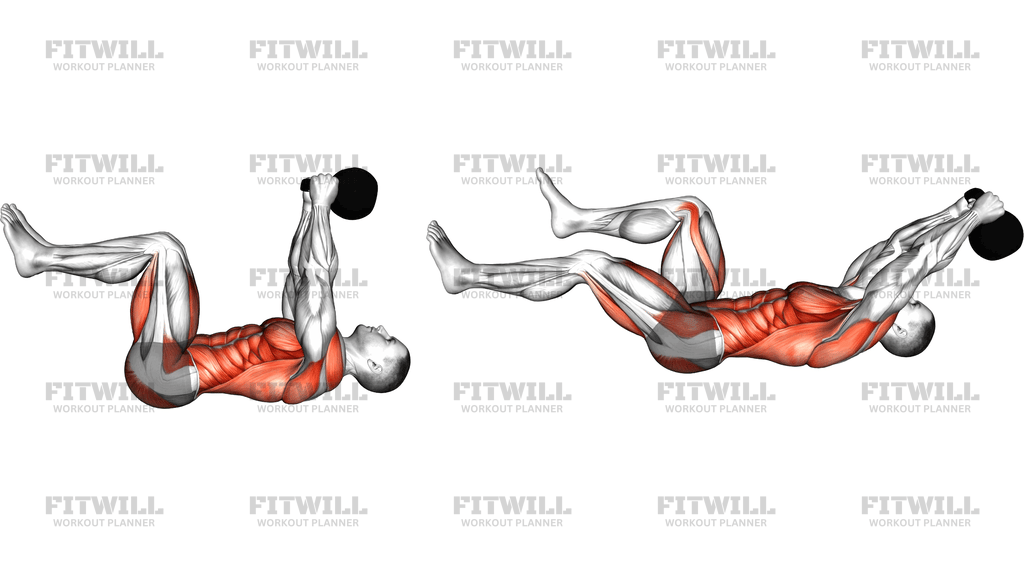
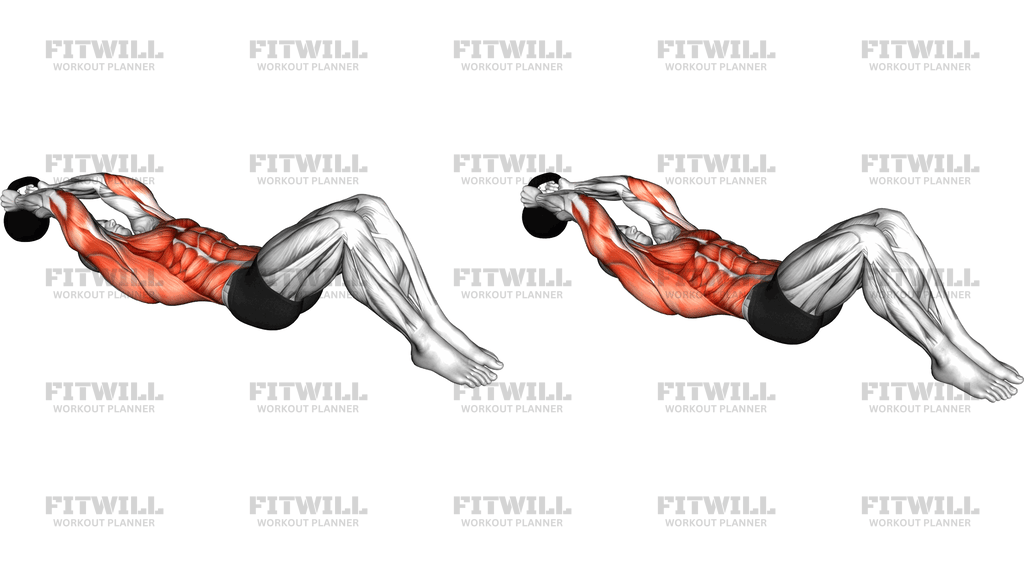
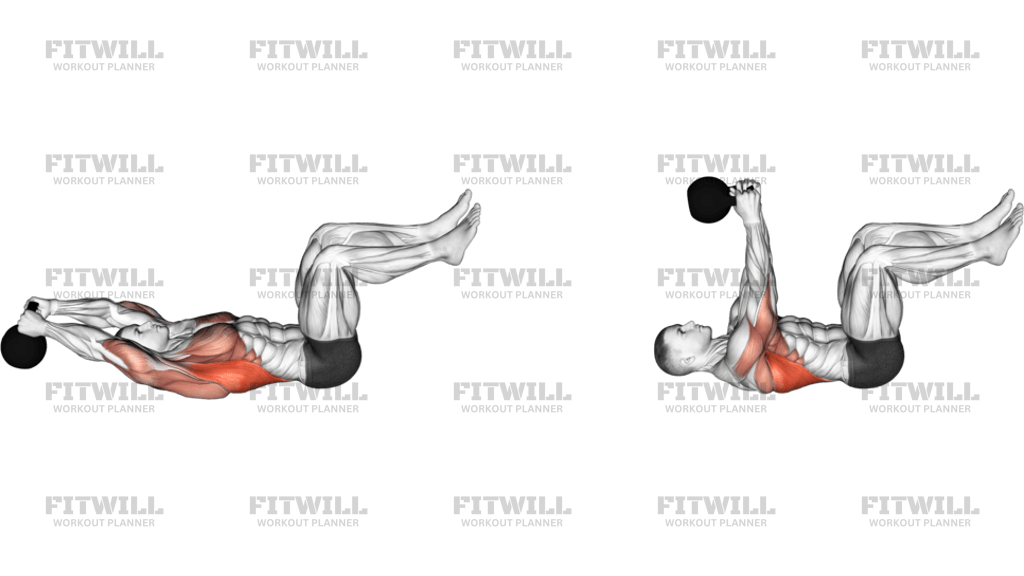
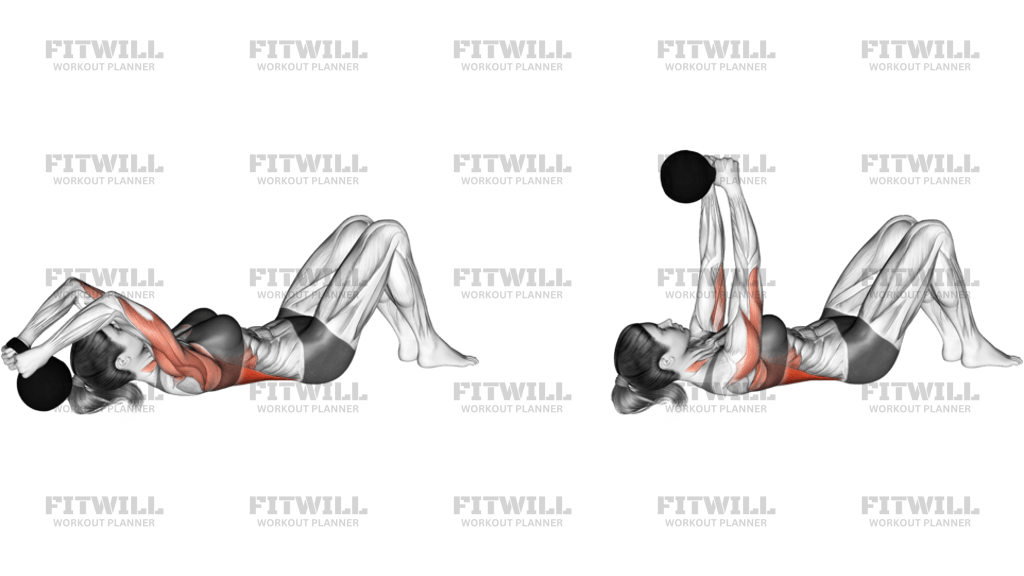
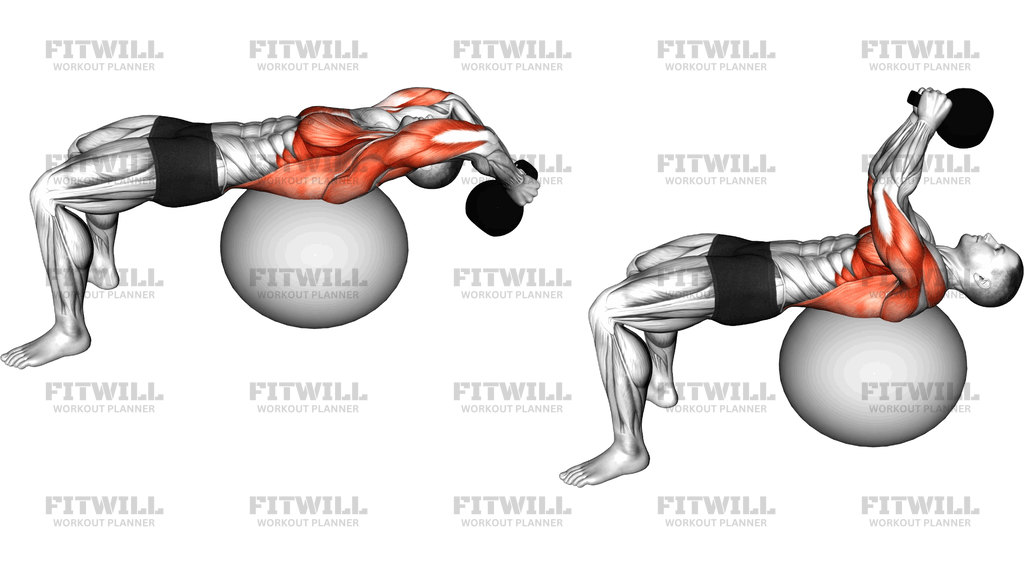
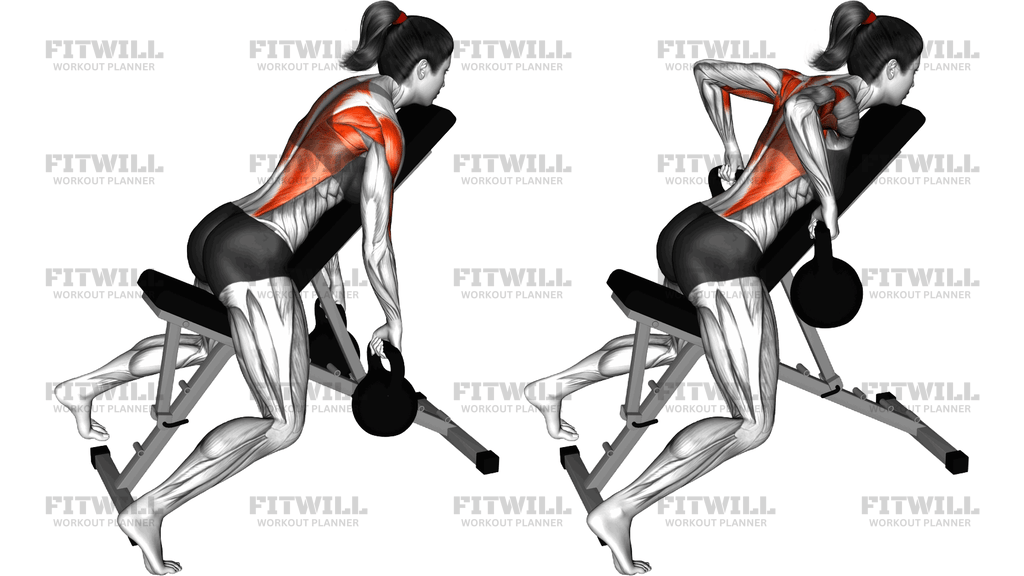
Kettlebell Incline Pullover
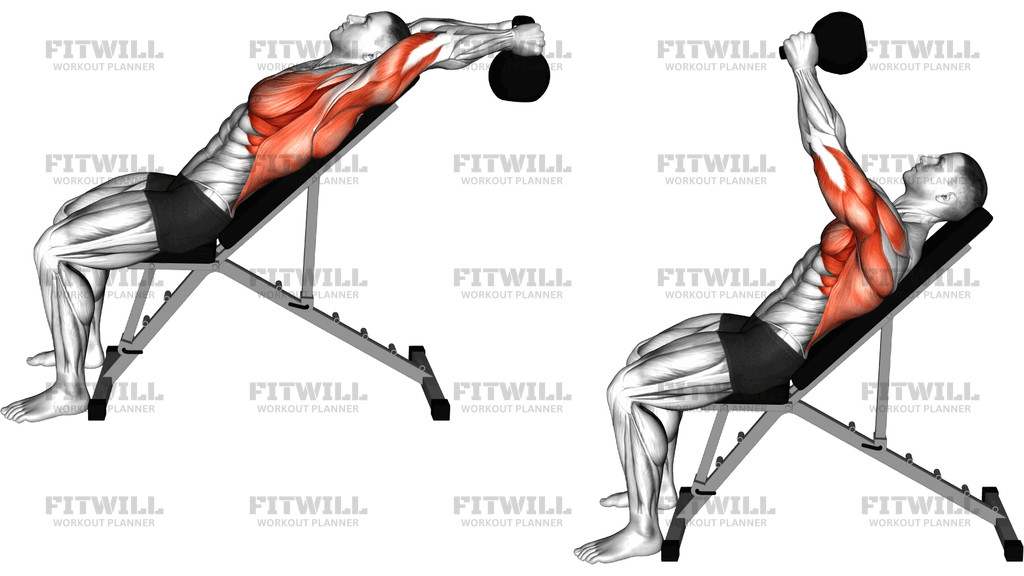
The Kettlebell Incline Pullover is an arc-shaped upper body exercise performed lying back on an incline bench while holding a single kettlebell with both hands. You lower the kettlebell in a smooth arc back over your head until your arms are extended past parallel with your torso, then pull it back up until it sits directly above your chest. The incline angle separates this from a flat-bench pullover by shifting the stretch and the pulling work higher into the chest and the lats, while the kettlebell's offset handle changes the grip and balance compared to the traditional dumbbell version.
This movement primarily trains the lats and chest through a long range of motion, with the triceps long head, serratus anterior, and grip working to control the weight overhead. Because the shoulder travels into deep extension under load, it also challenges shoulder stability and core control, since your torso has to stay braced on the bench while the arms move independently of it. Lifters who want a bigger lat stretch, better overhead arm mechanics, or an accessory that bridges pressing and pulling patterns tend to get the most out of it.
Setup matters more here than in most pulling exercises. An incline bench set to roughly 30 to 45 degrees puts your torso at an angle where the kettlebell can travel behind your head without scraping the floor or dragging your shoulders off the pad. Your feet stay planted, your hips and upper back stay in contact with the bench, and the kettlebell is held by the horns or the handle with both hands stacked so the bell hangs in a predictable line. Rushing the setup or letting the hips lift is where most of the sloppiness starts.
Execution should feel like drawing a wide arc with your hands rather than pressing or rowing in a straight line. Extend the arms almost fully, keep a soft bend in the elbows, and lower the kettlebell back in a controlled path until you feel a stretch across the lats and chest. Pause briefly, then pull through that same arc using the lats and chest, exhaling as the bell comes back over the top of your chest. The weight stays under your control at every point; the kettlebell should never swing or drop past the point where your lower back arches off the bench.
Choose a kettlebell you can handle for slow, deliberate reps rather than a heavy bell that forces momentum. Start lighter than you think you need, because the stretched position behind your head is far more demanding than the top of the rep. If you are new to pullovers, practice the path with no weight or a very light bell first to learn where your comfortable end range stops. Anyone with shoulder irritation, particularly with overhead positions, should keep the arc shallow and stop well short of any pinching or discomfort.
[ Workout Log & Planner ]
Put your next workout in Fitwill
Keep your plan and training log ready when you are.


Instructions
- Set an incline bench to roughly 30 to 45 degrees and place a kettlebell on the floor within easy reach of the top of the bench.
- Sit on the low end of the bench and either lift the kettlebell to your chest or have a partner hand it to you, gripping the handle or horns with both hands, fingers interlaced around it.
- Lean back onto the bench so your hips, mid-back, and head stay in contact with the pad, with feet flat on the floor and knees bent.
- Press the kettlebell up over your chest with your arms nearly straight, elbows slightly bent, and brace your core so your ribs stay down.
- Inhale and lower the kettlebell in a slow arc back over your head until your upper arms are in line with or slightly past your torso, feeling the stretch in the lats and chest.
- Stop the arc where you can keep your back and hips glued to the bench; do not let the bell sink into a position that forces your lower back to arch.
- Pause briefly at the bottom, then pull the kettlebell back through the same arc, driving with the lats and chest until it returns above your chest.
- Exhale as you pull up, and squeeze briefly at the top before starting the next rep.
- Keep the kettlebell close to your head on the return so it does not swing behind or above your hands unpredictably.
- After your final rep, bring the bell back to your chest, sit up carefully, and set it down on the floor rather than dropping it from the bench.
Tips & Tricks
- The most common mistake is turning the arc into a straight-arm press toward the ceiling. Think of your hands tracing a curved path over your face and head, not pushing straight up.
- If your hips lift off the bench as you lower the bell, your end range is too deep. Shorten the arc and keep the ribs pulled down.
- Hold the kettlebell by the handle with both hands wrapped around it rather than cupping the bell itself; the offset weight can rotate out of your grip mid-rep if your hold is loose.
- Keep the elbow bend constant throughout the set. If the elbows bend more on the way up, the triceps take over and the lat stretch disappears.
- Use a slower lowering phase than feels natural. Most of the training effect for this exercise lives in the stretched position behind your head.
- Set the bench angle so the bell clears the floor and your head at full extension. If the bell bumps the bench backrest or the floor, adjust the angle before adding weight.
- Do not let the kettlebell drift forward past your chest at the top; finishing with the bell over your chest keeps tension on the lats and pecs instead of dumping it onto the shoulders.
- Warm the shoulders up with light arm circles or band pull-aparts first, since the deep overhead position is unforgiving on cold shoulders.
- A spotter is useful for handing you the bell at the top of the bench and taking it away at the end of the set, which removes the riskiest part of the exercise.
Frequently Asked Questions
Which muscles does the Kettlebell Incline Pullover work?
The lats and chest do most of the work through the arcing path, while the triceps, serratus anterior, and grip assist. The incline angle places extra emphasis on the upper chest region compared to a flat-bench version.
How is the Kettlebell Incline Pullover different from a flat-bench pullover?
The incline raises your torso angle, so the weight travels a shorter vertical distance behind your head and the stretch pulls more on the upper chest and lats. It is generally friendlier for lifters who feel shoulder pinching on flat-bench pullovers.
Why use a kettlebell instead of a dumbbell for pullovers?
A kettlebell's handle sits above the bell, so the weight hangs below your hands and you can slide both hands into one handle for a secure two-hand grip. The shape also changes the balance point, which many lifters find easier to control in the stretched position.
What bench angle should I use for the Kettlebell Incline Pullover?
Around 30 to 45 degrees works for most people. Lower angles feel more like a flat pullover, while higher angles shorten the range behind the head and make the bell easier to control.
How heavy should the kettlebell be?
Start with a weight you can lower for three to four seconds without your hips lifting or your lower back arching. Pullovers reward control far more than load, and the stretched position is much harder than the top of the rep suggests.
Should my arms be fully straight during the exercise?
Keep a small, constant bend in the elbows rather than locking them out. Locked elbows strain the joint at the bottom, and bending further mid-rep shifts work away from the lats and chest.
Is the Kettlebell Incline Pullover safe for my shoulders?
It is generally well tolerated when the arc is kept within a pain-free range and the load is modest. If you have a history of shoulder problems or feel pinching as the bell passes overhead, shorten the arc or skip the exercise until you can move without symptoms.
What can I substitute if I do not have a kettlebell?
A single dumbbell held vertically by the top head with both hands on the same incline setup replicates the movement closely. You can also use a plate held by its edges, though the balance point will feel different.
Where should I feel the stretch during the Kettlebell Incline Pullover?
Most of the stretch should run across the lats and along the sides and front of the chest as the arms travel behind the head. Mild abdominal involvement is normal, but sharp pain in the shoulder or lower back means the range is too deep.
How do I get into and out of the starting position safely?
Sit on the low end of the incline bench with the kettlebell held at your chest, then walk your hips up and lean back onto the pad. At the end of the set, pull the bell back to your chest before sitting up, or have a spotter take it once your arms are vertical.