Smith Box Squat
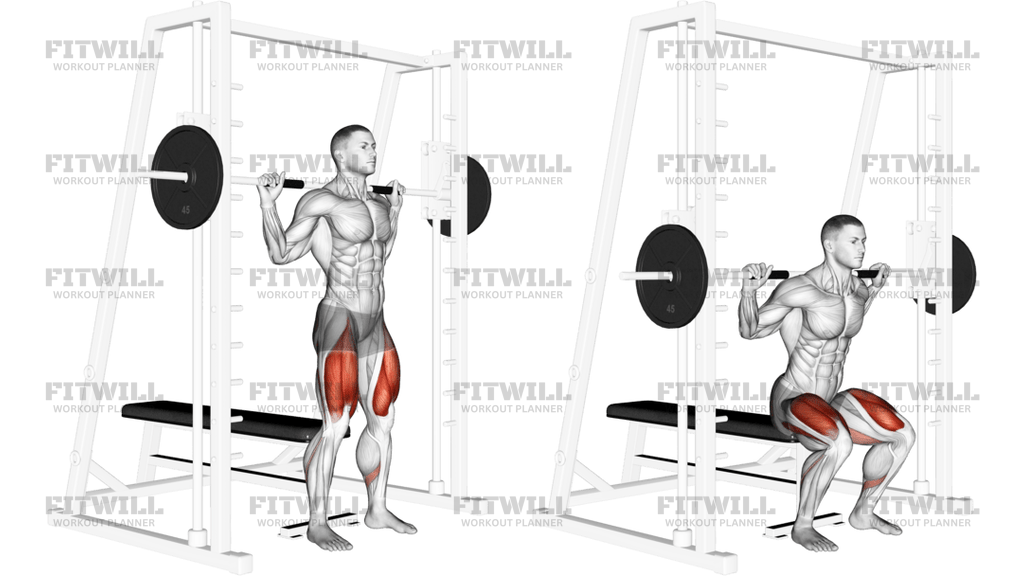
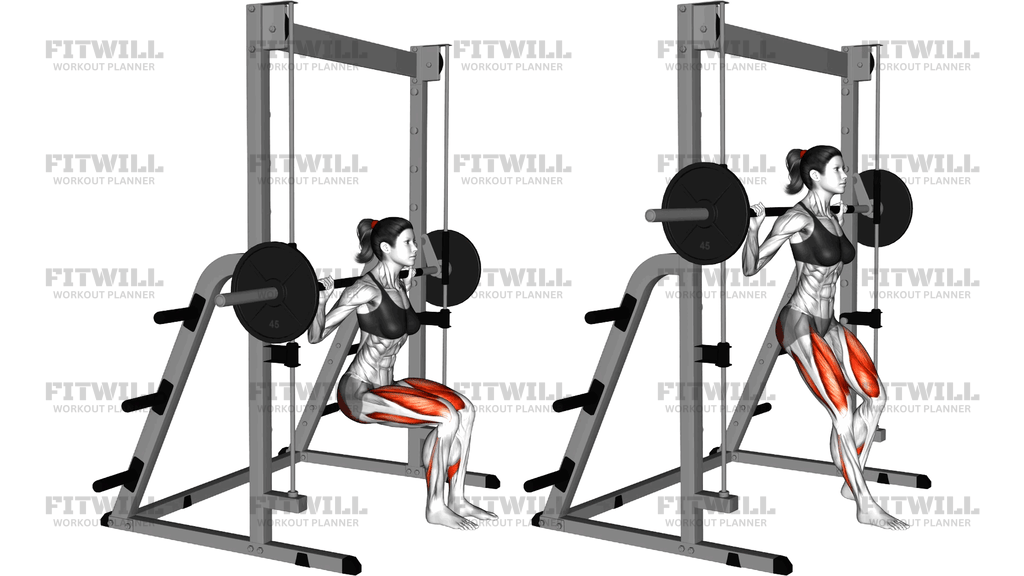
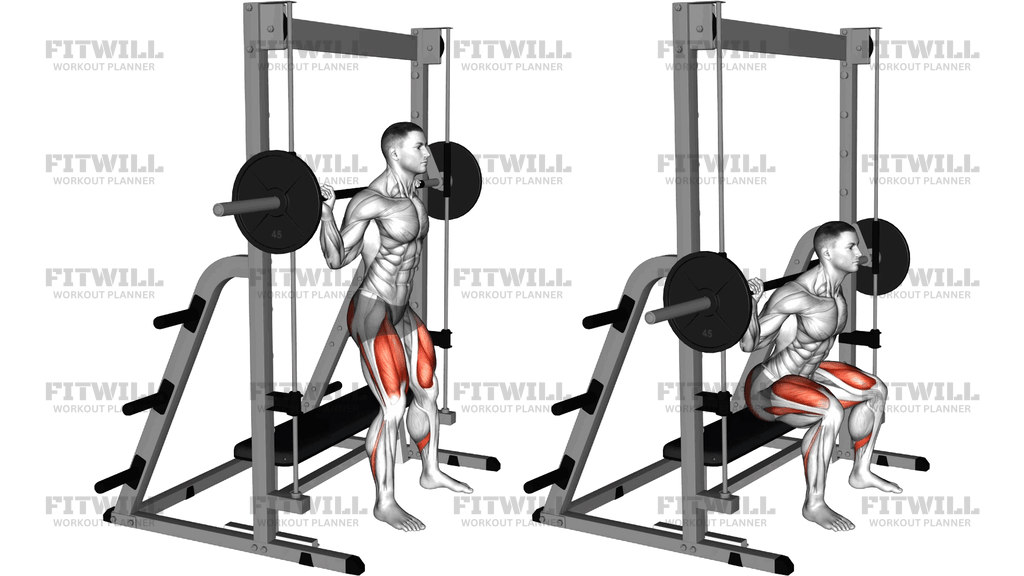
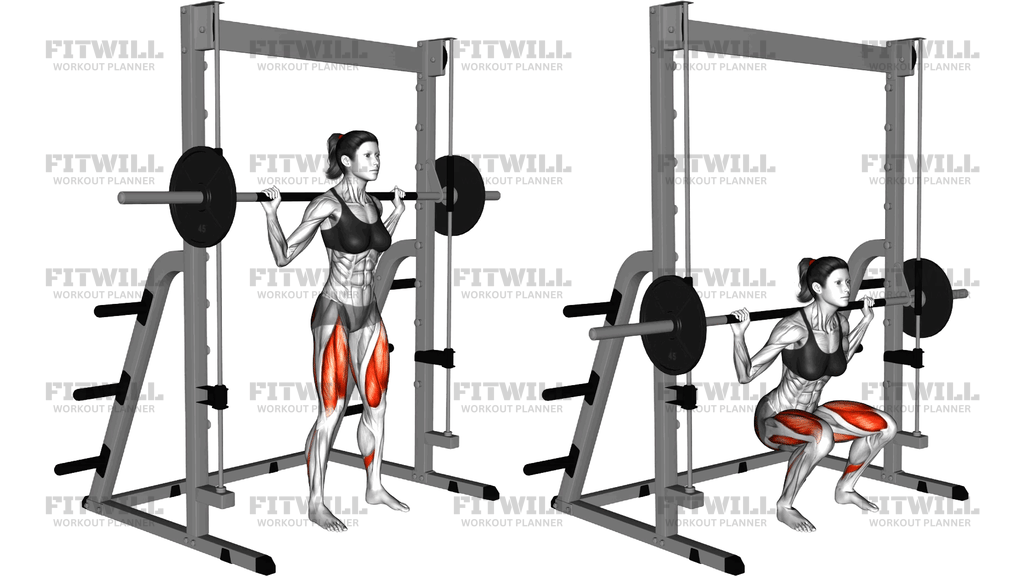
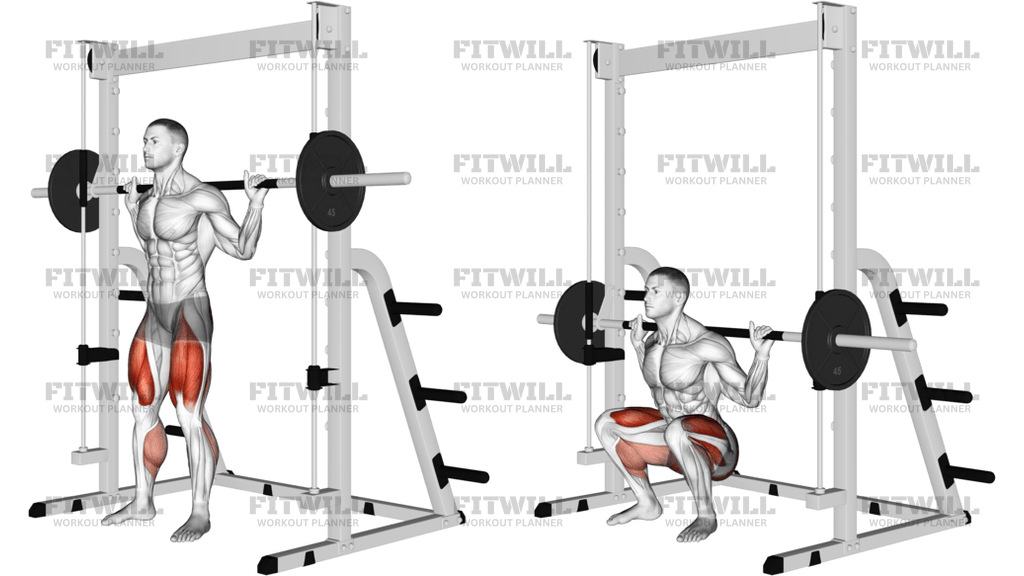
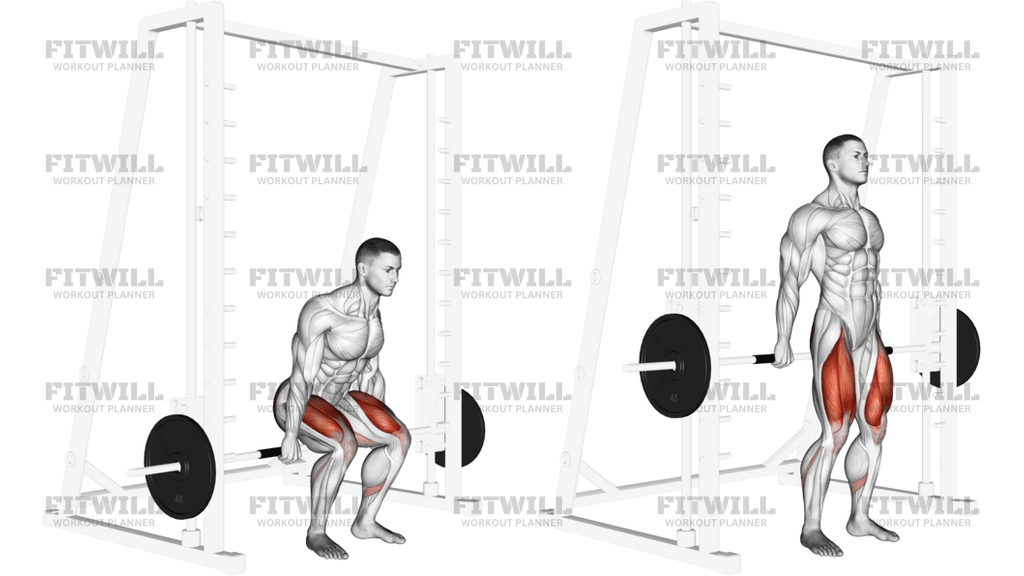
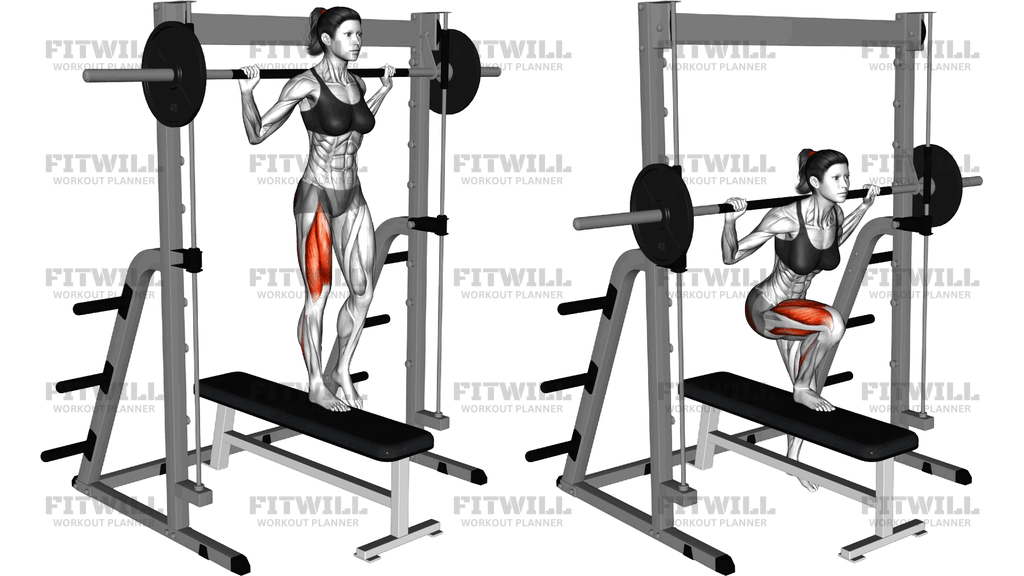
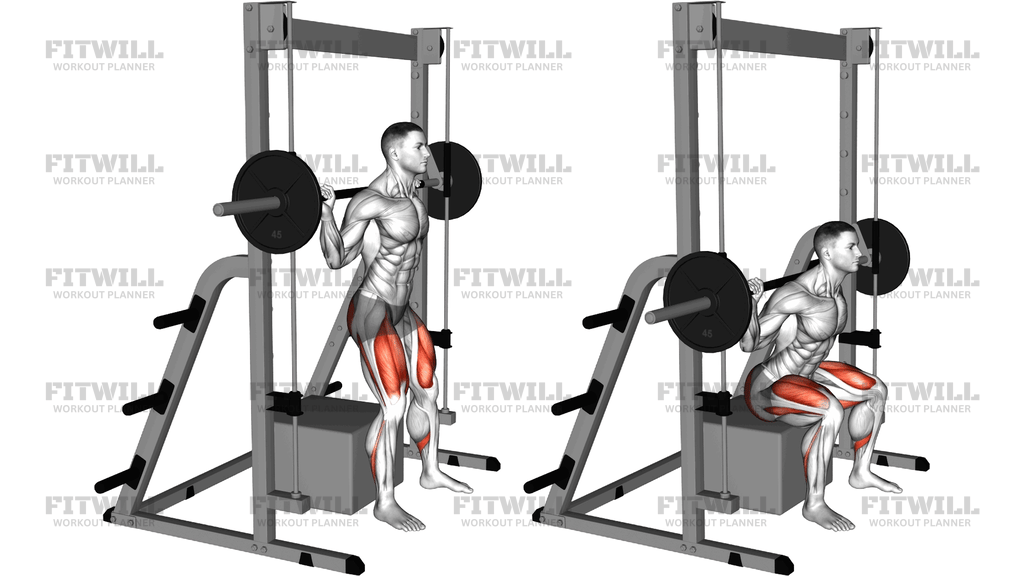
The Smith Box Squat is a back squat performed on a Smith machine with a sturdy box or platform positioned behind you as a depth target and a place to momentarily sit. The fixed vertical bar path of the Smith machine removes the balance demands of a free-weight barbell, while the box gives you a physical, repeatable bottom position. Together, these two pieces of equipment make the squat pattern easier to standardize, which is why this movement shows up frequently in beginner strength programs, rehab-style progressions, and technique work for lifters who struggle with depth control.
Muscularly, the exercise is dominated by the quadriceps, which extend the knees out of the seated position. The glutes and hamstrings contribute heavily on the way down and when driving the hips back off the box, and the lower back and core work to keep your torso upright against the load on your shoulders. Because the bar travels on rails, the stabilizing demand at the trunk and hips is lower than in a free squat, so most of the effort is directed straight into the leg muscles.
Setup matters more than people expect. The box height determines how deep you squat, so most lifters use a box at or just below knee height to start. You also need to place your feet far enough forward of the bar that your shins stay roughly vertical as you descend — this lets you sit back onto the box with a vertical spine rather than collapsing forward. If your feet are directly under the bar, the machine path will force your knees forward and pull you into an awkward position at the bottom.
To execute the movement, unrack the bar, walk your feet to their position, and sit back and down until your glutes make contact with the box. A proper box squat involves a brief pause and a controlled transfer of weight onto the box without fully relaxing — you touch, load, and drive up. Descend with intent rather than dropping onto the seat, because falling onto the box turns the rep into a bounce and invites lower back strain.
The Smith Box Squat is a good fit for lifters learning to hinge and sit back, for anyone returning from time away from squatting who wants a guided path, and for intermediate trainees who want to overload the legs with heavier loads than they would trust on a free bar. It also works well as a teaching tool: the box gives instant feedback on whether you are reaching depth consistently from rep to rep.
From a safety standpoint, the Smith machine's safety catches give you an escape route that a barbell squat does not, which makes this a sensible choice for training alone. Still, respect the load, keep contact with the box brief and controlled, and never round your lower back to reach the seat. If the box height forces you to lean forward heavily or lose heel contact, lower the weight or adjust the setup before adding load.
[ Workout Log & Planner ]
Put your next workout in Fitwill
Keep your plan and training log ready when you are.


Instructions
- Set a sturdy box or platform behind the bar of the Smith machine, starting with a height at or just below your knees.
- Position the bar across your upper back and traps, grip it slightly wider than shoulder width, and rotate it off the hooks.
- Step your feet forward so they sit roughly 20-30 centimeters ahead of the bar, about hip-to-shoulder width apart with toes turned slightly out.
- Brace your core, lift your chest, and keep your gaze forward so your torso stays upright on the fixed bar path.
- Push your hips back and bend your knees, lowering with control until your glutes make contact with the box.
- Pause briefly on the box, keeping tension in your legs and trunk — do not slump or fully unload onto the seat.
- Drive through your mid-foot and squeeze your glutes to stand back up along the same vertical path until your hips and knees are fully extended.
- Exhale as you rise, then inhale and re-brace before the next descent.
- After your final rep, step your feet back under the bar and rotate it fully onto the hooks before releasing your grip.
- Adjust the safety catches to a level just below your lowest squat depth before loading the bar with plates.
Tips & Tricks
- The most common mistake is standing directly under the bar like a free-weight squat. On a Smith machine the bar cannot move forward, so if your feet are not ahead of the bar your knees travel far past your toes and your heels lift at the bottom.
- Do not crash onto the box. If you hear a heavy thud each rep, you are dropping the last portion of the descent — lower the weight and control the final few centimeters.
- If you find yourself leaning far forward to reach the box, the box is too low for your current mobility. Raise it one step and rebuild depth from there.
- Keep your whole foot in contact with the floor. Rocking onto your toes when you sit down usually means the stance is too narrow or too close to the bar.
- Think of the pause on the box as loading a spring: touch, stay tight, then explode up. Fully relaxing onto the seat kills tension and rounds the lower back.
- Use the safety catches as insurance, not as part of the lift. Set them just below your working depth so a failed rep can be escaped safely.
- Rotate the bar fully onto the hooks before letting go. Because your feet are forward of the bar, unracking and racking are the most awkward moments of the set.
- Start with your body weight or a light load for the first few sessions to dial in box height and foot placement before adding significant weight.
- Keep your shins close to vertical throughout. If your knees shoot forward as you descend, push your hips back harder at the start of the rep.
Frequently Asked Questions
Which muscles does the Smith Box Squat work?
The quadriceps do most of the work driving you off the box, with strong contributions from the glutes and hamstrings on the descent and the initial drive upward. The lower back and core stay active to hold your torso upright under the bar.
Is the Smith Box Squat good for beginners?
Yes, it is one of the most approachable squat variations because the fixed bar path handles balance and the box defines depth. Beginners should start with a light load and focus purely on foot placement and a controlled descent.
How high should the box be for the Smith Box Squat?
Start with a box at or slightly below knee height, which lets most lifters reach parallel depth without rounding the lower back. Lower the box gradually over time as mobility and control improve.
Why do my feet need to be in front of the bar during this exercise?
The Smith machine bar only moves vertically, so placing your feet forward of the bar lets your hips travel back toward the box while your shins stay near vertical. Standing directly under the bar forces the knees forward and makes the bottom position cramped and unstable.
Should I fully sit and relax on the box?
No. Touch the box, keep your trunk braced and leg tension intact for a brief pause, then drive up. Fully unloading onto the seat rounds the lower back and makes the following rep harder to start cleanly.
Can I replace regular barbell squats with the Smith Box Squat?
It can substitute well when you want a guided path, a defined depth target, or a way to train without a spotter. It places less demand on balance and trunk stabilization than a free-weight squat, so it is best treated as a complement or training-phase variation rather than a permanent replacement.
What is the most common mistake in the Smith Box Squat?
Dropping onto the box instead of lowering with control. The impact transfers the load to your spine and joints rather than your leg muscles, so control the last portion of every descent.
Is the Smith Box Squat safe to train alone?
Generally yes, because the safety catches on the machine give you an exit if a rep fails. Make sure the catches are set just below your working depth and that you rotate the bar fully onto the hooks before releasing your grip.
How does the Smith Box Squat differ from a regular box squat with a barbell?
The Smith machine locks the bar into a vertical path, which removes the horizontal hip travel and balance requirements of the free-weight version. This makes it easier to learn and heavier to load, but it reduces the stabilizing work your hips and trunk would otherwise do.