Cable Incline Close Grip Bench Press
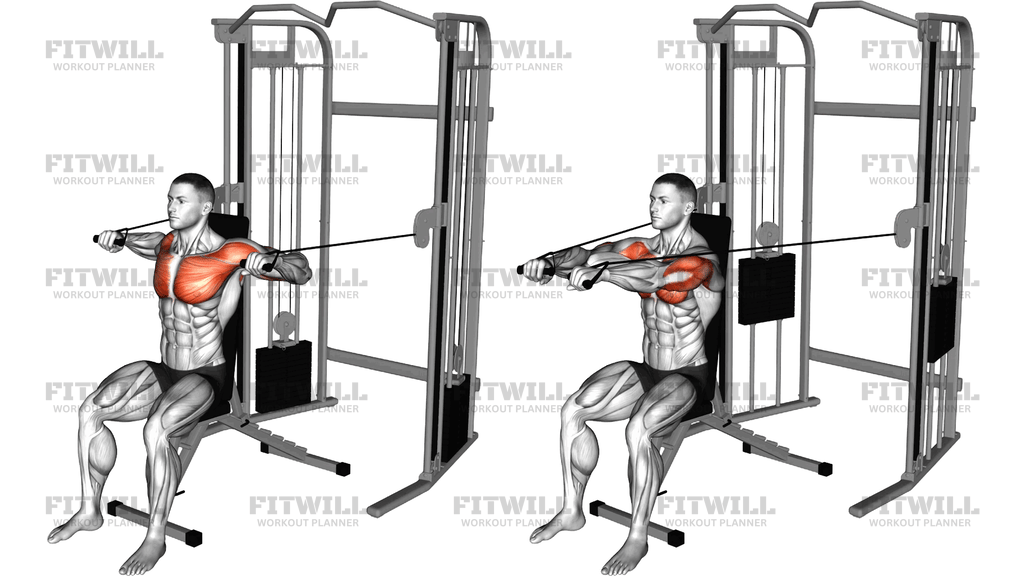
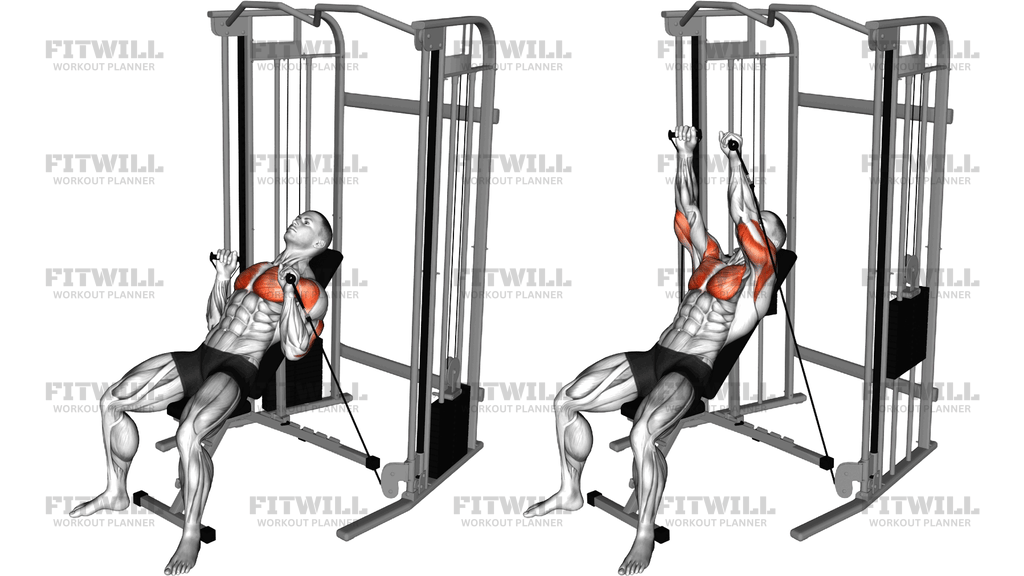
The Cable Incline Close Grip Bench Press is a cable crossover variation of the incline press performed on an inclined bench positioned between two low pulleys. You sit back against the pad with a handle in each hand, hold the handles close together at shoulder height, and press them up along an inclined path until your arms are extended overhead. Because the resistance comes from cables rather than free weights, the tension stays on the chest through the entire range, including the top of the movement where a barbell would unload.
The incline angle shifts the emphasis toward the clavicular head of the pectoralis major, the upper portion of the chest that many lifters find harder to develop than the mid-chest. The close hand position changes the mechanics further: the elbows track closer to the torso, the triceps take on a larger share of the pressing work, and the front delts assist throughout. This makes the movement a solid choice for lifters who want upper-chest development while also strengthening the triceps in a press-specific pattern.
The cable setup matters more than it might seem. With a barbell or dumbbells, gravity pulls the resistance straight down, but with low pulleys the resistance pulls down and outward, so you must press slightly inward and forward to keep the handles on track. That inward line of pull actually complements the chest's function of horizontal adduction, which is one reason the cable version feels so much more direct on the pecs than a standard press. The bench angle, the pulley height, and where you place the bench relative to the two pulleys all determine whether the cables feed smoothly into your hands at shoulder level.
To perform it well, keep your head, upper back, and hips in contact with the pad, plant your feet firmly, and let the handles move in a controlled arc from shoulder height to a point above your upper chest. Do not chase a full lockout at the expense of cable tension, and do not let your elbows flare wide or bounce at the bottom. The rep should look identical on both sides; if one arm drifts, the weight is likely too heavy or the bench is off-center between the pulleys.
This exercise fits well as an accessory after a heavier barbell or dumbbell incline press, or as the main pressing movement on a day when you want constant tension without loading the shoulder joint with heavy free weights. It is also a practical option for solo lifters who do not want a heavy barbell stuck overhead. Progress by adding small weight increments or by slowing the lowering phase, both of which are easy to manage with a pin-selected weight stack.
[ Workout Log & Planner ]
Put your next workout in Fitwill
Keep your plan and training log ready when you are.


Instructions
- Position an incline bench set to roughly 30-45 degrees between the two low pulleys of a cable machine, centered so both cables feed evenly toward your shoulders, and attach a handle to each pulley.
- Take a handle in each hand and sit back on the bench, then pull the handles up to shoulder height with your hands close together, only a few inches apart, palms facing forward and elbows bent and tucked slightly in front of your torso.
- Plant your feet flat on the floor on either side of the bench, squeeze your shoulder blades down and back against the pad, and brace your core so your lower back stays in contact with the bench.
- Exhale and press both handles up along an inclined path, letting them travel slightly toward each other as your arms extend above your upper chest.
- At the top, push the handles until your arms are nearly straight but your elbows stay soft, keeping tension on the chest rather than letting the cable stack slam together or rest.
- Inhale and lower the handles under control back to shoulder height, allowing your elbows to travel down and slightly outward until they are just below or level with your torso.
- Pause briefly at the bottom without letting the weight stack touch down or the cables slacken, then begin the next press.
- Keep your wrists stacked over your elbows and your hands within a few inches of each other for the entire set; the press should move the cables, not the cables pull your arms out of position.
- Complete all reps, then guide the handles down slowly before letting go, since releasing tension suddenly can snap the handles back toward the pulleys.
Tips & Tricks
- If one side presses higher or faster than the other, re-center the bench between the pulleys first; an uneven cable line will twist your shoulders long before your strength becomes the issue.
- The most common mistake is gripping the handles so wide that the movement becomes a standard incline press; keep the handles within a few inches of each other or you lose the triceps emphasis that defines this variation.
- Do not fully relax your elbows at the bottom of each rep. Letting the cables yank your arms back pulls your shoulder blades off the pad and turns the reset into a loose stretch you then have to press out of.
- If your wrists fold backward at the top, the pressing path is drifting behind your head; cue yourself to finish with the handles stacked over your upper chest, not over your face.
- A 45-degree bench turns this into more of a shoulder-dominant press. If you feel it mostly in your front delts, lower the bench angle closer to 30 degrees.
- Use a slower two to three second lowering phase here rather than a heavier load. The cable's constant tension makes the eccentric far more productive than bouncing the handles off your shoulders.
- Keep tension on the stack between reps instead of letting the plates settle. The moment the stack touches down, the chest loses load and the rep count becomes unreliable.
- Chalk up or use full-hand grips rather than hooking your fingers through the handles. Grip fatigue on the cables often fails before the chest does on higher-rep sets.
- If you feel pinching at the front of your shoulders, reduce the depth so your upper arms stop just below torso level, and check that your elbows are not flaring wide at the bottom.
Frequently Asked Questions
What muscles does the Cable Incline Close Grip Bench Press work?
The primary muscle is the upper chest, specifically the clavicular head of the pectoralis major. The triceps carry a large share of the pressing work due to the close hand position, and the front delts assist throughout the press.
Why use a close grip instead of a shoulder-width grip on the incline cable press?
The close position keeps your elbows tucked closer to your torso, which loads the triceps more directly and shortens the range the chest has to travel. It is a useful way to train the triceps in a press pattern while still challenging the upper chest.
What bench angle should I use for the Cable Incline Close Grip Bench Press?
Around 30 degrees works for most lifters and keeps the emphasis on the upper chest. Steeper angles shift the work progressively toward the front delts and make the movement feel more like a shoulder press.
Is this exercise suitable for beginners?
Yes, and the cable setup actually helps, because the weight stack allows small increments and there is no barbell to get pinned under. Beginners should start light and focus on keeping the hands close, the back glued to the pad, and both arms moving evenly.
How is the cable version different from a barbell incline close grip press?
The low pulleys pull down and outward, so the resistance challenges you to press inward and upward, matching the chest's adduction function. Tension also remains high at the top of the rep, whereas a barbell becomes much easier at lockout.
Where should my elbows be during the rep?
Your elbows should stay fairly close to your torso, descending to about torso level at the bottom and finishing nearly straight but not locked at the top. Flaring them wide turns the set into a standard incline press and puts more stress on the shoulder capsule.
My shoulders feel uncomfortable at the bottom of the movement. What should I change?
Shorten the range so your upper arms stop at or just below torso level, and make sure your shoulder blades stay retracted against the pad. If discomfort persists, reduce the weight and slightly lower the bench angle before adjusting anything else.
What can I substitute if my gym has no cable crossover machine?
A barbell or dumbbell close grip incline press on an incline bench trains a very similar pattern, and a single low pulley with one handle pressed at a time is a partial substitute. Bands anchored behind the bench can also approximate the inward line of pull.
How do I release the handles safely at the end of a set?
Lower the handles back to shoulder height under control, then guide the cables toward the pulleys gently rather than letting go under tension. Releasing a loaded cable suddenly sends the handles flying back and can damage the machine or injure someone nearby.