Smith Incline Wide Grip Bench Press
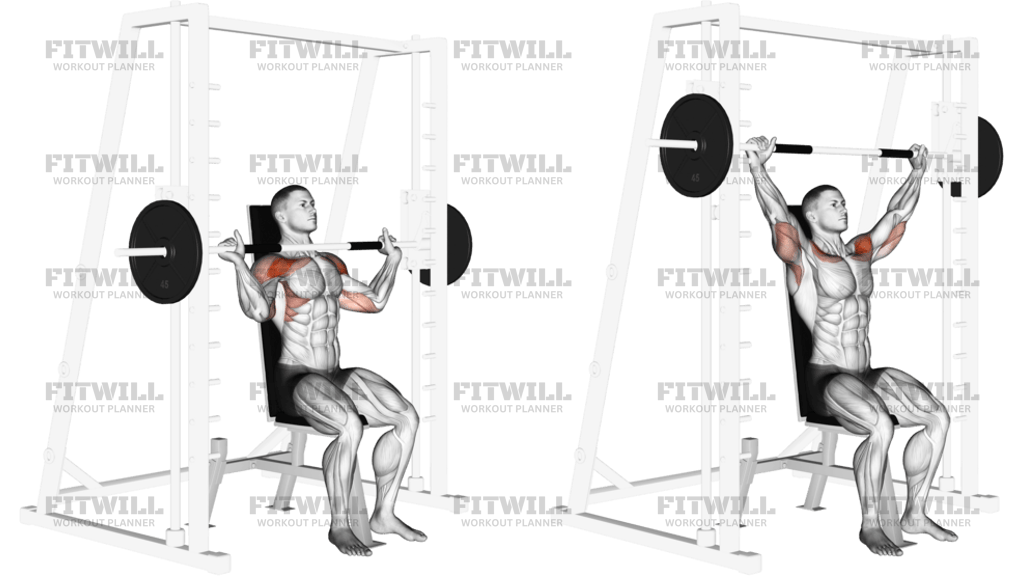
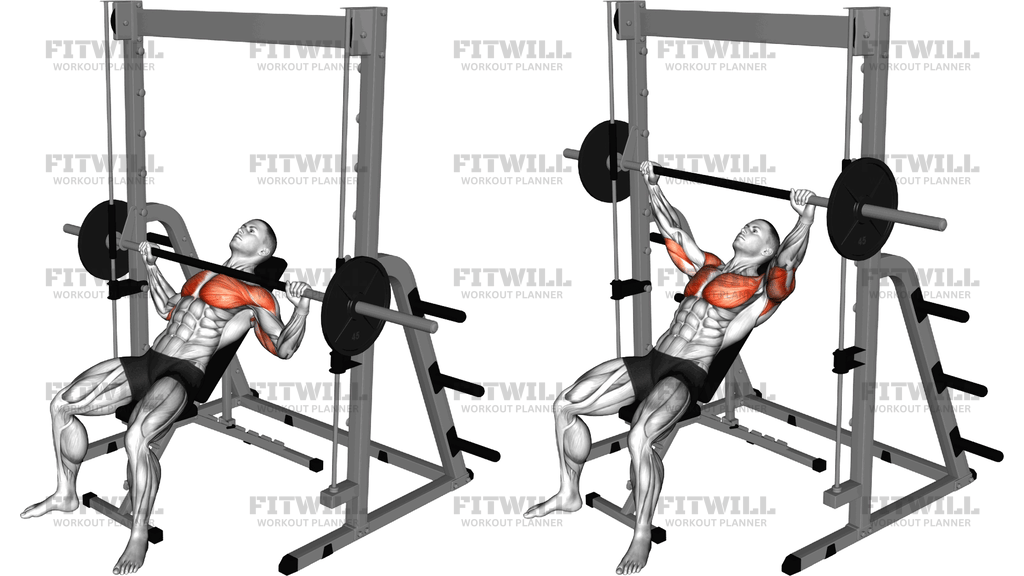
The Smith Incline Wide Grip Bench Press is an upper-chest press performed on a Smith machine with an incline bench set beneath the bar. Because the bar travels along a fixed vertical track, you can focus entirely on pressing hard and feeling the clavicular head of the pectoralis major work, without spending effort stabilizing a free barbell. The wide grip shortens the pressing range, flares the elbows naturally, and shifts emphasis toward the upper chest and front shoulders rather than the triceps.
This movement suits lifters who want targeted upper-chest development with a reduced stability demand. It works well as a secondary pressing exercise after heavier free-weight work, as a way to push close to failure safely since the bar can be rotated into the hooks at any point, and as a confidence-builder for lifters who find free-weight incline pressing uncomfortable or intimidating. Powerlifters and physique-focused lifters both use it to add controlled upper-chest volume.
Setup matters more on this exercise than most people realize. The bench angle, typically set around 30 to 45 degrees, positions your upper chest directly under the bar path, and the bench itself must be placed so the bar lowers to your upper chest rather than your mid-chest or neck. Because the Smith machine locks the bar into a straight line, a poor bench position cannot be corrected mid-rep the way a free press can. Take the time to adjust the bench and unplug the safety stops before loading weight.
Execution is straightforward but benefits from discipline. Lower the bar under control to the upper chest with the elbows flared roughly 45 to 60 degrees, touch lightly or stop just above the chest, then press up and slightly back until the arms are extended without locking hard. Keep the shoulder blades pinned back and down, feet planted on the floor, and ribs stacked over the pelvis so the lower back does not arch excessively.
The wide grip is the defining detail here. Hands placed well outside shoulder width reduce elbow flexion demands and encourage horizontal adduction at the shoulder, which is the chest's primary job. However, an excessively wide grip strains the shoulders and wrists, so choose a width that feels powerful without joint discomfort. If you have cranky shoulders, a slightly narrower grip and a shallow range are smarter than forcing the bar deep.
[ Workout Log & Planner ]
Put your next workout in Fitwill
Keep your plan and training log ready when you are.


Instructions
- Set an incline bench to roughly 30-45 degrees and slide it under the Smith machine bar so the bar will descend to your upper chest, then adjust the safety stops just below your deepest rep.
- Load the bar evenly and grip it with a wide, overhand grip, hands set well outside shoulder width so the forearms stay roughly vertical at the bottom.
- Sit back on the bench, plant your feet flat on the floor, pinch your shoulder blades together and down, and lift your chest toward the bar.
- Rotate the bar to release the hooks and hold it directly over your upper chest with your arms extended.
- Inhale and brace your core, then lower the bar in a slow, straight line to your upper chest, letting the elbows flare out to the sides.
- Touch the bar lightly to the upper chest or stop just above it, keeping tension in the pecs rather than collapsing at the bottom.
- Exhale and press the bar back up along the fixed track, driving through the floor with your feet and keeping your hips on the bench.
- Finish each rep with arms extended but elbows soft, then complete your set, re-rack the bar by rotating it into the hooks, and confirm it is seated before letting go.
Tips & Tricks
- If the bar drifts toward your neck at the bottom, the bench is set too far forward or too upright; move the bench so the bar lines up over your upper chest before adding plates.
- A grip wider than what keeps your forearms vertical at the bottom invites shoulder strain; bring your hands in until the elbows stack under the wrists, not behind them.
- Do not bounce the bar off your upper chest on this machine; the fixed path removes the stabilizing demand that normally limits bounce, so the joints absorb the impact instead.
- Keep your shoulder blades retracted for the whole set; letting them slide forward as you fatigue turns the movement into a front-shoulder press and rounds the bench position.
- The Smith bar is heavier than it looks because of its counterbalance or sled weight; check the machine's counterbalance before calculating your working load.
- If your wrists bend backward at the top, widen your thumb wrap so the bar sits in the heel of your palm and stacks over the forearm bones.
- Keep hip contact with the bench; driving the hips up to shorten the range may let you lift more, but it flattens the incline angle and shifts work away from the upper chest.
- Since the bar can be twisted into the hooks at any moment, this is one of the safer ways to take an upper-chest press near failure, but still set the safety stops instead of relying on the twist alone.
Frequently Asked Questions
What muscles does the Smith Incline Wide Grip Bench Press work?
It primarily targets the clavicular head of the pectoralis major, the upper portion of the chest, with support from the front shoulders and triceps. The wide grip shifts some of the load away from the triceps compared with a closer grip.
Why use a wide grip on the incline press instead of a normal grip?
A wide grip reduces elbow bend and encourages the elbows to flare, which favors horizontal adduction at the shoulder, the chest's main action. It also shortens the range slightly, allowing heavier loads with less triceps involvement.
Is the Smith Incline Wide Grip Bench Press good for beginners?
Yes, because the fixed bar path removes the balance requirement and the bar can be re-racked at any point. Beginners should start light, learn the bench positioning first, and keep the reps controlled.
What bench angle should I use for this exercise?
Around 30 to 45 degrees works best for most lifters. Lower angles drift toward a flat press targeting the mid-chest, while steeper angles shift work toward the front shoulders.
Why does the bar hit my chest in the wrong spot on the Smith machine?
The Smith bar only moves vertically, so the bench must be positioned so your upper chest sits directly under the bar. Slide the bench forward or back and test with an empty bar before loading plates.
How does this compare to a free-weight incline barbell press?
The free-weight version builds more stabilizer strength and carriesover, while the Smith version lets you isolate the upper chest with less balance demand and safer failure points. Many lifters use both, with the Smith press as a volume or finisher movement.
Can I use the Smith Incline Wide Grip Bench Press if I have shoulder discomfort?
The wide grip and incline angle can bother sensitive shoulders, so narrow your grip slightly, reduce the depth, and stay within a pain-free range. If discomfort persists, stop the exercise and consult a qualified professional.
What is the most common mistake with this movement?
Setting the bench in the wrong spot so the bar descends to the neck or mid-chest. Because the bar path is fixed, this misalignment cannot be corrected mid-rep and puts unnecessary stress on the shoulders.
How heavy is the Smith machine bar itself?
It varies by machine; counterbalanced Smith bars can weigh very little, while sled-style bars often weigh 15 to 25 kilograms. Check the label or counterbalance marking on your machine before tracking your loads.
Should I lower the bar all the way to my chest?
A light touch to the upper chest is a good standard, but only go as deep as you can keep the elbows flared and the shoulders stable. Forcing the bar deep with a wide grip stretches the shoulder capsule under load, which is where strains happen.