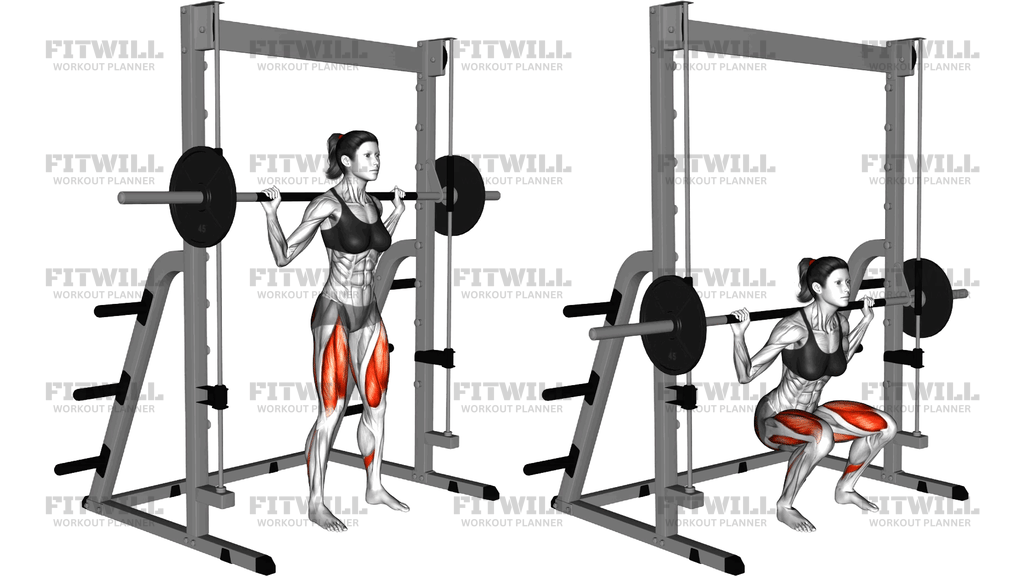
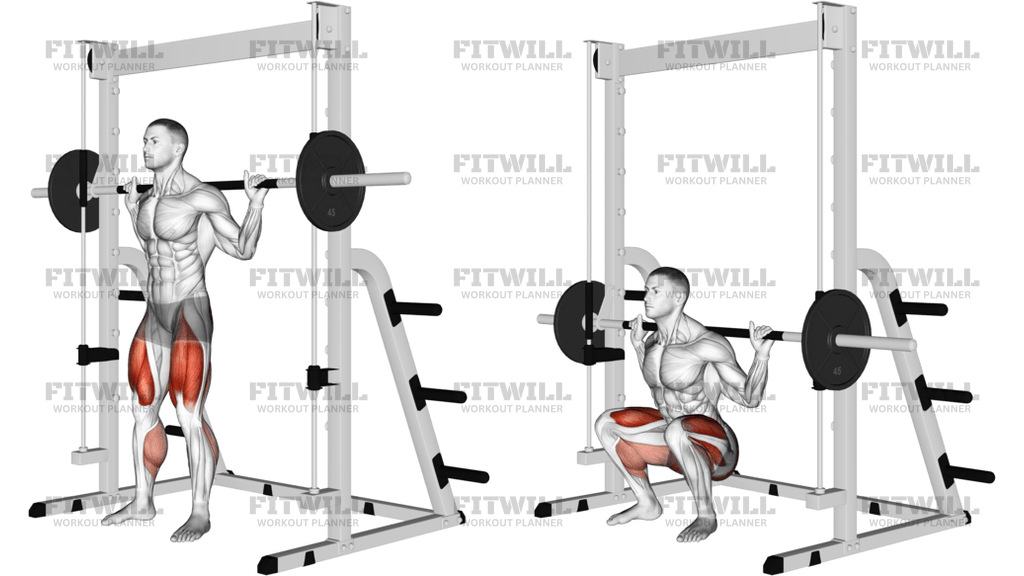
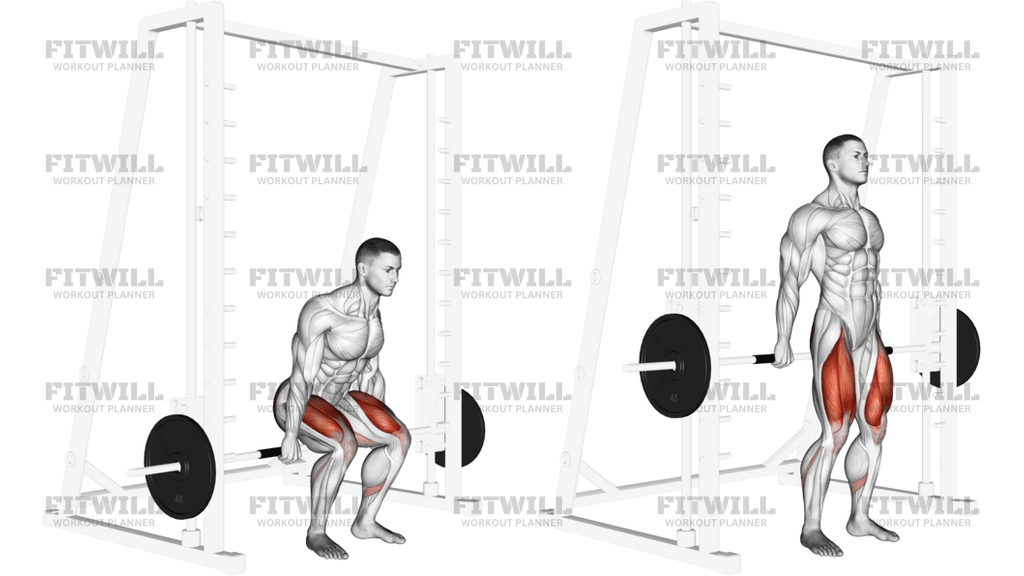
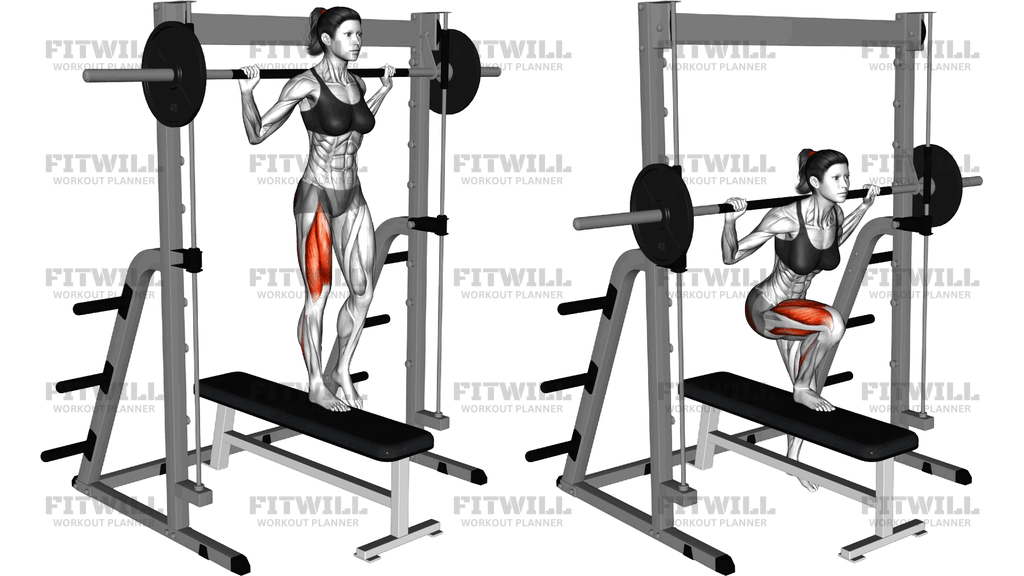
Smith Unilateral Side Lunge
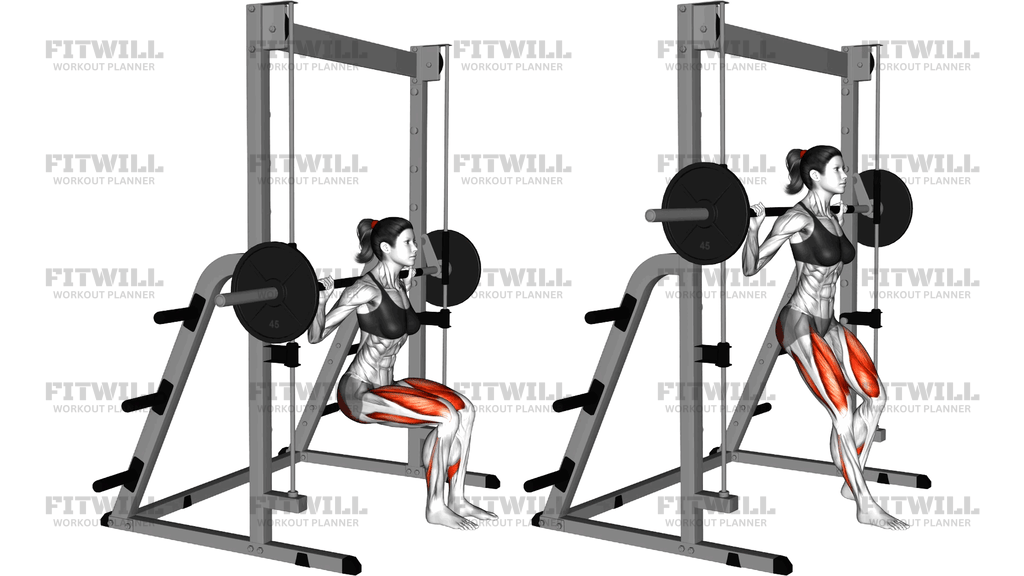
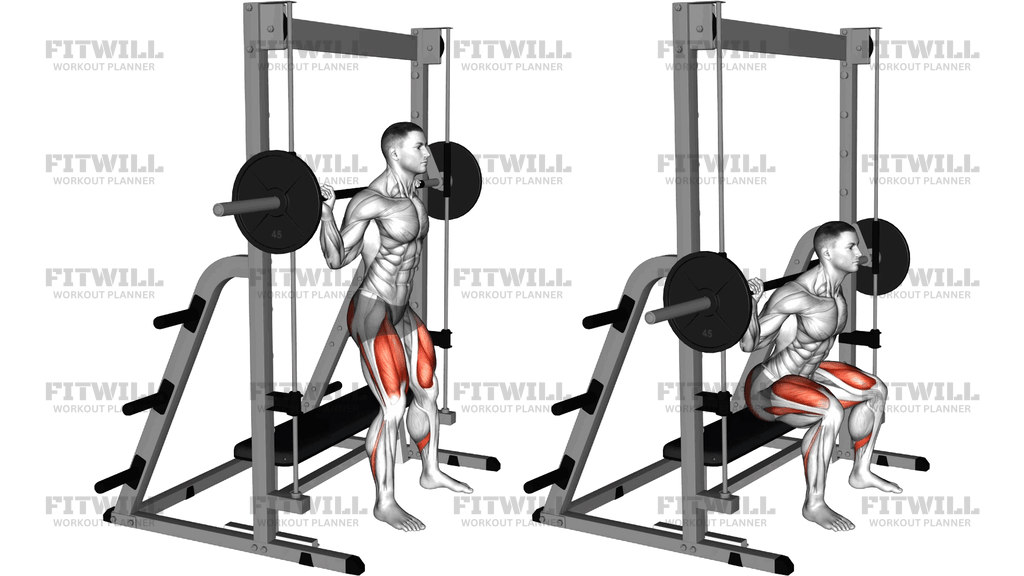
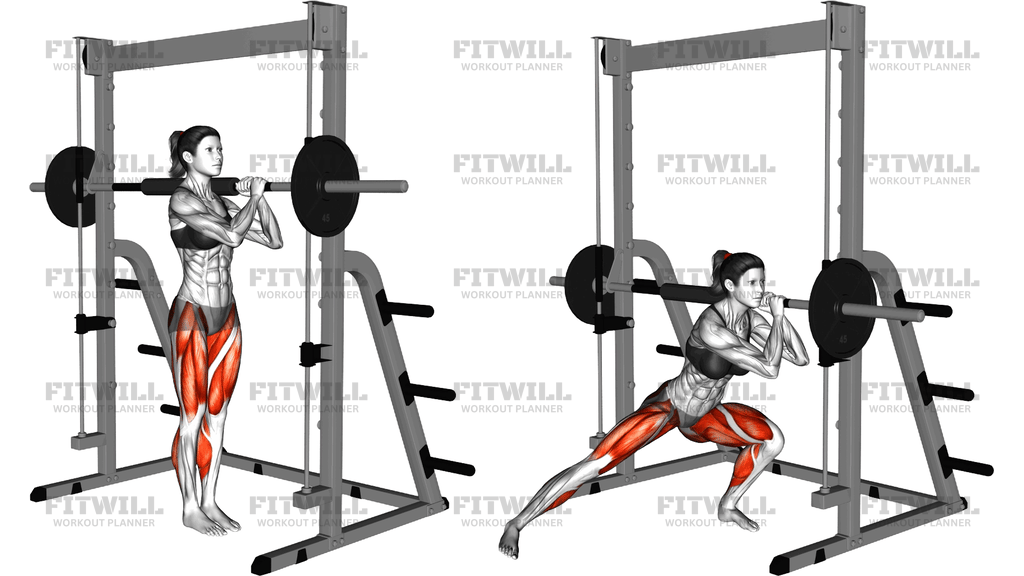
The Smith Unilateral Side Lunge is a lateral lunge performed inside a Smith machine, with the bar resting across your upper back as it would for a back squat. Instead of stepping forward or backward, you take one leg out to the side, sit your hips back and down over the working leg, and let the trailing leg straighten along the floor. The fixed vertical path of the Smith bar is what makes this setup interesting: it removes the balance demands of holding a free barbell overhead or on your back, so you can concentrate entirely on the lateral hip and knee mechanics of the lunge itself.
This movement primarily trains the quadriceps of the working leg, with strong contributions from the glutes as the hip extends back to standing. The adductors on the inner thigh of the working leg work hard to control the descent, and the straight trailing leg gets a genuine inner-thigh and hamstring stretch under load that is hard to replicate with forward lunges. Because you load one side at a time, it also exposes and gradually corrects left-to-right strength differences that often hide inside bilateral squats.
The Smith machine setup matters for a practical reason. In a free-weight side lunge, many people tip the torso or lose the trail foot because they are also managing a barbell. With the bar fixed in its rails, you can grip it lightly for a reference point, keep your chest tall, and push the working knee out over the toes without the bar drifting. Set the bar height so you can unrack it while standing fully upright with feet together, and make sure the safety stops are positioned just below your lowest working depth.
Execution comes down to controlling the hip, not just bending the knee. Start with feet together under the bar, brace the trunk, and shift your weight fully onto the working leg as you step the other foot out wide. Sit back into the working hip as if reaching for a bench placed slightly behind and to the side of you, keeping the working foot flat and the knee tracking in line with the toes. The trailing leg stays straight with the foot flat or toes pulled up, acting as a stabilizing outrigger.
This exercise suits lifters who want quad and glute development with a lateral component, athletes who cut and change direction, and anyone rehabbing or coaching around balance limitations who still wants loaded single-leg work. It is also a useful teaching tool: because the bar path is fixed, it is easier to feel whether you are genuinely sitting into the hip versus simply collapsing the knee inward.
Work in a moderate rep range, keep the load lighter than your back squat until the pattern feels automatic, and treat the stretch at the bottom as part of the exercise rather than something to rush through. If the working knee caves inward or the heel lifts, shorten the range or reduce the weight before progressing.
[ Workout Log & Planner ]
Put your next workout in Fitwill
Keep your plan and training log ready when you are.


Instructions
- Set the Smith machine bar at roughly upper-chest height so you can unrack it while standing tall, and place the safety stops just below your expected bottom position.
- Step under the bar and rest it across your upper back and shoulders, holding the bar with both hands, elbows bent and pointing down as in a back squat.
- Unrack the bar, take one small step so the bar clears the hooks, and stand with your feet together, directly beneath the bar path.
- Brace your core, lift your chest, and keep your gaze forward to set a neutral spine before any movement.
- Inhale, then step one foot out wide to the side while shifting your weight over the opposite leg, which stays under the bar.
- Push your hips back and down over the working leg, letting that knee bend and track out over the toes while the trail leg straightens and its foot stays flat.
- Descend until the working thigh is roughly parallel to the floor or you feel a firm stretch along the inner thigh of the straight leg, keeping the working heel down.
- Exhale and drive through the working heel and mid-foot to pull your hips back under the bar, returning to a tall stand with feet together.
- Complete all reps on one side, then re-rack the bar or switch legs by stepping out with the other foot for the same number of reps.
- Re-rack by rotating the bar back onto the hooks only when you are standing fully upright with both feet together.
Tips & Tricks
- If the bar drifts forward of your mid-foot at the bottom, you are bending the knee without sitting back into the hip; cue yourself to reach the glute back toward the machine's base before descending further.
- A caving knee on the working side usually means the load or range is ahead of your adductor and glute control; reduce the depth until the knee, hip, and ankle stack in one line.
- Keep your grip on the bar relaxed. Squeezing hard tends to pull your shoulders into rotation and tips your torso toward the working side.
- The trailing foot should stay flat or with toes pulled up. If it rolls onto the outside edge, your stance is too narrow or the lunge angle is too far forward rather than to the side.
- Because the Smith bar cannot move forward or backward, any backward lean shows up immediately. If you lean back to stand up, lighten the load and consciously finish each rep with hips under shoulders.
- Alternate legs set by set rather than within a set. Resetting your stance under the fixed bar between sides keeps each rep cleaner than shuffling side to side.
- Start with little or no added weight for the first sessions. The fixed bar path changes the balance demands compared to dumbbell side lunges, and the pattern needs to feel automatic first.
- Pause for one breath at the bottom of each rep. The stretched adductor position is where most people bounce, and pausing turns that stretch into usable strength work.
- Set the safety stops even on light sets. A lateral lunge puts you at an awkward angle to bail, and the stops give you an exit if you lose the working leg.
Frequently Asked Questions
Which muscles does the Smith Unilateral Side Lunge work hardest?
The quadriceps and glutes of the working leg do most of the work, while the adductors control the descent and stabilize the wide stance. The straight trail leg receives a loaded inner-thigh and hamstring stretch throughout the rep.
Why use a Smith machine for side lunges instead of dumbbells?
The fixed vertical bar path removes the need to balance a weight while moving sideways, which is the hardest part of the free-weight version. This lets you focus on pushing the knee out, sitting into the hip, and loading each leg evenly.
How wide should I step in the Smith Unilateral Side Lunge?
Step wide enough that the working knee can bend fully without passing far past the toes and the trail leg straightens comfortably. If your trail foot rolls inward or your working heel lifts, the step is too narrow.
Is this exercise suitable for beginners?
Yes, provided you start with a very light load and a modest depth. The Smith machine is actually one of the more beginner-friendly ways to learn the side lunge because the bar supports balance while you learn the hip pattern.
Should the bar go on my back or in front of my shoulders?
The standard setup is a back-squat bar position across the upper trapezius, which is how this movement is typically performed. If you have shoulder mobility limits that make the back position uncomfortable, a dumbbell side lunge may be a better fit.
My working knee collapses inward at the bottom. How do I fix it?
Reduce the depth and the load, and consciously drive the knee out over the pinky side of the working foot as you descend. Weak or under-active glutes and adductors are usually the cause, so shallow, controlled reps rebuild that control.
How is the Smith Unilateral Side Lunge different from a regular lunge?
A regular lunge moves in the sagittal plane, stepping forward or back, while this version steps sideways and loads the front-leg adductors and glutes differently. The lateral reach also stretches the straight trail leg along the inner thigh, which forward lunges do not do.
Can I substitute this if my gym has no Smith machine?
Dumbbell or kettlebell side lunges are the closest substitute, holding the weight at your chest or at your sides. A curtsy lunge or cable lateral lunge also trains a similar one-sided lateral pattern.
How heavy should I go on this exercise?
Stay noticeably lighter than your back squat or free-weight lunge load, since the adductors and lateral hip stabilizers are usually less conditioned than the main squat muscles. Add weight only when every rep shows a flat working heel and a knee tracking over the toes.
Is it safe for my knees if I have a history of knee discomfort?
The lateral knee angle of a side lunge stresses the joint differently than a squat, so it is worth easing in with body weight and a short range first. Stop and reassess if you feel pinching or pain rather than muscular effort, and keep the knee tracking in line with the foot throughout.