Kettlebell Squat To Overhead Press
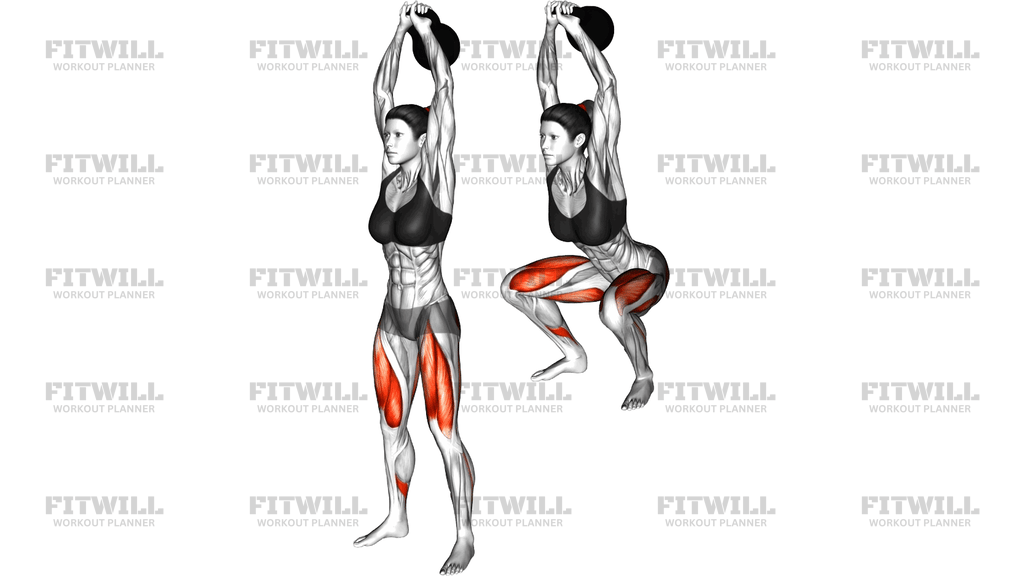
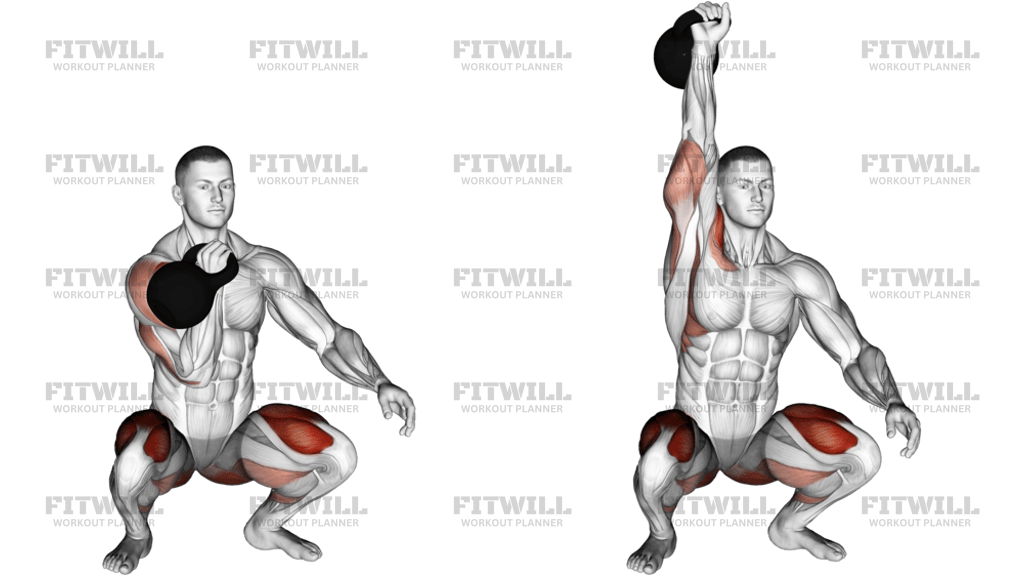
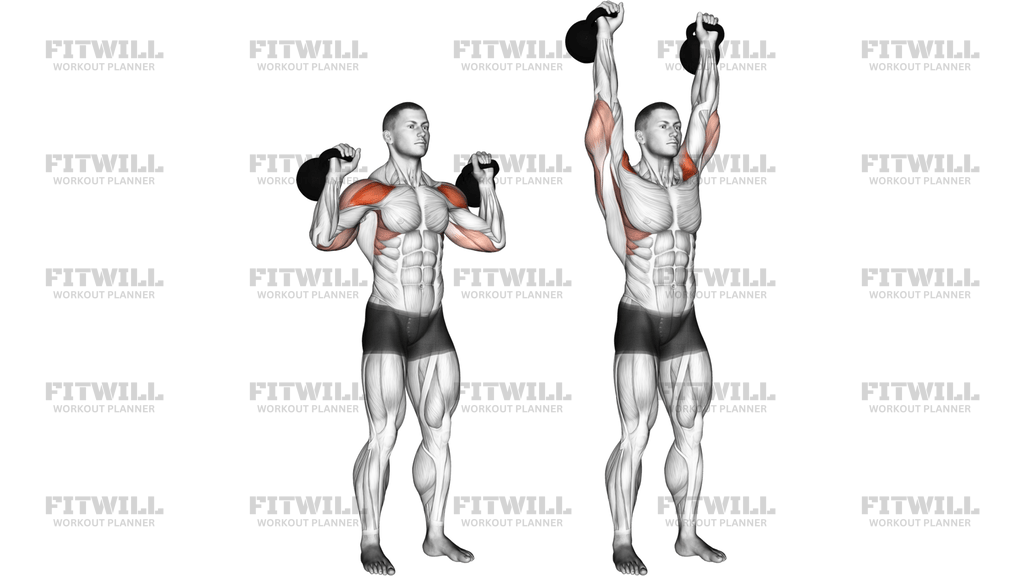
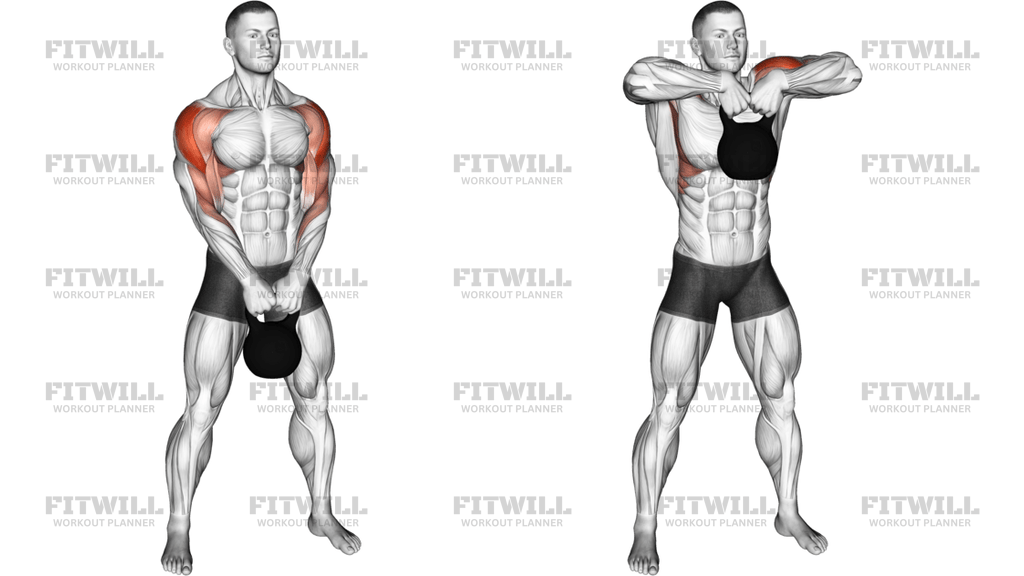
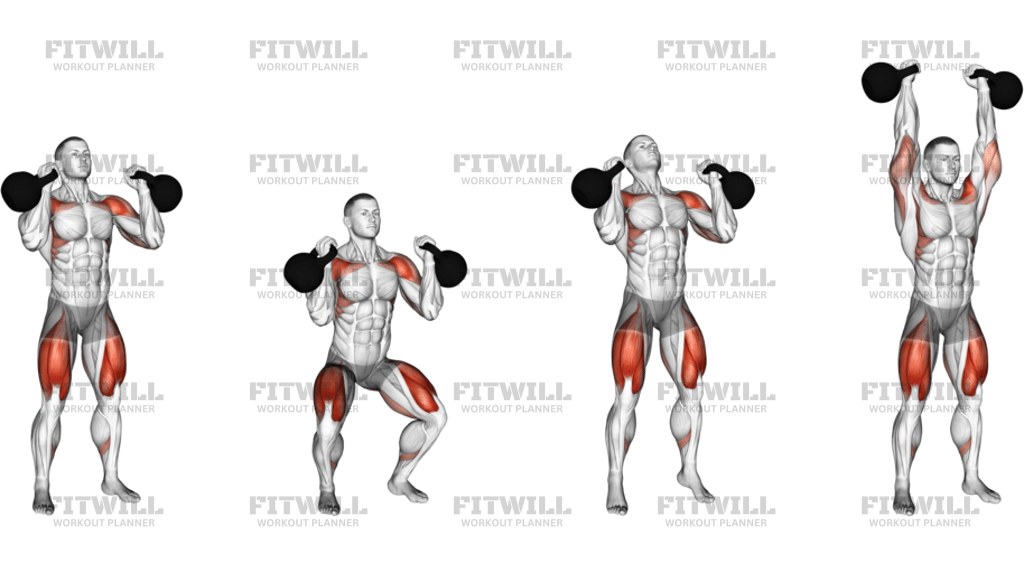
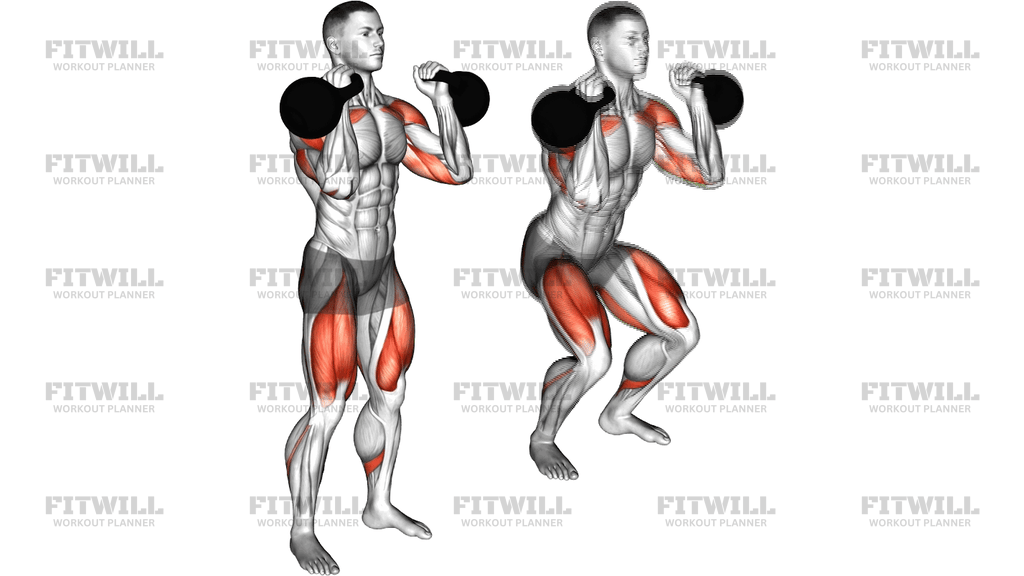
The Kettlebell Squat To Overhead Press combines two fundamental patterns—a front squat and an overhead press—into one continuous lift. You hold one kettlebell in each hand at shoulder height in the rack position, squat down, then drive up out of the hole and press both bells straight overhead as you finish standing. The image shows the movement mid-flow: elbows tucked close to the torso, kettlebells resting against the forearms, and the knees tracking forward and out over the feet in the bottom of the squat.
Because the press rides on the momentum of your squat drive, this lift trains the whole body in one coordinated effort. The quads, glutes, and hamstrings produce the force from the ground, the core transfers that force through a rigid trunk, and the shoulders and triceps finish the bell overhead. Your upper back, traps, and grip work the entire time just to keep two kettlebells sitting quietly in the rack without collapsing your chest.
This movement suits intermediate lifters who already own a solid bodyweight squat and a comfortable single-arm kettlebell press. It is a staple in kettlebell strength and conditioning work, and it earns its place in time-efficient sessions because a few quality reps tax the legs, shoulders, and core at once. Athletes also like it because the squat-to-press rhythm closely mirrors real-world explosive pushing—driving from the hips and expressing force overhead.
Setup matters more here than in most barbell work because two kettlebells sitting on your forearms will punish a loose rack position. Clean the bells to your shoulders, keep your elbows close rather than flared wide, and let the handles rest diagonally across your palms so the weight settles on your forearms instead of pulling your wrists backward. If the rack feels uncomfortable, fix it before squatting—most problems in this lift start with a sloppy clean.
Execute the rep by squatting with an upright torso to at least parallel, keeping both heels down and knees tracking over the toes. As you drive up, begin the press so the bells arrive locked out overhead just as your hips reach full extension. Control the descent of the press back into the rack, take a breath, and either repeat or re-squat from a stable position. Start light: two kettlebells overhead demand more shoulder stability than one, and the temptation to lean back under fatigue is the main thing to guard against.
[ Workout Log & Planner ]
Put your next workout in Fitwill
Keep your plan and training log ready when you are.


Instructions
- Set two kettlebells on the floor in front of your feet, about shoulder-width apart.
- Hinge down, grip both handles with your knuckles facing forward, and clean the bells to your shoulders so they rest against the outside of your forearms in the rack position.
- Stand with feet roughly shoulder-width or slightly wider, toes turned out a few degrees, elbows tucked close to your ribs rather than flared out.
- Take a breath into your belly and brace your trunk as if preparing for a light punch, keeping your ribs stacked over your pelvis.
- Squat down by sitting between your hips, keeping your chest up, heels flat, and knees tracking out over your toes until you reach at least parallel.
- Drive the floor away and stand up forcefully, and as your hips extend, press both kettlebells straight up overhead.
- Finish with the bells locked out over your shoulders, biceps near your ears, wrists straight, and elbows fully extended.
- Lower the kettlebells under control back into the rack, letting them settle on your forearms before the next squat.
- Exhale as you press, re-breathe and re-brace at the top of the rack position between reps.
- When finished, lower the bells back to your shoulders, hinge at the hips, and set the kettlebells on the floor with a flat back.
Tips & Tricks
- If the bells pull your wrists backward during the squat, your grip is too deep through the handle—rotate the handle so it rests diagonally across the palm and the weight sits on your forearm.
- A common failure point is pressing too early from a deep squat, which turns the lift into a strain from the bottom. Let your legs do the first two-thirds of the work and start the press as your hips extend.
- Keep your elbows tight to your ribs in the rack; flared elbows round your shoulders forward and make the squat's upright torso position much harder to hold.
- If your heels lift at the bottom of the squat, the bells are probably pulling you forward. Shift your weight to the midfoot and push your knees slightly wider rather than rising onto your toes.
- Avoid leaning your torso back as the bells go overhead—that usually means the weight is too heavy or your core has stopped bracing. Squeeze your glutes hard at lockout to stay tall.
- Use the stand-up phase to generate momentum, but still press with intent; letting the bells float up passively leads to soft, wobbly lockouts.
- Match the weight of both kettlebells precisely. A small imbalance between sides becomes obvious and disruptive once both bells are overhead.
- If two bells overhead feel unstable, practice the movement with one kettlebell in the rack to groove the squat-press timing before doubling up.
- Reset your brace at the rack position on every rep rather than holding one long breath through the whole set—your air runs out faster than your strength does.
Frequently Asked Questions
Which muscles does the Kettlebell Squat To Overhead Press work the most?
The quads, glutes, and shoulders do the bulk of the work, with the triceps finishing each press and the core, upper traps, and forearms holding the rack position together. It is genuinely a full-body lift.
Is the Kettlebell Squat To Overhead Press suitable for beginners?
It is best treated as a second-step exercise. Learn the bodyweight squat and the single kettlebell press first, then combine them with one light bell before attempting two.
Why do my wrists hurt when I hold two kettlebells in the rack position?
The handles are likely gripping your palms straight across, which bends your wrists back under the bell's weight. Rotate each handle so it sits diagonally and the kettlebell rests on your forearm instead of hanging off your hand.
Should I press at the bottom of the squat or at the top?
Start the press as your hips extend near the top of the squat so leg drive assists the bells upward. Pressing from the deep bottom position removes that assist and makes the lift far harder than it needs to be.
How deep should I squat in the Kettlebell Squat To Overhead Press?
Aim for at least parallel—hip crease level with the knee—as long as you can keep your chest up and heels down. Depth matters less than maintaining an upright torso and clean knee tracking.
What can I use if I do not have two kettlebells?
A single kettlebell in a one-arm rack squat to press works the same pattern and highlights core stability. A pair of dumbbells held at shoulder height is a workable substitute, though they lack the kettlebell's forearm rest.
Why does my lower back ache after this lift?
The usual culprit is leaning the torso backward during the press or letting the chest collapse in the squat, both of which shift load to the lumbar spine. Brace harder, squeeze the glutes at lockout, and drop the weight if the pattern does not clean up.
How many reps should I do per set?
Because the shoulders and grip fatigue before the legs, sets of 5 to 8 reps work well for strength. Go heavier for 3 to 5 reps only after your rack position feels completely secure.
Do I need to clean the kettlebells every rep?
No. Once the bells are in the rack, keep them there through the set, returning to the rack position after each press and only lowering to the floor when you are finished.