Kettlebell Sots Press
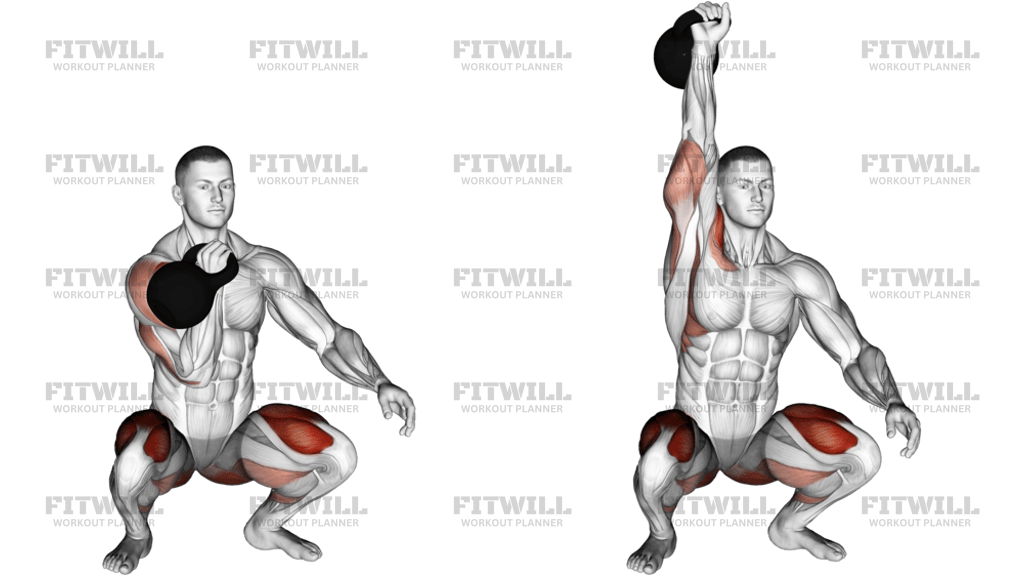
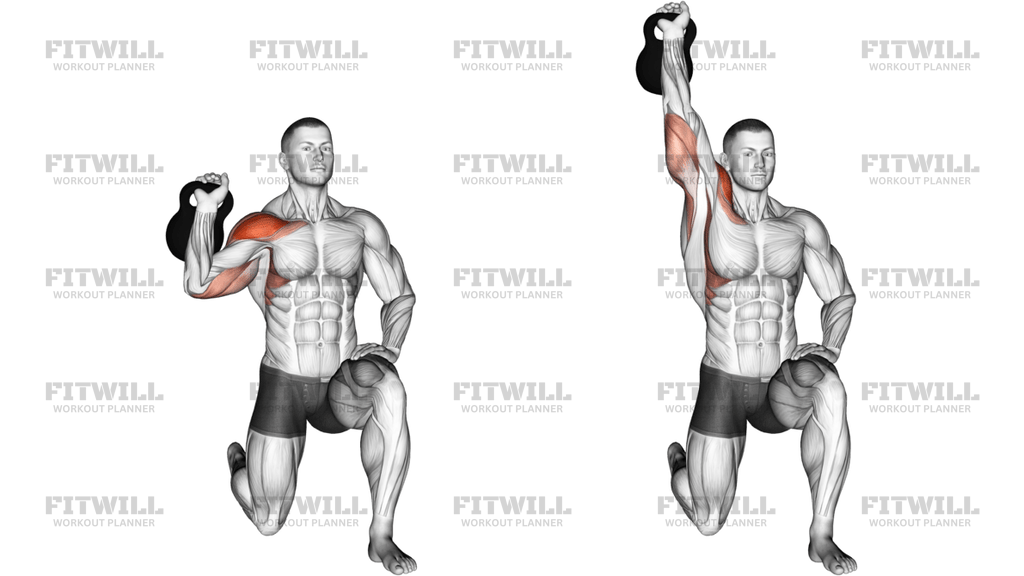
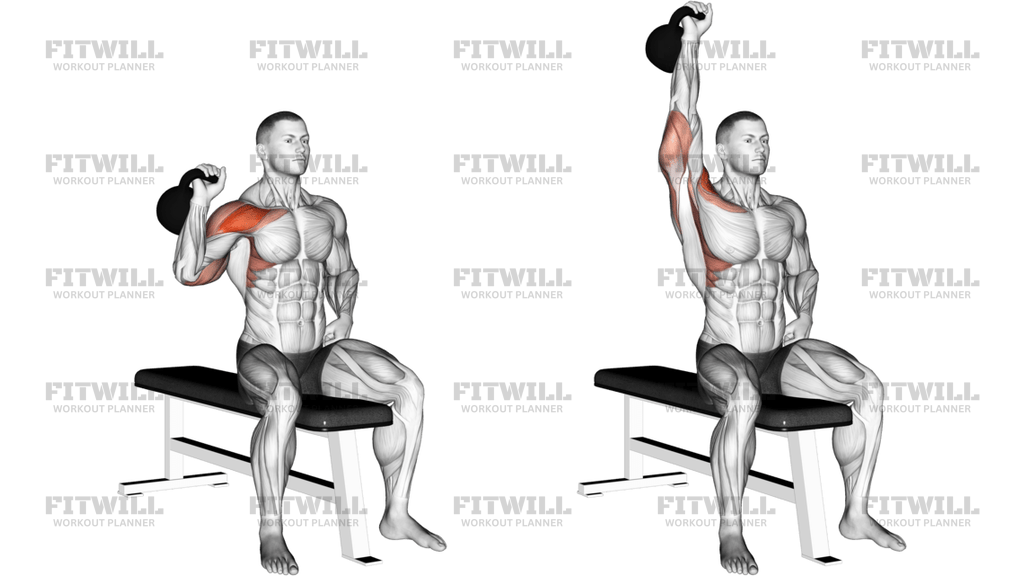
Kettlebell Sots Press is a demanding single-arm kettlebell press performed from the bottom of a deep squat. The bell starts in the front rack at shoulder height, the lifter settles into a stable squat, and the press is completed without standing up first. The image shows why this drill is unique: it combines a locked-in lower body position with an overhead press, so the athlete has to keep balance, torso position, and shoulder mechanics organized at the same time.
This exercise trains the shoulders hard, especially the delts, but it also exposes weaknesses in the triceps, upper back, trunk, ankles, hips, and thoracic spine. A clean Sots press is less about brute force and more about control under a compressed position. If the rack is loose, the squat collapses, or the torso leans back to help the press, the set turns into compensation instead of quality strength work. The goal is a vertical press from a still lower body and a steady, upright trunk.
The setup matters more here than in most presses. The feet need enough width and stability for a deep squat, the heel contact needs to stay planted, and the kettlebell has to sit snugly in the rack with the wrist stacked and the elbow under the hand. From there, the torso stays tall while the bell travels straight up. The free arm acts as a counterbalance, but it should not twist the body or swing for momentum. Every rep should look deliberate from the bottom position to the overhead lockout.
Use the Sots press when you want a shoulder strength drill that also challenges mobility, bracing, and positional control. It is useful for advanced lifters, overhead athletes, and anyone who needs to own a deep squat while pressing. Light to moderate loading usually works best because the bottom position magnifies the difficulty. If you cannot keep the heels down, the chest tall, and the press path vertical, reduce the load or shorten the range until the rep is crisp and repeatable.
Fitwill
Log Workouts, Track Progress & Build Strength.
Achieve more with Fitwill: explore over 9600 exercises with images and videos, access built-in and custom workouts, perfect for both gym and home sessions, and see real results.
Start your journey. Download today!




Instructions
- Hold a kettlebell in one hand in the front rack at shoulder height, with your wrist stacked over your elbow and your elbow tucked close to the ribcage.
- Set your feet slightly wider than hip width and sink into a deep squat, keeping your heels down, chest tall, and torso upright.
- Let the free arm extend out for balance without letting the shoulders or ribs rotate open.
- Take a breath and brace your trunk before each press so the squat position stays fixed.
- Press the kettlebell straight up from the rack until the arm locks out overhead and the bell is stacked over the shoulder.
- Keep the wrist neutral and the biceps close to the ear at the top without leaning back to finish the rep.
- Lower the kettlebell slowly back to the front rack while staying in the squat.
- Reset your balance at the bottom, then repeat for the planned number of reps.
- When the set is done, stand up with control before switching sides.
Tips & Tricks
- Choose a lighter bell than you would use for a standing press; the deep squat and balance demand make the lift feel much heavier.
- Keep the kettlebell pinned to the rack before you press it. If the forearm flares away from the body, the shoulder usually compensates.
- Drive through the full foot, not just the toes. If the heels peel up, the squat is too deep or the stance is too narrow for the load.
- Press the bell vertically instead of arcing it forward. A forward path usually means the torso is leaning back to help the rep.
- Use the free arm as a counterweight, but do not let it yank your chest open or twist the trunk toward the kettlebell side.
- Keep the ribs down as the bell goes overhead. Overextending the lower back to finish the press steals work from the shoulder.
- Lower the kettlebell under control to the rack. Dropping into the bottom position makes the next rep unstable.
- If the bottom squat position is the limiting factor, work on ankle, hip, and thoracic mobility separately before loading the press harder.
- End the set when the press starts to wobble, the rack position gets sloppy, or the squat can no longer stay upright.
Frequently Asked Questions
What muscles does the Kettlebell Sots Press work most?
The delts do the main pressing work, with help from the triceps and upper back. The deep squat also challenges the core, hips, and ankles.
Is this a beginner-friendly kettlebell press?
Usually not at full depth. Beginners are better off mastering a goblet squat and a standing single-arm press before trying the bottom-position version.
How low should I squat before pressing?
Lower only as far as you can keep your heels down, chest tall, and torso steady. Full depth is ideal, but a shorter squat is better than a collapsed bottom position.
Why do my heels come up during the Sots Press?
That usually means the squat depth exceeds your ankle mobility or stance width. Widen the stance slightly, reduce the depth, or use a lighter kettlebell.
Should the kettlebell stay in the front rack during the whole rep?
Yes. The bell should start in the front rack, press overhead from that position, and return to the same rack without drifting away from the body.
Can I use two kettlebells for this exercise?
Not if you want the standard Sots press shown here. The single-kettlebell version is the classic drill because it challenges balance and anti-rotation more directly.
Why does my torso lean back when I press?
That usually means the bell is too heavy or the rack position is too loose. Keep the ribs down, press straight up, and reduce the load if needed.
What is a good way to progress the Sots Press?
Progress by cleaning up the bottom squat first, then adding reps, then increasing load in small jumps. Better balance and a cleaner overhead lockout matter more than heavier weight.