Kettlebell Double Push Press
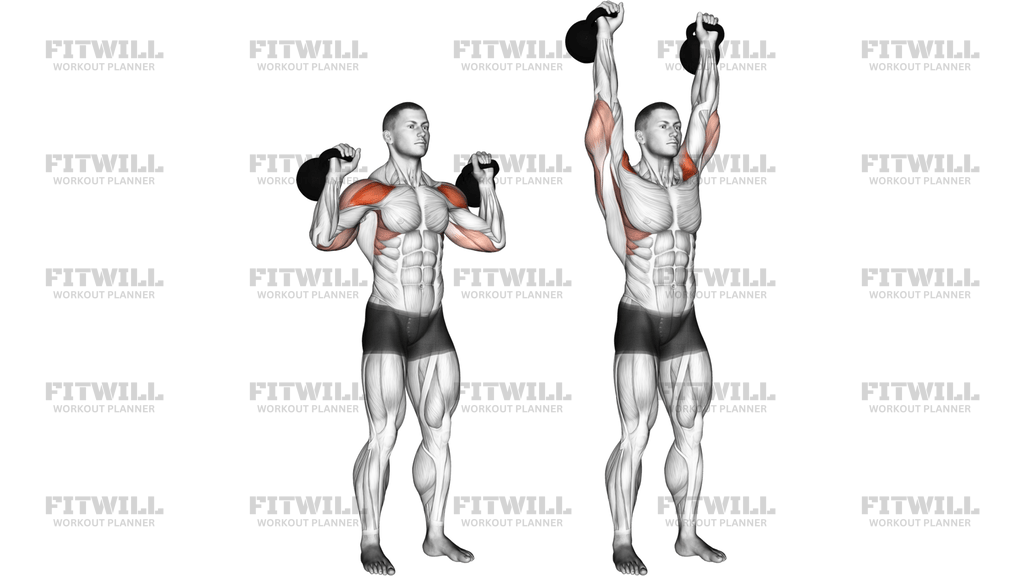
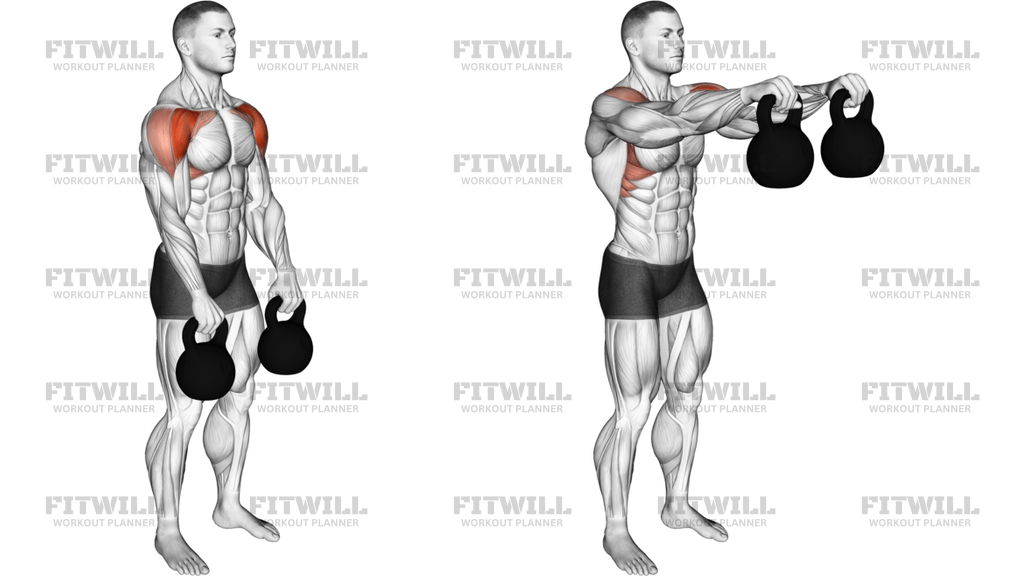
Kettlebell Double Push Press is a standing overhead press performed with two kettlebells in the front rack. It combines a short knee dip with an explosive leg drive so the bells can travel overhead more efficiently than in a strict press. The movement is still a shoulder-dominant press, but the legs, trunk, and upper back all have to organize the transfer of force so the bells finish stacked over the shoulders instead of drifting forward.
This exercise places the main demand on the delts and triceps while the traps, upper back, and core keep the rack and overhead positions stable. In anatomy terms, the main work centers on the Deltoids, with help from Trapezius, Rhomboids, and Triceps brachii. Because both arms are loaded at once, the front rack has to stay balanced and symmetrical; if one bell sits farther forward or one elbow drops, the press becomes uneven very quickly.
The setup matters a lot. Start with feet about hip to shoulder width, ribs stacked over the pelvis, and both kettlebells resting against the shoulders with the wrists neutral and the forearms close to vertical. The elbows should sit slightly in front of the body rather than flaring wide. From there, the dip is small and controlled, almost like loading a spring. If the dip turns into a squat or the torso folds forward, the press loses its power and the lower back often takes over.
On the drive, push through the floor and let the legs begin the rep before the arms finish it. The bells should travel close to the face and then stack directly over the shoulders with straight elbows and a tall torso. At the top, the body should feel braced rather than thrown backward. Lower the kettlebells back to the rack along the same path, absorb them softly on the shoulders, reset your breath, and repeat with the same rhythm.
Use the double push press when you want a shoulder exercise that also trains timing, power transfer, and body control under load. It fits well in strength blocks, power-focused accessories, and upper-body sessions where you want a more athletic press than a strict overhead variation. Keep the load light enough that each rep stays crisp. If the bells are drifting, the torso is leaning back, or the rack is collapsing, the weight is too heavy for quality work.
[ Workout Log & Planner ]
Put your next workout in Fitwill
Keep your plan and training log ready when you are.


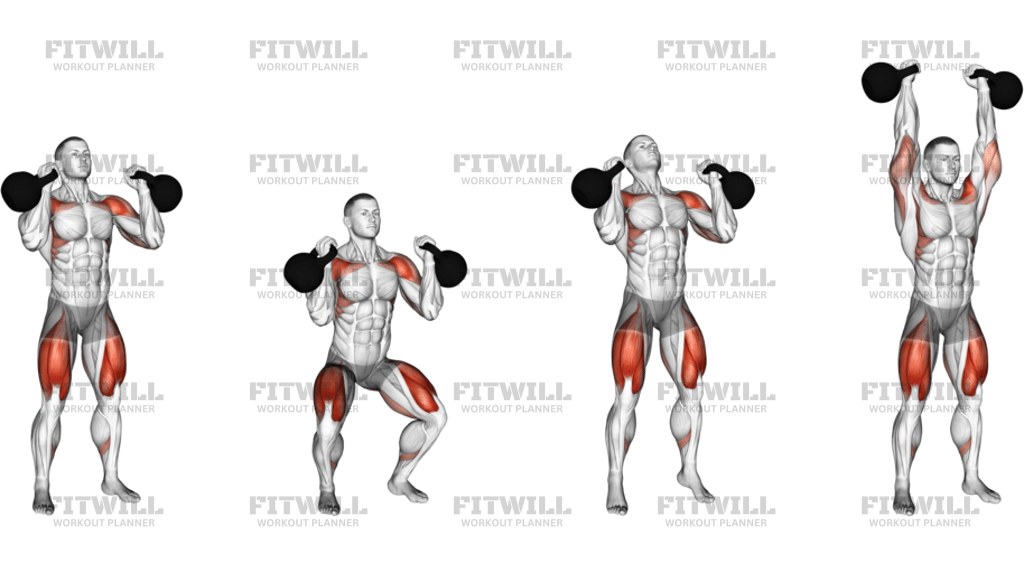
Instructions
- Stand tall with both kettlebells in the front rack, feet about hip to shoulder width, wrists neutral, and elbows slightly in front of the torso.
- Stack the ribs over the pelvis, squeeze the glutes lightly, and fix your gaze forward before you start the first rep.
- Take a short, controlled dip by bending the knees a few inches while keeping the torso upright and the heels grounded.
- Reverse direction immediately and drive through the floor so the legs start the press.
- Transfer that force into both arms and press the kettlebells up along a close, efficient path past the face.
- Finish with the bells stacked over the shoulders, elbows locked, and the biceps near the ears without leaning back.
- Pause briefly overhead, then lower the bells under control back to the front rack.
- Reset your breath and brace again before the next repetition.
Tips & Tricks
- Keep both forearms close to vertical in the rack so the kettlebells do not torque the wrists backward.
- Make the dip shallow. If you sink into a squat, the movement stops being a push press and the timing breaks down.
- Keep the chest tall through the dip and drive. A forward lean usually means the bells are too heavy or the rack is unstable.
- Start the press with the legs, not the arms. The hands should finish the rep after the floor drive has already begun.
- Let the bells travel close to the face and then finish straight overhead. Pressing around the head wastes force and stresses the shoulders.
- Exhale as the bells leave the rack, then take a quick breath back in before the next repetition.
- Lower the kettlebells on the same path they used on the way up, and let them settle softly back onto the shoulders.
- Stop the set if one kettlebell starts drifting ahead of the other or the low back begins to arch.
Frequently Asked Questions
What muscles does the Kettlebell Double Push Press work most?
The main emphasis is on the shoulders, especially the delts, with strong help from the triceps and upper traps.
How is this different from a strict double kettlebell press?
The push press uses a short leg dip and drive to help move the bells overhead, while a strict press uses only the arms and shoulders.
Where should the kettlebells start before each rep?
They should start in the front rack, resting against the shoulders with the wrists neutral and the elbows slightly in front of the torso.
Should the dip be deep like a squat?
No. The dip should be short and controlled, just enough to load the legs before the upward drive.
Can beginners use this exercise?
Yes, if they can hold a solid front rack and use light bells with smooth timing. A heavy load makes the rack and overhead position hard to control.
What is the most common technique error?
The most common mistake is turning the dip into a squat and leaning back to finish the press, which shifts stress into the lower back.
Is this more of a strength or power exercise?
It can train both, but the push press is usually used as a more explosive press than a strict shoulder exercise.
How should I breathe during the rep?
Take a breath and brace before the dip, then exhale as you drive the bells overhead and reset at the top or on the way down.