Kettlebell Standing Prone Lateral Raise
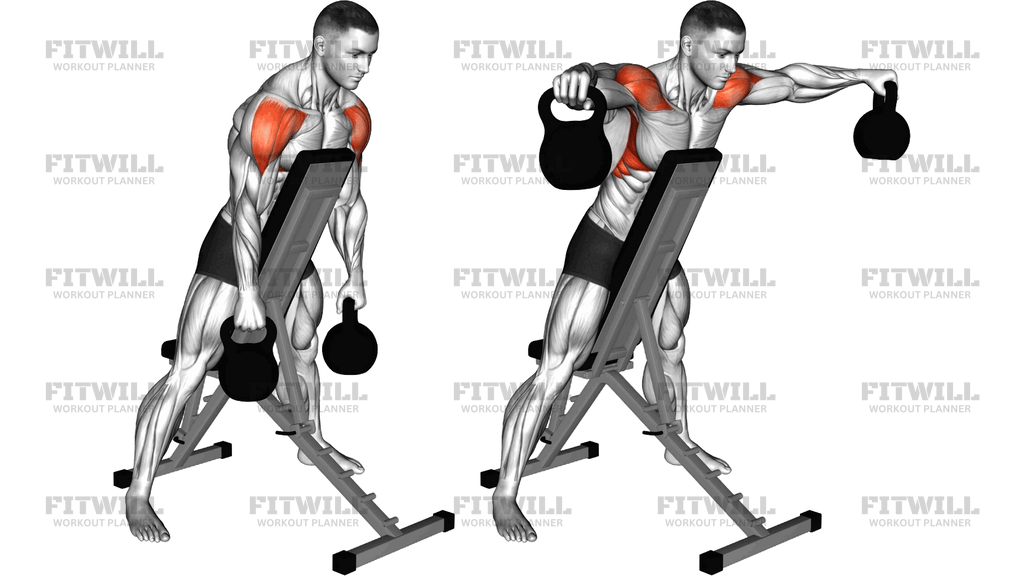
The Kettlebell Standing Prone Lateral Raise is a shoulder isolation exercise performed by standing behind an incline bench, leaning your chest against the pad, and raising a kettlebell out to each side until your arms reach shoulder height. Because your torso is supported against the angled bench, momentum from the hips and lower back is largely removed from the movement, which forces the side delts to do the work on their own. The kettlebell handle sits slightly below the bell, so the weight hangs a touch lower and pulls differently than a dumbbell, adding a small stability demand through the grip and wrist.
This setup is especially useful for lifters who tend to swing their lateral raises. When you stand completely free, it is easy to lean back, shrug, or jerk the weight up with body English. Pressing the chest firmly into the incline pad locks the torso in place, so if the kettlebells go up, it is because the deltoids lifted them. That makes this version a strong choice for anyone building wider, rounder shoulders, or for intermediate and advanced lifters who want a strict variation after freestanding raises have stalled.
The primary muscle at work is the lateral deltoid, with the posterior deltoid and upper traps assisting as the arms approach the top of the arc. The core and legs work isometrically to hold your stance, and the forearms and grip handle the kettlebells throughout. Because you are raising both arms at once while supported, the load stays moderate and the emphasis stays on clean, repeatable reps rather than maximal weight.
Execution quality comes down to three things: chest contact with the pad, a slight bend in the elbows, and leading with the elbows rather than the hands. Set the bench to a low-to-moderate incline, lean in so the pad supports your sternum, and let the kettlebells hang directly under your shoulders. From there, sweep the arms out to the sides in a wide arc, stopping at or just below shoulder height, then lower under control. Raising much higher than shoulder level shifts the work toward the traps and adds shoulder joint stress without much benefit.
You will most often see this exercise in hypertrophy programs as a primary shoulder movement, or as a strict accessory after pressing work when the delts need direct volume. It also suits lifters returning from lower back irritation who still want lateral raise volume without a freestanding stance. Start lighter than you would with dumbbells, since the kettlebell's hanging position and offset center make the same weight feel less stable, and progress by adding reps before adding load.
[ Workout Log & Planner ]
Put your next workout in Fitwill
Keep your plan and training log ready when you are.


Instructions
- Set an incline bench to roughly 30-45 degrees and place a kettlebell on the floor on each side of it.
- Stand behind the bench with your feet in a staggered or hip-to-shoulder-width stance, then hinge forward and rest your chest and sternum firmly against the top of the pad.
- Pick up one kettlebell in each hand with a neutral grip, letting both arms hang straight down under your shoulders with a slight bend in the elbows.
- Brace your core, keep your neck in line with your spine, and make sure your chest stays glued to the pad before starting the rep.
- Exhale and raise both kettlebells out to the sides in a wide arc, leading with your elbows and keeping the elbow bend fixed.
- Stop when your upper arms reach shoulder height or just slightly below, with your hands roughly level with or slightly below your elbows.
- Pause briefly at the top without shrugging your shoulders up toward your ears.
- Inhale and lower the kettlebells back down along the same arc until your arms are fully hanging again.
- Complete all reps with steady chest contact, and set the kettlebells on the floor before stepping away from the bench.
Tips & Tricks
- The most common fault is turning this into a row by pulling the elbows back and behind the torso; keep the arc directly out to the sides so the side delts, not the rear delts and lats, dominate.
- If your chest lifts off the pad during the raise, the weight is too heavy or you are initiating with your torso — drop the load and recommit to chest contact on every rep.
- Keep the elbow bend constant. Straightening the arm at the bottom and bending it more at the top turns the movement into a weird curl-plus-raise hybrid that offloads the delt.
- Because the kettlebell hangs below the handle, expect the bell to rotate slightly outward; let it rotate naturally instead of fighting to keep it perfectly still.
- Stop at shoulder height. Elevating the arms well above the horizontal turns the finish into an upper trap shrug and irritates the shoulder for many lifters.
- Grip the handle toward the corner rather than the center if the bells want to spin; a corner grip keeps the kettlebell more stable against your hand.
- If your hamstrings complain about holding the forward lean, widen your stance slightly and push your hips back so the bench, not your back, carries the position.
- Use a slow three-second lowering phase. The eccentric is where most of the growth stimulus for the delts lives, and it is hard to cheat when the pad is bracing your chest.
- Start with lighter kettlebells than your dumbbell lateral raise weight — often 20-40% less — until the hanging bell position feels stable in your hand.
Frequently Asked Questions
What muscles does the Kettlebell Standing Prone Lateral Raise work?
The lateral deltoids are the primary movers, with the posterior deltoids and upper traps assisting near the top of the arc. Your core, legs, and forearms work statically to hold the lean and grip the kettlebells.
Why lean against an incline bench for a lateral raise?
The pad braces your chest and eliminates momentum from your hips and lower back, making the exercise stricter than a freestanding lateral raise. This helps lifters who swing the weight up when standing unsupported.
Is the Kettlebell Standing Prone Lateral Raise suitable for beginners?
Yes, provided they start with very light kettlebells and learn the chest-against-pad position first. Beginners may benefit from doing dumbbell or cable lateral raises first, since the hanging kettlebell adds a grip and stability challenge.
How high should I raise the kettlebells?
Raise until your upper arms are about parallel to the floor, at or just below shoulder height. Going higher shifts emphasis to the upper traps and can strain the shoulder joint without adding much deltoid benefit.
What angle should the incline bench be set to?
A low-to-moderate incline of roughly 30-45 degrees works well. The goal is a comfortable forward lean where your chest rests on the pad and your arms can hang straight down without touching the bench.
Why does the kettlebell feel harder to control than a dumbbell in this exercise?
The kettlebell's center of mass hangs below the handle, so the bell wants to rotate and swing slightly as your arm moves. That offset load increases the demand on your grip and wrist, so use a lighter bell than you would for dumbbells.
Can I do this exercise standing without the bench?
You can perform a standard standing lateral raise, but you lose the torso support that makes this version strict. The bench is what prevents swinging and lower back strain, so keep it in place whenever possible.
Should my elbows be bent or straight during the raise?
Keep a small, fixed bend in the elbows throughout — around 10-20 degrees. Fully straight arms stress the elbow joint, and varying the bend during the rep turns the movement into a partial row or curl.
How many sets and reps should I do?
For shoulder hypertrophy, 3-4 sets of 10-15 controlled reps works well for most lifters. Since the supported position reduces cheating, prioritize smooth tempo and full range over heavy weight.
Is it safe to do this movement with a shoulder injury history?
The supported torso and moderate range make it shoulder-friendly for many people, but pain with overhead work or raises should be assessed first. If a rep causes sharp pain, reduce the range to pain-free height or consult a qualified professional before continuing.