Dumbbell 45 Degrees Back Extension
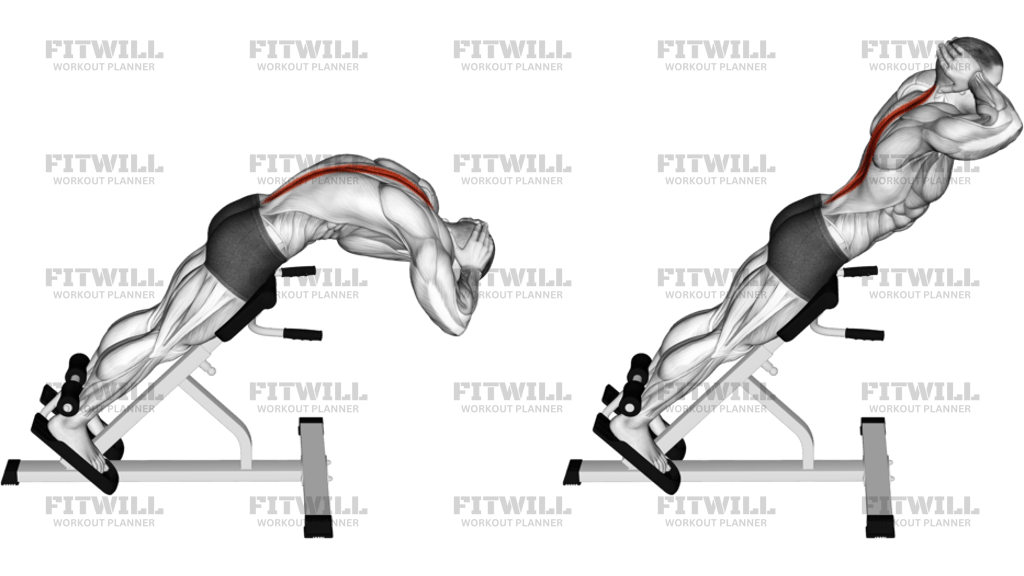
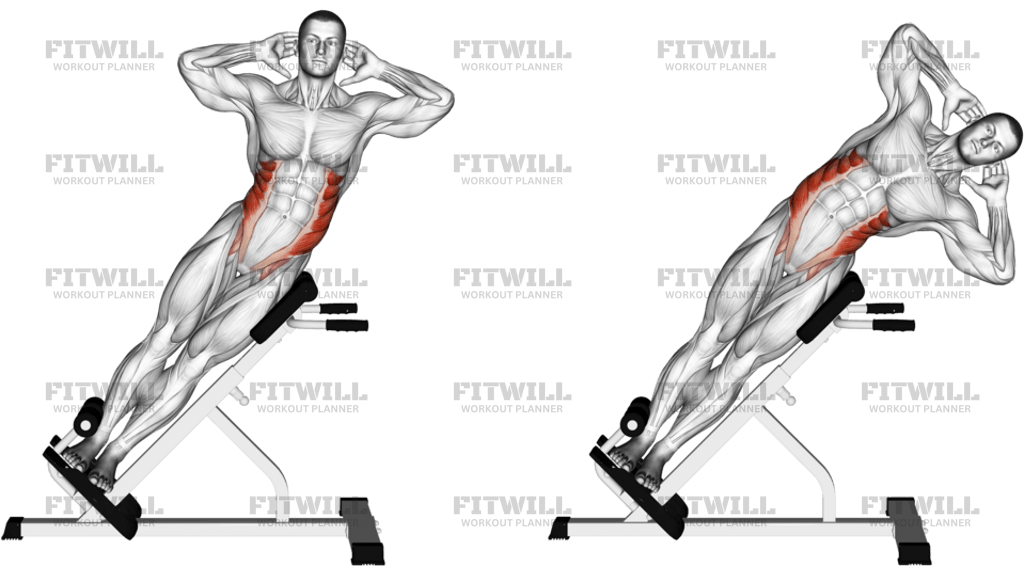
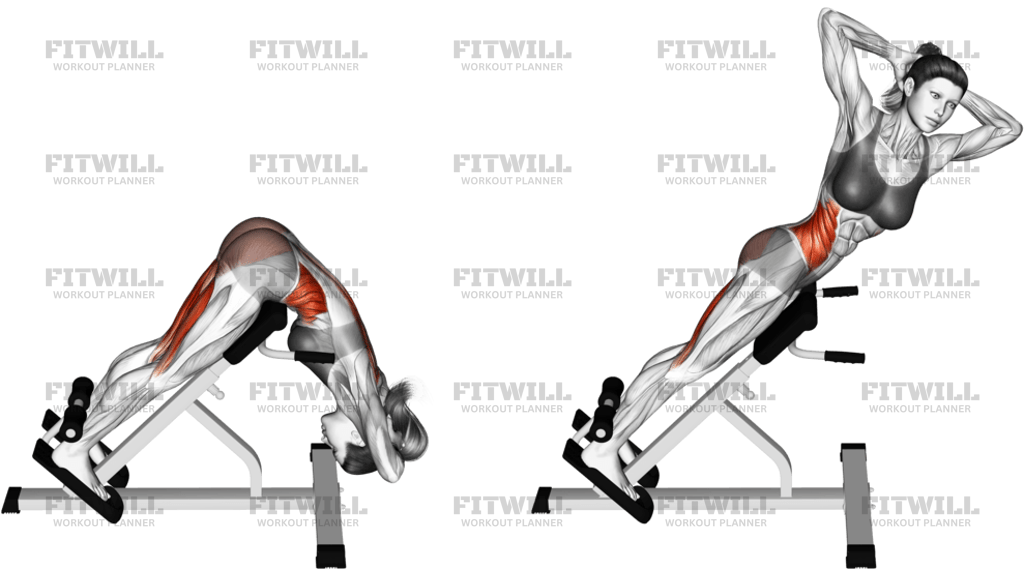
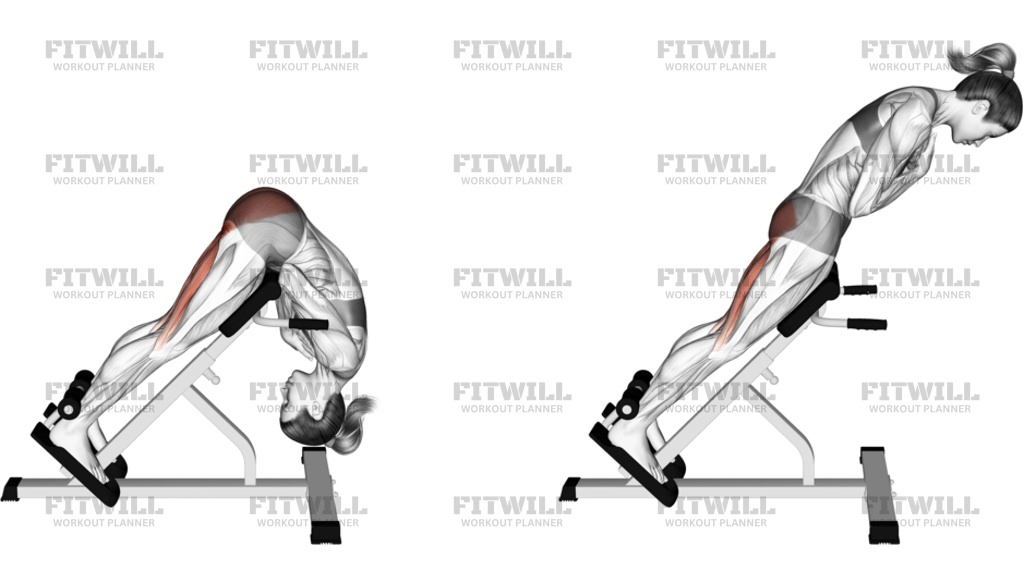
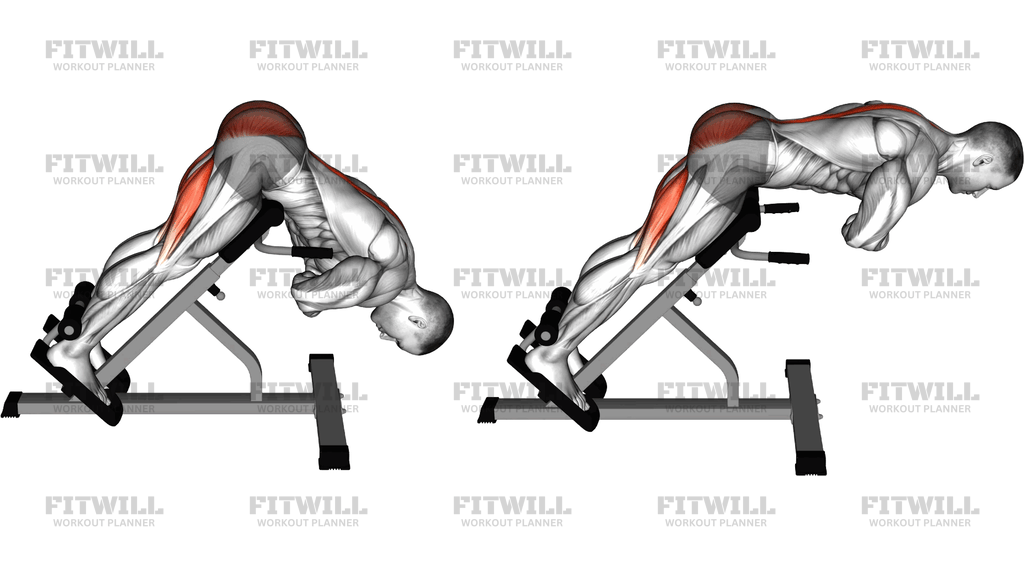
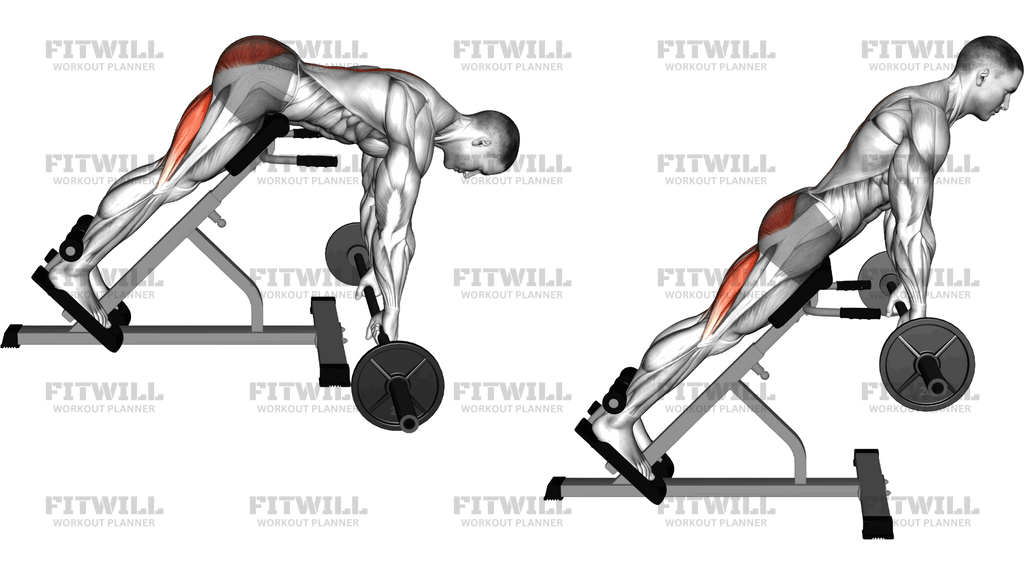
The Dumbbell 45 Degrees Back Extension is a loaded version of the classic hyperextension performed on an angled back extension bench, often called a Roman chair or 45-degree bench. Your ankles are anchored under the pads, your hips rest against the large support pad, and you hold a dumbbell against your chest or let it hang from your hands as you lower your torso toward the floor and pull back up to a straight body line. The 45-degree angle shortens the lever compared to a horizontal setup, which makes the loaded version more manageable while still giving the lower back, glutes, and hamstrings plenty of work.
The main movers here are the erector spinae running up the lumbar spine, which extend the trunk against the weight of the dumbbell. Because the hips stay fixed on the pad, the glutes and hamstrings assist strongly as you rise to the top position. Holding the dumbbell also challenges your grip and upper back to a degree, since your arms simply hang and follow the path of the torso throughout.
Setup matters more on this exercise than most people realize. The edge of the pad should sit at your hip crease, not on your stomach or mid-thigh, so your pelvis can tilt freely as you hinge down and rise up. If the pad blocks your hips, you end up moving through the lower back alone; if it sits too low, your legs take over. The ankle pads should lock you in firmly enough that you can lower your chest toward the floor without your heels lifting.
To execute it well, think of the movement as a slow bow rather than a sit-up in reverse. Hinge at the hips, let the dumbbell travel straight down under your shoulders, and descend until you feel a mild stretch across the back of your legs and lower back. Rise by driving your hips into the pad and squeezing your glutes until your head, shoulders, hips, and ankles form one line. There is no reason to extend past that line; arching upward at the top shifts stress onto the spine for no extra benefit.
This exercise suits lifters who have already built comfort with bodyweight back extensions and want to progress the pattern without jumping straight to a heavily loaded barbell good morning. It is commonly used in lower body and posterior chain days, as a warm-up primer before deadlifts or squats, and as higher-rep accessory work for people whose lower back tends to fatigue before their legs on hinge movements.
Treat this as a controlled, moderate-load exercise rather than a max-effort lift. The lumbar spine tolerates repeated flexion under load poorly, so choose a dumbbell you can move smoothly for clean reps, keep the descent slow, and stop the set as soon as your position starts to drift. Done with that mindset, it is one of the most direct ways to strengthen the muscles that support your spine during everyday bending and lifting.
[ Workout Log & Planner ]
Put your next workout in Fitwill
Keep your plan and training log ready when you are.


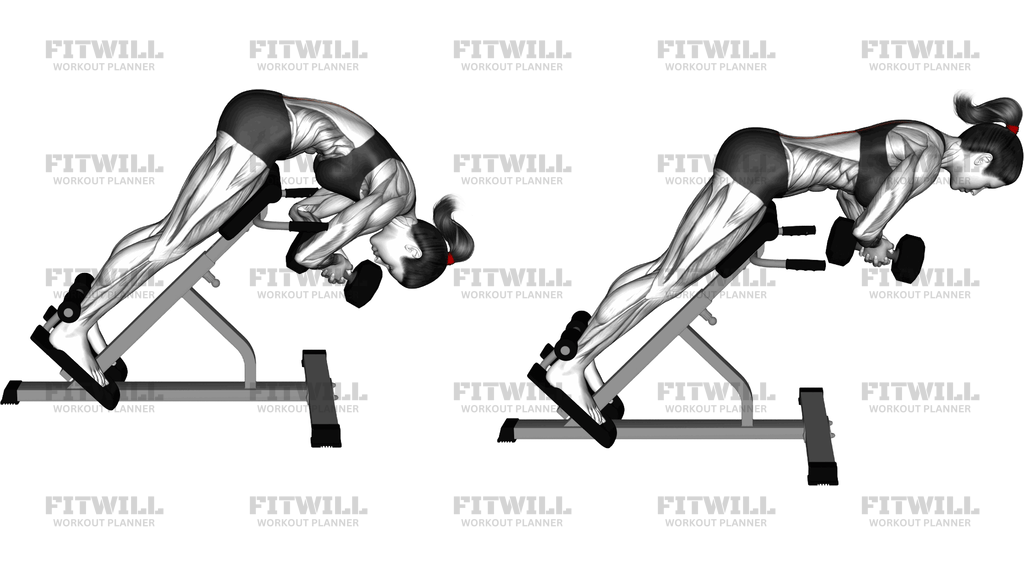
Instructions
- Set the hip pad of the 45-degree back extension bench so its top edge sits at your hip crease when you lie face down on it.
- Secure your ankles under the rear pads with the balls of your feet on the platform, legs straight but knees soft.
- Pick up a light dumbbell and hold it vertically against your chest with both hands, or let it hang from your arms directly below your shoulders.
- Cross your arms over the dumbbell or hold it at your upper chest, then brace your abdominals as if bracing for a light punch.
- Hinge forward at the hips and lower your torso toward the floor in a slow, controlled arc, letting the dumbbell hang straight down beneath you.
- Descend until you feel a comfortable stretch in your hamstrings and lower back, roughly a 45-to-90-degree fold at the hips depending on your mobility.
- Drive your hips down into the pad and squeeze your glutes to lift your torso back up until your head, shoulders, hips, and ankles form one straight line.
- Do not arch past that straight line; pause briefly at the top with the glutes engaged.
- Exhale as you rise, inhale at the top, and take a breath before starting the next descent.
- Complete your reps, then set the dumbbell down on the floor or a bench before unhooking your ankles from the pads.
Tips & Tricks
- Most people set the pad too high, which pins the pelvis and forces all the movement into the lumbar spine; drop the pad height until it sits right at the hip crease.
- If the dumbbell pulls you forward at the bottom and you feel it in your shoulders, hold it tighter against your chest instead of letting your arms hang loose.
- A dumbbell held at the chest loads you far more than bodyweight, so start with 5-10 kg even if you can do 20 clean bodyweight reps.
- Rounding your upper back on the way down turns this into a loose hang; keep the chest open and think of the dumbbell and your head lowering together.
- Bouncing out of the bottom stretch is the most common fault on this bench; the stretch reflex feels good but robs the erectors of work and adds risk.
- If your calves cramp, you are pointing your toes and pushing off the foot platform; pull your toes up and keep the heels planted.
- Squeeze the glutes at the top before you think about squeezing the lower back, since extending past a straight line with weight in hand is where lumbar strain usually happens.
- Bend your knees slightly if the stretch in your hamstrings forces your lower back to round at the bottom.
- Progress by adding reps first, then small weight jumps of 1-2.5 kg, because the lumbar extensors respond better to volume than to big load increases.
Frequently Asked Questions
What muscles does the Dumbbell 45 Degrees Back Extension work?
The erector spinae of the lower back are the primary movers, with the glutes and hamstrings assisting as you extend the hips to the top. The grip and upper back also work isometrically to hold the dumbbell in place.
Is the Dumbbell 45 Degrees Back Extension safe for beginners?
Beginners should master the bodyweight version first and only add a dumbbell once they can control the hinge pattern without arching past a straight line at the top. When ready, start with a very light dumbbell held at the chest.
Should I hold the dumbbell at my chest or let it hang from my hands?
Holding it against your chest with crossed arms keeps the weight closer to your spine and is easier to control, while letting it hang increases the leverage and difficulty. Most lifters should start at the chest.
How far down should I lower my torso?
Lower until you feel a mild stretch in the hamstrings and lower back, typically somewhere between a 45-degree and 90-degree fold at the hips. Going deeper only helps if you can keep your back from rounding.
Why do I feel the Dumbbell 45 Degrees Back Extension mostly in my hamstrings?
That is normal, since the hamstrings stretch and assist heavily in this position. To shift more work to the lower back and glutes, focus on driving the hips into the pad and squeezing the glutes on the way up.
Can I use this exercise instead of deadlifts?
It trains a similar hinge pattern with far less load on the grip and spine, so it works well as an accessory or substitute when deadlifting is not available. It will not replicate the full-body loading of a heavy deadlift.
How many reps and sets should I do?
Sets of 8-15 controlled reps work well for strength, while higher reps of 15-20 suit endurance-focused work. Because the load is on the lumbar spine, quality reps matter more than chasing heavy dumbbells.
What is the most common mistake on this exercise?
Hyperextending and arching the back past a straight line at the top, often combined with bouncing out of the bottom. Both shift stress onto the lumbar spine, so end each rep with the body in one line and descend slowly.
What can I use if I do not have a 45-degree back extension bench?
A stability ball anchored against a wall with your feet hooked under something stable can replicate the setup, though it is less secure when holding a dumbbell. Dumbbell Romanian deadlifts are a simpler standing alternative.