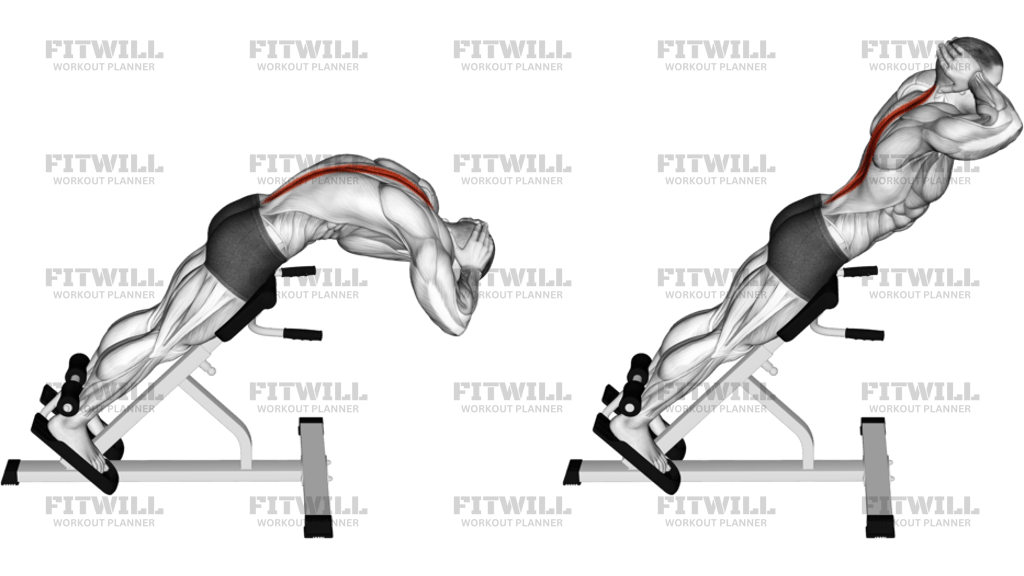
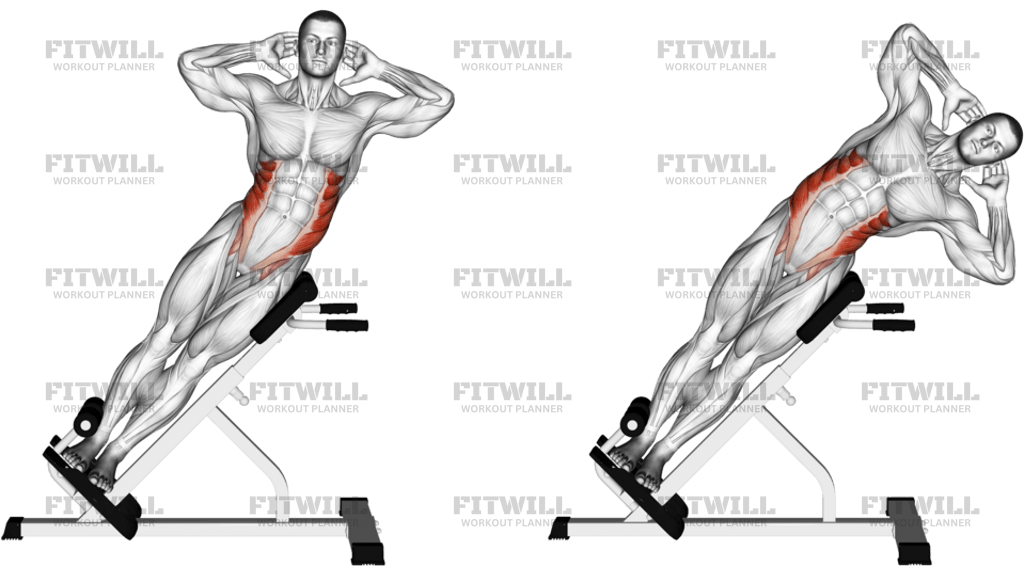
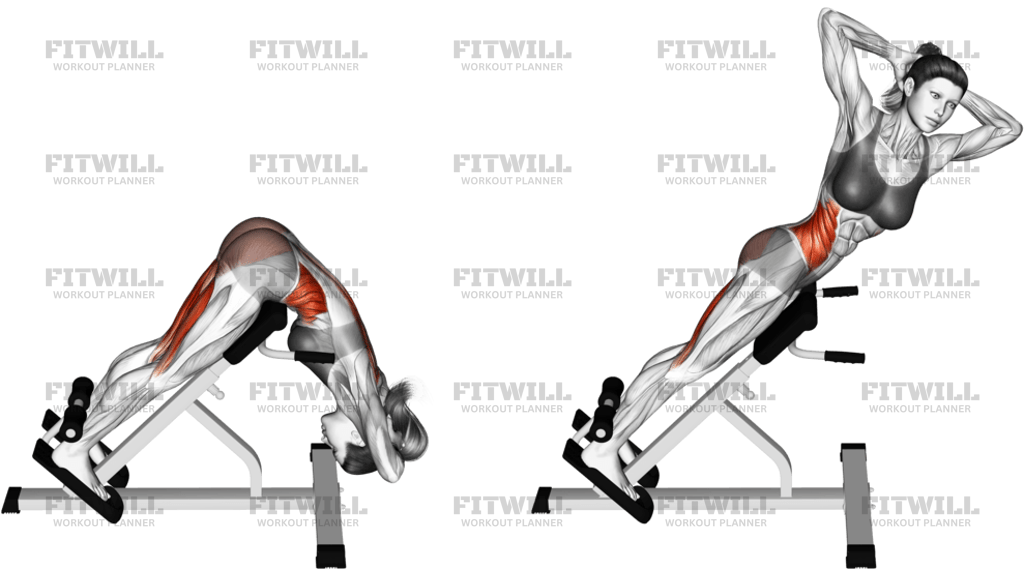
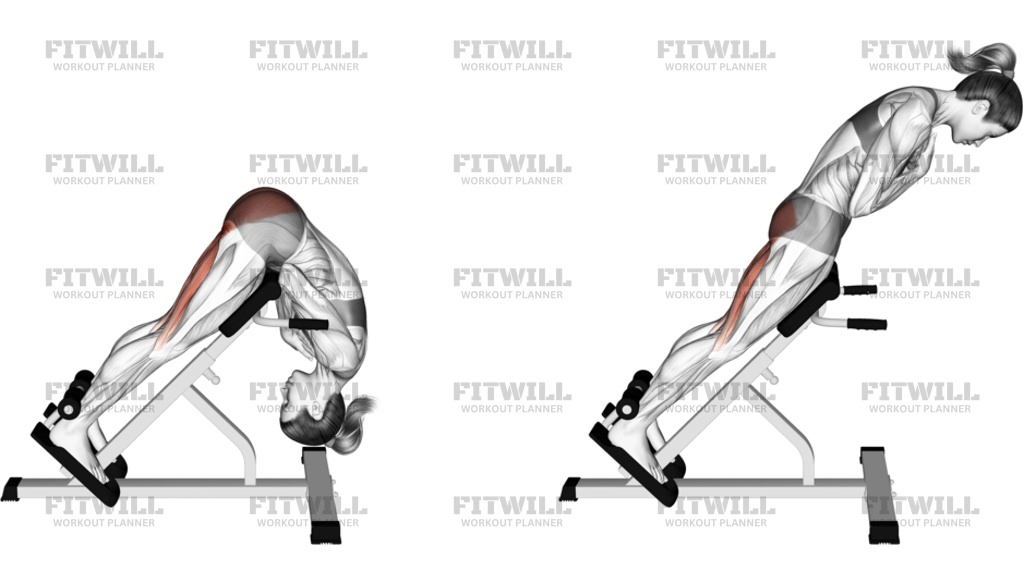
Kettlebell 45 Degrees Back Extension
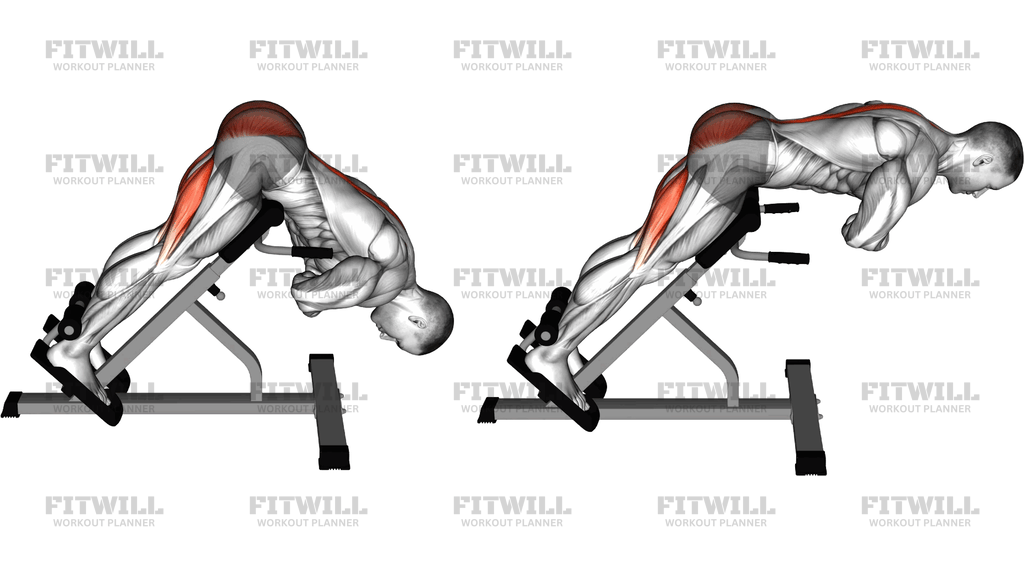
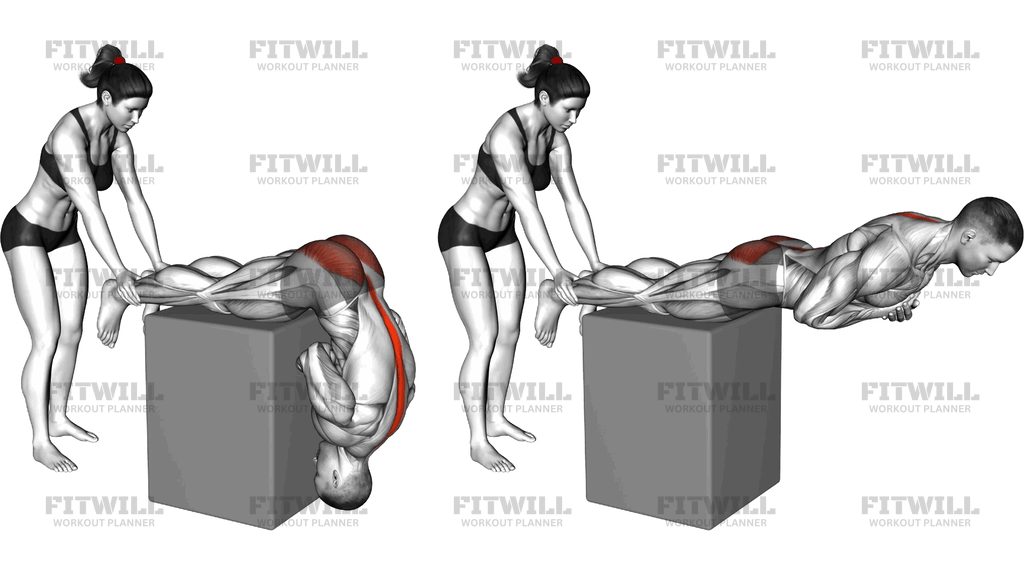
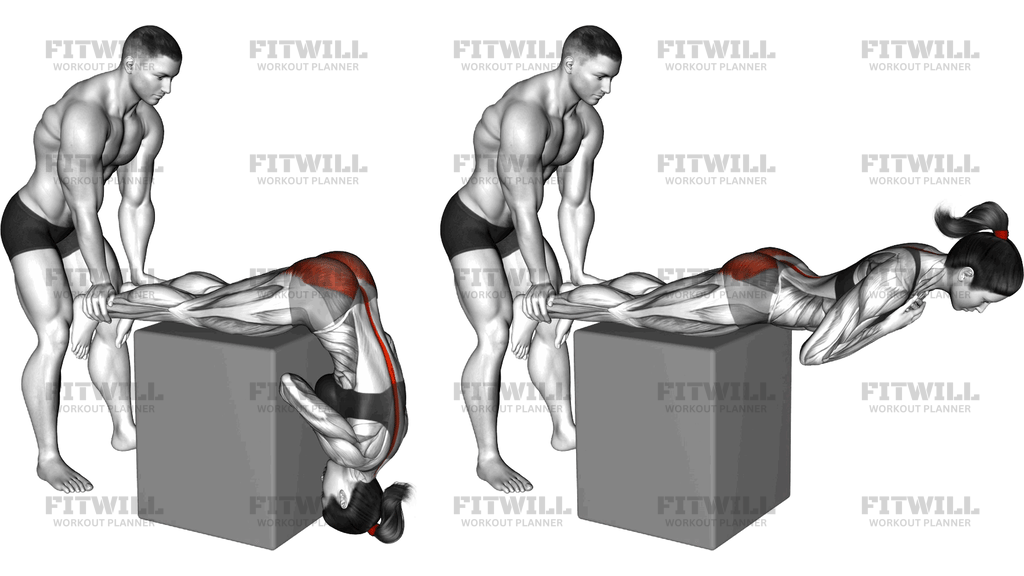
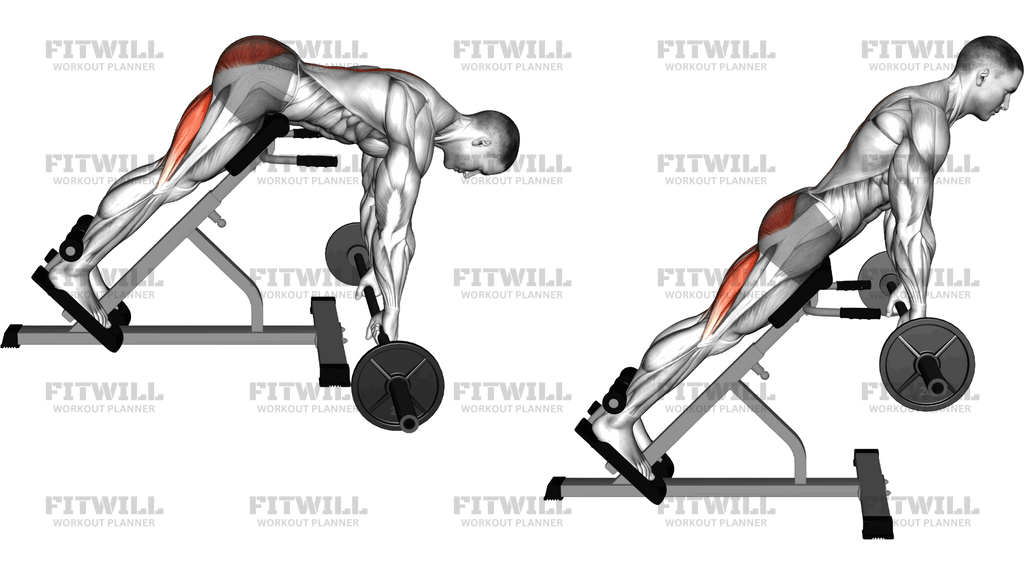
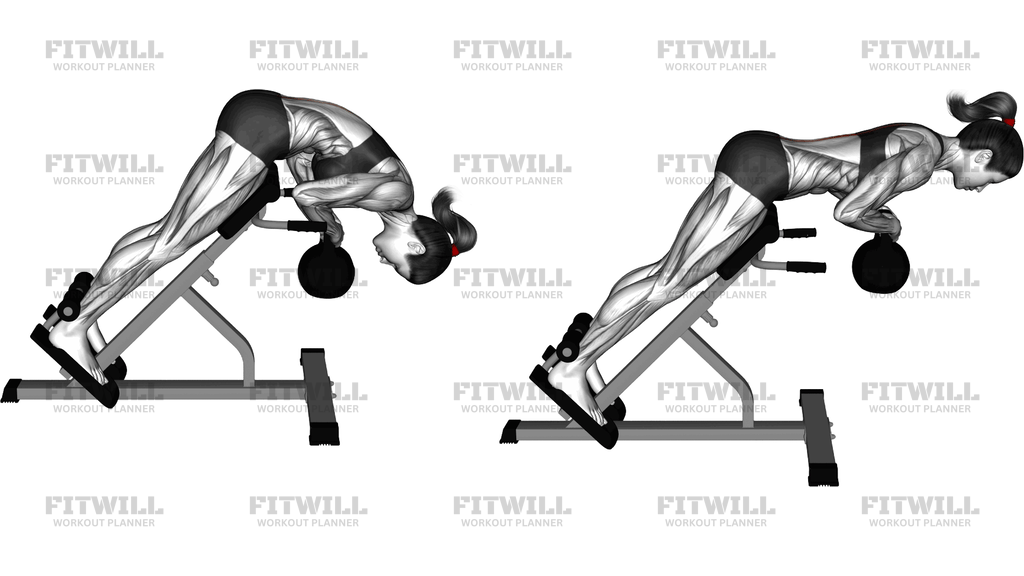
The Kettlebell 45 Degrees Back Extension is a weighted hyperextension performed on an angled back extension bench, sometimes called a Roman chair or hyper bench. Your hips rest against the pad, your ankles are hooked under the roller pads, and you hold a kettlebell with both hands against your chest or hanging beneath your shoulders as you hinge down and extend back up to a straight line. The added load from the kettlebell makes the erector spinae, glutes, and hamstrings work noticeably harder than in the bodyweight version.
This movement is a strong choice once unweighted back extensions have become easy and you need a way to keep progressing. Because the 45-degree angle limits the range compared to a horizontal bench, it is a manageable entry point into weighted trunk extension. It suits lifters building posterior chain strength for squats and deadlifts, as well as anyone who wants a stronger, more resilient lower back for daily lifting and sport.
The 45-degree setup matters for how the load is distributed. With the bench angled, your torso travels through a shorter arc, which keeps more emphasis on the lumbar extensors at the top of the range and lets the glutes and hamstrings drive the extension from the hips. Padding placement is critical: the pad should sit at the crease of your hips so your pelvis can tilt freely. If the pad blocks your hips, you cannot hinge properly and the stress shifts into the lower spine itself.
Execution comes down to hinging rather than flexing. Lower your torso by pushing your hips back into the pad and letting your chest travel toward the floor while the kettlebell stays close to your body. Rise by squeezing the glutes and driving the hips down into the pad until your head, spine, and hips form one straight line. Resist the urge to hyperextend and lift your chest past that line; stopping at neutral keeps the work on the intended muscles.
Common use cases include posterior chain accessory work after deadlifts, lower back hypertrophy blocks, and preparatory strength for anyone progressing toward heavier hinges. Because the kettlebell is held in front of the body, the load also challenges your ability to hold a stable, braced torso under weight, which transfers directly to barbell hinge lifts.
Keep the load conservative when learning the exercise. Start with a light kettlebell or hold a weight plate to your chest, and only add load when you can move smoothly without any jerking or bouncing at the bottom. If you feel the work shifting into your spine rather than your hips and back muscles, reposition the pad or reduce the range before adding weight.
[ Workout Log & Planner ]
Put your next workout in Fitwill
Keep your plan and training log ready when you are.


Instructions
- Set the pad of the 45-degree back extension bench at the crease of your hips so your pelvis can tilt forward and back freely.
- Hook your ankles securely under the roller pads and place your feet flat on the platform with your legs straight and knees slightly relaxed.
- Pick up a light kettlebell and hold it with both hands against your chest, or let both hands grip the handle so it hangs below your shoulders.
- Cross your arms over the bell if holding it at your chest, and squeeze it so it does not swing during the set.
- Brace your abdomen and tuck your chin slightly before starting each rep.
- Lower your torso by pushing your hips back into the pad, letting your chest travel down toward the floor until you feel a mild stretch across the back of your hips.
- Drive your hips down into the pad and squeeze your glutes to raise your torso until your head, spine, and hips form a straight line.
- Pause briefly at the top without lifting your chest past neutral, then lower under control over two to three seconds.
- Exhale as you extend up and inhale at the top before each repetition.
- After your final rep, release the kettlebell to the floor before unhooking your ankles and stepping off the bench.
Tips & Tricks
- If your lower back feels pinched at the top, you are likely extending past neutral — finish each rep with your body in one straight line instead of arching upward.
- The most common mistake is rounding through the spine on the way down instead of hinging at the hips; think about pushing your hips back into the pad rather than curling your chest toward the floor.
- A kettlebell held away from your chest swings and pulls your torso around; keep it pressed close to your sternum or directly under your shoulders so it moves with you.
- Lower the kettlebell slightly slower than you lift it — dropping into the bottom position turns the exercise into a bounce and removes tension from the back extensors.
- If the pad digs into your thighs or abdomen, it is set too high; adjust it so only the hip crease contacts the pad and the legs can move independently of the torso.
- Keep a soft bend in the knees rather than locking them — locked knees flatten the hamstrings and can make the bottom position feel strained.
- Start with a kettlebell you could comfortably do 20 bodyweight-style reps against; the angle plus load adds up quickly on the lumbar muscles.
- If you cannot feel your glutes working, slow the top half of each rep and consciously squeeze them as you come up to a straight line.
- Avoid turning the movement into a row by pulling the kettlebell toward you — the arms only hold the weight while the hips and trunk do the lifting.
Frequently Asked Questions
What muscles does the Kettlebell 45 Degrees Back Extension work?
The primary muscles are the erector spinae of the lower back, with strong support from the glutes and hamstrings as they extend the hips. Holding the kettlebell also forces your trunk to stay braced throughout the set.
Where should I hold the kettlebell during the Kettlebell 45 Degrees Back Extension?
Holding it against your chest with both hands is the most stable option and keeps the load close to your center of mass. Gripping it so it hangs beneath your shoulders is also acceptable, but it demands more upper back and grip endurance.
Is the Kettlebell 45 Degrees Back Extension suitable for beginners?
Beginners should first master unweighted back extensions on the 45-degree bench with clean hip hinging. Once 15 to 20 controlled reps feel easy, a light kettlebell held at the chest is a sensible first step into loading.
Should I arch past a straight line at the top of the Kettlebell 45 Degrees Back Extension?
No — finishing at a neutral line from head to hips keeps the tension on the glutes, hamstrings, and back extensors. Repeatedly overextending adds stress to the lumbar spine without extra muscle benefit.
Why does pad placement matter so much on the back extension bench?
The pad must sit at the crease of your hips so the pelvis can rotate as you hinge. If the pad blocks your thighs or abdomen, your torso cannot lower fully and your lumbar spine is forced to do the hinging instead.
How heavy should the kettlebell be for this exercise?
Choose a weight you can lower slowly and lift without jerking for 8 to 15 reps. Because the lumbar muscles fatigue quickly under load, progress in small increments rather than large jumps.
What can I use instead of a kettlebell for the Kettlebell 45 Degrees Back Extension?
A weight plate or dumbbell held at the chest works nearly identically. If no weight is available, pause longer at the top and lower more slowly to increase the challenge.
Can I do the Kettlebell 45 Degrees Back Extension if my lower back gets sore easily?
Start with bodyweight reps and a shorter range, stopping at a comfortable depth. If you notice sharp or lingering discomfort rather than normal muscle fatigue, reduce the load and range and consider having a coach check your setup.
How does the Kettlebell 45 Degrees Back Extension differ from a regular back extension?
The kettlebell adds external load, so the back extensors, glutes, and hamstrings work against resistance instead of only your body weight. This makes it useful for building strength once the bodyweight version no longer feels demanding.
How should I breathe during the Kettlebell 45 Degrees Back Extension?
Inhale and brace before lowering, then exhale as you drive up to the straight-line position. Re-brace at the top of each rep so your trunk stays supported under the load.