Medicine Ball Sit-Up Wall
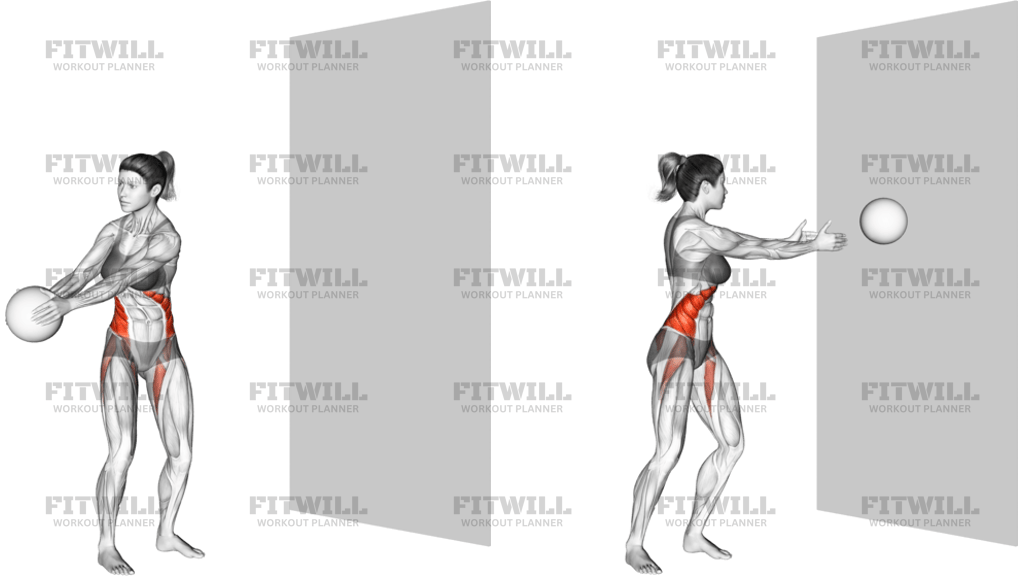
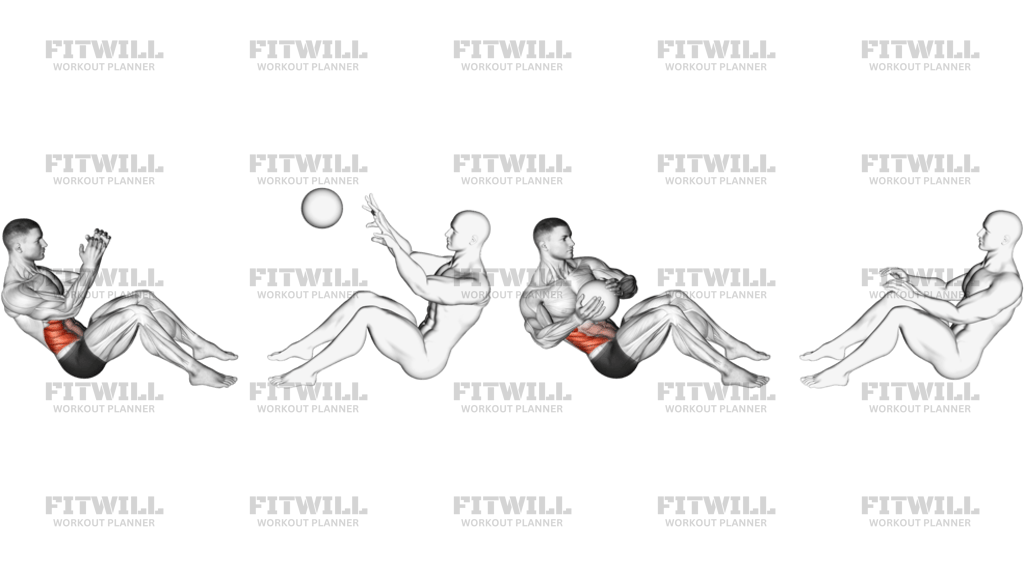
Medicine Ball Sit-Up Wall is a core-focused floor exercise that uses a medicine ball and a wall target to keep each repetition honest. Instead of rushing through a generic crunch pattern, the wall gives you a fixed point to reach toward, which helps you repeat the same torso angle, hand path, and finish position from rep to rep. That makes Medicine Ball Sit-Up Wall useful when you want a controlled ab exercise that still feels athletic and deliberate.
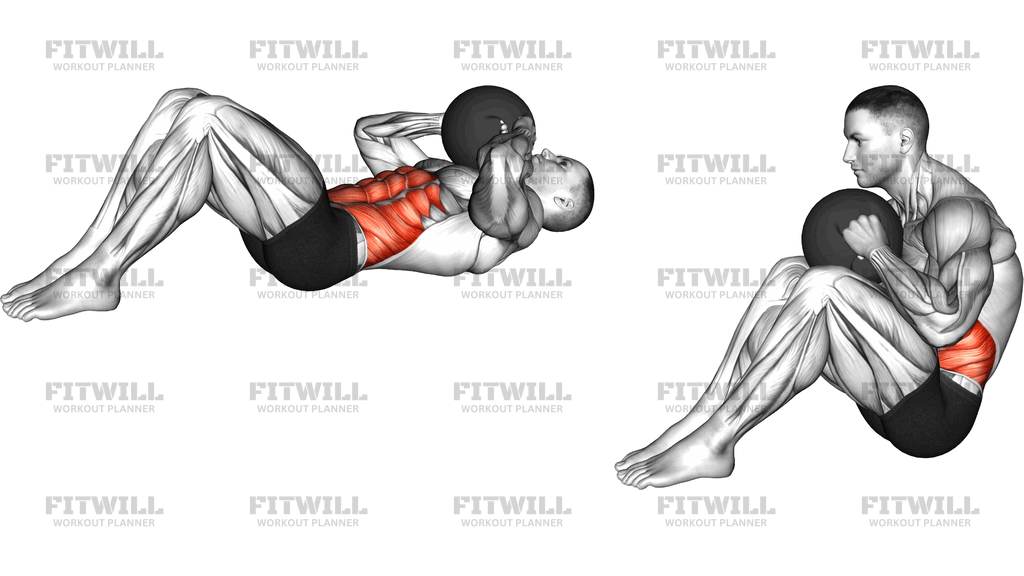
The main work comes from the rectus abdominis, with the obliques and hip flexors helping you curl the torso and keep the movement smooth. Because the lower body is usually set close to the wall, you also get feedback from your feet and hips about whether you are using the floor, the wall, or pure momentum to help the sit-up. When the setup is right, Medicine Ball Sit-Up Wall trains trunk flexion, midline control, and coordinated breathing without turning into a sloppy leg-driven rep.
Setup matters a lot here. Sit on the floor with your knees bent, place your feet close enough to the wall that they can act as a steady anchor, and hold the medicine ball centered at your chest before you lie back. Keep your rib cage stacked rather than flared, and make sure the ball starts in a position you can control instead of drifting behind your head. A clean setup keeps the rep focused on your abs instead of your hips or neck.
From the bottom, exhale, curl your shoulders and upper back off the floor, and drive the ball forward in a straight line toward the wall as you sit up. Keep the motion smooth and finish tall rather than collapsing forward or yanking with your arms. Lower back down slowly under control, keeping the ball steady and the feet planted, then reset before the next rep. In a workout, Medicine Ball Sit-Up Wall works well as accessory core work, a warm-up for trunk activation, or a conditioning set when you want crisp reps with a clear target.
Use a lighter ball if you start throwing the torso at the wall instead of controlling the sit-up, or if your neck and hip flexors start taking over. The best version of Medicine Ball Sit-Up Wall feels firm through the midsection, quiet through the lower body, and repeatable from the first rep to the last. If the wall target changes the rep into a toss or rebound in your gym, keep the same control standards and only increase speed after you can hold position cleanly.
[ Workout Log & Planner ]
Put your next workout in Fitwill
Keep your plan and training log ready when you are.


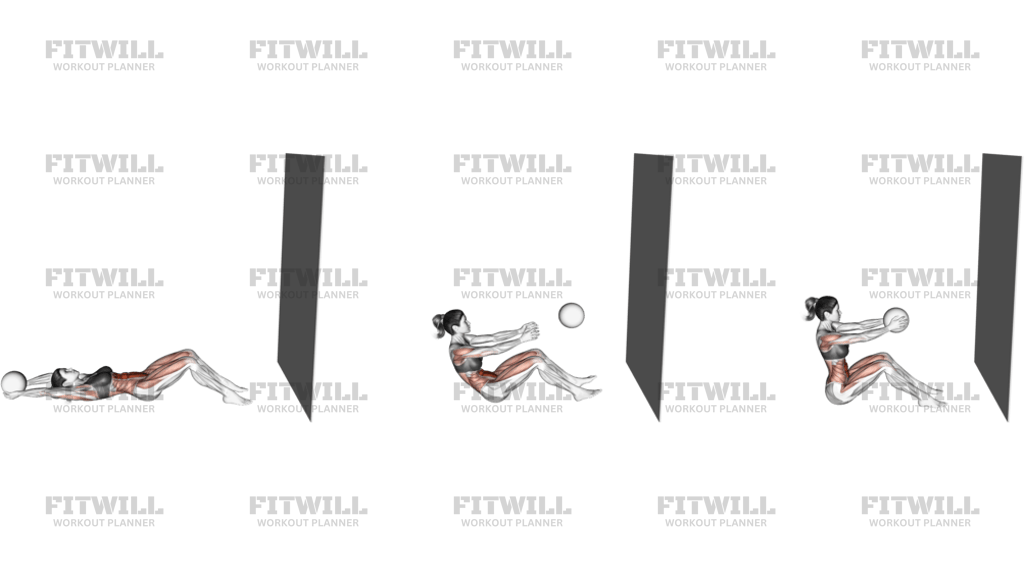
Instructions
- Sit on the floor with your knees bent and your feet close to the wall so the wall can anchor your lower body.
- Hold the medicine ball with both hands at the center of your chest before you lean back.
- Lower your back to the floor until your shoulder blades are down and your knees stay bent.
- Tuck your chin slightly, keep your rib cage down, and brace your abs before each rep.
- Exhale and curl your shoulders and upper back off the floor in one smooth sit-up.
- Drive the medicine ball straight toward the wall as you rise instead of swinging it upward.
- Finish tall at the top with your torso stacked over your hips and the ball reaching forward under control.
- Lower back to the floor slowly, keeping the ball steady and your feet planted near the wall.
- Reset fully at the bottom before starting the next repetition.
Tips & Tricks
- Keep the ball in line with your chest and sternum so the wall target does not pull your shoulders forward.
- If your feet start pushing hard into the wall, slide them slightly farther away and keep the lower body quieter.
- Choose a ball that lets you sit up without turning the rep into a throw.
- Think about lifting your ribs toward your pelvis instead of pulling with your arms.
- Touch the wall lightly at the top if that is the version you are doing, but do not bounce off it.
- Keep your neck long and your chin gently tucked so the sit-up comes from the trunk, not the head.
- Lower with control for every rep; the descent should look as deliberate as the curl up.
- If your hip flexors take over, shorten the range and stop before the legs start to dominate.
- Use the same wall target and ball height on every repetition to keep the set consistent.
Frequently Asked Questions
What muscles does Medicine Ball Sit-Up Wall work most?
The abs do most of the work, with the obliques and hip flexors helping during the curl up.
Do I have to throw the medicine ball at the wall?
No. In most versions, you simply reach or press the ball toward the wall as you sit up. If your gym uses a throw-and-catch version, keep the same control and use a lighter ball.
Where should my feet be for Medicine Ball Sit-Up Wall?
Set your feet close enough to the wall that they stay planted and stable without forcing your hips to tuck. The wall should help anchor you, not turn the rep into a leg drive.
Is Medicine Ball Sit-Up Wall good for beginners?
Yes, if the ball is light and the range is short enough to stay smooth. Beginners should focus on a controlled curl rather than trying to hit the wall hard or move fast.
How heavy should the medicine ball be?
Use a load that lets you keep your torso moving instead of your arms or hips. If the ball changes the sit-up into a swing, it is too heavy.
Why does the wall matter in this sit-up?
The wall gives you a fixed target and a simple setup check. It helps you repeat the same path each rep and keeps the movement from drifting into a loose, inconsistent sit-up.
What should I do if Medicine Ball Sit-Up Wall hurts my neck?
Reduce the ball weight, keep your chin slightly tucked, and stop pulling the head forward. If the neck still takes over, shorten the range or switch to a floor crunch variation.
How can I make Medicine Ball Sit-Up Wall harder?
Add a little load, slow the lowering phase, or pause at the top with the ball reaching toward the wall. Keep the same wall target so the harder version still stays controlled.