Medicine Ball Sit Up Slam
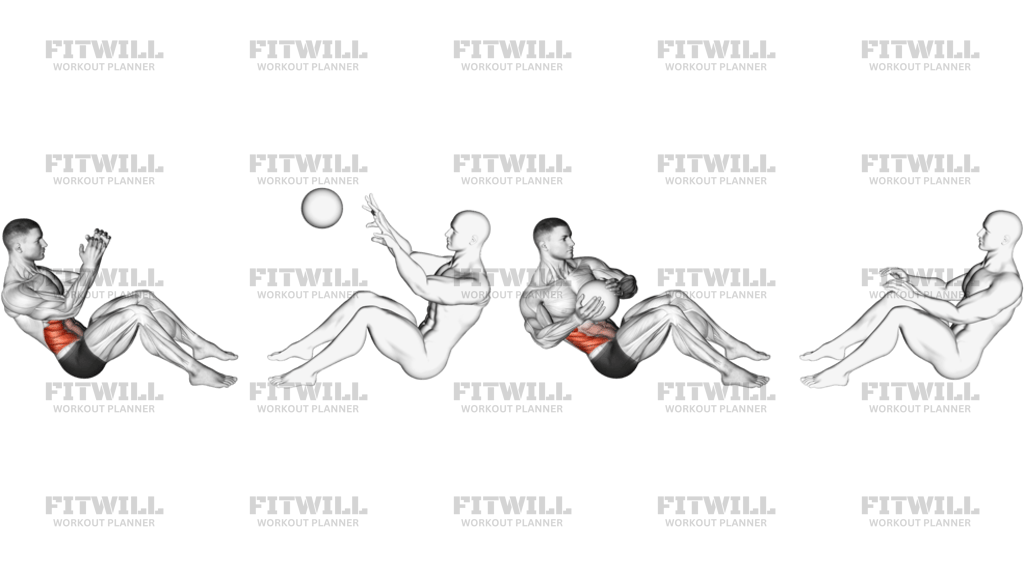
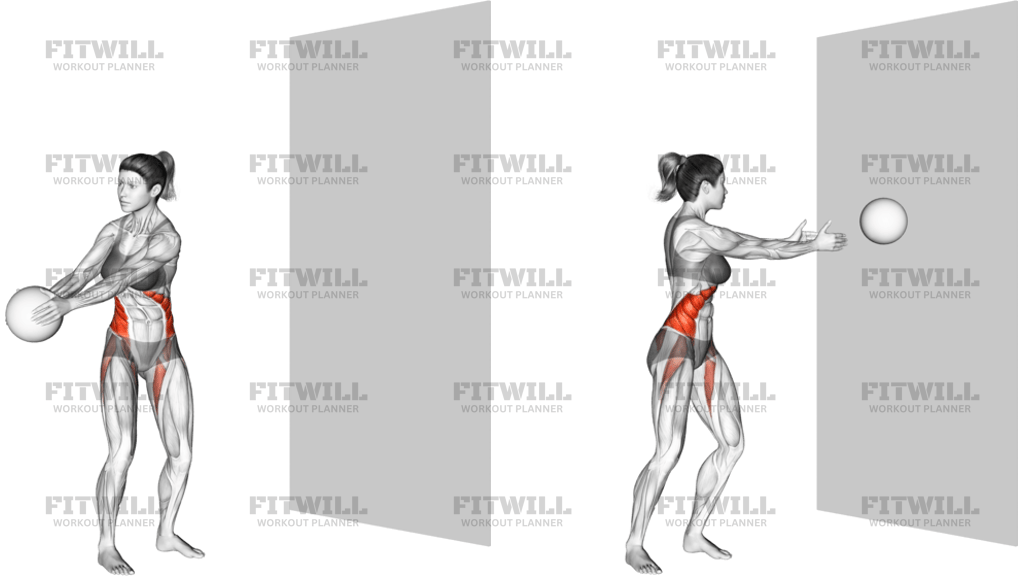
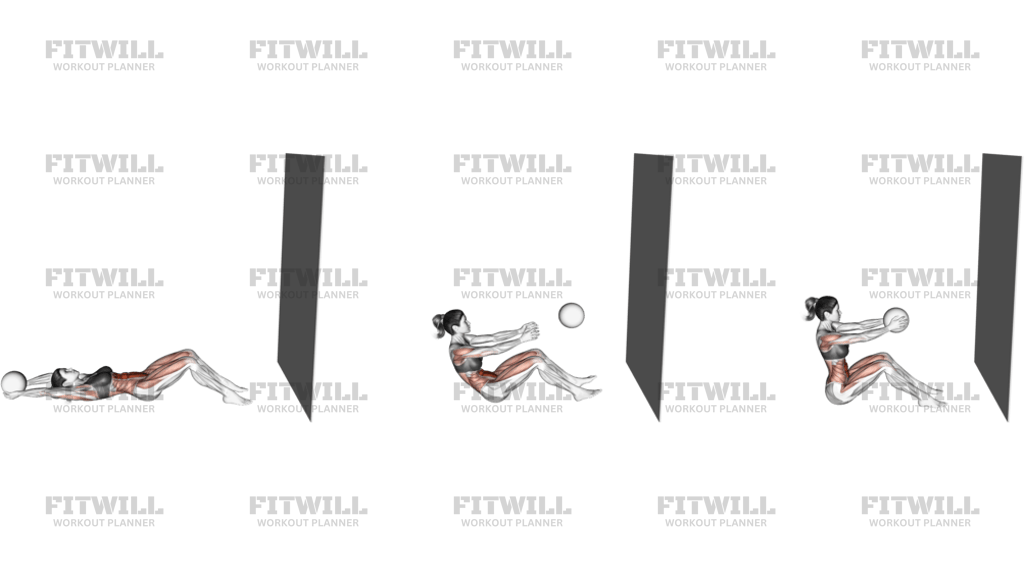
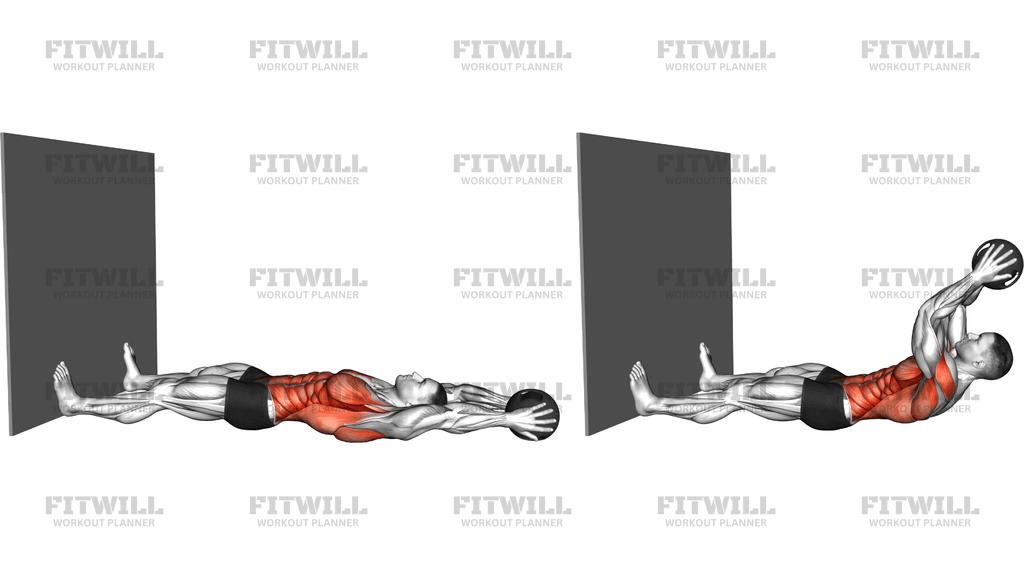
The Medicine Ball Sit Up Slam is a power-focused core exercise that combines a full sit-up with an explosive ball slam. You start flat on your back with your legs extended and your feet braced against a wall, holding a medicine ball in both hands above your head. From there, you sit up in one strong, continuous motion and drive the ball forward and down into the floor near the base of the wall. It is essentially two movements fused into one: the trunk curl of a sit-up and the forceful overhead throw of a slam.
This movement is useful for anyone who wants their abs to do more than just flex slowly under load. Because you are accelerating a ball from an overhead stretched position to a slam at the top, your trunk has to produce force quickly rather than merely hold a position. That makes it a popular choice in conditioning circuits, martial arts and field sport preparation, and general athletic training where throwing, punching, or sprinting actions benefit from a reactive midsection.
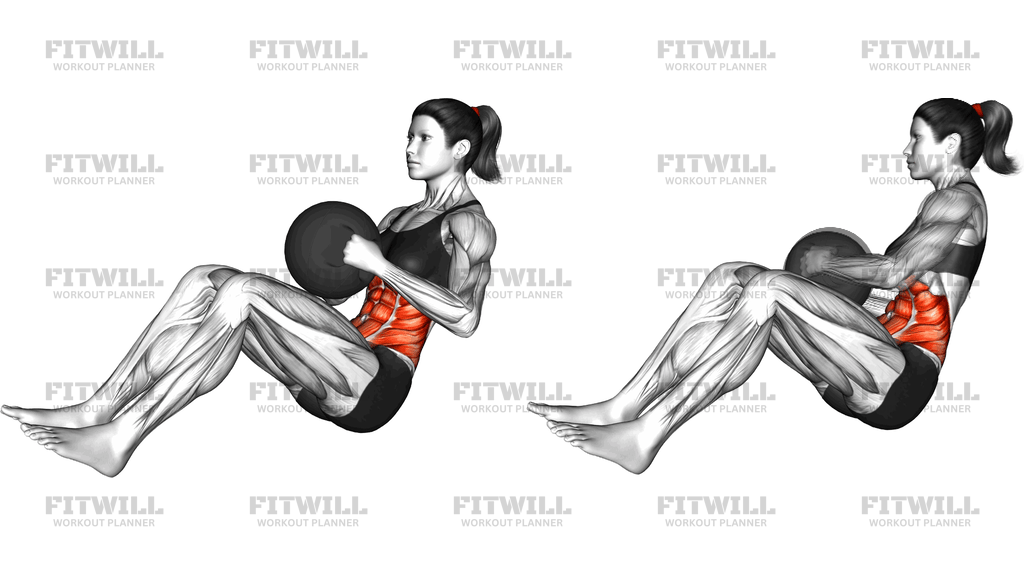
The primary work comes from the rectus abdominis, which curls the spine from the floor, with the obliques stabilizing and the hip flexors assisting as your torso rises toward your legs. Your shoulders, lats, and arms carry the ball through the overhead arc and deliver the slam. Having your feet pressed against the wall anchors your lower body so the effort stays on your trunk instead of leaking into your legs.
Setup matters more than people expect. Lying with legs fully extended and feet against a wall makes this harder than a bent-knee sit-up because the hip flexors work from a long position and there is no knee drive to help you. Start with a light medicine ball until you can sit up smoothly without jerking your head forward or bouncing off the floor.
Execution should feel like one coordinated wave: arms stay long as the ball travels from behind your head, the torso peels up powerfully, and the slam finishes the movement with intent. Avoid letting the ball crash down on yourself or throwing so hard that your lower back rounds violently at the top. Controlled weight, deliberate power, and a quiet lower back are the markers of a good rep.
Use the Medicine Ball Sit Up Slam early in a core session when you are fresh, or as a finisher for timed intervals. Three to four sets of eight to twelve reps works well for strength and power emphasis, while shorter, faster sets suit conditioning days. If your lower back or neck complains, reduce the ball weight or switch to a bent-knee version before dropping the exercise entirely.
[ Workout Log & Planner ]
Put your next workout in Fitwill
Keep your plan and training log ready when you are.


Instructions
- Place a medicine ball on the floor and sit with your back to open floor space, then lie down flat on your back with your legs straight and the soles of both feet pressed firmly against a wall.
- Hold the medicine ball with both hands, fingers spread around the sides of the ball, and extend your arms straight back overhead until the ball rests on or just above the floor behind your head.
- Brace your abdominal muscles and gently pull your lower back toward the floor before moving, so your spine starts in a supported position.
- Exhale as you curl your torso off the floor, keeping your arms long and letting the ball travel in an arc from overhead toward your knees in one continuous motion.
- At the top of the sit-up, drive the ball forcefully forward and down, slamming it into the floor close to the base of the wall near your feet.
- Keep your feet in contact with the wall and your legs relaxed but still, so your trunk rather than your legs produces the movement.
- Pick the ball back up with both hands and lower it overhead with control as you roll back down one vertebra at a time to the starting position.
- Inhale at the bottom, reset your brace, and make sure the ball and your body are aligned the same way before starting the next rep.
- Complete all reps on one set with the same rhythm, resting the ball fully on the floor behind your head between reps if you need a moment to reset.
Tips & Tricks
- Choose a ball you can control at the top of the sit-up; a ball that is too heavy usually gets thrown by yanking the neck and shrugging the shoulders instead of by curling the trunk.
- Do not let your heels lose contact with the wall during the sit-up. If your feet slide or lift, the wall is too far away or the ball is too heavy for your current hip flexor strength.
- Aim the slam at the floor, not at the wall itself. Throwing the ball into the wall from this position sends it rebounding back toward your face.
- If your lower back arches off the floor when the ball is overhead, your range is ahead of your strength. Start each rep with the ball slightly higher behind your head and gradually extend your reach over time.
- Keep the arms long rather than pulling the ball in with bent elbows. Bent arms turn the movement into an arm exercise and shorten the arc your abs have to work through.
- Slam with your whole torso driving through, not just a wrist flick. The throw should feel like the finish of the sit-up, not a separate arm action.
- Lower down slowly on the way back. Dropping your torso to the floor under gravity wastes half the exercise and tends to make the lower back slap the ground.
- If you cannot sit up all the way with straight legs, bend your knees slightly or loop a light band around your feet for a few weeks while you build hip flexor and abdominal strength.
- Place a mat under your upper back and head if you are training on a hard floor, and check that the area near the wall is clear before you start slamming.
Frequently Asked Questions
Which muscles does the Medicine Ball Sit Up Slam work the most?
The rectus abdominis does most of the work as it curls your torso off the floor, with the obliques and hip flexors assisting throughout the sit-up. The shoulders, lats, and arms move the ball through the overhead arc and finish the slam.
Why are the feet braced against the wall in this exercise?
Pressing your soles into the wall anchors your legs so the straight-leg sit-up does not turn into a struggling leg movement. It also gives you a stable base for an explosive slam at the top.
Is the Medicine Ball Sit Up Slam suitable for beginners?
It can be, but beginners should start with a very light ball and may want to bend the knees slightly at first. If you cannot sit up from a flat position without jerking, build basic sit-up strength before adding the slam.
How heavy should the medicine ball be?
Pick a ball you can accelerate cleanly for all planned reps, usually between 2 and 6 kg for most people. If your torso slows down noticeably or your lower back strains overhead, the ball is too heavy.
Should I slam the ball into the wall or the floor?
Slam it into the floor near the base of the wall. Throwing the ball into the wall itself sends it rebounding straight back toward you, which is dangerous from a lying position.
What is the most common mistake with this movement?
Yanking the head and shoulders forward with the neck and arms instead of curling the trunk. This shows up as a strained neck and a sit-up that never actually reaches full height.
What can I use instead of a medicine ball?
A sandbag, a small weight plate held with both hands, or even a single dumbbell hugged to the chest can replace the ball. Any weight you can hold securely and control through the overhead arc works.
How is this different from a regular sit-up?
The straight-leg setup with feet against a wall increases hip flexor involvement, and the slam adds an explosive, full-speed contraction at the top. A regular sit-up is typically slower and lets you use arm swing or knee drive to cheat.
Is it safe for the lower back?
It is generally fine when the ball is light enough to control and you avoid letting the lower back arch hard under the load overhead. Stop and reduce the weight or bend your knees if you feel pressure in your lower back during the setup or the slam.
How many reps and sets should I do?
For power and core strength, three to four sets of eight to twelve controlled reps works well. For conditioning, use a lighter ball and work in timed intervals of 20 to 30 seconds with clean form.