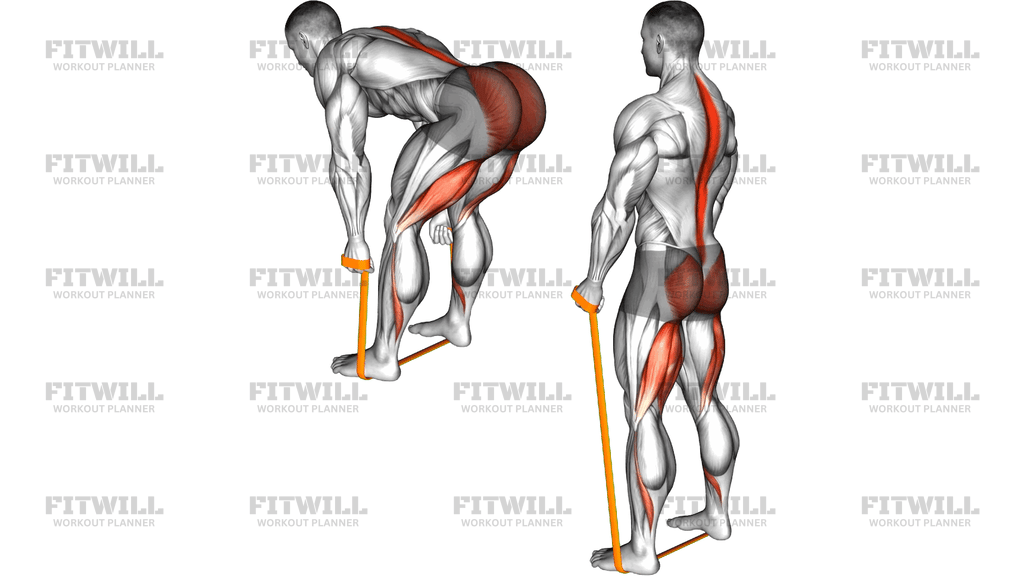
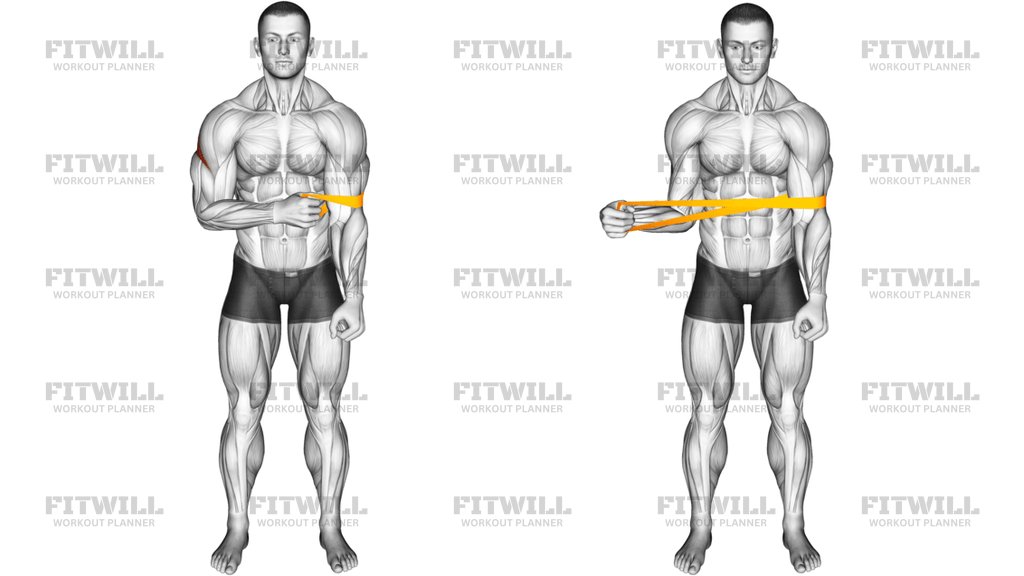
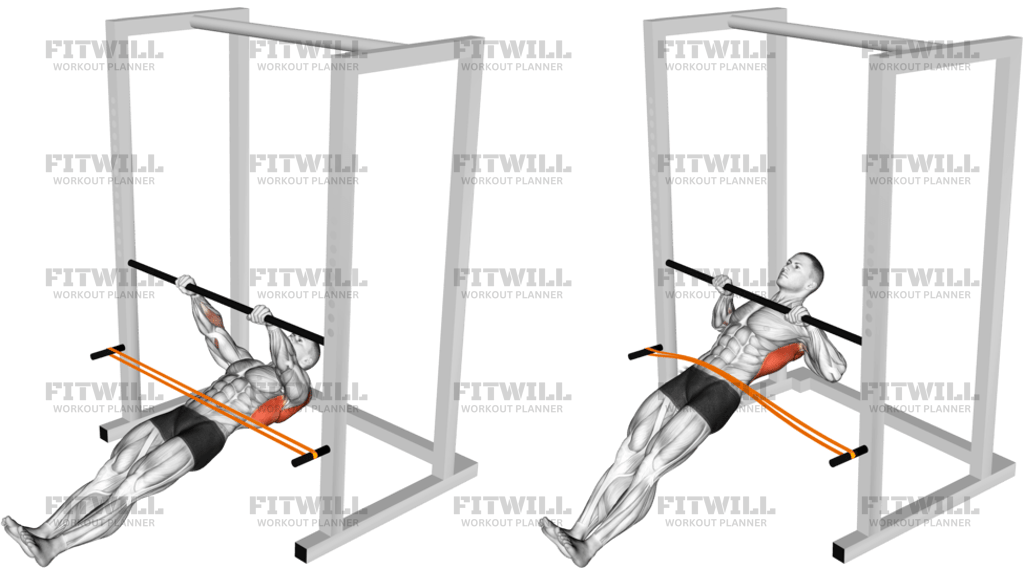
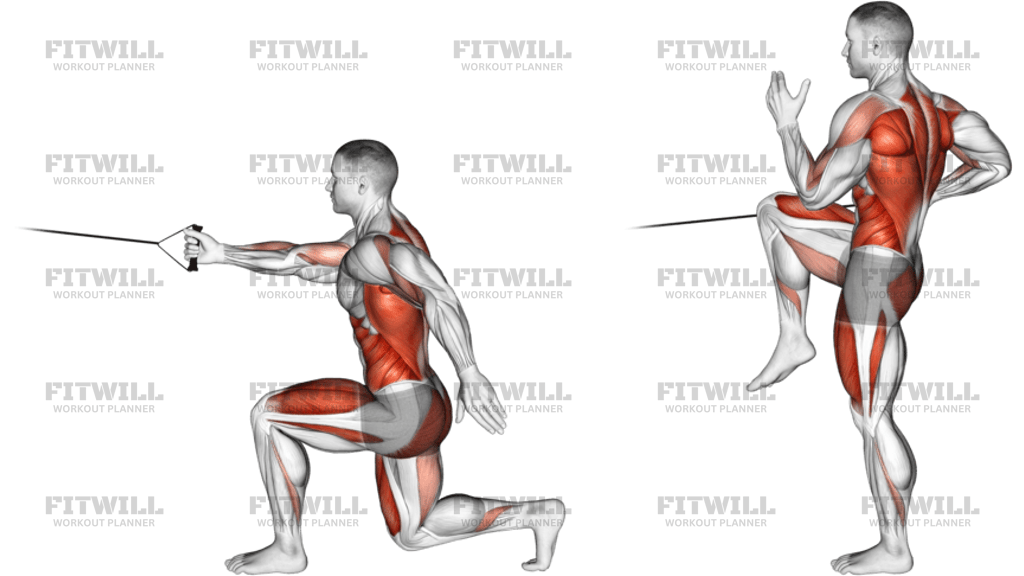
Resistance Band Standing Underhand Lat Pulldown
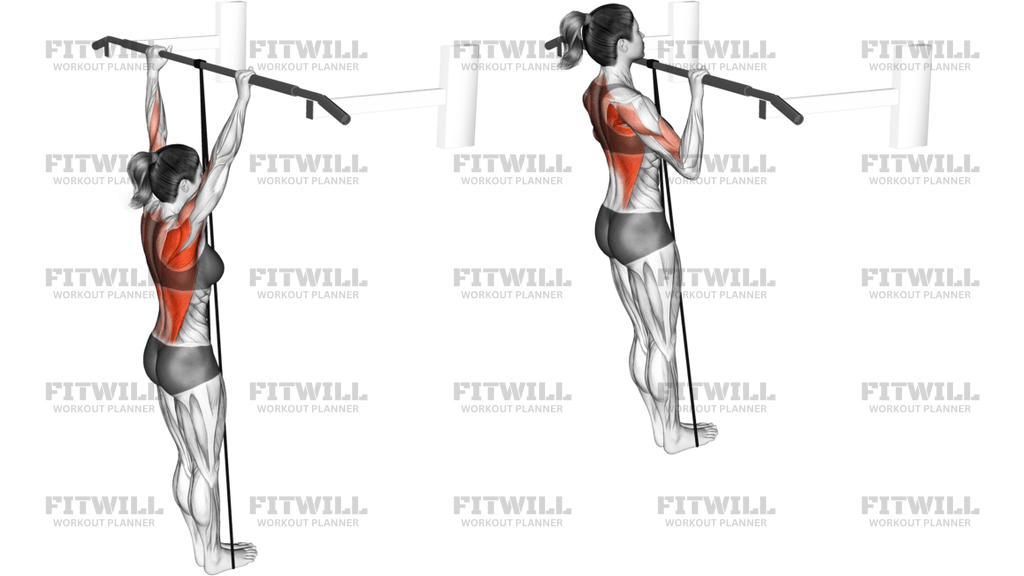
The Resistance Band Standing Underhand Lat Pulldown is a vertical pulling exercise performed by looping a resistance band over a sturdy overhead bar or power rack and pulling the ends down toward your shoulders with your palms facing you. Because you stand the whole time, your legs, glutes, and core work to keep your torso tall and still, which makes this a more demanding variation than a seated pulldown even though the band provides lighter resistance.
The underhand grip changes the flavor of the pull compared with a pronated version. With your palms turned toward you, the biceps sit in a stronger line of pull and contribute more, while the lats still do the bulk of the work driving the elbows down and back. It is a useful choice for anyone building toward pull-ups and chin-ups, since it trains the same vertical pulling pattern with an easily adjustable load.
This movement suits beginners who want a gentle entry into lat training, home lifters without a cable machine, and more experienced trainees using it as a high-rep back-finisher or warm-up. The band's resistance curve also matters: tension is heaviest at the bottom of the pull near peak contraction, which encourages you to squeeze rather than swing the weight down.
Setup quality decides whether this exercise hits your back or your arms. Anchor the band over a secure bar at roughly head height or above, grip the ends with an underhand grip about shoulder-width apart, and take a step or two back so there is meaningful tension with your arms extended overhead. Stand with feet roughly hip-width apart, a soft bend in the knees, and ribs stacked over the pelvis so you do not lean back as you pull.
To execute well, start each rep by drawing the shoulder blades down and together, then pull the band ends down until your hands are beside your shoulders and your elbows point toward the floor and slightly back. Pause briefly at the bottom to feel the lats contract, then let the band raise your arms back overhead under control. Avoid turning this into an upright row by letting the elbows drift forward, and keep your torso from rocking.
The main safety points are simple: confirm the band is anchored securely and free of tears before every set, keep tension controlled on the way up so the band cannot snap your hands upward, and choose a resistance you can move through a full range without shrugging or arching backward. If your grip gives out before your back does, slow the tempo or use a band with less tension rather than gripping harder.
[ Workout Log & Planner ]
Put your next workout in Fitwill
Keep your plan and training log ready when you are.


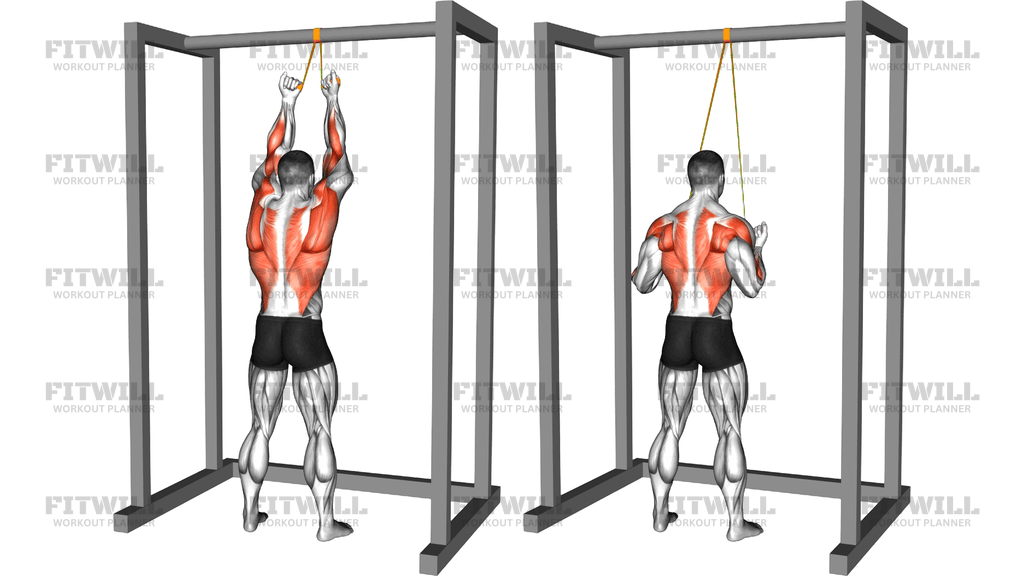
Instructions
- Loop a resistance band over a secure overhead bar or power rack at about head height, and pull the anchor point firmly to confirm it will not slip.
- Grip one end of the band in each hand with an underhand grip, palms facing you, hands about shoulder-width apart.
- Step back until there is clear tension in the band with your arms fully extended overhead, and stand with feet hip-width apart and knees slightly bent.
- Brace your core, lift your chest, and stack your ribs over your hips so your torso stays upright throughout the set.
- Begin each rep by pulling your shoulder blades down and back, then drive your elbows down toward your sides.
- Pull the band ends down until your hands are level with your shoulders and your elbows point down and slightly behind your torso.
- Squeeze your lats for a beat at the bottom of the pull before releasing.
- Slowly let the band raise your arms back overhead, resisting the pull the whole way until your elbows are fully extended.
- Exhale as you pull down and inhale as your arms return overhead, keeping your breathing steady and never holding your breath.
- Complete your reps, then step forward carefully to release the band tension before letting go of the handles.
Tips & Tricks
- If your shoulders shrug toward your ears at the start of the pull, you are skipping the scapular step — deliberately press the shoulder blades down before the elbows move.
- Bending the wrists back so the band pulls over your fingers is a common fault with band pulldowns; keep the band settled in the middle of your palm so your grip stays strong.
- The band is slackest when your arms are overhead, so many lifters rush the top of the rep. Slow the stretch phase down to keep the lats loaded through the whole range.
- Leaning back and turning this into a row happens quickly as fatigue sets in. If your torso tips past a slight backward angle, reduce the band tension instead of leaning further.
- Elbows that travel forward and up turn the movement into a biceps-and-shoulders exercise. Cue your elbows to finish low and close to your ribs, pointing toward the floor.
- Because the underhand grip lets the biceps take over, try finishing each rep by thinking about pulling with your pinky fingers and elbows rather than your hands.
- Check the band and its anchor before every set. A worn band or a loose loop on a smooth bar can release suddenly when tension peaks at the bottom of the pull.
- If your arms are short relative to the anchor height and you cannot get full overhead extension, stand on a slight elevation or re-loop the band higher rather than working with a cramped range.
- Control the return more than the pull. Letting the band snap your arms up is the fastest way to lose lat tension and irritate the shoulder.
Frequently Asked Questions
Which muscles does the Resistance Band Standing Underhand Lat Pulldown work?
The lats are the primary movers, with the biceps assisting strongly because of the underhand grip. The rhomboids, mid traps, and rear shoulders stabilize and retract the shoulder blades, and your core works to keep you upright while standing.
Why use an underhand grip instead of an overhand grip for this band pulldown?
The supinated grip puts the biceps in a stronger pulling position, which lets you feel the movement more easily and builds strength in the same arm position used for chin-ups. The lats still do most of the work, but the arms share more of the load than with a pronated grip.
Is the Resistance Band Standing Underhand Lat Pulldown good for beginners?
Yes. The band load is easy to scale, there is no seat or machine setup to learn, and the movement teaches the shoulder-blade-down position that carries over to chin-ups and pulldowns. Start with a light band and focus on a smooth, full range.
How high should I anchor the band for this exercise?
Anchor it high enough that you can stand with your arms fully extended overhead and still feel tension. A bar at or above head height on a power rack works well, and you can loop the band over itself to shorten it if you need more starting tension.
Why do I feel this more in my biceps than my lats?
The underhand grip naturally gives the biceps a mechanical advantage, so they take over when you pull with your hands or rush the reps. Slow the tempo, start each rep by depressing the shoulder blades, and focus on driving your elbows down and back rather than bending your arms.
Can I do the Resistance Band Standing Underhand Lat Pulldown without a rack?
You only need any secure overhead attachment point that can safely hold a stretched band, such as a pull-up bar or a sturdy beam with a proper anchor. Never hook a band over something smooth, thin, or unverified, since a slipping anchor can snap back at you.
How is this different from a seated cable lat pulldown?
The standing position removes the seat and thigh pads, so your core and legs must stabilize you, and the band's resistance increases toward the bottom of the pull instead of staying constant. The cable version allows heavier loading, while the band version is easier to set up at home and gentler on the joints.
How many reps and sets should I do?
Because band resistance is moderate, this exercise works well in the 10 to 20 rep range for 2 to 4 sets. Pick a band that makes the last few reps challenging without your torso leaning back or your shoulders shrugging.
Is it safe to let the band stretch quickly on the way back up?
No. Releasing the band abruptly lets it yank your arms overhead and can strain the shoulder or pull the anchor loose. Always lower your arms back up in a controlled two- to three-second return and keep tension in the band until the set is finished.
Can this exercise help me progress toward chin-ups?
It can, because it trains the same underhand vertical pulling pattern with an adjustable load. As you get stronger, use a heavier band or slow the tempo so the movement keeps challenging you on the way to bodyweight pulling.