Resistance Band Seated Straight Back Row
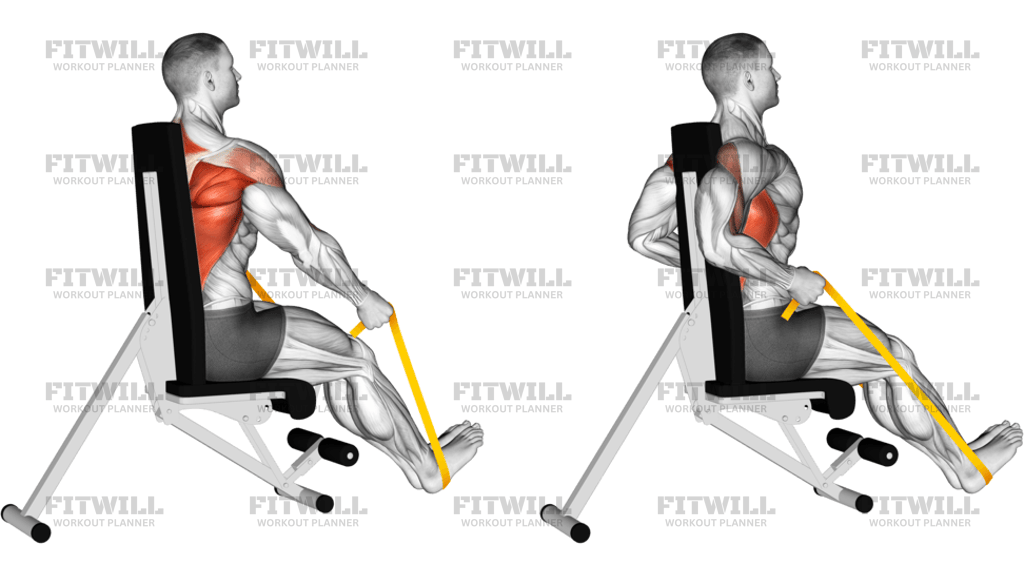
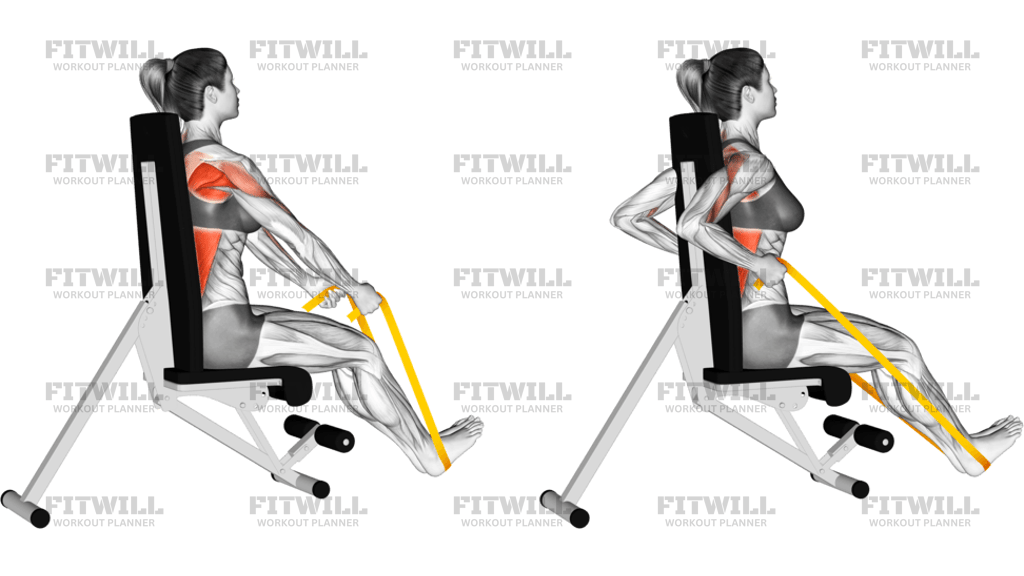
Resistance Band Seated Straight Back Row is a seated horizontal pulling exercise that trains the upper back, rear shoulder area, and arms while asking you to keep the torso tall and steady. The image shows the band anchored low in front of the body, with the lifter seated upright against support and pulling the handles back toward the ribs. That straight-backed position is the point of the movement: it removes the temptation to rock the torso and keeps the tension on the back instead of turning the rep into a body swing.
This variation places the strongest emphasis on the traps and upper back, with the rhomboids, lats, and biceps helping to complete the pull. In practice, that means the shoulder blades should move cleanly back and down as the elbows travel behind the torso, then return forward under control. If the shoulders shrug up, the neck tenses, or the chest collapses, the row usually shifts away from the intended muscles and becomes more about momentum than tension.
The setup matters because a seated band row is only as good as the line of pull. Sit tall, plant the feet, and make sure the band starts with enough tension that the first inch of the rep still feels deliberate. From there, pull the handles toward the lower ribs or waist, pause briefly when the shoulder blades are fully retracted, and let the arms extend again without losing posture. Keep the ribs stacked over the pelvis so the back stays long instead of leaning into the pull.
This exercise is useful when you want a controlled back movement that is easy to scale with band resistance and simple to keep joint-friendly. It works well as accessory work, warm-up activation, rehab-adjacent pulling, or higher-rep hypertrophy work when you want cleaner repetition quality than a heavy machine row might allow. The seated position also makes it easier to isolate the pulling action and keep the finish position honest.
Use a lighter band if you cannot keep the shoulders down and the torso quiet for every rep. The most productive version of the exercise is usually the one that looks calm: no jerking off the start, no leaning far back at the finish, and no snapping the band back on the return. When the movement stays smooth, the upper back does the work it is meant to do and the row becomes a reliable training staple.
[ Workout Log & Planner ]
Put your next workout in Fitwill
Keep your plan and training log ready when you are.


Instructions
- Sit tall on the bench or seat with the band anchored low in front of you, feet planted, and the handles in both hands.
- Keep your chest lifted, ribs stacked over your pelvis, and shoulders relaxed before you start the pull.
- Brace your midsection so your torso stays straight instead of leaning back when the band tightens.
- Begin the row by driving your elbows back along your sides and pulling the handles toward your lower ribs.
- Squeeze your shoulder blades back and slightly down at the end of the pull without shrugging your shoulders.
- Pause briefly in the contracted position while keeping the neck long and the chest open.
- Return the handles forward under control until your arms are extended and the band tension is still manageable.
- Repeat for the planned number of reps, then reset with the band slackening only after the set is finished.
Tips & Tricks
- Keep the elbows close to your torso so the pull stays on the upper back instead of turning into a wide-arm rear delt swing.
- If your shoulders creep up toward your ears, reduce the band tension and think about sliding the shoulder blades into your back pockets.
- Do not lean back to finish the rep; the torso should stay nearly vertical the whole time.
- Pull toward the lower ribs or waist, not high into the chest, so the line of pull matches a true row.
- Let the arms lengthen on the return, but do not let the band yank you forward and round your upper back.
- A brief squeeze at the back helps the rhomboids and traps, but do not hold so long that the neck starts to tense.
- Use enough tension that the first third of the rep is controlled, not a loose tug that only gets hard at the end.
- Exhale as you row and inhale as the handles travel forward to keep the torso braced without stiffening the neck.
Frequently Asked Questions
What muscles does the Resistance Band Seated Straight Back Row work most?
It mainly targets the upper back and traps, with help from the rhomboids, lats, and biceps.
Why does the exercise use a straight-back seated position?
The upright torso keeps the pull strict and stops you from turning the row into a leaning or swinging movement.
Where should the handles travel during each rep?
Pull them toward the lower ribs or waist so the elbows can drive back beside the torso.
Should I squeeze my shoulder blades together at the top?
Yes, but keep the squeeze controlled and low, not shrugged up into the neck.
Can beginners use this row safely?
Yes. A light band and a slow return make it beginner-friendly as long as the torso stays upright.
What is the most common mistake with this band row?
Leaning back to create extra range is the biggest mistake because it shifts tension away from the back.
How heavy should the band be for this exercise?
Use a band that lets you keep the shoulders down and the return smooth for every repetition.
Is this exercise better for strength or hypertrophy?
It can be used for both, but it is especially useful for controlled upper-back work in moderate to higher rep ranges.