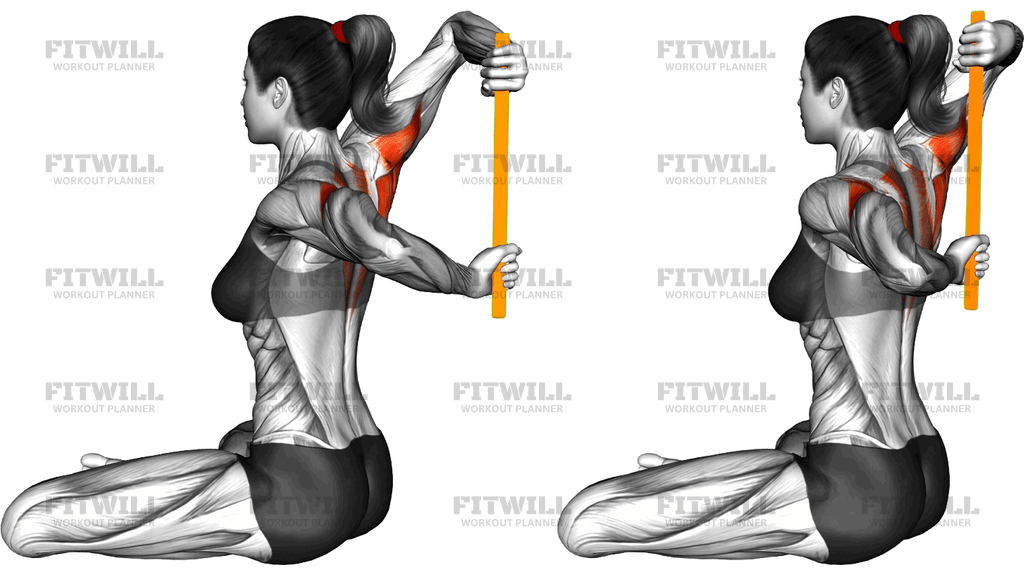
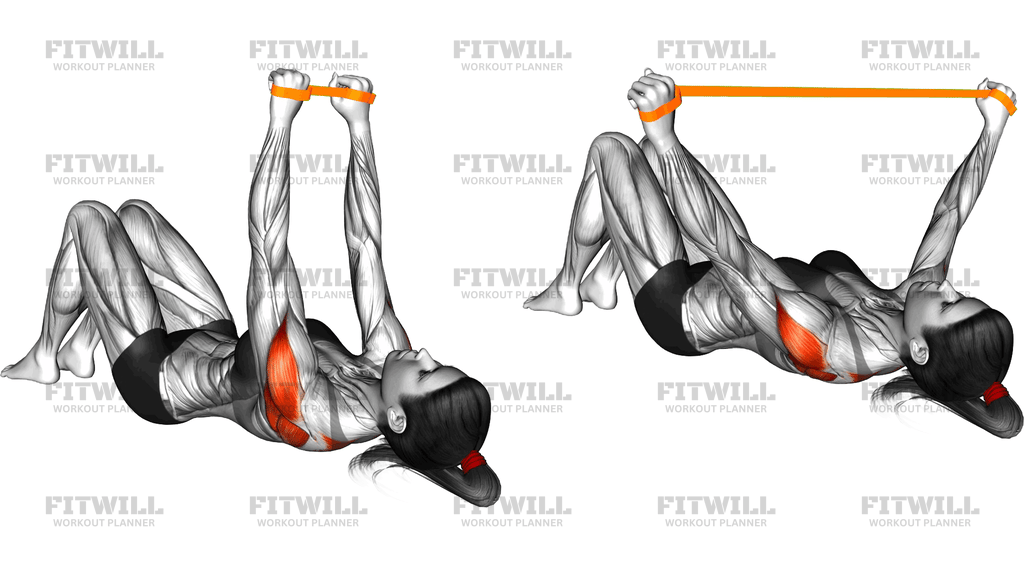
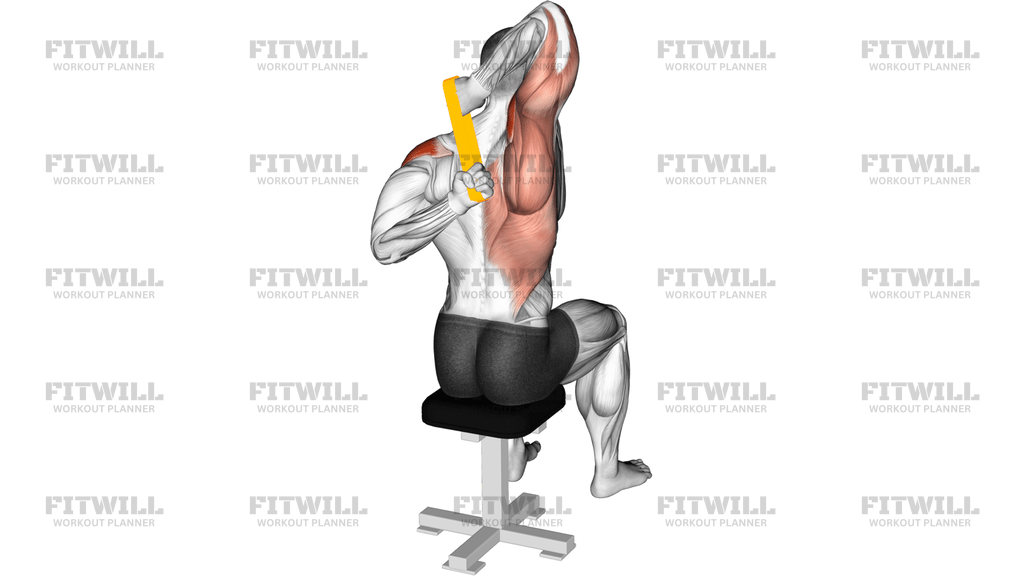
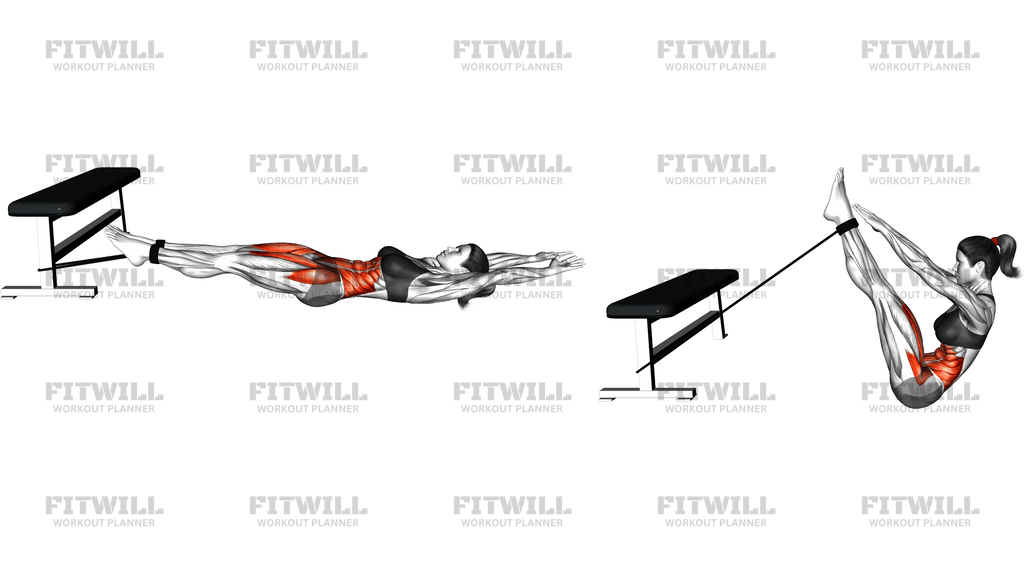
Resistance Band Inverted Row
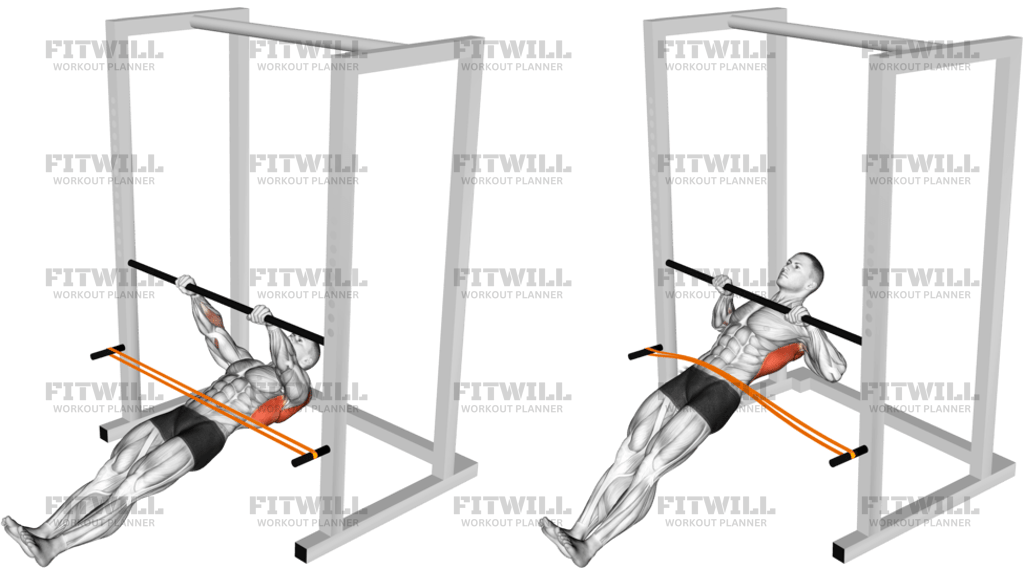
Resistance Band Inverted Row is a horizontal pulling exercise that trains the upper back, lats, rear shoulders, and arms while teaching the trunk to stay rigid under tension. In the usual setup, you lie back under a fixed bar or band anchor with your body angled off the floor, then row your chest toward the hands instead of letting the hips sag or the shoulders shrug. It is a practical way to build pulling strength when you want a rowing pattern that is easier to scale than a strict barbell row.
The exercise works best when the body stays organized from the first rep. A straight line from ankles to shoulders lets the back muscles do the pulling while the glutes and core keep the pelvis from tipping forward. If the setup is sloppy, the movement turns into a shrug, a hip hinge, or a half rep, which takes tension away from the mid-back and puts it into the neck and lower back.
During each rep, drive the elbows back and slightly down until the lower chest reaches the bar or the band line, then squeeze the shoulder blades without jerking the torso upward. The return should be slow enough that you can feel the lats lengthen and the shoulders stay packed. That controlled eccentric is part of the training effect, so a shorter body angle or lighter band is better than cheating the range with momentum.
Resistance Band Inverted Row fits well in back sessions, upper-body accessories, and beginner pulling progressions because you can adjust difficulty by changing foot position, body angle, or band tension. It also pairs well with pressing work for balanced shoulder training. Keep the neck long, the ribs down, and the grip steady; if the setup feels unstable, stop and reset before the next rep rather than muscling through a broken position.
[ Workout Log & Planner ]
Put your next workout in Fitwill
Keep your plan and training log ready when you are.


Instructions
- Set a stable bar, rack, or band anchor at about lower-chest height and lie underneath it with your heels on the floor and your body in a straight line.
- Take an overhand grip on the bar or band handles just outside shoulder width and let your arms hang straight before the first pull.
- Walk your feet forward until your torso is angled and your shoulders are under the anchor, then set your glutes and ribs so your hips do not drop.
- Brace your midsection and keep your neck long before you start the row.
- Pull your chest toward the bar or anchor by driving your elbows back and slightly down.
- Finish the rep with your lower chest close to the hands, the shoulder blades squeezed, and the wrists staying neutral.
- Lower yourself slowly until your arms are straight again without losing the straight line from shoulders to ankles.
- Reset your feet and body position before the next rep, then repeat for the planned set.
Tips & Tricks
- Move your feet closer to the anchor to make the row harder, or farther away to make it easier.
- Keep the chest high without arching the lower back; the ribs should stay stacked over the pelvis.
- If your shoulders creep toward your ears, shorten the range and think about pulling the elbows to your back pockets.
- Use a two-second lowering phase so the lats and mid-back stay under tension instead of dropping back to the start.
- Do not let the hips bend or pike when you get tired; reset the whole body line before the next rep.
- A wider grip usually shifts more work to the upper back, while a slightly narrower grip makes it easier to keep the elbows close.
- Keep the wrists straight so the hands do not become the limiting factor before the back does.
- If the bar or band feels unstable, reduce tension first and build the row from a cleaner setup.
Frequently Asked Questions
What muscles does Resistance Band Inverted Row work?
It mainly trains the lats, rhomboids, mid-back, rear shoulders, and biceps, with the core and glutes working to keep the body straight.
Is Resistance Band Inverted Row beginner-friendly?
Yes. It is usually easier to learn than a strict row because you can change the body angle or band tension to reduce the load.
Where should the bar or band sit for Resistance Band Inverted Row?
Set the anchor around lower-chest height so you can pull the chest to the hands without turning the rep into a steep shrug or a partial curl.
Should my body stay straight during the row?
Yes. Keep a straight line from ankles to shoulders and avoid letting the hips sag or bend as you pull.
How high should I pull on Resistance Band Inverted Row?
Pull until your lower chest or sternum reaches the bar or band line, then lower under control rather than bouncing off the bottom.
Why do my shoulders shrug up during this exercise?
The pull is probably too hard or the grip is too wide. Bring the feet back, lighten the tension, and start the rep by pulling the shoulder blades down.
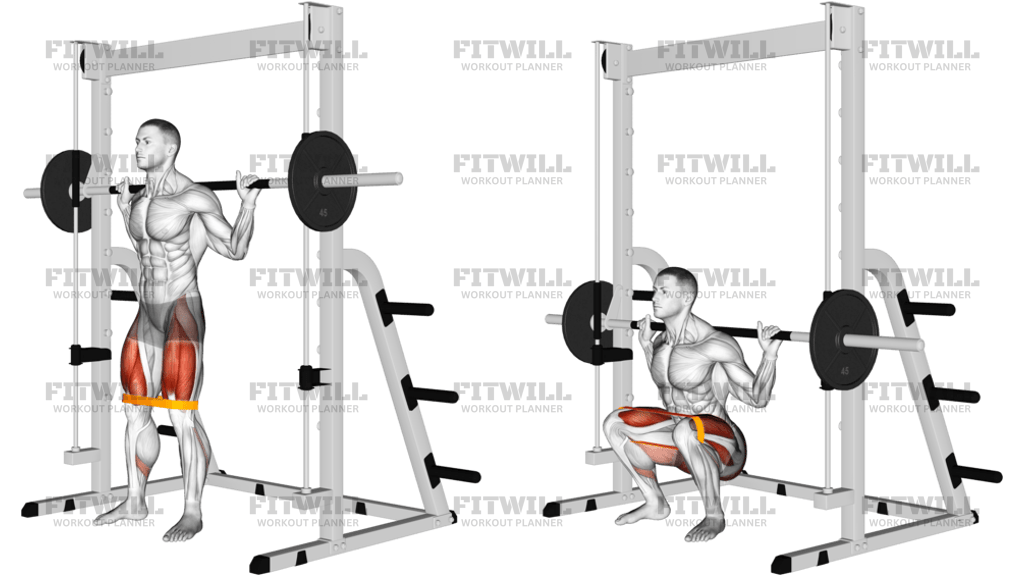
Can I use a Smith machine or rack for Resistance Band Inverted Row?
Yes, as long as the bar or anchor is stable and positioned so your body can stay clear of the frame while you row.
How do I make Resistance Band Inverted Row harder?
Move your feet forward, use a lower body angle, or increase the band tension only after you can keep the same chest-to-bar path and slow lowering phase.