Static Quadriceps Contaction (Isometric)
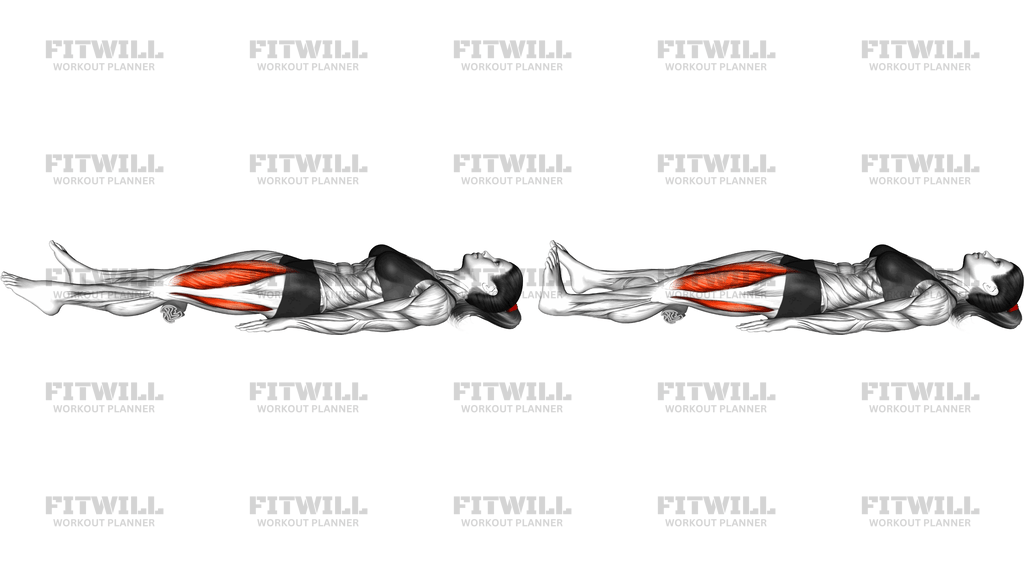
The Static Quadriceps Contraction, often called a quad set, is an isometric exercise performed lying on your back with a rolled towel placed under one knee. Instead of moving through a range of motion, you press the back of your knee down into the towel and hold the contraction for a set number of seconds before relaxing. It is one of the simplest and most widely used ways to activate the quadriceps without bending the knee or loading the joint.
This movement is especially valuable when full knee bending is uncomfortable or restricted, such as after a knee injury or surgery, during flare-ups of general knee discomfort, or in the early stages of a leg rehabilitation program. It is also useful for beginners who have trouble feeling their quadriceps work in exercises like squats or leg extensions, because the fixed position makes the muscle squeeze easy to identify. Because no external weight is required, it can be done almost anywhere with nothing more than a towel and a firm surface to lie on.
The primary muscle worked is the quadriceps at the front of the thigh, with particular emphasis on the vastus medialis, the teardrop-shaped muscle just above the inside of the knee that plays a key role in knee stability. As you press the knee into the roll, the quadriceps shortens slightly while the knee stays essentially still, which is the defining feature of an isometric contraction. The hips stay relaxed and the rest of the body remains still, keeping the effort isolated to the thigh.
Setup matters more than it might seem. The towel roll must sit just above the joint crease at the back of the knee so that pressing down creates a clear target for the quadriceps. If the roll is too large, too small, or positioned behind the calf instead, the press loses its effect and the hamstrings may take over. Lying flat with both legs extended, arms relaxed at your sides, keeps the pelvis neutral and prevents you from substituting hip movement for knee extension.
To execute well, straighten the knee firmly into the towel, pull your kneecap upward toward your hip, and hold the squeeze for five to ten seconds while breathing normally. The contraction should be deliberate and strong, but not so forceful that you wince or grip the floor with your heels. Release slowly rather than letting the leg go slack all at once, then rest briefly before repeating. A typical starting dose is ten repetitions per leg, one or two times per day.
Keep the ankle relaxed or gently pulled back so the toes point toward your shin, which often helps the quadriceps engage more fully. If you feel pinching, sharp pain, or swelling afterward, reduce the intensity of the press or check with a qualified professional before continuing. The goal is a clean, isolated thigh squeeze, not maximum effort against the floor.
Fitwill
Log Workouts, Track Progress & Build Strength.
Achieve more with Fitwill: explore over 9600 exercises with images and videos, access built-in and custom workouts, perfect for both gym and home sessions, and see real results.
Start your journey. Download today!




Instructions
- Lie flat on your back on an exercise mat or firm floor with both legs extended and your arms resting at your sides.
- Roll a towel into a firm cylinder about 10 to 15 centimeters thick and place it directly under one knee, in the crease just above the joint.
- Point the toes of that leg toward your shin so the foot is flexed, and let the other leg rest straight and relaxed on the floor.
- Gently brace your abdominal muscles and keep your lower back in neutral contact with the mat without pressing it down hard.
- Press the back of your knee firmly down into the towel roll, straightening the leg against it as if driving the heel toward the far wall.
- Hold the contraction for five to ten seconds, feeling the quadriceps tighten across the front of your thigh while the knee stays in contact with the roll.
- Breathe steadily throughout the hold; avoid holding your breath as you press.
- Release the press slowly and let the thigh relax completely for two to three seconds before the next repetition.
- Complete the planned number of reps, typically 8 to 12, then move the towel to the other knee and repeat.
- After the final rep, slide the towel out and gently bend and straighten the knee a few times to restore easy movement.
Tips & Tricks
- A common mistake is squeezing hard but letting the kneecap stay still; you should see and feel the kneecap glide upward toward your hip when the quadriceps engage properly.
- If your heel lifts or digs into the floor as you press, you are rotating the whole leg instead of extending the knee; keep the heel resting lightly in place and isolate the squeeze at the thigh.
- Position the towel in the crease behind the knee, not under the calf; a roll placed too low turns the press into a hamstring task and the quadriceps barely work.
- Curling the toes or tensing the whole leg usually means the effort is too aggressive; back off to about 70 percent effort so the contraction stays clean and pain-free.
- If you cannot feel the muscle working, place your free hand on the front of the thigh during the hold; tactile feedback makes the quad squeeze much easier to detect.
- Do not let the hips rock or the pelvis tilt as you press; both sit bones should stay evenly weighted on the mat for the entire hold.
- Rest fully between reps rather than keeping constant tension; a complete relax-and-repulse rhythm produces a crisper contraction than one long grind.
- Hold times longer than ten to fifteen seconds often lead to breath-holding and clenching; if you need more total work, add reps instead of stretching the hold.
- After long sessions of sitting, the quadriceps may be sluggish; a few gentle knee bends before starting the sets helps the muscle respond faster.
Frequently Asked Questions
What muscles does the Static Quadriceps Contraction work?
It primarily targets the quadriceps on the front of the thigh, especially the vastus medialis just above the inside of the knee. No other muscle works significantly because the body stays still and only the knee extends against the towel.
Why is a towel roll placed under the knee for this exercise?
The roll creates a firm target just above the joint so the back of the knee has something to press into, which drives the quadriceps to contract without the knee bending. It also slightly unloads the joint, making the hold more comfortable.
Is the Static Quadriceps Contraction suitable for beginners?
Yes, it is one of the most beginner-friendly thigh exercises because it requires no weight and little coordination. Beginners should start with gentle five-second holds and focus on feeling the muscle squeeze before increasing effort.
How long should I hold each contraction?
Five to ten seconds per hold works well for most people, followed by a full relaxation between reps. Longer holds tend to cause breath-holding and unnecessary tension, so adding reps is usually more effective than stretching the duration.
Why do I not feel my quadriceps working when I press down?
The towel is likely positioned under the calf instead of the crease behind the knee, or the press is too soft. Move the roll up to just above the joint, place a hand on the front of the thigh, and press with deliberate effort until you feel the muscle tighten.
Can I do the Static Quadriceps Contraction without a towel?
You can press the back of the knee toward the floor on a mat, but most people feel a much weaker contraction that way. A rolled towel, small cushion, or similar soft roll gives the knee a clear target and makes the exercise noticeably more effective.
Is it normal for my hamstrings to work during this exercise?
The hamstrings sit directly under the towel and may feel mild pressure, but they should not be the main effort. If the back of your thigh cramps or dominates, lighten the press and recheck that the roll sits right behind the knee crease.
How is this different from a straight leg raise?
The Static Quadriceps Contraction keeps the knee pressed into a towel and the leg on the floor, so the joint stays still and the muscle works isometrically. A straight leg raise lifts the whole limb against gravity, which demands more strength and puts more load through the hip and knee.
Is it safe if my knee hurts when I press down?
A firm muscle squeeze is normal, but sharp pain, pinching, or increased swelling are signals to stop or reduce the intensity. If discomfort persists at lighter efforts, consult a qualified health professional before continuing.