Kettlebell Single Arm Row (Bird Dog Stance On Ben)
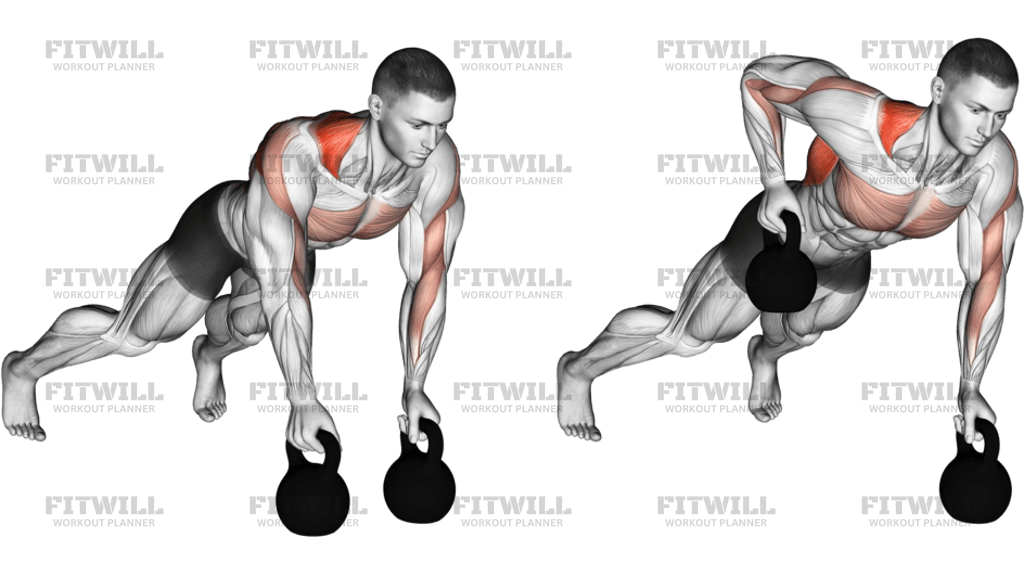
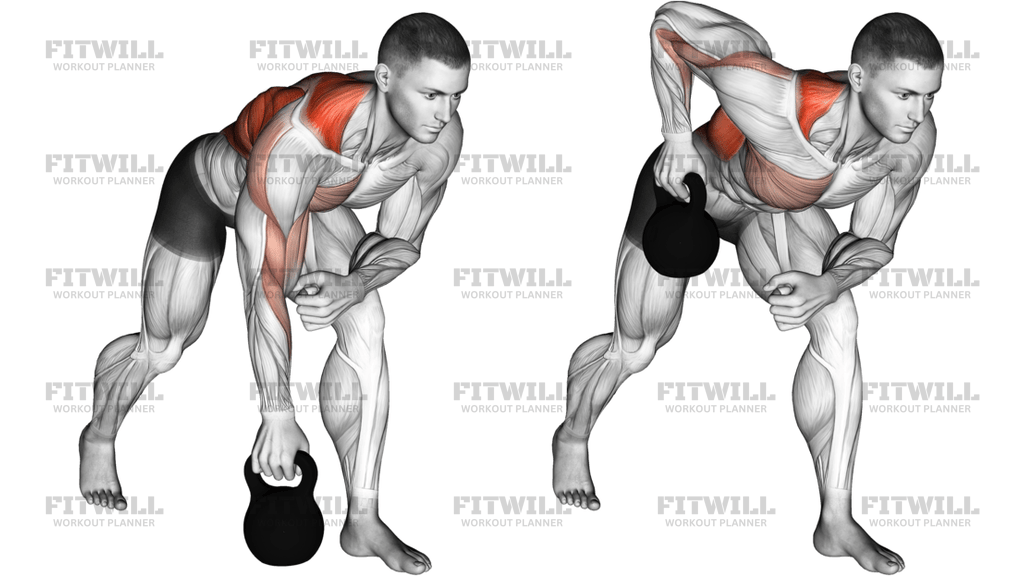
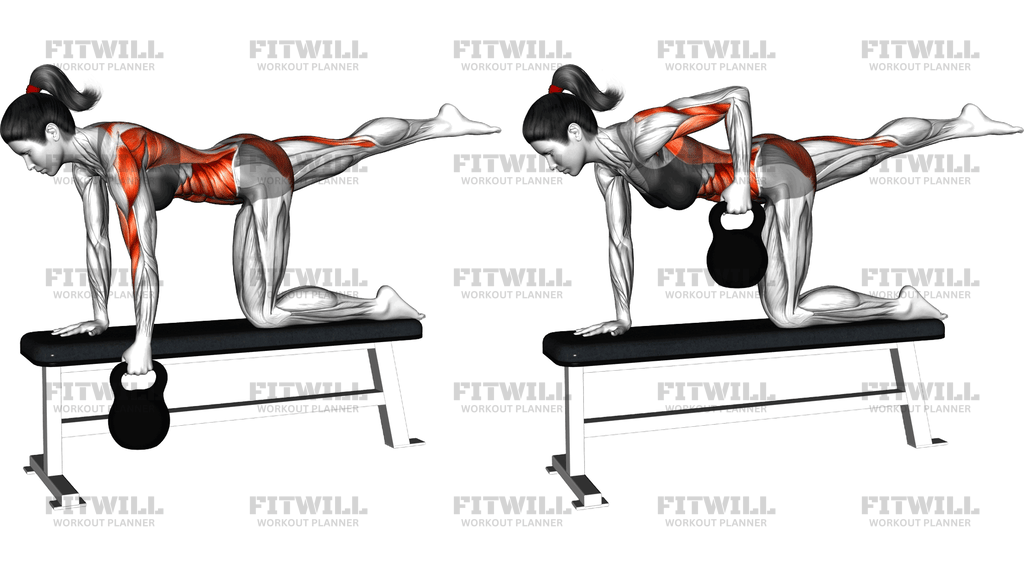
The Kettlebell Single Arm Row (Bird Dog Stance On Bench) is a hybrid pulling exercise that combines a classic one-arm row with the balance demands of a bird dog hold. You set up in a quadruped position on a flat bench, with one hand and one knee planted on the bench pad while the opposite leg extends straight back behind you and the opposite hand grips a kettlebell hanging toward the floor. From there, you row the kettlebell up toward your hip and lower it back down under control, all while keeping the extended leg and torso steady.
The bird dog stance is what makes this version special. Because only two points of contact sit on the bench and one leg reaches behind you, your body has to fight rotation on every rep. Your core, especially the obliques and deep stabilizers around the spine, works hard to keep your hips square while the lat pulls. The extended glute and hamstring also stay engaged to hold the leg level with your torso, so you are training anti-rotation strength and pulling strength at the same time.
This movement suits intermediate lifters who already own a solid traditional supported row and want more core and stability demand without adding load. It is also popular in kettlebell training programs, since the offset stance mimics the counterbalance requirements of drills like bird dogs, single-leg deadlifts, and carrying variations. Athletes who need trunk control under asymmetric load, such as fighters, climbers, and field sport players, get a lot out of it.
The setup matters more here than in most rows. Placing the supporting hand directly under the shoulder and the kneeling knee under the hip creates a stable base, while the extended leg acts as a counterweight that lengthens the lever arm. If the setup is sloppy, the hips twist, the low back rounds, and the lat loses its line of pull. Take a moment to square the hips and brace before the first rep, and the row itself becomes far more effective.
To execute well, pull the kettlebell toward your hip rather than your chest, keeping the elbow tracking close behind you. Think about driving the elbow back and squeezing the shoulder blade toward the spine at the top, then lower the bell with a slow two-to-three-second descent instead of dropping it. Exhale on the pull, inhale on the way down, and keep your neck neutral by looking at the bench rather than forward.
Common use cases include back-focused kettlebell sessions, core accessory work at the end of a pull day, and rehab-style strength blocks where anti-rotation control is the priority. Start lighter than you would for a knee-supported row, because the extended-leg stance reduces how much load you can stabilize. If your balance or grip gives out before your lat does, that is a clear sign to reduce the weight and own the position first.
[ Workout Log & Planner ]
Put your next workout in Fitwill
Keep your plan and training log ready when you are.


Instructions
- Place a flat bench in front of you and set a kettlebell on the floor beside it within easy reach.
- Kneel onto the bench with your left knee positioned under your left hip and place your left palm flat on the pad directly under your left shoulder, arm straight.
- Reach your right leg straight back behind you so it hovers at roughly hip height and forms a straight line from your heel through your hips to your head.
- Pick up the kettlebell with your right hand using a firm neutral grip, letting it hang toward the floor with your arm fully extended.
- Brace your core, squeeze the glute of the extended leg, and square your hips so both hip points face the floor.
- Pull the kettlebell up toward your right hip, keeping your elbow close to your body and driving it back past your ribs.
- At the top, squeeze your shoulder blade down and back toward your spine without shrugging toward your ear.
- Lower the kettlebell slowly over two to three seconds until your arm is fully extended and the shoulder reaches a slight stretch.
- Exhale as you pull, inhale as you lower, and keep breathing steadily rather than holding your breath.
- Complete all reps on one side, set the kettlebell down safely, then switch sides so the opposite hand and knee support you on the bench.
Tips & Tricks
- The most common failure in this stance is hip rotation: as the bell gets heavy, the loaded-side hip drifts up and the torso twists. Fix it by gripping the bench slightly harder with the supporting hand and actively squeezing the extended-leg glute on every rep.
- Rowing the kettlebell toward your chest instead of your hip shifts work away from the lat and toward the upper arm. Cue yourself to bring the bell to the hip crease so the elbow finishes behind your ribs.
- If the extended leg drops toward the floor, your lever is too long or the load is too heavy. Lower the leg slightly, reduce the weight, or practice the whole pattern with body weight only until you can hold the position for thirty seconds.
- Keep a small bend in the elbow of the supporting arm if your wrist or shoulder complains about a locked-out position, but keep the palm planted under the shoulder either way.
- Avoid letting the kettlebell pull your shoulder forward at the bottom of each rep. Own the bottom position with the shoulder blade lightly packed rather than letting the bell yank the arm loose.
- Chalk or a dry towel helps if sweat makes the bench grip slippery, since hand contact is your only upper-body anchor in this variation.
- Do not rush the setup. Shifting the knee an inch forward or back changes your balance point dramatically, so adjust once before starting rather than wiggling around mid-set.
- If you feel it in the low back instead of the lats, you are likely arching or sagging. Re-brace the core as if bracing for a light punch and shorten the row range until the trunk stays rigid.
- Reset the leg position between sets rather than grinding the last reps with a collapsed stance. Quality of the hold is part of the exercise, not just the pull.
Frequently Asked Questions
What muscles does the Kettlebell Single Arm Row (Bird Dog Stance On Bench) work?
The primary movers are the lats, with strong support from the rhomboids, traps, rear shoulders, and biceps during the pull. The bird dog stance adds continuous work for the obliques, deep core stabilizers, glutes, and hamstrings of the extended leg.
How is this different from a standard single arm row with one knee on a bench?
In the standard version, the non-working knee and the same-side hand support you on the bench, which blocks most rotation. Here the opposite leg reaches back in a bird dog position, so your core must resist twisting while the arm rows, making the trunk work much harder at the same load.
Can beginners do the Kettlebell Single Arm Row (Bird Dog Stance On Bench)?
Beginners can, but they should master the bird dog hold on the floor and a basic supported single arm row first. Starting with a very light kettlebell, or even body weight only, lets them learn the balance demand before adding meaningful load.
Why does my extended leg drop or shake during the row?
That usually means the glute and hamstring of the extended leg are not engaged, or the load on the rowing side is pulling you off balance. Squeeze that glute to lift the leg to hip height and reduce the kettlebell weight until the leg can stay level for every rep.
How heavy should the kettlebell be for this exercise?
Choose a weight noticeably lighter than you would use for a knee-supported single arm row, since the offset stance reduces your stability. A good test is whether you can keep your hips square and leg level through your target rep range with two or three reps left in reserve.
What can I use instead of a kettlebell for the Kettlebell Single Arm Row (Bird Dog Stance On Bench)?
A single dumbbell works as a direct substitute because the rowing path is the same. A resistance band anchored low can also work, though the resistance profile changes since the tension peaks at the top of the pull instead of staying constant.
Where exactly should I pull the kettlebell toward?
Pull it toward your hip, finishing with your elbow just behind your ribs. Pulling toward the chest turns the movement into more of an upper-back and arm raise and takes tension off the lat.
Is it safe to do this row if my wrists hurt when my hand is flat on the bench?
A slight bend in the supporting elbow and shifting pressure toward the heel of the palm often resolves wrist discomfort. If pain persists, switch to a variation with a forearm or dumbbell on the bench for support instead of forcing through it.
How many sets and reps work best for this movement?
Two to four sets of eight to twelve reps per side covers most strength and stability goals. Because the trunk fatigues before the lats in this stance, prioritize clean hip position over chasing extra reps.