Band Twist (Down Up)
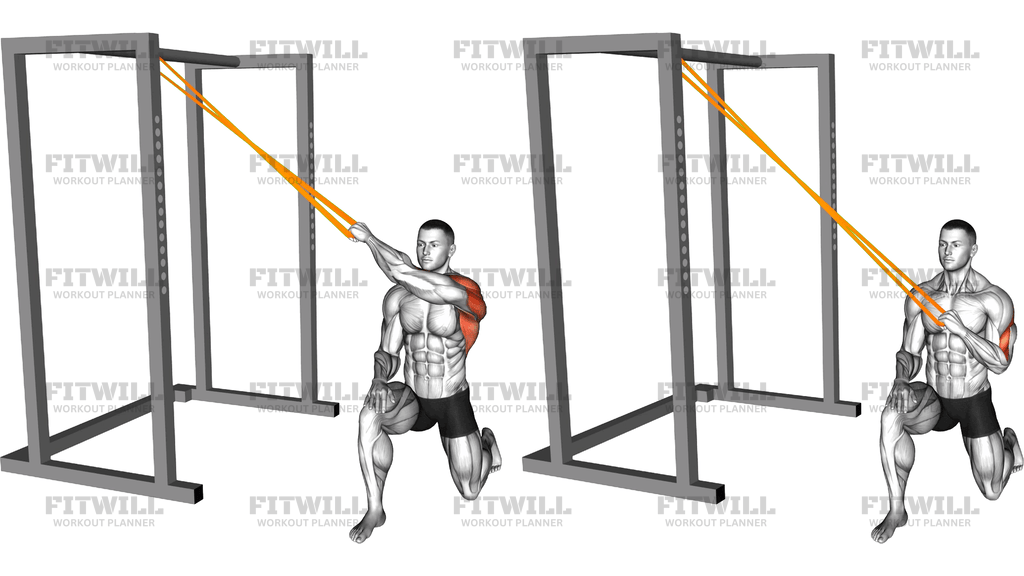
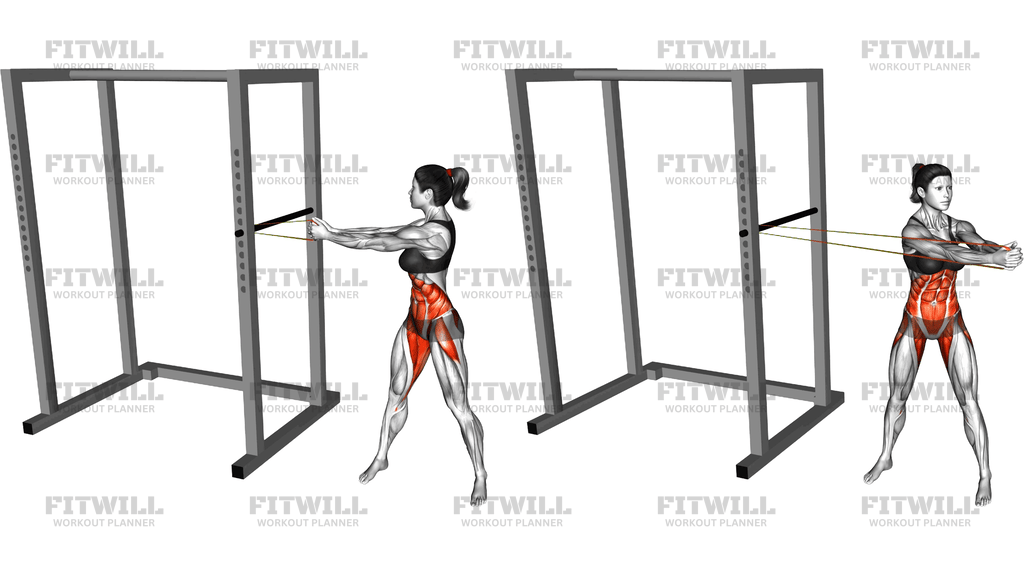
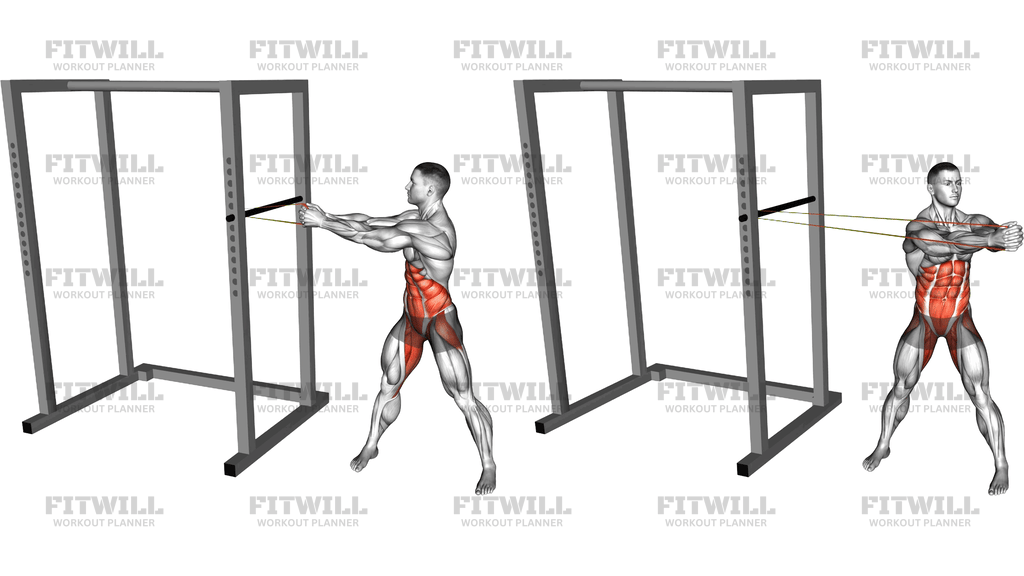
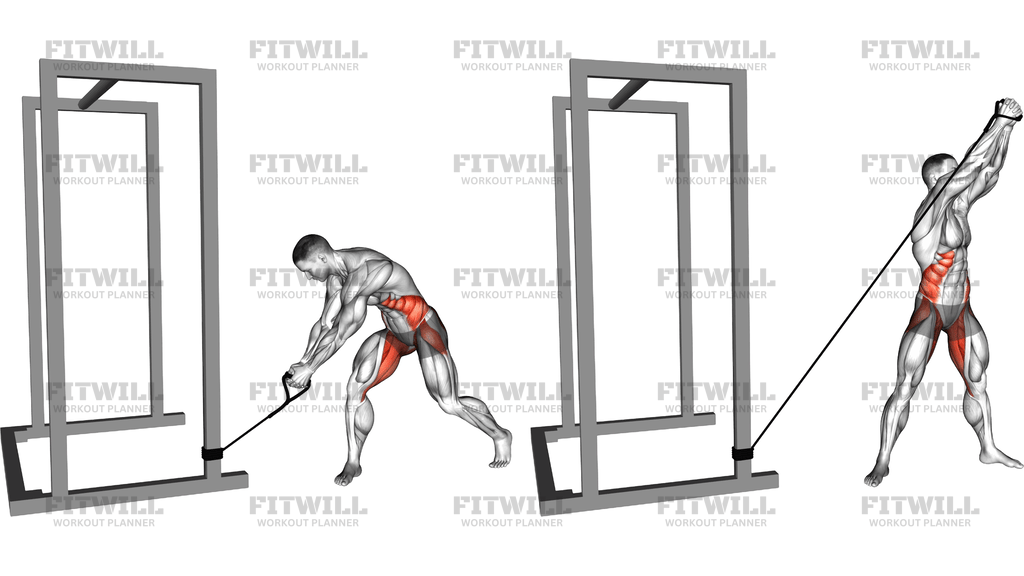
The Band Twist (Down Up) is a rotational, low-to-high pull that turns a simple resistance band into a full-body diagonal pattern. The band is anchored low at the base of a rack, and you start in a staggered, bent-over stance with both hands gripping the handle near your outside knee. From there you rotate your torso, straighten your legs, and drive the handle up and across your body until your arms finish extended overhead on the opposite side. Think of it as the reverse of a high-to-low woodchop: you are lifting the tension from the floor up across your torso.
This movement trains the obliques as the main drivers of trunk rotation, but it also demands a lot from the glutes and quads, which extend the hips and knees as you rise out of the bent-over start. Your shoulders and upper back work to control the band overhead, and your lower back stabilizes the spine as it moves through a long diagonal arc. Because a band resists more as it stretches, the rotation gets harder exactly where you have the most leverage, which teaches you to stay braced through the end range.
Athletes use this pattern because throwing, swinging, and changing direction all happen along a low-to-high diagonal. It is equally useful for general lifters who want rotational strength without setting up a cable pulley, since the only equipment you need is a band and a low anchor point. It also doubles as a warm-up or primer before heavier rotational or overhead work because the load is easy to scale.
Setup matters more than force here. The band should be anchored at floor level, and your starting stance should put you far enough to the side that the band is already under light tension before you move. If you start too close, the first part of the lift is slack and the band snaps you back at the top; too far away and you cannot complete the arc. Plant both feet so you can rotate through the hips rather than sliding or twisting at the knees.
To execute it well, let the rotation lead and the arms follow. The hips and shoulders turn together as you stand, and the hands simply ride the path the torso creates. Finish tall with arms locked out overhead toward the opposite side, then lower the band back along the same diagonal under control instead of letting it yank you back down. Breathe out as you rotate up, inhale on the way down, and complete all reps on one side before switching.
Keep the movement honest: if you have to jerk the band or arch your lower back to finish the rep, the tension is too high. A controlled tempo, a stable front foot, and a deliberate squeeze of the obliques at the top will do more for you than maxing out the resistance. Stop the set as soon as your position starts to drift, because sloppy rotations teach exactly the habits this exercise is meant to fix.
[ Workout Log & Planner ]
Put your next workout in Fitwill
Keep your plan and training log ready when you are.


Instructions
- Anchor a resistance band low at the base of a power rack and attach a single handle to the free end.
- Stand sideways to the anchor with the band on your outside hip, feet staggered so the leg nearer the anchor is back, and bend your hips and knees into a quarter-squat reach.
- Grip the handle with both hands, arms straight, hands positioned down by your outside knee with the band already under mild tension.
- Brace your core and keep your chest tall enough that your lower back is not rounded at the bottom.
- Drive through your legs to stand while rotating your torso toward the opposite side, letting the hands travel in a diagonal path across your body.
- Finish with your arms extended straight overhead on the far side, hips fully open, and your weight shifted onto the front leg.
- Pause briefly at the top and feel the obliques on the working side holding the position against the band's pull.
- Lower the handle back down the same diagonal path with control, returning to the bent-over start without letting the band snap you down.
- Exhale as you rotate up, inhale as you return to the start.
- Complete all reps on one side, then reset your stance and repeat with the band anchored on the other side.
Tips & Tricks
- If the band goes slack at the bottom, step one foot closer to the anchor so tension stays constant through the whole arc.
- Rotate from the hips first — if your knees cave inward to buy range, widen your stance and turn the back foot out slightly.
- Do not let the band pull your shoulders forward at the start; pull your shoulder blades back before you begin the lift.
- Keep the front heel glued to the floor; lifting it early means you are turning with momentum instead of trunk control.
- Choose a band you can stop mid-arc without jerking — the hardest point is the last third of the lift as the band stretches.
- Control the descent for two to three seconds; most people only own the lifting half of this movement.
- Keep your arms long but not rigid — locked elbows at the top are fine, but shrugging the handle up with your traps steals work from the obliques.
- If your lower back takes over, reduce the range slightly and think about finishing the rotation with the ribcage down, not by arching backward.
- Match your stance on both sides and count reps per side; nearly everyone has a stronger rotational direction and will drift toward it.
Frequently Asked Questions
What muscles does the Band Twist (Down Up) work?
The obliques do most of the rotational work, supported by the rectus abdominis and deeper core muscles that keep the spine stable. The glutes and quads power the stand-up out of the bent position, and the shoulders help control the band overhead.
How is the Band Twist (Down Up) different from a cable woodchop?
It runs the same diagonal path but from low to high, like a reverse chop, and uses a band instead of a cable stack. The band gets harder toward the top of the movement, whereas a cable load stays constant, so the top-end position is challenged more.
How low should the band be anchored?
Anchor it at floor level or on the lowest post of the rack, so the band pulls from the ground up along your starting arm angle. A higher anchor shortens the arc and turns it into a different exercise.
Can beginners do the Band Twist (Down Up)?
Yes — use a light band and focus on rotating from the hips and torso rather than pulling with the arms. Mastering the diagonal path with low tension is more valuable than adding resistance early.
Why do I feel this more in my legs than my core?
You are probably pushing off the back leg too aggressively and letting the lower body dominate the lift. Slow the stand-up, keep the hips and shoulders turning together, and the obliques will take over more of the work.
Should my feet stay planted during the movement?
Yes, both feet should stay planted for the whole set on each side. If you need to pivot, rotate through the hips with the feet fixed rather than stepping or sliding, which keeps the rotation controlled and repeatable.
What can I substitute if I do not have a band and rack?
A low cable pulley with a single handle covers the same low-to-high diagonal, or you can hold a light medicine ball and mimic the path without external tension. Match the stance and rotation pattern either way.
How many reps and sets should I use?
Two to three sets of 8–12 reps per side works well for strength and control. Because the band resistance rises quickly, stop each set when the top position can no longer be held cleanly.
Is it safe for my lower back?
When the band tension is matched to your control and you rotate through the hips with a braced trunk, the movement is well tolerated. Avoid rounding at the bottom start and jerking against the band's stretch, and scale down if you feel any strain.