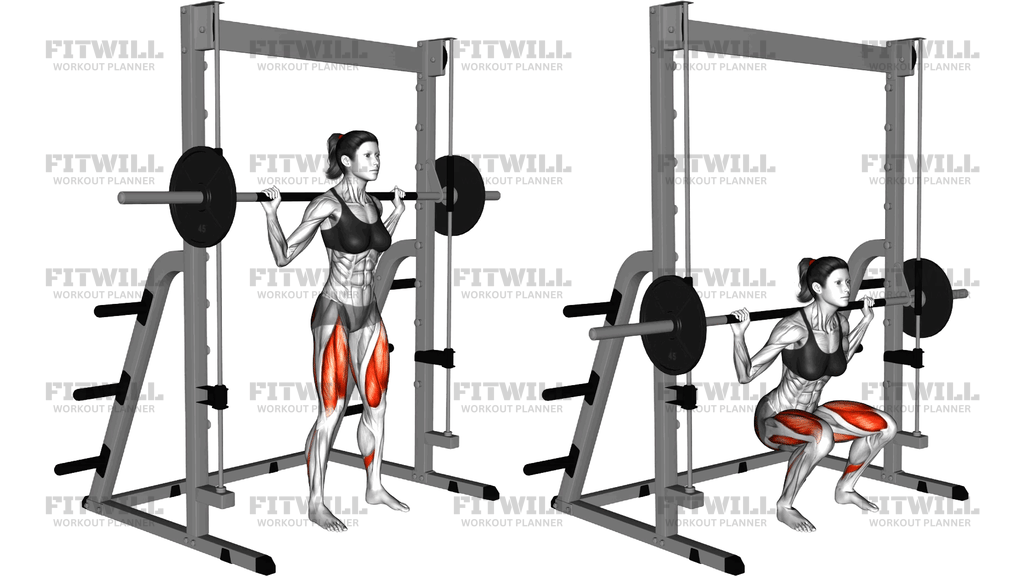
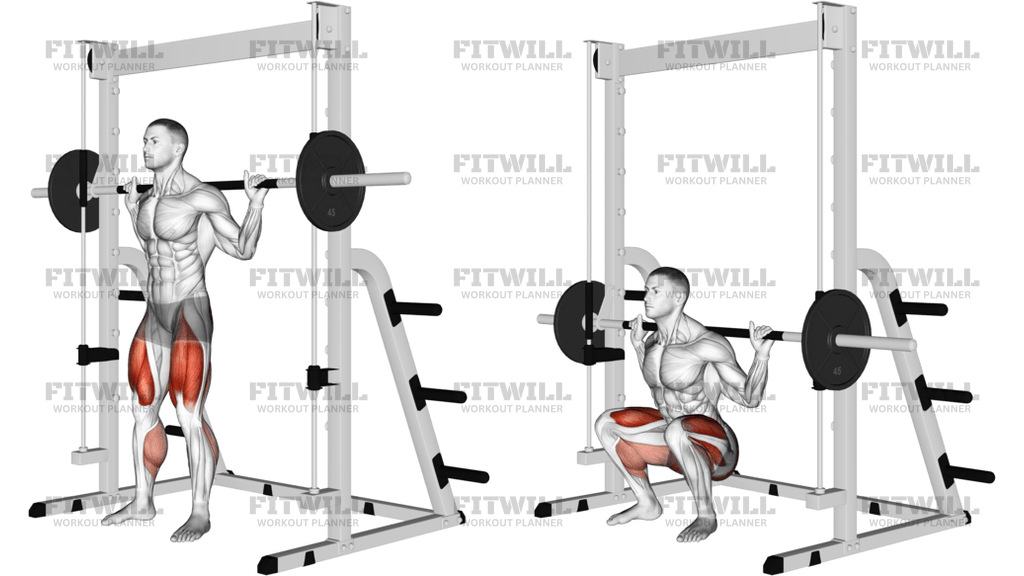
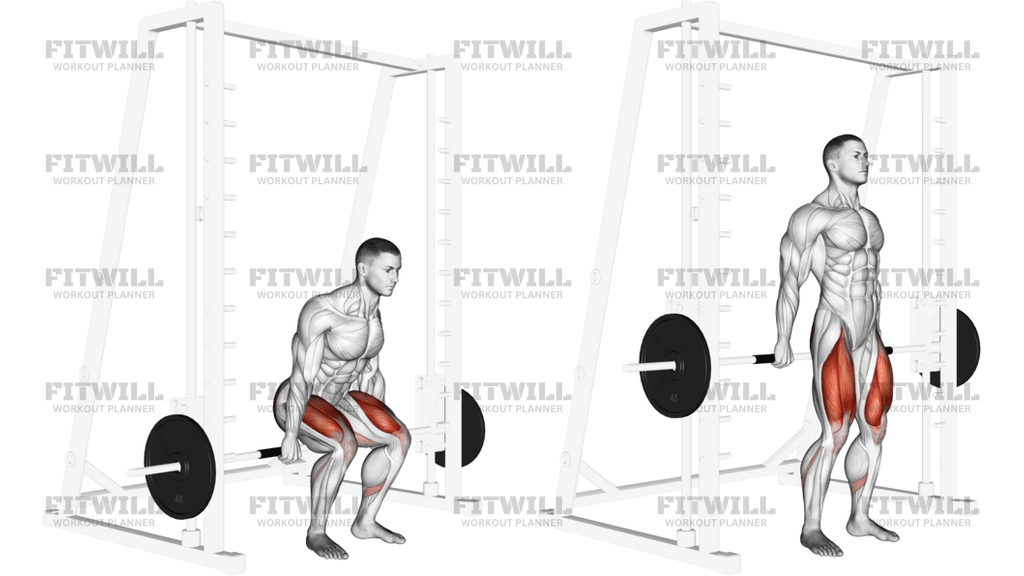
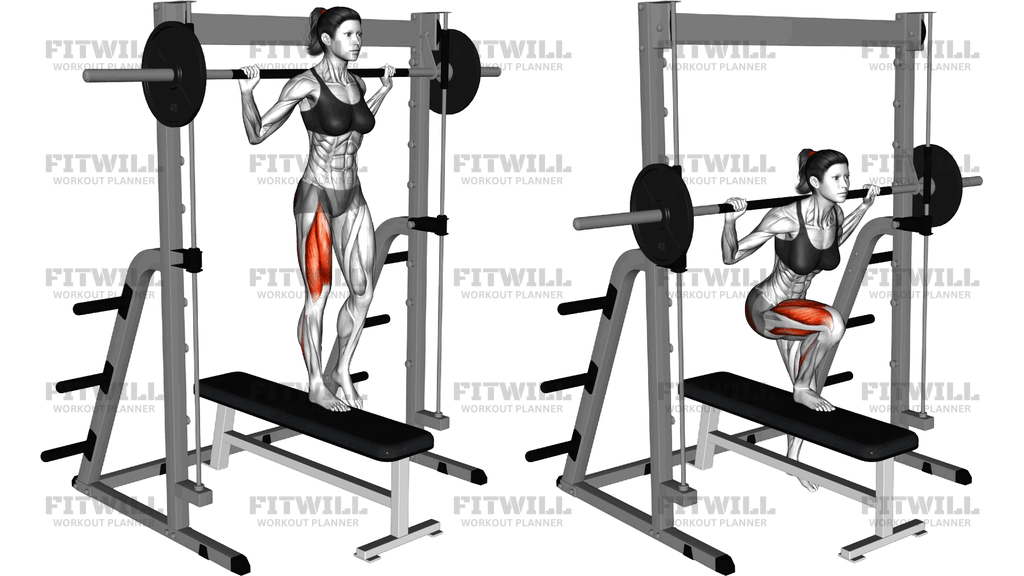
Smith Unilateral Side Lunge
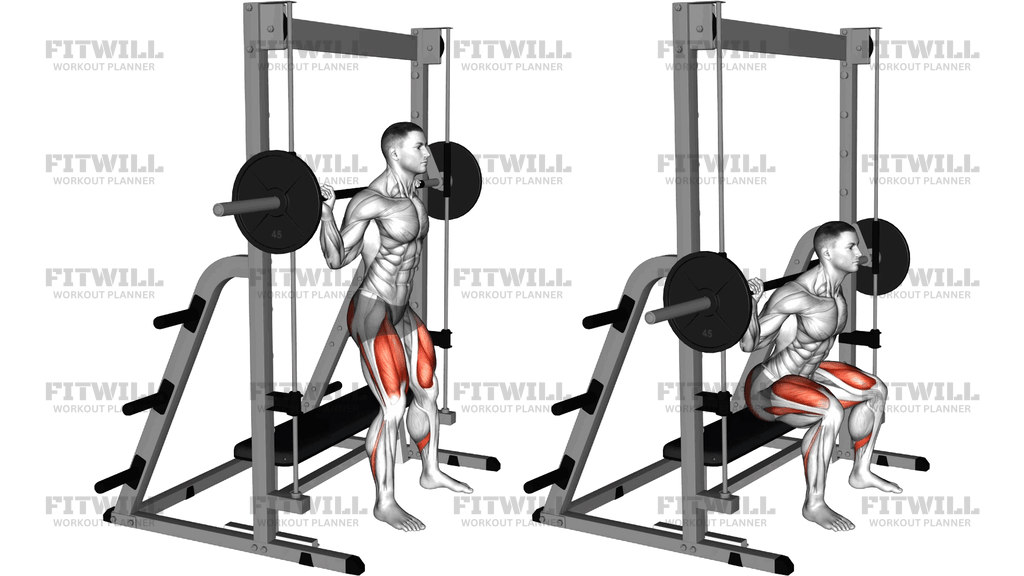
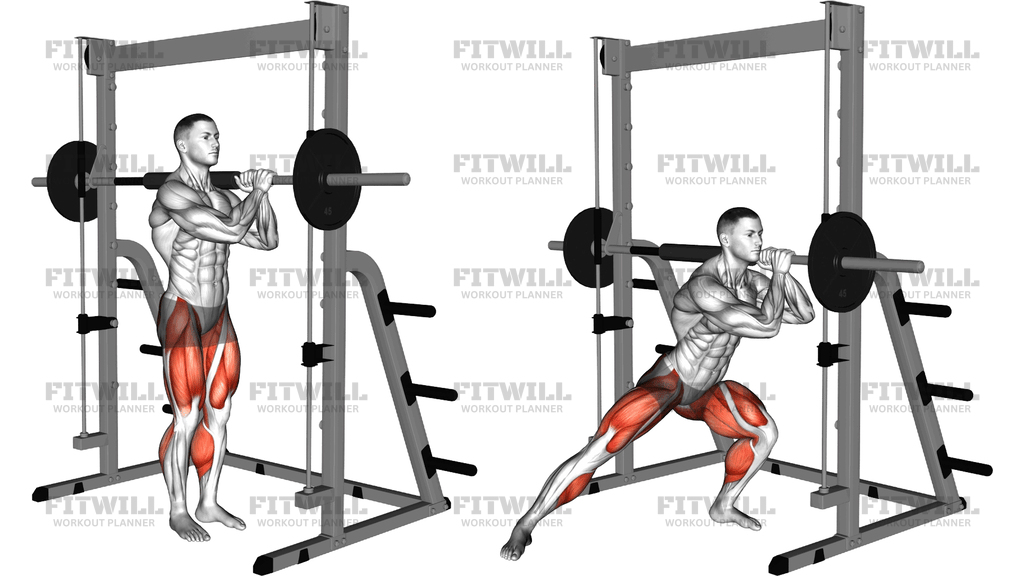
The Smith Unilateral Side Lunge is a one-sided lateral lunge performed with the Smith machine bar held in front of the chest. Setting the bar at roughly collarbone height and gripping it with both hands gives you a stable anchor point that travels only up and down its fixed rails. That guided vertical path takes most of the balance demands out of the movement, so you can load the working leg fairly hard and concentrate on depth and knee tracking instead of wobbling through each rep.
In the bottom position, one leg is bent and absorbs the load while the other leg stays long and extended out to the side with the foot planted. This trains the quads and glutes of the bent leg through a deep range, and at the same time loads the adductors of the straight leg, which are highlighted strongly at the end range of the stretch. Because each side works on its own, you can spot and fix left-to-right strength differences that hide in bilateral squats.
The setup matters more than it might seem. With a free-weight side lunge, holding a barbell or dumbbells forces you to manage the load and your balance at the same time, and most people cut depth as a result. On the Smith machine, the bar supports your upper body and controls the line of your torso, so the emphasis shifts to how cleanly the working hip, knee, and ankle move. Keep the bar resting against the front of your shoulders and chest, elbows pointing down, and let the machine do the stabilizing so your legs can do the working.
To perform it well, set the bar height, unrack, take a narrow stance close to the machine, then step one foot out wide and sink your hips down and back over that bent leg. The straight leg stays planted with the whole foot on the floor. Drive through the bent leg to come back up, bring the feet together, and repeat on the other side or finish all reps on one leg first.
This movement suits intermediate lifters who want a loaded lateral lunge without balance as the limiting factor, people rehabbing or working around side-to-side asymmetries, and athletes who need frontal-plane leg strength for changes of direction. Because the load stays on the bar and in front of the body, it is also easier on the lower back than many heavy unilateral leg options. Start light, master the foot positions for both sides, and only add plates once your knee tracks smoothly and you can reach a consistent depth on every rep.
[ Workout Log & Planner ]
Put your next workout in Fitwill
Keep your plan and training log ready when you are.


Instructions
- Set the Smith machine bar at about collarbone height and add your chosen weight with collars secured.
- Step under the bar, rest it on the front of your shoulders and upper chest, and grip it with both hands slightly wider than shoulder width, elbows angled down toward the floor.
- Unrack the bar by rotating it off the safety hooks and stand tall, feet together, a short step in front of the bar path.
- Brace your core, pull your shoulder blades down, and keep your chest tall and your gaze forward.
- Step one foot out wide to the side, keeping the other foot planted, and begin lowering your hips straight down along the bar's vertical path.
- Sink until the bent leg's thigh is near parallel to the floor and the opposite leg is fully extended with its whole foot flat, feeling the stretch along that inner thigh.
- Keep the bent knee stacked over the middle of its foot, not collapsing inward, and hold the bar lightly against your chest the whole time.
- Press through the entire foot of the bent leg to drive back up until both feet are together under the bar.
- Exhale as you push up, inhale as you lower into each lunge.
- Complete your reps on one side or alternate sides as planned, then re-rack the bar on the hooks and rotate it to lock it before letting go.
Tips & Tricks
- If you find yourself drifting forward off the bar's rail, your step out is too narrow; widen it so your hips can travel straight down beside the bar.
- The most common mistake is letting the bent knee cave inward. Cue the knee toward the pinky side of that foot, especially as you approach the bottom.
- Keep the heel of the working leg down. If it lifts, lengthen your stance slightly or reduce depth rather than balancing up on the ball of the foot.
- Hold the bar against your chest rather than pressing it forward. Pushing the bar away shifts load to the shoulders and pulls you off the machine's vertical line.
- Because the Smith machine locks your path, the straight leg does more work than people expect; move slowly into the bottom to feel the adductor stretch instead of bouncing.
- Set the safety stops just below your lowest lunge depth so a missed rep can't drop you into a deep stretch with weight on your chest.
- If one side reaches full depth easily and the other doesn't, match the weaker side's depth instead of forcing both legs to the same bottom position.
- Start with just the bar or a light load for a set of ten per side before adding plates; the fixed path exposes mobility limits quickly.
- Wear flat, stable shoes and check that both feet stay fully on the floor; the straight leg's outer edge often rolls up when fatigue sets in.
Frequently Asked Questions
What muscles does the Smith Unilateral Side Lunge work?
The bent leg's quadriceps and glutes do most of the pushing, while the straight leg's inner thigh muscles work hard in the stretched position. The hamstrings assist on the way up, and your core stabilizes the torso against the bar.
Why hold the Smith machine bar in front of the chest instead of behind the neck?
The front hold keeps your torso upright and lets the bar rest against your shoulders and chest, which matches the vertical path of the machine. A behind-the-neck position would pull your shoulders back and make the frontal-plane lunge awkward on the fixed rails.
Is the Smith Unilateral Side Lunge good for beginners?
Yes, with a light load it is one of the more approachable ways to learn the side lunge, because the bar guides the descent and removes most of the balance demand. Beginners should start with just the bar and focus on knee tracking and foot placement before adding weight.
How wide should I step out to the side?
Wide enough that your hips can sink straight down next to the bar path while the opposite leg stays long. If your heel lifts or your bent knee travels past your toes noticeably, the stance is too narrow for your current mobility.
Which leg is actually doing the work in this lunge?
The bent leg drives you up and down, while the straight leg holds its position and controls the inner-thigh stretch. Both sides get trained, just in different roles, which is part of why this exercise is useful.
What is the most common mistake with this movement?
Letting the bent knee collapse inward at the bottom, usually when the weight or fatigue gets ahead of control. Slowing the descent and cueing the knee over the foot fixes it in most cases.
Can I replace free-weight side lunges with the Smith Unilateral Side Lunge?
It works well when you want to load the pattern heavily or work around balance limits, but it removes the stabilizer challenge that makes dumbbell side lunges demanding. The two complement each other rather than being direct substitutes.
How deep should I lower on the Smith Unilateral Side Lunge?
Lower until the bent leg's thigh is roughly parallel to the floor or until your form starts to change, whichever comes first. Consistent depth on both sides matters more than chasing the deepest stretch.
Is this exercise safe for people with knee issues?
The fixed bar path and front-loaded position are gentle on the lower back and give clear control of knee tracking, but anyone with knee discomfort should use a pain-free depth and check with a qualified professional before loading the movement.
How should I structure sets and reps for this exercise?
Two to four sets of eight to twelve reps per leg works well for strength and muscle, done early in a leg session before fatigue affects your knee control. Rest long enough between sides that you can hold the same depth and foot position on the second leg.