Seated Groin Stretch
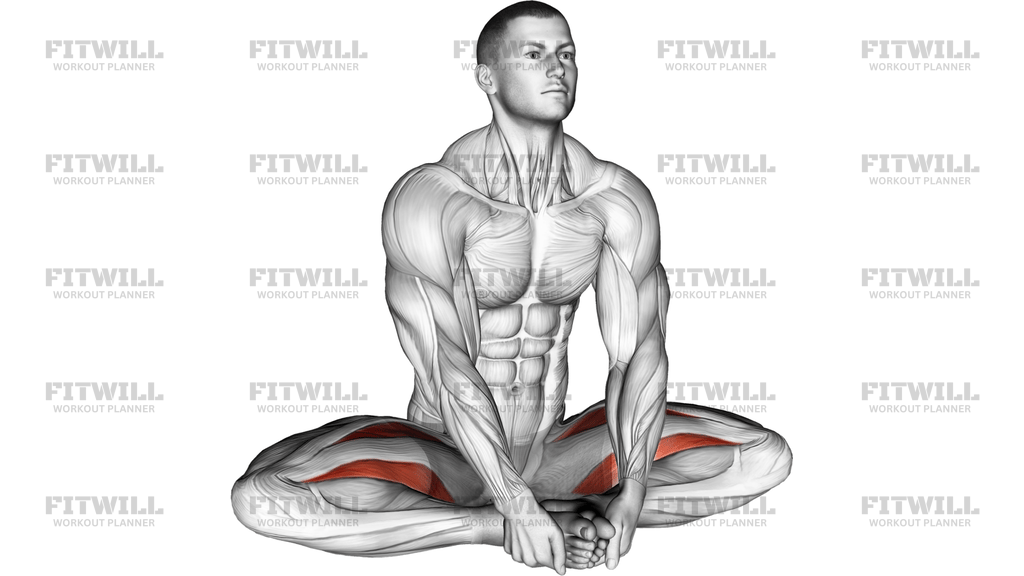
Seated Groin Stretch is a floor-based inner-thigh mobility exercise performed on an exercise mat with body weight. The seated butterfly position places the soles of the feet together, opens the hips, and creates a direct stretch through the adductors while the torso stays tall and controlled. It is a simple movement, but the quality of the setup changes everything: when the pelvis is grounded and the spine is long, the stretch stays in the groin and inner thighs instead of spilling into the low back.
This exercise primarily targets the adductor group, with the hips, glutes, and core helping to stabilize the seated position. The knees fall outward under control while the feet stay connected, so the body can relax into length without forcing the joints. That makes Seated Groin Stretch useful for opening tight inner thighs after squats, lunges, running, cycling, or long periods of sitting.
A good rep begins by sitting on the sit bones, bringing the soles of the feet together, and choosing a foot distance that lets the pelvis stay neutral. From there, the knees lower gradually and the torso either stays upright or hinges forward from the hips with a long spine. The goal is a steady, even stretch, not a hard collapse toward the floor. Small adjustments in foot position, knee angle, and torso lean should be used to find tension that is noticeable but still easy to breathe through.
Because this is a mobility drill rather than a strength movement, the best results come from patience and consistency. Use it in a warm-up, cooldown, or mobility block where you can breathe slowly and stay relaxed. Do not bounce, force the knees down, or crank the feet too close to the groin if the pelvis starts to round. If the hips are very tight, sit on a folded towel or small pad to make the position easier to hold and keep the stretch more comfortable.
[ Workout Log & Planner ]
Put your next workout in Fitwill
Keep your plan and training log ready when you are.


Instructions
- Sit on an exercise mat with your knees bent and the soles of your feet pressed together in front of you.
- Hold your ankles or feet, then sit tall on your sit bones and lengthen through the crown of your head.
- Let your knees drop out to the sides naturally instead of forcing them down with your hands.
- Draw your heels closer to your pelvis only as far as you can keep your pelvis steady and your spine long.
- Keep your chest open and your shoulders relaxed while you feel the stretch through the inner thighs and groin.
- If you want more intensity, hinge forward from the hips with a flat back instead of rounding your lower spine.
- Breathe slowly and evenly, easing deeper on the exhale without bouncing or pulsing.
- Hold the end position for a controlled stretch, then bring the knees back together and release the feet carefully.
Tips & Tricks
- If your hips tip backward, sit on a folded towel or pad to keep the pelvis more upright.
- Do not pull the feet so close that your knees feel pinched or the low back rounds hard.
- Think about opening the knees from the hip sockets, not pressing on the knees themselves.
- A tall torso usually shifts the work more into the hip adductors; a slight forward hinge increases the stretch without changing the setup.
- Keep the soles of the feet in contact so the position stays stable and symmetrical.
- Use longer exhales to help the inner thighs soften instead of forcing a bigger range.
- If one knee sits much higher than the other, adjust the foot distance until both sides feel even.
- Stop if you feel sharp pain in the groin, knees, or hips, because this stretch should feel open, not aggressive.
Frequently Asked Questions
What does Seated Groin Stretch target most?
It primarily stretches the adductors, which are the inner-thigh muscles of the groin.
Can beginners perform this exercise?
Yes. Beginners usually do well with the upright version first, especially if they keep the feet a little farther from the hips.
Where should I feel the stretch?
You should feel it across the inner thighs and groin, with some hip opening if you hinge forward.
Should I force my knees down to the floor?
No. Let the knees drop under control and use breathing and foot position to find a comfortable stretch.
Can I lean forward in the seated groin stretch?
Yes, but only by hinging from the hips with a long spine. Rounding hard through the lower back usually makes the position sloppier.
Why are my knees still far from the floor?
Tight adductors are common. Use a higher seat, a smaller range, and consistent holds rather than pushing harder.
When is this stretch most useful?
It works well after lower-body training, before mobility work, or any time you want to reduce stiffness from sitting or cycling.
What should I change if the stretch feels too intense?
Move the feet farther from the pelvis, sit on a folded towel, and keep the torso upright until the stretch feels manageable.