Dumbbell Split Jerk
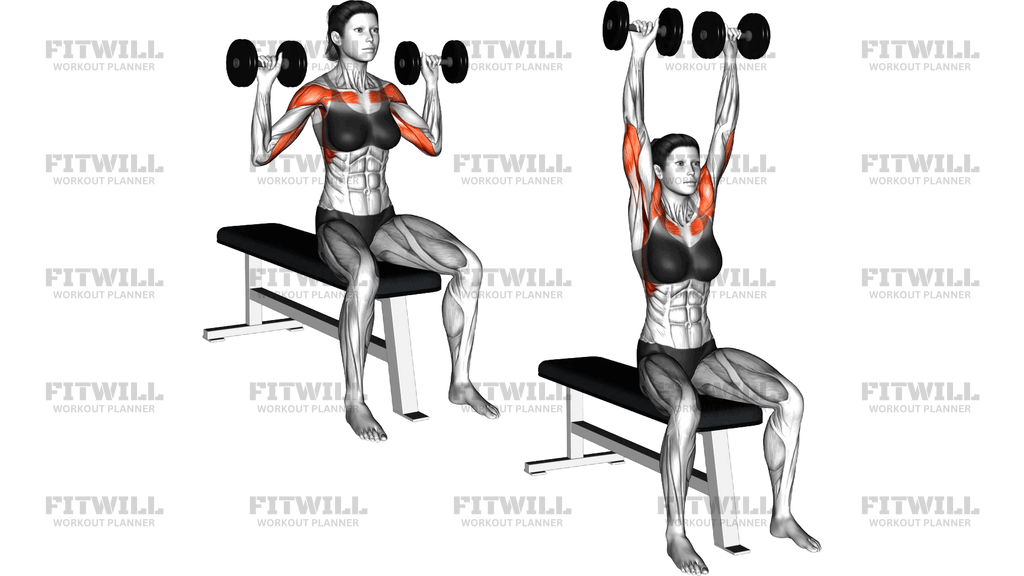
The Dumbbell Split Jerk is an explosive overhead movement where you drive a pair of dumbbells from shoulder height to full lockout overhead while dropping into a split stance — one foot stepping forward, the other moving back. It takes the aggressive leg drive of a barbell jerk and applies it to dumbbells, which demand extra stability work from the shoulders and arms because each implement moves independently. The result is a lift that builds pressing power, coordination, and full-body timing in a single rep.
This movement earns its place in a program because it trains the whole kinetic chain under speed. The shoulders and triceps finish the press, but the quads, glutes, and calves generate the drive that actually gets the dumbbells moving, and the core transfers that force from legs to arms. The split catch also develops balance and single-side stability, since you must control two separate weights overhead while your feet are staggered.
Setup matters more here than in a strict press. The dumbbells should rest at the shoulders with elbows slightly in front of the torso, wrists stacked over elbows, and feet set at about hip width. If the weights drift behind the shoulders or the elbows flare wide, the drive loses power and the dumbbells travel forward instead of straight up, forcing a chasing correction at the catch.
To execute well, perform a shallow dip by bending the knees a few inches while keeping the torso upright, then drive violently through the floor. As the dumbbells accelerate upward, drop underneath rather than waiting for them to peak — split the feet, punch the arms to lockout, and land with the front shin roughly vertical and the back knee slightly bent. Once the weights are stable overhead, bring the feet back together under control before lowering for the next rep.
You will see the Dumbbell Split Jerk used in general strength training, conditioning circuits, and as a learning tool for anyone progressing toward barbell Olympic lifting. Because dumbbells are easier to bail from and less technical than a barbell, this is a practical entry point for learning jerk mechanics.
Keep the loads moderate while you learn the timing. The dip and drive should be crisp, not slow and grindy, and the front knee should track over the foot rather than collapsing inward. If you cannot hold the lockout steady for a beat before recovering, the weight is too heavy to learn from.
[ Workout Log & Planner ]
Put your next workout in Fitwill
Keep your plan and training log ready when you are.


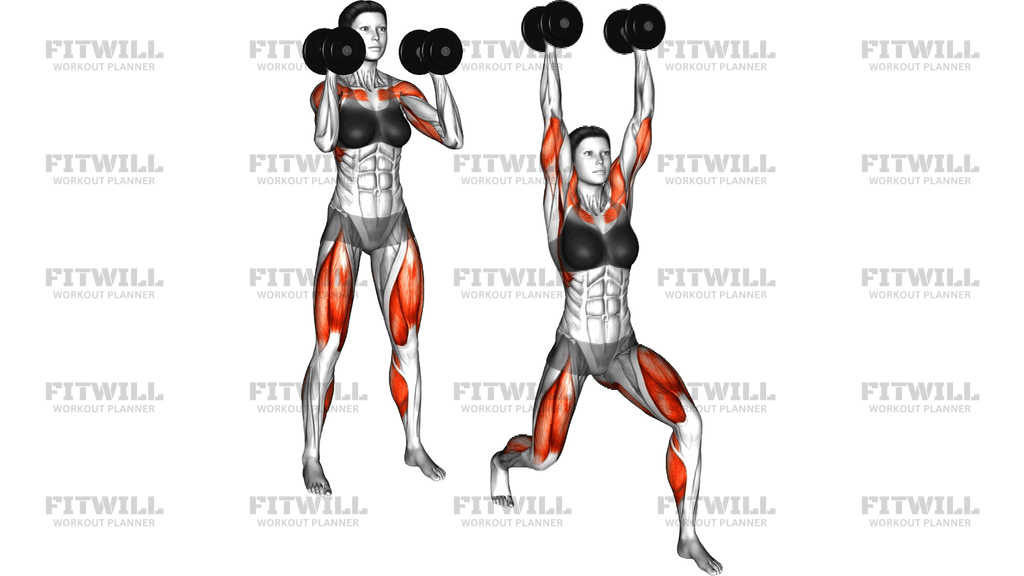
Instructions
- Hold a dumbbell in each hand and clean them to the shoulders, letting the weights rest at the fronts of the shoulders with elbows slightly below or just in front of the weights.
- Set your feet about hip width apart with weight spread evenly across both feet, and grip the dumbbells firmly with wrists stacked over the elbows.
- Brace the core and take a breath into the belly, keeping the ribcage down and the chest tall without leaning back.
- Dip by bending the knees 3-6 inches, keeping the torso vertical and the heels glued to the floor.
- Reverse the dip explosively, driving through the floor with both legs so the dumbbells launch upward off the shoulders.
- As the dumbbells rise, drop under them: step one foot forward and the other foot back into a split stance while punching both arms straight overhead.
- Land in the split with the front shin vertical, the back knee softly bent, and both dumbbells locked out in line with the ears, biceps close to the head.
- Hold the overhead position for a beat until the weights are completely stable, then step the feet back together to a standing position.
- Exhale as you drive, inhale at the top or during the reset, then lower the dumbbells back to the shoulders under control before starting the next rep.
Tips & Tricks
- A common error is dipping too deep or too slowly — if the knees bend past a shallow quarter squat, the drive becomes a slow grind and the dumbbells never get airborne speed. Keep the dip short and snappy.
- If the dumbbells finish out in front of your head at lockout, your elbows were likely too wide during the dip or you leaned your torso back to press. Keep the elbows tucked slightly forward and the spine neutral so the weights travel straight up.
- Do not let the front knee cave inward when you land in the split. Cue the front foot to grip the floor and the knee to track over the second toe.
- The back foot should land with the heel lifted and the toe turned slightly inward — landing flat-footed on the back leg reduces hip stability and strains the lower back.
- Alternate which foot steps forward each set. Always splitting with the same leg builds an asymmetry you will feel once the weights get heavy.
- Punch the arms aggressively instead of pressing them slowly. The split jerk rewards a fast punch that meets the dumbbells at the top, not a muscled-out press.
- If your wrists ache at the rack position, adjust so the dumbbell heads rest on the fronts of the shoulders rather than hanging from the grip alone — this lets the legs do more of the work.
- Start with lighter dumbbells than you would strict press. The timing of the drop-under is the skill; heavy weights hide sloppy footwork until they cause a missed rep.
- Recover by stepping the back foot in first, then the front foot. Stepping both feet at once while holding weights overhead invites a stumble.
Frequently Asked Questions
Which muscles does the Dumbbell Split Jerk work the most?
The shoulders and triceps finish the overhead lockout, but the quads, glutes, and calves produce the explosive leg drive. The core and traps stabilize the weights overhead throughout the catch.
Is the Dumbbell Split Jerk suitable for beginners?
Yes, as long as the weight stays light and the footwork is learned slowly. Practicing the split stance and the dip-and-drive separately before combining them makes it very approachable.
How is the Dumbbell Split Jerk different from a dumbbell push press?
In a push press, your legs assist but your feet stay planted and you press through the whole range. In the split jerk, you drop under the rising dumbbells into a staggered stance, so you can handle more weight and catch with straight arms.
Should I split with the same leg every rep?
Alternate your front leg between sets so both sides develop equal skill and stability. Always splitting with the same foot forward creates one-sided overhead strength imbalances over time.
How deep should the dip be before driving the dumbbells up?
Only a few inches — roughly a quarter of a normal squat depth. A shallow dip keeps the torso upright and lets you reverse direction quickly, which is what actually launches the dumbbells.
Why do my dumbbells drift forward when I jerk them?
The most likely cause is leaning the torso back or letting the elbows flare out during the dip. Keep the elbows slightly in front of the shoulders and your ribs stacked over your hips so the weights travel a straight vertical path.
What can I substitute if I do not have dumbbells?
A barbell split jerk works the same pattern, and kettlebells in the rack position are a workable alternative. For a body weight version, drill the split footwork and punch with empty hands to refine timing.
How should I bail out safely if I miss a rep?
Push the dumbbells forward and away from your body while stepping out of the split, keeping them clear of your head, knees, and feet. Never try to save a tipping dumbbell by twisting to catch it overhead.
Can I do the Dumbbell Split Jerk in a conditioning circuit?
Yes, but reduce the weight significantly and keep the dip-and-drive crisp rather than letting fatigue turn it into a slow press. Alternating legs each rep works well for higher-rep conditioning sets.