Dumbbell Split Jerk
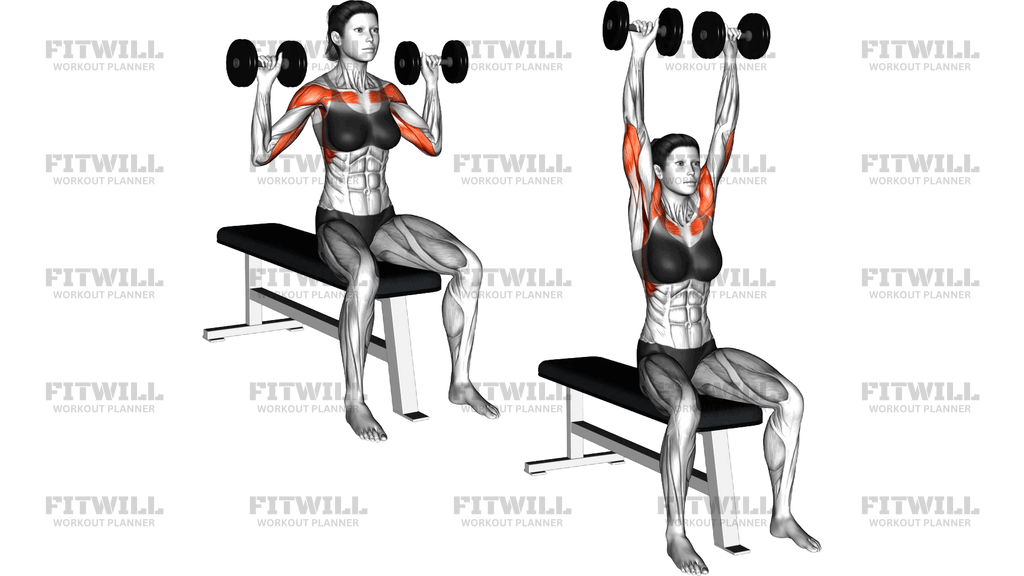
The Dumbbell Split Jerk is an explosive overhead lift where you drive a pair of dumbbells from shoulder height to full lockout using leg power, then catch them with one foot stepped forward and the other back. Unlike a strict press, the split stance lets you drop your torso slightly under the rising weights, so you can handle loads you could never simply muscle overhead. It comes from weightlifting tradition but translates well to dumbbell training, where the independent weights demand extra balance and control.
This lift suits intermediate lifters who already own a solid overhead press and a comfortable rack position. It is especially valuable for athletes in field and court sports, CrossFit-style training, or anyone who wants to build power through the legs and hips while challenging shoulder stability at the same time. Because each arm works separately, weaker-side imbalances get exposed quickly, which makes it a useful diagnostic tool as well as a strength builder.
The main drivers are the quads and glutes, which generate the drive, and the shoulders and triceps, which punch the dumbbells up and hold them locked out. The split catch loads the front thigh and the hip of the rear leg, while the core braces hard to keep your ribs stacked over your pelvis with heavy weights overhead. Your traps and upper back also stay busy keeping the dumbbells pulled back into a stable overhead position.
Setup matters more here than in most presses. The dumbbells should rest on your shoulders with elbows slightly in front of the weights, not flared wide, and your feet should be set at about hip width before the dip. A rushed or lopsided setup usually shows up as a jerky dip that dumps the dumbbells forward of your midline, making the catch far harder than it needs to be.
To execute well, keep the dip short and vertical, drive through the floor, and let the dumbbells travel up and slightly back as your feet split. The catch should land with a flat front shin, a soft back knee, and arms straight overhead with the dumbbells over your ears. Recover by stepping the front foot back first, then the rear foot forward, before lowering the dumbbells with control. Work in the three to six rep range if you are training power, and treat any rep where the weights drift ahead of your head as a sign to reduce load.
[ Workout Log & Planner ]
Put your next workout in Fitwill
Keep your plan and training log ready when you are.


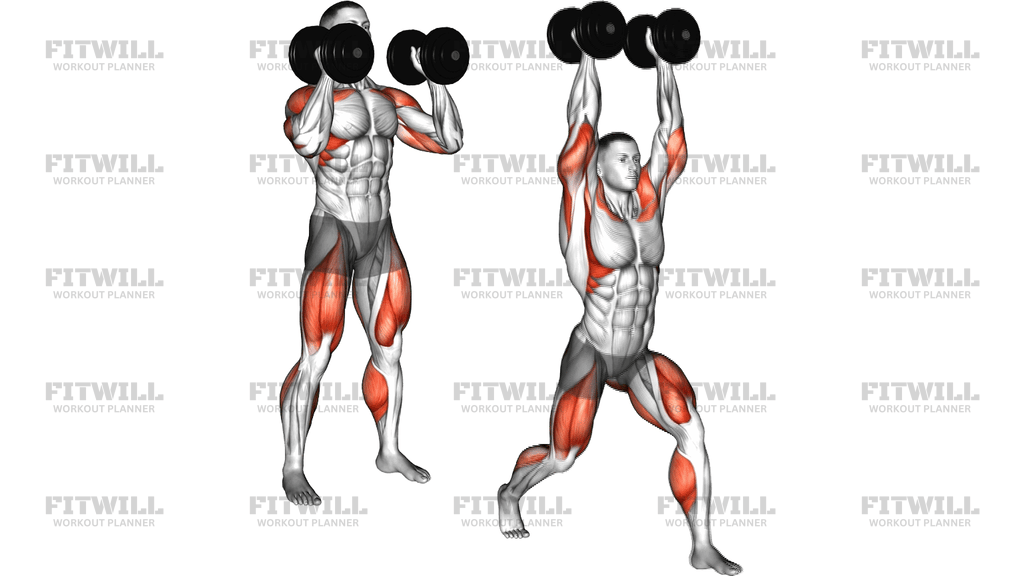
Instructions
- Clean or press two dumbbells up to your shoulders and hold them in the rack position, resting on the fronts of your shoulders with your elbows tucked slightly under the weights.
- Stand with your feet about hip width apart, grip the dumbbells firmly, and look straight ahead rather than up or down.
- Take a deep breath into your belly and brace your core as if preparing to take a light punch.
- Dip by bending your knees and hips a few inches, keeping your torso vertical and both dumbbells stacked over your hips.
- Drive up hard through your heels to launch the dumbbells off your shoulders.
- As the dumbbells rise, split your feet: step one foot forward and the other back, dropping your body under the weights.
- Catch with both arms locked straight overhead, the dumbbells over your ears, your front shin roughly vertical, and your back knee softly bent.
- Pause in the split to confirm control, then step your front foot back and bring your rear foot forward to stand tall with the dumbbells still overhead.
- Lower the dumbbells back to your shoulders under control while exhaling, then reset your brace and stance before the next rep.
- Breathe in before the dip, hold the brace through the drive and catch, and exhale once the dumbbells are locked out and stable.
Tips & Tricks
- Keep the dip short — around two to four inches. A deep dip turns the lift into a grind and pushes the dumbbells forward off your shoulders.
- If the dumbbells end up in front of your head at the catch, you probably let your chest lean forward during the dip. Think of keeping your back pocket loaded and your ribs down.
- Alternate your split leg across sets so one side does not become your permanent catch side and drift stronger than the other.
- Do not rush the split. Step your feet crisply but land softly; stomping into position usually means your timing with the drive is off.
- If your arms are pressing instead of punching, the load is likely too heavy for your pressing strength to finish — drop the weight until the leg drive does most of the work.
- Keep a flat rear foot or a lightly touching toe, not a collapsed back ankle, so your back knee tracks safely and the catch stays stable.
- Practice the footwork pattern without weights first — dip, drive, split, recover — until the sequence is automatic before adding load.
- If your lower back arches at lockout, squeeze your glutes and pull your ribs down rather than chasing the dumbbells further behind your head.
- Use a weight you can strict press at least a few times. Dumbbells that are too heavy force you to catch with bent elbows, which is where most failed reps happen.
Frequently Asked Questions
Which muscles does the Dumbbell Split Jerk work most?
The quads and glutes generate the drive, while the shoulders and triceps finish and hold the lockout. Your core and traps work continuously to keep the dumbbells stable overhead in the split position.
How is the Dumbbell Split Jerk different from a dumbbell push press?
A push press uses leg drive but you finish the press with your feet planted side by side. In the split jerk you reposition your feet into a lunge stance and drop under the rising dumbbells, which lets you handle heavier loads and land with straight arms.
Can beginners do the Dumbbell Split Jerk?
Beginners should first be comfortable with a dumbbell overhead press, a front rack hold, and basic lunges. Practicing the split footwork with light or no weight is the safest way to learn before loading it.
Should I split with the same leg every rep?
Pick a dominant leg for consistency during a set, but alternate the lead leg across sets so both sides develop evenly. Many lifters split with the leg opposite their dominant hand, but comfort matters more than a fixed rule.
Why do my dumbbells drift forward of my head at the catch?
That usually means your torso leaned forward during the dip or your elbows flared out in the rack. Keep the dip vertical, elbows under the weights, and think about pushing the dumbbells up and slightly back as you split.
How heavy should the dumbbells be for the Dumbbell Split Jerk?
Use a load you can strict press for several clean reps; the jerk lets you move more than that, but only if your lockout is solid. If you catch with bent elbows or chase the dumbbells with your head, the weight is too heavy.
What can I substitute if I cannot do the split footwork?
A dumbbell push press with both feet planted trains the same explosive drive with simpler footwork. Power jerks, where you push your feet out to the sides instead of splitting front to back, are another good option.
How many reps and sets should I do?
For power and technique, work in sets of 3 to 5 reps with moderate loads and full recovery between sets. Treat high-rep dumbbell jerks as conditioning only once your technique is consistent, since fatigue breaks down the catch quickly.
Is it safe for my knees to catch in a split position?
When the front shin stays roughly vertical and the back knee lands softly with your torso upright, the split catch distributes the load across both legs well. Keep the volume sensible and warm up your hips and ankles first to reduce strain.