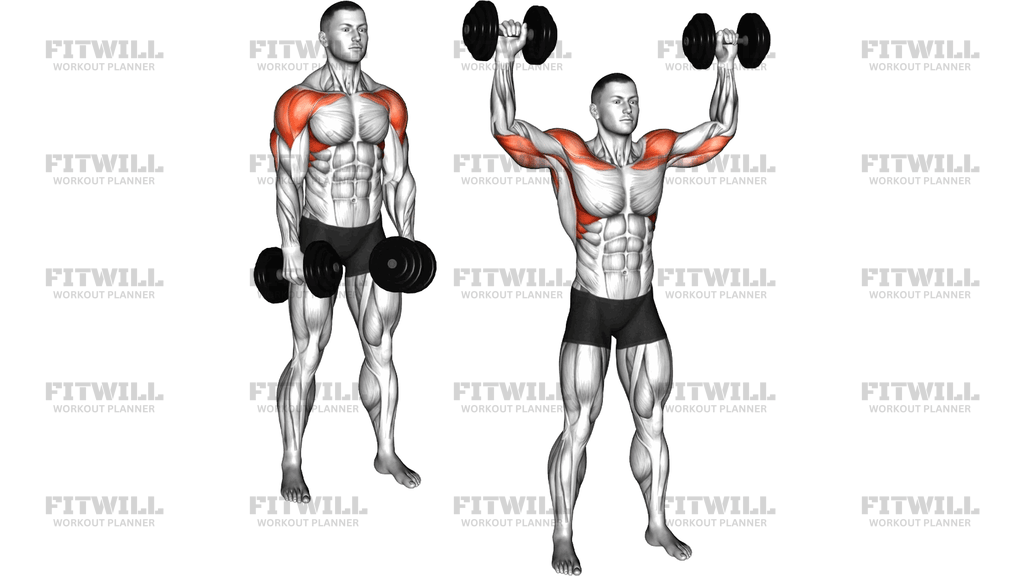
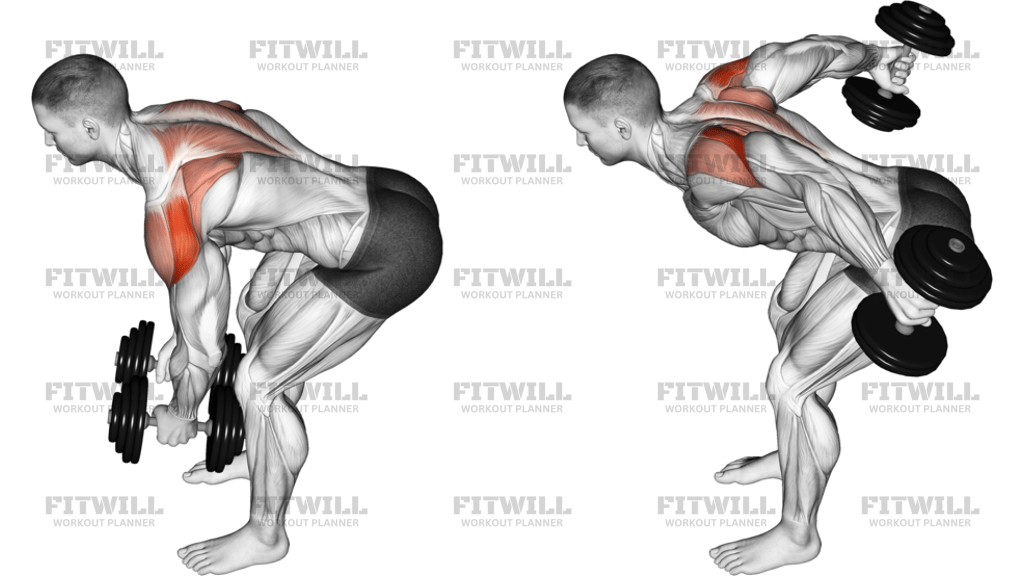
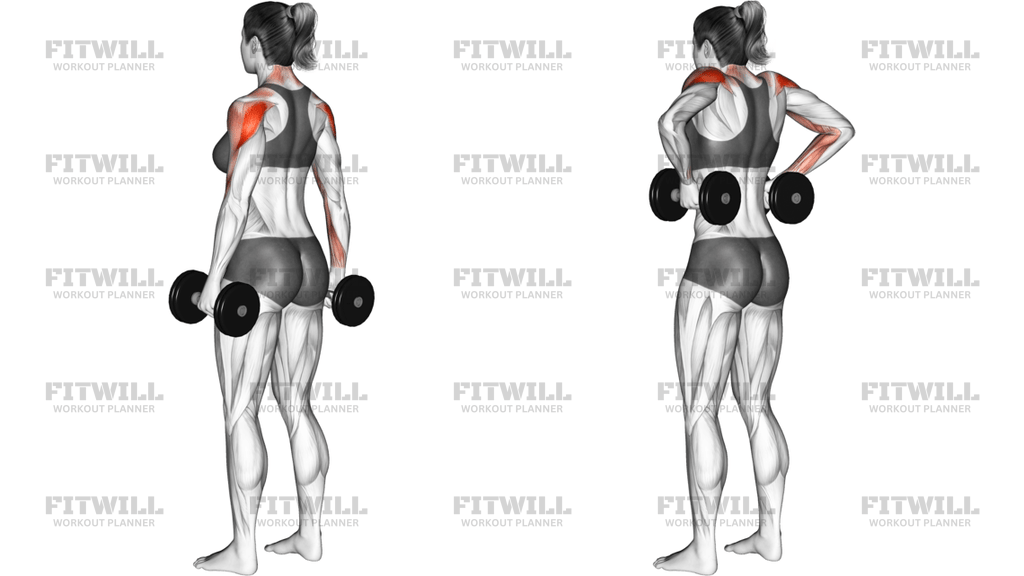
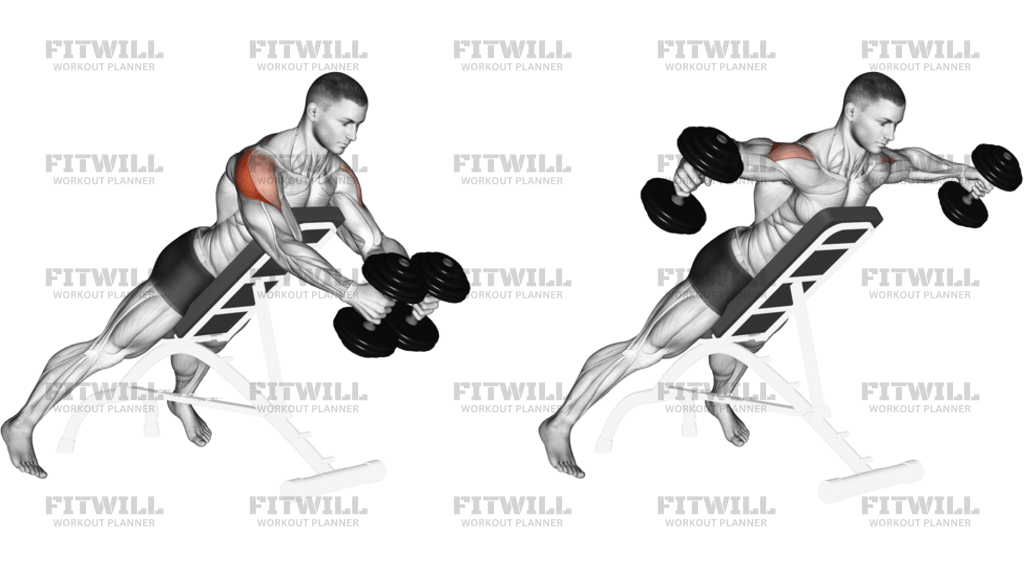
Dumbbell Incline Front Raise
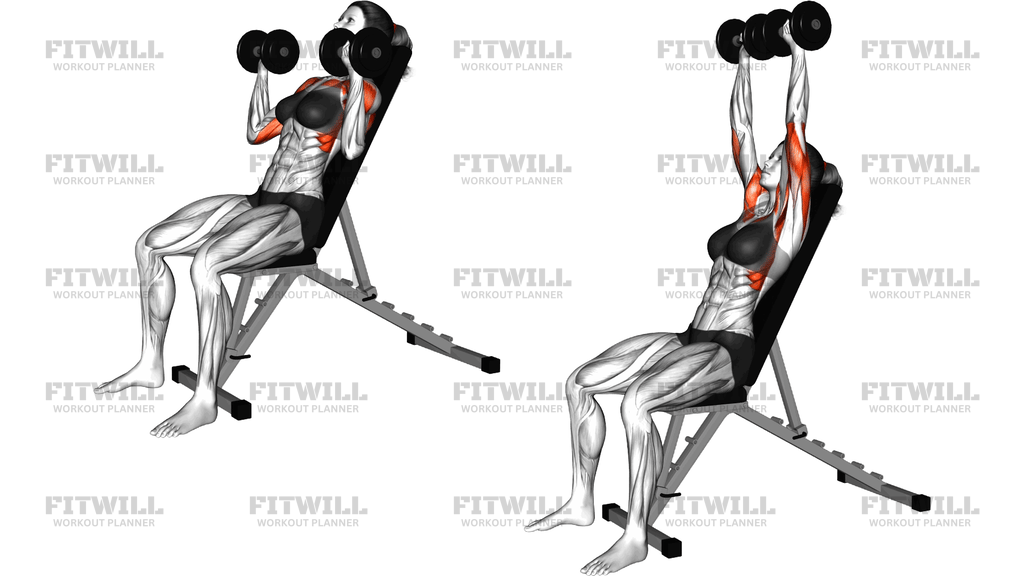
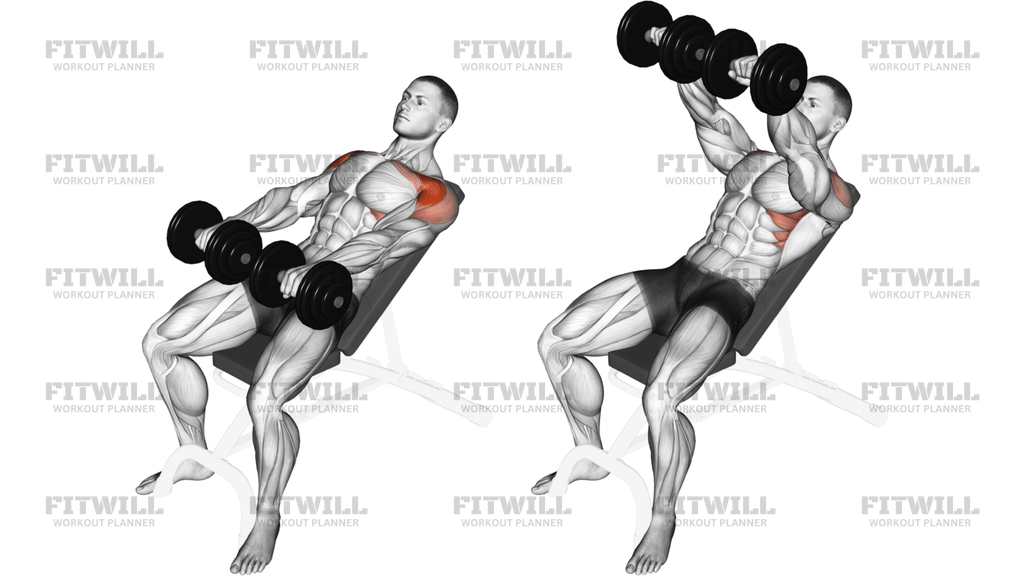
Dumbbell Incline Front Raise is a shoulder-isolation exercise performed while lying back on an incline bench with a dumbbell in each hand. The incline support changes the angle of pull and removes most of the body English that often shows up in standing front raises, so the front delts have to do the work instead of the hips, lower back, or momentum. It is a straightforward accessory lift for building shoulder control, front-delt tension, and cleaner overhead mechanics.
The setup matters more here than in many arm raises. With the torso supported on the bench, the chest stays open, the ribs stay down, and the shoulder joint moves through the lift without a big sway from the trunk. The feet stay planted, the head stays in contact with the bench, and the dumbbells start near the thighs or just outside them before traveling in a controlled arc. That fixed position makes it easier to keep the rep honest and repeatable.
The lift should feel like the arms are tracing a smooth path in front of the body rather than swinging upward. Raise the dumbbells until the upper arms are close to shoulder height or slightly above if your shoulders tolerate it well, then lower them slowly until the front delts are loaded again at the bottom. Keep a soft bend in the elbows, avoid shrugging the shoulders toward the ears, and do not turn the movement into a press or a chest fly.
This exercise is useful when you want direct front-delt work without standing momentum, especially in accessory blocks, upper-body sessions, or shoulder-focused training. It can also be a good option for lifters who want a more stable front raise variation than the standing version. Choose a load that lets every repetition look the same, because once the torso starts bouncing on the bench or the elbows bend and straighten to cheat the top range, the exercise stops doing what it is meant to do.
[ Workout Log & Planner ]
Put your next workout in Fitwill
Keep your plan and training log ready when you are.


Instructions
- Set an incline bench to about 30 to 45 degrees and sit back with your head, upper back, and hips supported.
- Plant both feet flat, hold a dumbbell in each hand, and let the arms hang near the thighs with a slight bend in the elbows.
- Set your shoulders down and back against the bench without arching hard through the lower back.
- Brace your midsection so the torso stays still while the arms move.
- Raise both dumbbells in a smooth arc in front of you until the upper arms reach about shoulder height or slightly above.
- Keep the wrists stacked over the elbows and avoid turning the rep into a press or a shrug.
- Pause briefly at the top if you can keep the shoulders relaxed and the dumbbells controlled.
- Lower the dumbbells slowly to the start position, keeping tension in the front delts the whole way down.
- Reset your shoulder position before the next rep and repeat for the planned set.
Tips & Tricks
- A lower incline usually keeps the movement more honest; a very steep bench turns it into something closer to a seated front raise.
- Use lighter dumbbells than you would for a standing raise, because the supported position removes momentum but increases the demand on control.
- Stop the ascent when the shoulders want to shrug; the front delts should finish the rep, not the upper traps.
- Keep the elbows softly bent and fixed so the dumbbells travel in a clean arc instead of wobbling forward and back.
- If the wrists bend back at the top, the load is probably too heavy or the range is too aggressive.
- Do not bounce off the bench with your torso to start each rep; the back support is there to reduce cheating, not replace it.
- Exhale as the dumbbells rise and take a controlled breath on the way down to keep the ribcage from flaring.
- If your shoulders pinch overhead, shorten the top range slightly and keep the rep just below the painful angle.
Frequently Asked Questions
What does the Dumbbell Incline Front Raise work most?
It mainly trains the front delts, with the upper traps and triceps helping stabilize the lift.
Why do this on an incline bench instead of standing?
The bench support reduces body swing and makes the front delts do more of the work through the whole rep.
How high should I raise the dumbbells?
Bring them to about shoulder height or a little higher if your shoulders stay smooth and pain-free.
What should my upper body stay in contact with?
Keep your head, upper back, and hips supported on the incline bench so the torso does not drive the lift.
What is the most common form mistake?
Shrugging the shoulders and swinging the dumbbells up with momentum instead of lifting under control.
Can beginners use this exercise?
Yes, it is beginner-friendly if the dumbbells are light and the range stays controlled.
Should the elbows stay straight?
No, keep a small bend in the elbows and hold that angle so the shoulder joint leads the movement.
Can I do one arm at a time?
Yes, alternating arms can help you feel the front delt work and make it easier to keep the bench stable.
What if I feel it more in my neck than my shoulders?
That usually means the weights are too heavy or the shoulders are creeping up toward the ears; lighten the load and keep the neck long.