Cable Bent-Over Row
Cable Bent-Over Row is a cable rowing exercise performed from a hip hinge with a close-grip handle or V-handle. It trains the back through a guided pulling path while the arms, rear shoulders, and trunk help keep the body steady. The cable keeps constant tension on the rep, so the quality of the hinge, torso angle, and finish position matter as much as the amount of weight on the stack.
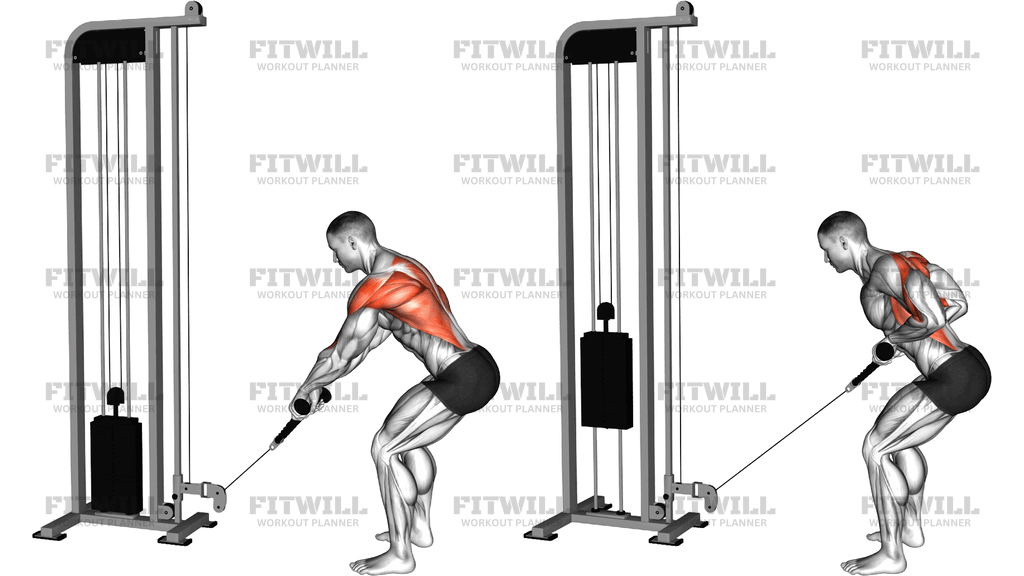
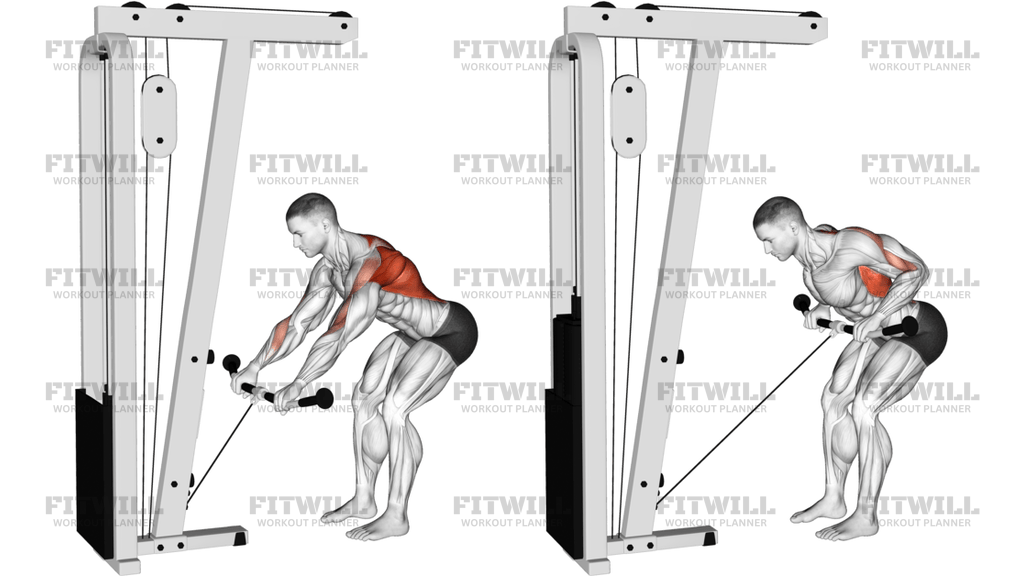
The image shows a bent-over stance with soft knees, a neutral spine, and the handle traveling from arm's length toward the lower ribs. That position shifts the work toward the lats and mid-back while still asking the core to resist rotation and torso swing. If the hips rise, the chest lifts too much, or the shoulders shrug, the load moves away from the back and into momentum.
Set the pulley low, step far enough back for the cable to load the start position, and hinge until your torso is roughly parallel to the floor or slightly higher if your back feels safer there. The handle should start just below the knees or shin level with the arms long, then travel close to the body as you row. A clean rep finishes with the elbows tucked and the handle near the lower ribcage or upper waist, not high into the chest.
This movement works well for back-focused hypertrophy, accessory pulling volume, or as a lower-back-friendly alternative when you want a fixed cable path instead of free weights. It also teaches control in a bent-over position, which carries over to many other row and hinge variations. Use a load that lets you keep the torso still, breathe between reps, and lower the handle under control until the shoulder blades can reach forward without losing the hinge.
Fitwill
Log Workouts, Track Progress & Build Strength.
Achieve more with Fitwill: explore over 9600 exercises with images and videos, access built-in and custom workouts, perfect for both gym and home sessions, and see real results.
Start your journey. Download today!




Instructions
- Set the cable pulley low and attach a close-grip handle or V-handle.
- Stand facing the stack with feet about hip-width apart and take the handle in a neutral grip.
- Hinge at the hips until your torso is about 30 to 45 degrees forward, with a soft bend in the knees and a neutral spine.
- Let the arms hang long under the shoulders and keep the cable slightly tensioned before you start the first pull.
- Brace your torso, then pull the handle toward your lower ribs or upper waist by driving the elbows back.
- Keep the handle close to your body and avoid letting the shoulders roll forward as you row.
- Squeeze the shoulder blades together only as much as needed to finish the pull without leaning back.
- Lower the handle slowly until the arms are long again and the shoulders can reach forward under control.
- Reset your hinge and breathing between reps, then repeat for the planned set.
Tips & Tricks
- If the cable yanks you upright at the start, step farther back or lighten the stack so you can keep the hinge angle.
- Keep the handle path tight to the thighs and lower ribs; letting it drift away turns the rep into a standing shrug and swing.
- Think about driving the elbows back, not pulling with the hands, so the lats and mid-back do the work.
- Do not chase a huge torso lean. A stable half-hinge with a neutral spine is usually better than bending lower and losing position.
- Keep your neck long and your gaze a few feet ahead on the floor instead of cranking your chin up to finish the row.
- Pause briefly when the handle reaches the ribs so you can feel the back finish the rep without bouncing the stack.
- Lower the handle under control until the shoulder blades can protract a little, but stop before your lower back rounds.
- Use a grip width and attachment that lets the wrists stay straight; a V-handle is usually easier on the elbows than a wide straight bar.
Frequently Asked Questions
What does Cable Bent-Over Row train most?
It mainly trains the back, especially the lats and mid-back, with the rear shoulders, biceps, and trunk helping to stabilize the rep.
Why use a cable instead of dumbbells for this row?
The cable keeps tension on the pull and gives you a consistent line of resistance, which is useful for controlled back work.
How low should my torso be in the bent-over position?
Aim for a hip hinge that keeps the spine neutral and the torso around parallel or slightly above parallel if that feels more stable.
Where should the handle finish?
For this version, the handle should come toward the lower ribs or upper waist, not up toward the chest.
Can I use a straight bar instead of a V-handle?
Yes, but a close-grip neutral attachment usually makes it easier to keep the elbows tucked and the wrists comfortable.
What is the most common mistake with this row?
Letting the torso bounce or rise during the pull is the biggest issue, because it turns the row into a body-driven swing.
Is this exercise safe for beginners?
Yes, if you start with a light load and keep a controlled hinge, a neutral spine, and smooth reps.
How should I breathe during each repetition?
Brace before the pull, exhale as you row the handle in, then inhale and reset as you lower it back to the start.