Body Muscle Side Back View
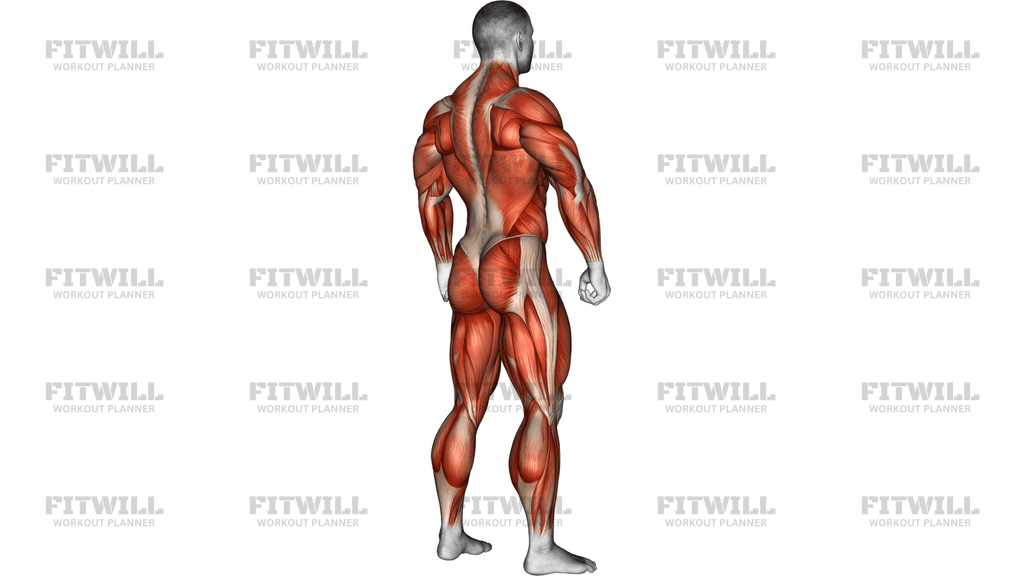
This is a static posterior-view muscle reference showing the full back side of the body in a neutral standing pose. The image is useful for studying how the major muscles of the neck, upper back, shoulders, arms, glutes, hamstrings, and calves line up when the body is stacked and relaxed.
Because the figure is shown from behind, the visual emphasis lands on symmetry, spinal alignment, shoulder position, pelvic level, and lower-body balance. That makes it a good reference for posture teaching, anatomy study, and posterior-chain cueing rather than a loaded movement or sport-specific drill.
The setup matters more than motion here. A clean back view starts with the head tall, ribs stacked over the pelvis, feet grounded evenly, and the arms resting naturally at the sides. When the shoulders are level and the torso is not twisted, the back muscles are easier to read and compare side to side.
If you are using this pose as a coaching reference, keep the stance quiet and intentional. Avoid leaning back, shrugging one shoulder, shifting onto one leg, or clenching the hands so hard that the upper body changes shape. Small changes in posture can hide the muscle lines this view is meant to show.
Use this image when you want a simple posterior anatomy reference for education, assessment, or warm-up awareness. It is most valuable when the goal is to understand how the body should look from behind in a neutral, balanced position, not when the goal is to measure strength or perform repetitions.
[ Workout Log & Planner ]
Put your next workout in Fitwill
Keep your plan and training log ready when you are.


Instructions
- Stand tall with your back facing the viewer, feet about hip-width apart, and your weight spread evenly across both feet.
- Let your arms hang naturally at your sides with the elbows straight and the hands relaxed.
- Lengthen the back of your neck and keep your chin level so the head stays stacked over the ribcage.
- Set the shoulders down and wide, then let the shoulder blades rest without pinching them together hard.
- Keep the ribcage over the pelvis and avoid arching the lower back or leaning the torso backward.
- Square the hips and torso so both sides of the body remain visible and balanced from behind.
- Press evenly through the heels, big toe, and little toe to keep the stance stable.
- Hold the posture for the planned time while breathing steadily and keeping the torso quiet.
- Reset by softening the stance and returning to a natural standing position.
Tips & Tricks
- Keep your weight equal between the left and right foot so the glutes and calves look symmetrical from behind.
- Avoid shrugging one shoulder higher than the other; a level shoulder line makes the upper back easier to assess.
- Do not overarch the lower back or flare the ribs, or the clean posterior line will disappear.
- Relax the hands instead of clenching them hard unless you specifically want to show forearm tension.
- If you are studying anatomy, use a mirror or photo to compare the left and right sides of the back view.
- Keep the chest from popping forward; a stacked ribcage makes the back muscles easier to read.
- A small knee softness is fine for comfort, but do not turn the stance into a squat.
- Breathe normally so the torso does not stiffen and distort the posture.
- Treat this as a reference pose, not a strength test.
Frequently Asked Questions
What muscles are visible in this back-view pose?
The back, shoulders, arms, glutes, hamstrings, and calves are the most visible, with the traps and spinal erectors also easy to study.
Is this a real workout movement?
No. It is a static posterior anatomy reference rather than a loaded exercise.
Can beginners use this pose?
Yes. It is simple and useful for learning posture, balance, and posterior anatomy.
Why are the shoulder blades and upper back so easy to see here?
The neutral back-facing stance exposes the scapulae, traps, and lat lines without a lot of movement getting in the way.
Should I squeeze my shoulder blades together?
Not hard. Keep them set naturally so the upper back stays broad instead of cramped.
What is the main purpose of this position?
It helps with anatomy education, posture assessment, and left-right comparison from the back.
Can I use it in a warm-up?
Yes, as a posture-awareness drill before training, but it does not replace dynamic movement.
What should I avoid while holding the pose?
Avoid twisting the torso, leaning back, shrugging the shoulders, or shifting weight onto one leg.
How do I make the back view easier to read?
Stand tall, keep the pelvis level, and relax the arms so the posterior muscles are not hidden by tension.