Dumbbell Single-Arm Overhead Lunge
Dumbbell Single-Arm Overhead Lunge is a split-stance lower-body strength exercise with a major balance and shoulder-stability demand. One dumbbell stays locked out overhead while you lower into a lunge, so the legs have to produce force while the trunk resists side-to-side sway and rib flare. That makes it a useful drill for athletes and lifters who want leg strength, overhead control, and better whole-body coordination in one movement.
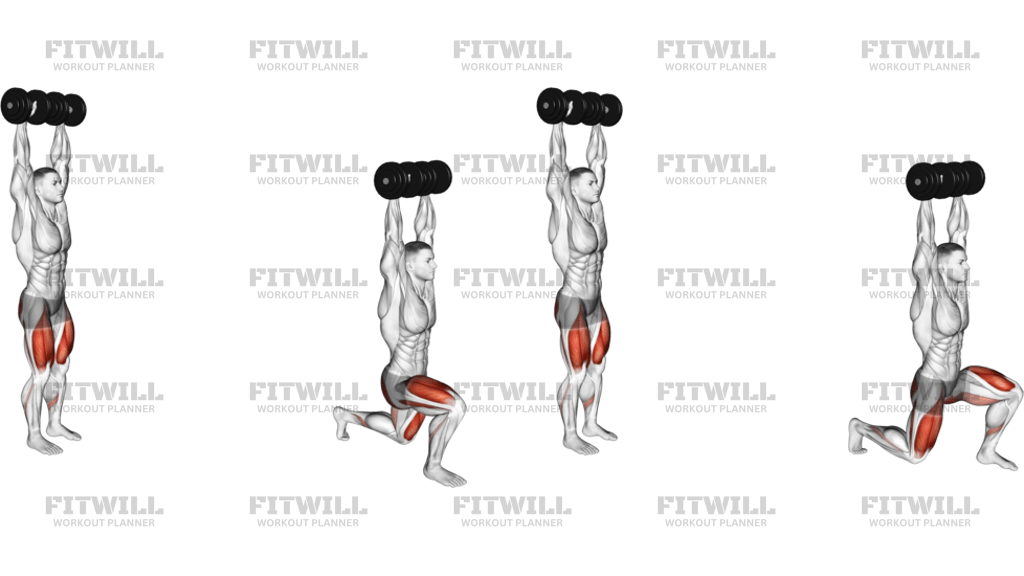
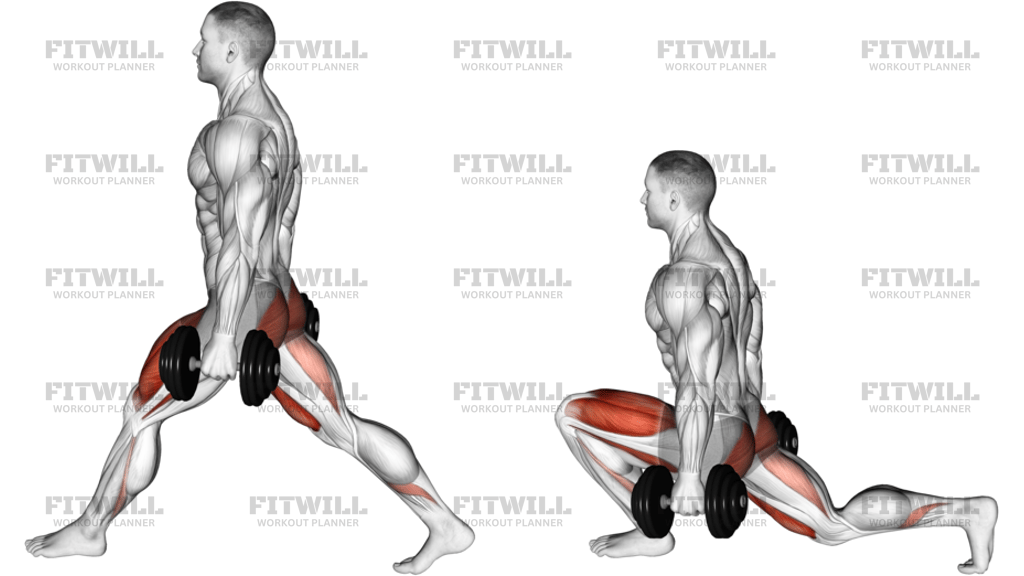
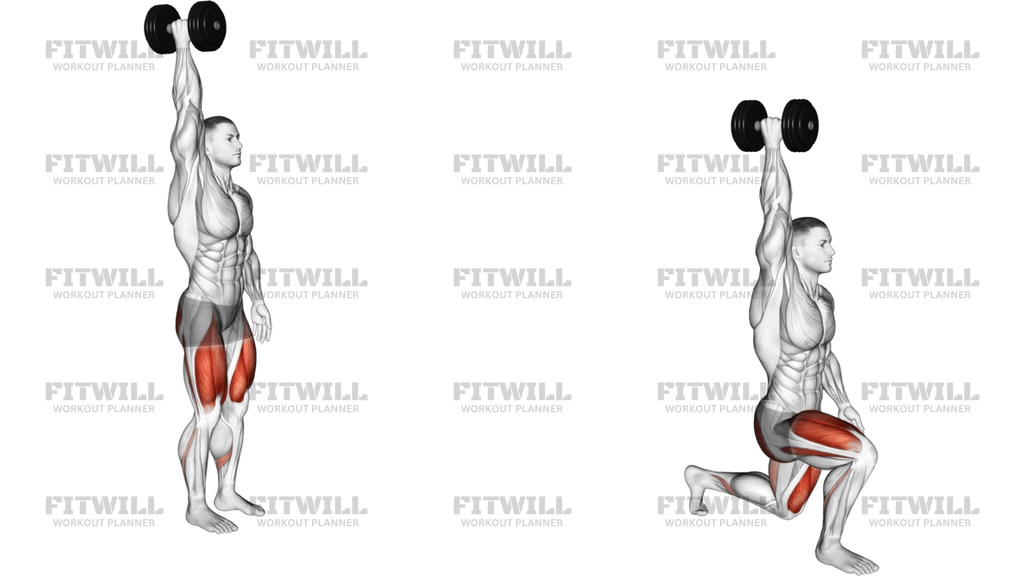
The image shows a tall overhead finish with the torso upright, which is the main reason this exercise works. Keeping the arm stacked over the shoulder forces the midline to stay organized while the front leg, glute, and quad control the descent. In anatomy terms, the gluteus maximus, quadriceps, hamstrings, rectus abdominis, obliques, and erector spinae all contribute, with the shoulder and upper back helping to hold the dumbbell steady.
Set up with one dumbbell overhead in a straight arm, wrist stacked over shoulder, and the non-working arm free for balance. Step into a split stance with enough length to let the back knee travel down without the front heel lifting. Before each rep, square your hips, keep your ribs down, and stand tall so the weight stays over the middle of your body instead of drifting forward or to the side.
Lower under control until the back knee approaches the floor and the front shin stays comfortable and stable. The front foot should stay planted as you drive back up through the whole foot, not just the toes. On the way up, keep the overhead arm fixed and avoid letting the dumbbell tilt, because that usually means the trunk has started to rotate or the shoulder has lost position.
This exercise is most useful in a strength, athletic, or accessory block where quality matters more than load. It can also expose side-to-side differences: one side may feel steadier overhead or more stable at the bottom of the lunge. Use it when you want lower-body work that also teaches overhead bracing, but keep the range honest and stop the set if the arm bends, the torso leans, or the front knee collapses inward.
[ Workout Log & Planner ]
Put your next workout in Fitwill
Keep your plan and training log ready when you are.


Instructions
- Hold one dumbbell overhead with the elbow locked, wrist stacked over the shoulder, and the free arm relaxed at your side.
- Step into a split stance with your front foot planted flat and your back foot far enough behind you to lower straight down.
- Square your hips and ribs before you descend so the dumbbell stays centered over your midfoot.
- Keep your torso tall and lower your back knee toward the floor in a smooth, controlled line.
- Let the front knee bend and track over the toes while the front heel stays down and stable.
- Pause briefly near the bottom with the overhead arm still vertical and the shoulders level.
- Drive through the front heel and midfoot to stand back up without letting the dumbbell drift or wobble.
- Reset your stance if needed, then repeat for the planned reps on the same side before switching sides.
Tips & Tricks
- A lighter dumbbell is usually the right choice here because the overhead position is the first thing to fail when the set gets too heavy.
- If the dumbbell drifts forward, shorten the step slightly and stack the wrist directly over the shoulder before each rep.
- Keep the back knee traveling straight down instead of shooting backward; that keeps the front leg doing the work the image suggests.
- Use the free hand for balance only, not for pushing off the front thigh or knee on the way up.
- If your torso leans, stop the descent sooner and keep the rib cage from flaring under the load.
- Press the floor away through the full front foot, especially the heel and big toe base, to avoid collapsing into the toes.
- Move slowly enough that you can feel the front glute and quad control the bottom half of the lunge.
- Switch sides only after the overhead arm stays vertical without bending at the elbow or arching the low back.
Frequently Asked Questions
What muscles does Dumbbell Single-Arm Overhead Lunge work most?
It mainly trains the glutes and quadriceps, with strong help from the hamstrings, core, and shoulder stabilizers because the arm stays overhead.
Is the overhead dumbbell supposed to stay locked out the whole time?
Yes. Keep the elbow extended and the wrist stacked over the shoulder so the lunge also challenges overhead stability.
Should the front foot stay flat during the lunge?
Yes, the front heel should stay grounded so you can drive up through the whole foot instead of dumping into the toes.
Can beginners do Dumbbell Single-Arm Overhead Lunge?
Beginners can use it, but start with a very light dumbbell or even no load overhead until the split stance and trunk position feel stable.
How low should I go in the lunge?
Lower until the back knee is close to the floor and the front heel stays planted. Do not chase depth if the torso leans or the dumbbell wobbles.
What usually causes the dumbbell to wobble overhead?
Too much load, a short split stance, or a rib flare at the bottom usually makes the arm drift. Re-stack the shoulder and slow the descent.
Is this more of a strength or balance exercise?
It is both. The legs drive the lunge, but the overhead position makes balance and trunk control a big part of the challenge.
What should I do if I feel it in my low back?
Reduce the load, keep the ribs down, and shorten the range slightly. If the low back still takes over, the overhead position is too heavy for the current setup.