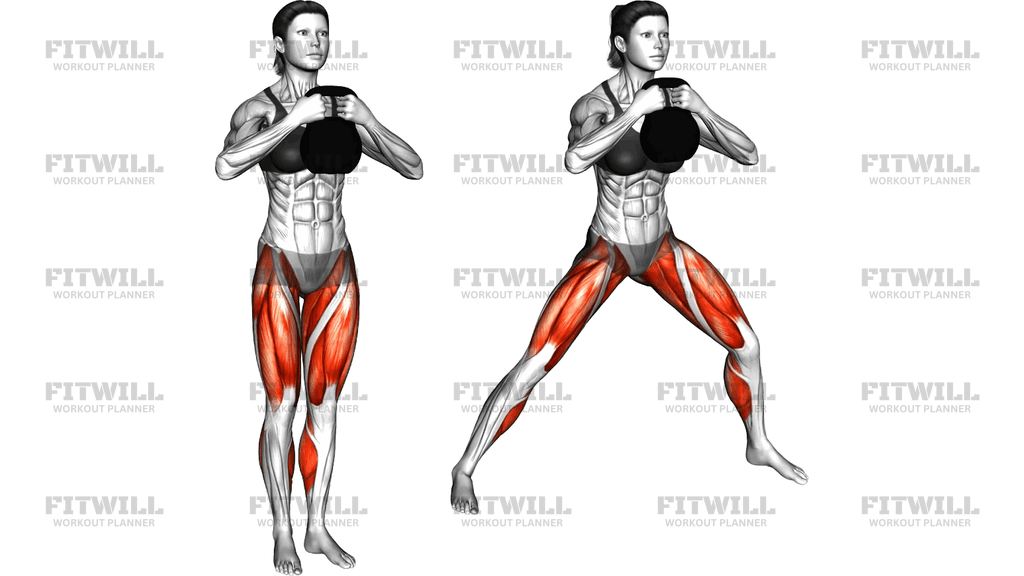
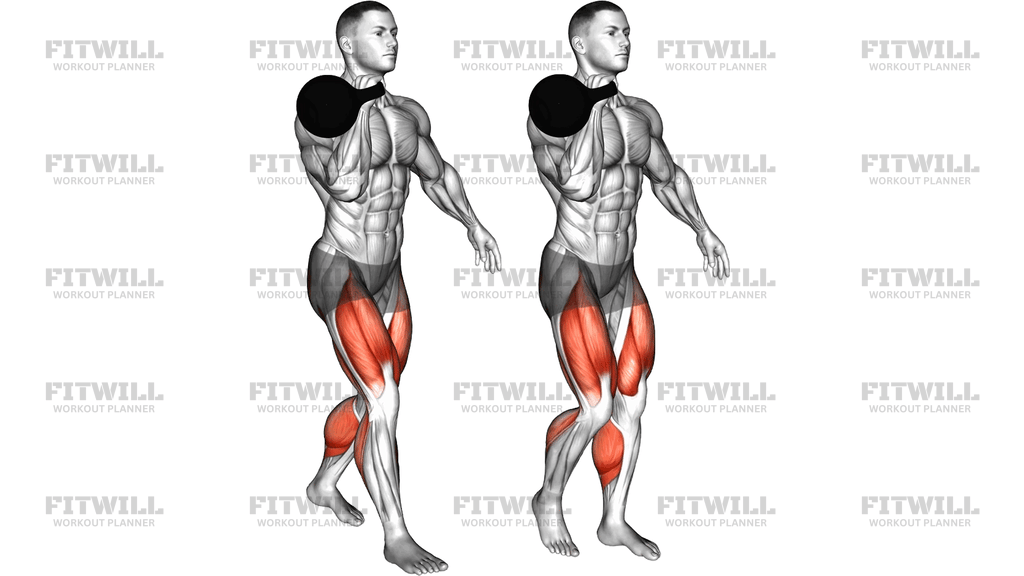
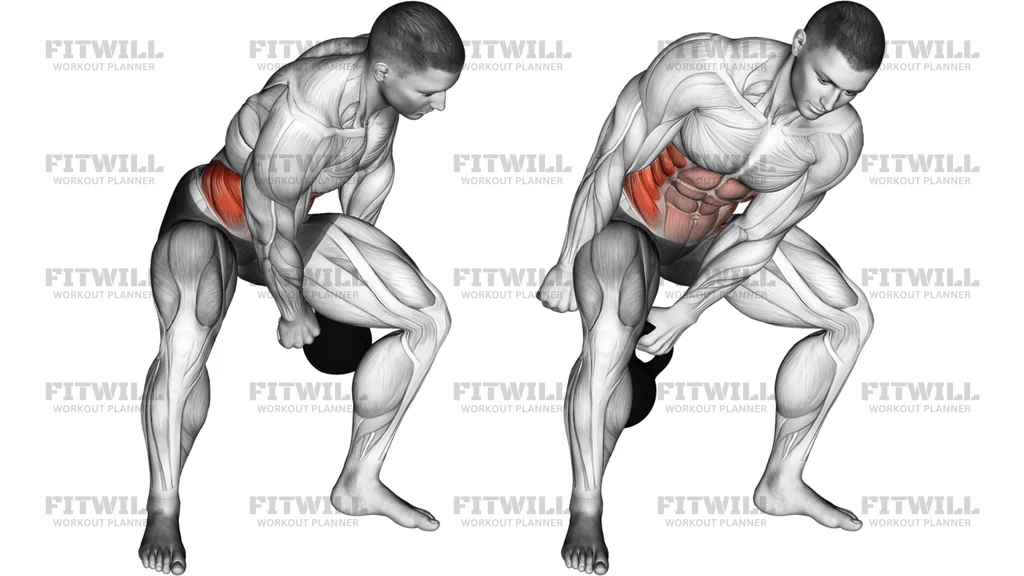
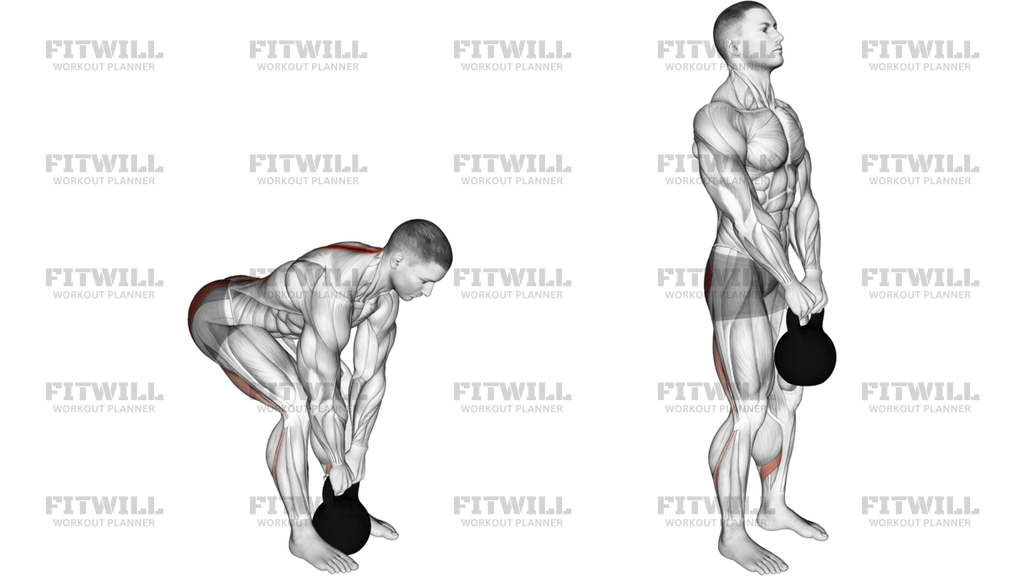
Kettlebell Lunge Pass Through
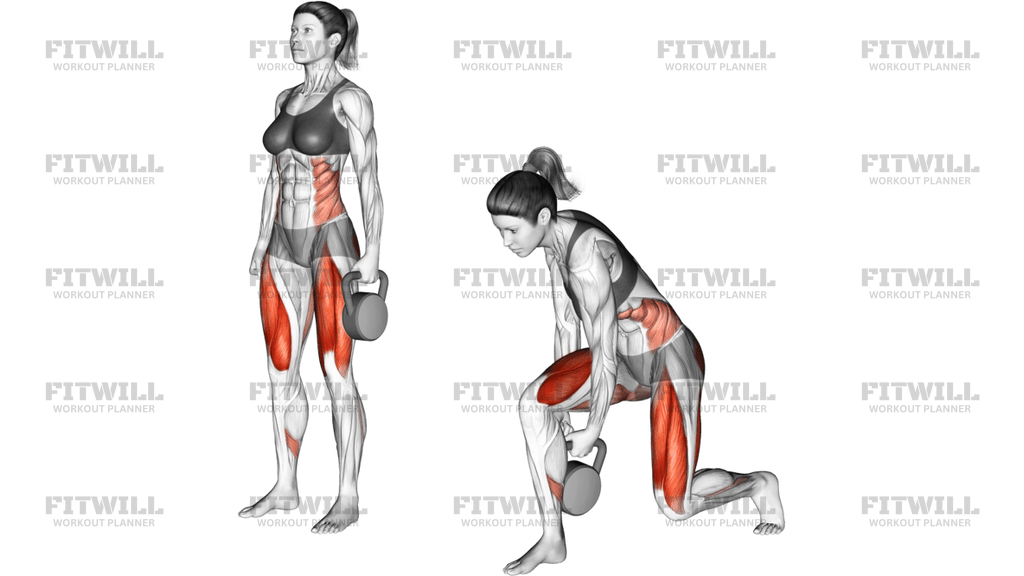
Kettlebell Lunge Pass Through is a unilateral lower-body exercise that combines a lunge position with a low kettlebell pass under the front leg. It trains the thighs, glutes, hips, and trunk to work together while the load changes sides, so the body has to stay organized instead of leaning, twisting, or rushing the rep. The exercise is less about brute force and more about clean coordination under tension.
The movement is useful when you want single-leg strength with extra anti-rotation demand. As you sink into the lunge, the front leg carries most of the load while the rear leg and hip help stabilize the body. Passing the kettlebell under the thigh or near the shin forces the torso, pelvis, and shoulders to resist collapse and stay square to the floor. That makes it a solid accessory drill for lower-body control, balance, and core stiffness.
Setup matters. Start from a long split stance or a lunge where you can keep the front foot flat and the front knee tracking over the toes. Hinge enough to reach the kettlebell without rounding your back, then move the bell low and close to the floor so it stays controlled. The cleaner the setup, the easier it is to keep tension in the working leg and avoid turning the exercise into a loose reach-and-grab motion.
On each repetition, lower into the lunge with control, pass the kettlebell under the front leg, and keep the torso tall enough to avoid collapsing over the knee. The pass should feel deliberate, with the bell traveling close to the floor and the load staying centered under you. Stand back up by driving through the front foot and resetting before the next pass. Smooth breathing and even tempo matter more here than speed or load.
Use Kettlebell Lunge Pass Through as a technique-focused strength drill, a lower-body accessory, or part of a conditioning circuit where control still matters. It suits athletes and gym users who need better hip stability, leg strength, and trunk control in split-stance positions. Keep the range pain-free, use a manageable kettlebell, and stop the set if the knee caves, the torso twists, or the pass starts drifting away from the body.
[ Workout Log & Planner ]
Put your next workout in Fitwill
Keep your plan and training log ready when you are.


Instructions
- Stand in a long split stance with the front foot flat, the rear heel lifted, and the kettlebell held in one hand beside the front leg.
- Brace your torso, keep your chest open, and hinge just enough to reach the bell without rounding your lower back.
- Lower into the lunge until the front thigh is close to parallel, keeping the front knee tracking in line with the toes.
- Guide the kettlebell low and close to the floor as you pass it under the front leg, staying balanced through the front foot.
- Keep your shoulders and hips as square as you can while the bell travels from one side of the body to the other.
- Drive through the front heel and midfoot to stand back up out of the lunge with control.
- Reset your posture at the top before starting the next pass, instead of letting the weight swing you into the next rep.
- Exhale through the effort and keep the descent smooth on the way back down.
- Alternate sides or complete all reps on one side before switching, depending on the program.
Tips & Tricks
- Keep the kettlebell close to the floor and close to the front leg so the pass stays controlled instead of becoming a swing.
- If your torso folds forward, shorten the stance slightly and reduce depth before adding more load.
- Let the front foot do the work; the rear leg is there for balance, not for pushing you up.
- The front knee should track over the second or third toe, not dive inward when you pass the bell.
- Use a kettlebell you can move without twisting your ribcage to reach the floor.
- Stay tall through the chest, but do not over-arch the lower back to make room for the pass.
- Move slowly enough that you can place the bell, not drop it, under the leg.
- If the bell hits the floor or you have to lunge to chase it, the load is too heavy or the stance is too short.
Frequently Asked Questions
What does the kettlebell lunge pass through train?
It mainly trains the thighs, glutes, hips, and core while the body stays stable in a split stance.
Can beginners perform this exercise?
Yes, if they start with a light kettlebell and a shorter range so the pass stays smooth and balanced.
Where should the kettlebell travel during the pass?
It should move low and close to the floor, passing under the front leg without drifting far away from your body.
Should my torso twist when I pass the bell?
No. A small amount of natural shift is normal, but the shoulders and ribs should stay as square as possible.
Which leg should I feel working most?
The front leg should do most of the work, especially through the thigh and glute as you stand back up.
Can I do all the reps on one side first?
Yes. That is usually the simplest way to keep the setup consistent before switching sides.
What is a common mistake with this exercise?
The biggest error is turning the pass into a reach, twist, or swing instead of a controlled lunge-driven movement.
How do I make the movement harder without losing form?
Increase load slowly, deepen the lunge only if the front knee and torso stay organized, or slow the tempo.